“If these walls could talk, the tales they would tell.” —Unknown
The old saying insinuating profound curiosity toward interesting stories old buildings might tell about things they had witnessed, if they only possessed communication skills, is not limited to just walls.
The same thought has no doubt been extended to a variety of objects. For instance, I’ve often thought, “If this old car could just talk …”
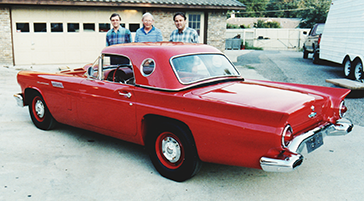
A few of the old cars for which I’ve been privileged to serve as temporary custodian have lived interesting lives, but the one with perhaps the most intriguing stories to tell might be one red 1957 Ford Thunderbird.
Owning and driving old cars is fun on many levels. However, one of the more fascinating aspects of the experience is prying into their history. From where did it come and how did it get here? What stories did it accumulate along the way?
Joe Greene in Bossier City, Louisiana, knew some of the red Thunderbird’s stories. When I first met Joe about 1983, he had owned it for 14 years. It already had a storied life by then, but the years to come would only add to one fascinating “auto” biography. Stories Joe passed on with the car included the one about where he found it in Virginia in the late 60s, about how the woman who owned it used it for drag racing, and that the car was gray although the data plate indicated it left the factory adorned in bright red.
Joe’s stories also included how he painted the car white, turned it to driver status, and enjoyed driving it for several years. A few years later after he and his family were settled in Bossier City at Barksdale Air Force Base as his last assignment in a 30-plus-year military career, Joe disassembled the car with plans for a full and accurate restoration.
This was when the old car’s story took a dramatic turn. By that time, factory invoices for the Little Birds were available via a Michigan T-Bird club that had acquired them from Ford Motor Company. Joe ordered the invoice for his car, not prepared for what he was bout to learn. The little red then gray, then white ‘Bird was one of 15 “special production” cars built January 29, 1957 equipped with “experimental” factory supercharged motors to promote the 1957 Daytona Beach race. According to the invoice, the one Joe owned was shipped to Heintzelman Ford in Daytona Beach, Florida, and displayed at the race by Ford Motor Company.
Still reeling from his discovery, Joe put the restoration on hold to accumulate the hard-to-find motor parts needed for such a rare and historically significant car. That “on hold” period lasted a few years before a deal was struck making me the car’s newest historian. The picture at the top of the page was made on the day in 1987 that it came to live with me in Center, Texas.
Sorting through the boxes of parts and pieces that came with the body still mounted on a rolling chassis, I took the car a little farther down restoration road before ultimately deciding such an automobile would be worth more with a professional restoration. Gil Baumgartner in the San Francisco valley area of California, then and still today, considered to be the ‘55-‘57 Thunderbird restoration guru, was assigned the task. Two years and lots of dollars later, the skillfully restored piece of automotive history returned to Texas.
Family demands and a relocation left me without a place to keep or care for the jewel of Thunderbird history, and I passed ownership to a friend in Dallas who buys, sells, and collects the Little Birds. This is where the car remained, in climate controlled storage, for 17 years during which time it won every award Classic Thunderbird Club International bestows, and was featured in several magazines and hardback books.
The next owner sold it at auction in 2012 for a reported $235,000 at which time the super rare red Thunderbird migrated to Australia. As far as I know, it’s still down there.
Born in Dearborn, Michigan, in January of ’57 for display at the 1957 Daytona Beach race; up the East Coast to Virginia by 1969; west to Bossier City, Louisiana in the early 70s; to my custody in Center, Texas, in 1987; out to California in 1989 for restoration; to Dallas in 1991; sold to Australia in 2012. Where it resided between Dallas where it was sold in 2008, and the 2012 auction that took it to the continent down under, I don’t know. What is known about the car is fascinating enough, but imagine the still unknown tales the automobile might tell.
If we could talk, sadly, I would have to tell the red ‘Bird we lost our friend, Joe, in February of this year. Beyond that, we would likely agree the sum the ‘Bird fetched in 2012 would have been a nice nest egg in my IRA and maybe have sent me to Australia for a vacation, too—that is, if this old car could talk.
Aldridge columns are also published in the Center, Texas, Light and Champion (http://www.lightandchampion.com) and the Mount Pleasant, Texas, Tribune newspapers (http://www.tribnow.com).
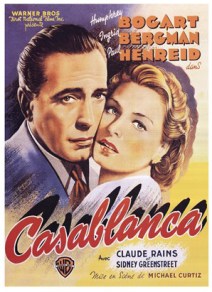 Casablanca (1942) — My number one favorite. Nothing else compares. I’m convinced the effective use of black and white requires more artistic skill than does a color palate. Starring Humphrey Bogart and Ingrid Bergman, set in World War II and released during the war, this one has more “quotable quotes” than any I know. So, “Play it once, Sam. For old times’ sake.” I will continue to play this one many times.
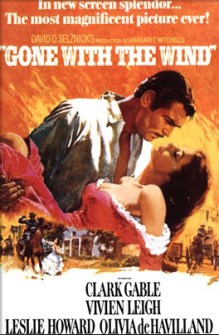 A 2014 Harris reader’s poll named , the novel the second most read book—just behind the Bible. To quote Scarlet, “After all, tomorrow is another day!” And, after all, I’ll watch this one again tomorrow and another day.
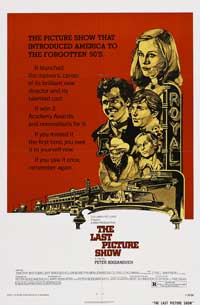 “Bein’ crazy about a woman like that is always the right thing to do,” according to Sam the Lion (Ben Johnson). For me, bein’ crazy about a movie like this one is the right thing to do.
 In 1995, the United States Library of Congress deemed the film “culturally, historically, or aesthetically significant” selecting it for preservation in the National Film Registry. “You can’t stay 17 forever,” to quote John Milner (Paul La Mat). I will, if I can watch this movie every year.
 The film is on the list of the “American Film Institute’s 100 Funniest American Movies.” “Seeing as how the VP is such a VIP, shouldn’t we keep the PC on the QT? ‘Cause if it leaks to the VC he could end up MIA, and then we’d all be put on KP.” — Adrian Cronauer (Robin Williams). I can’t even say that one time without stumbling, but I could easily watch this movie endless times.
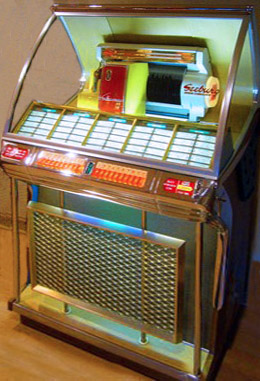
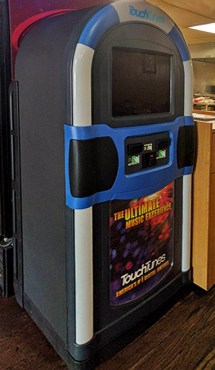 “No,” I responded. “What is it? Sort of reminds me of an old jukebox.”
 It started innocently enough with the “prefab” dinner in the oven. The offering of frozen gourmet meals at supermarkets today is nothing short of amazing, especially when compared to the TV dinners in aluminum trays that was half of my college cuisine. That and cheeseburgers.
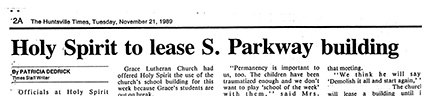 Like the East Texas newspaper headline on a story reporting that a Catholic School would be leasing a local building. Sure, the story explained it all, but after reading the headline, the reader’s mind has already gone down the road of thinking there’s a well-known and powerful new tenant in town.
 No explanation needed in the central Texas newspaper headline utilizing a similar sounding, but unfortunately, incorrect verb.
 Then there are those headlines that just should never have made it to press, like the coastal Texas newspaper headline that used an incorrect abbreviation. So many questions begging to be asked. I don’t know, maybe it resulted in a few more cookbook sales.
 Sometimes, a headline can be perfect, but placed on the page in such a manner as to suggest something entirely different than was intended. Like the photo in an East Texas weekly some years ago of four people standing waste deep in water, obviously prepared for a baptism service—which is what the headline and story below the picture reported. Unfortunately, the story and headline positioned right above the photo reported on an altogether different event that coincidentally, involved the same number of people pictured.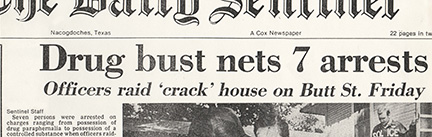
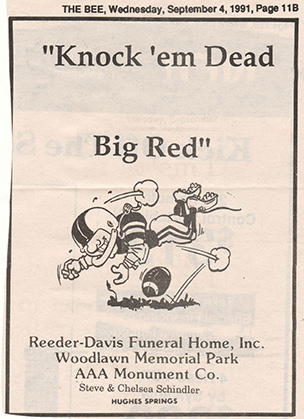 Having suffered the anguish of misprint maladies myself, I can testify that no writer is immune. Adding insult to injury, these few samples serve as evidence that once published, some typos will live in infamy for many years. Once the ink is on the newsprint, it’s there for published posterity.


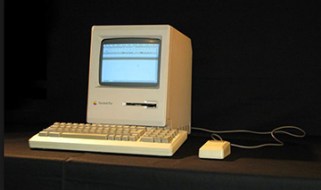
 Supplementing this collection of working wonders are three Mac desktops that preceded the current workhorse, a five-year old MacBook Pro. My Mac museum includes a PowerMac G5 currently living on a desk just in case it’s ever needed, in the same spot in which it’s collected dust since the MacBook Pro was first powered up. Stored in their original boxes are a PowerMac G4 and a first-generation iMac G3. It’s two-tone silver and gray. I just couldn’t take the plunge for one of the bright candy-colored configurations in which the revolutionary tear-drop shaped computers daringly debuted in the early 90s.
 So, what does a reformed “I’ll never need to know how to work a computer,” type do with all these devices? The easier answer is the same as it is for most of us today, “what would we do without them?”


 A Story Worth Telling