The sentimental aroma of creosote on cross ties

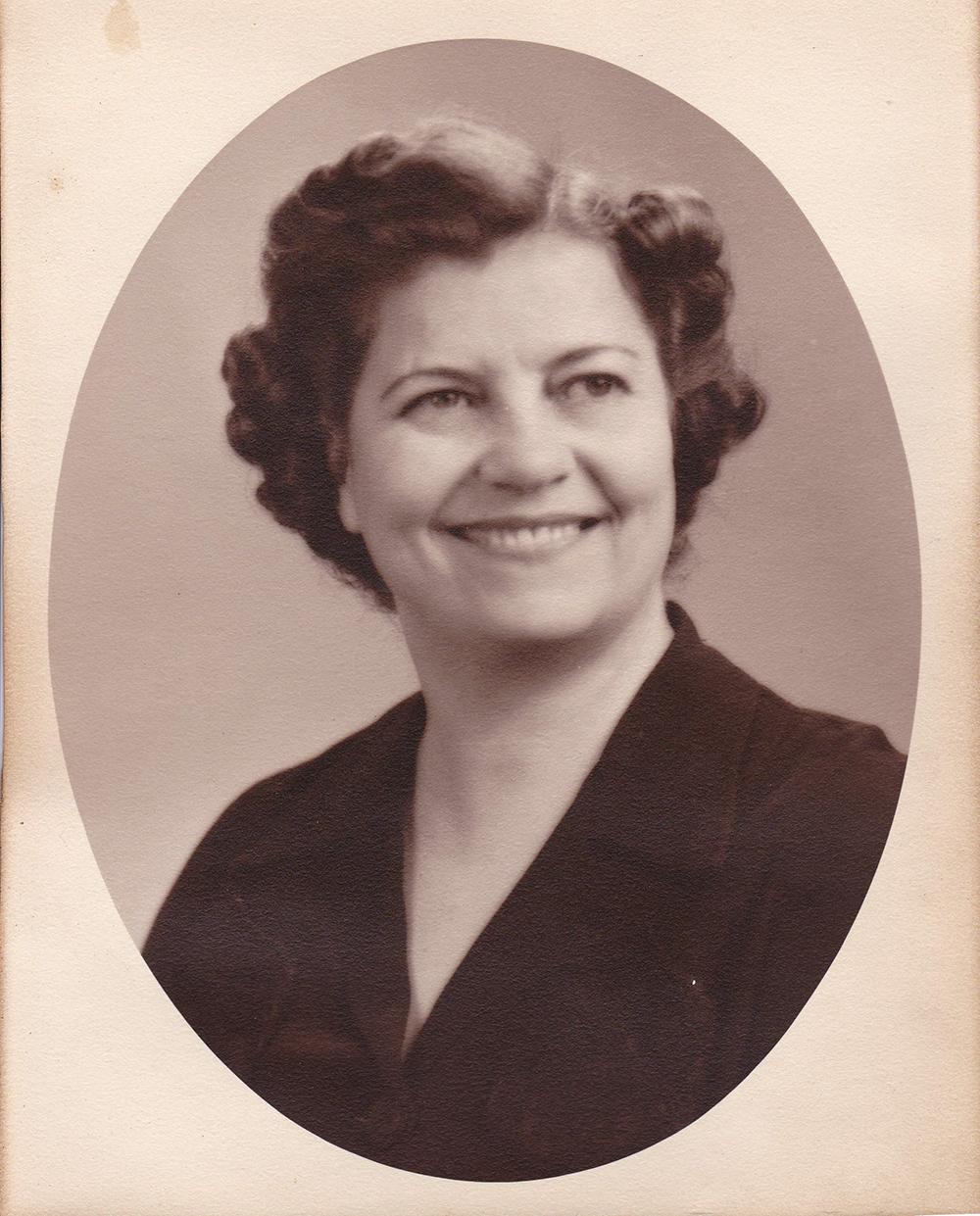
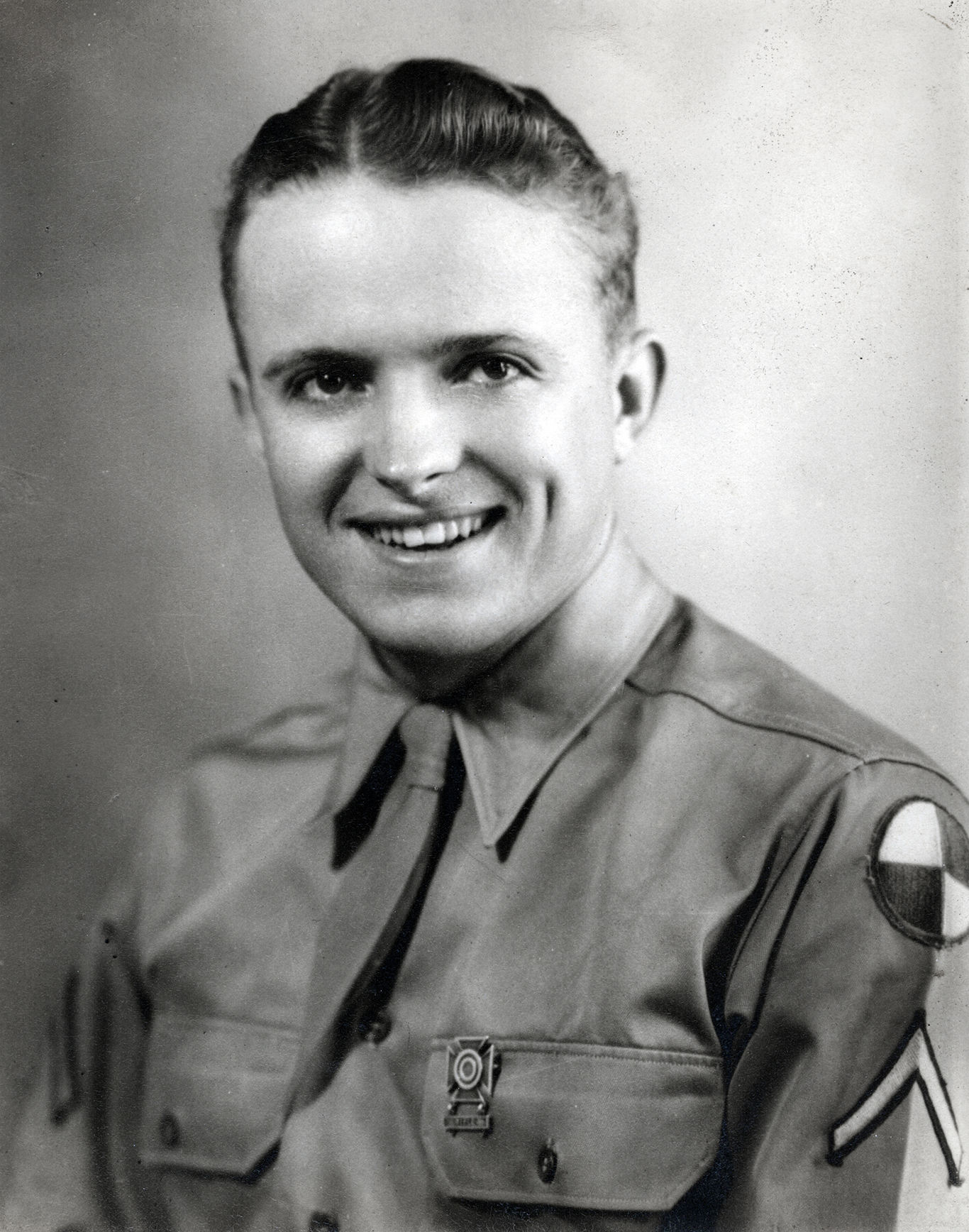
Pictured left to right—March 26, 1950—S.V. Aldridge, Leon Aldridge, Jr. (author) and Leon Aldridge, Sr.

There’s something alluring about railroad tracks. Steel rails supported by wooden cross ties have beckoned to our curiosities and provoked the muse within us since the Golden Spike tying both sides of the continent together with rail service was driven.

Photographers use them for portrait backgrounds; a generation of movie makers used them employing villains tying maidens in distress to the tracks, only to be foiled by the rescuing hero; and who among us has never stopped to gaze at the vanishing point on the horizon where the two rails converge, fantasizing about where the steel ribbons at our feet might lead us?

For me, it’s the sense of smell that does it. The strong, peculiar creosote odor on cross ties sends me back 60 years in time to Pittsburg, Texas where my dad’s parents lived and conjures up memories of my grandfather.

S.V. Aldridge worked for the railroad, the Cotton Belt as it was known then. He was born in 1888, and began a lifelong career with his first full-time job working for the railroad at the age of 13.

He retired in 1954, about the time I entered first grade in Crockett, and memories of my early summers spent at my grandparent’s house are indelibly linked to the distinct smell of creosote.

Creosote is the black tar-looking stuff used to preserve cross ties. The residue permanently stains anything with which it comes in contact. In the hot summer time, it’s a black, messy residue that oozes from the cross ties. In any form, it has a unique, pungent odor not quickly forgotten, especially for the grandson of a “railroad man.”

Even in retirement, my grandfather was still a railroad man. He delighted in taking me to the Pittsburg depot to watch the telegraph operator. The depot itself smelled of creosote, and the “rat-a-tat” rhythm of Morse code hammered out on a used Prince Albert tobacco can provided background music for the identifying aroma.

A special treat was the rare occasion on which he would mount the rails with the motorcar he rode for years as a section foreman and we would indulge in a short, open-air ride on the tracks. I used to think it was something he did to entertain me, but I still remember the smile on his face as well.

My grandparents lived across the street from the Cotton Belt track just a few blocks from the depot. We’ll never know, but I suspected in later years that buying a house right across from the street from the tracks might not have been a coincidence. For as long as he lived and was able to sit on the front porch in his rocking chair, my grandfather checked every passing train against his pocket watch and commented as to the rumbling freight train’s schedule. “Looks like the 5:15 is right on time,” I can still hear him comment.

They moved into the house at 323 Cypress Street in Pittsburg on Halloween night in 1930. My father was seven years old. My grandmother was living in the same house when she died in October of 1993, almost 63 years later to the day, and 26 years after my grandfather’s death in 1967. Even then, it still looked pretty much as I remembered it as a child from the early 1950s.

I thought about my grandfather when the railroad phased out cabooses in the 1980s in favor of a single small red ”tail light” on the last car, wondering what he would have thought about that. Even today, I still think a train without a caboose looks strange. Sort of like a sentence without a period. A book without a conclusion. A sermon without a closing hymn.

And, smelling creosote without my granddad around still leaves me with the feeling something’s missing. Maybe it’s the same feeling we get looking at railroad tracks and thinking about places we’ve been, or places we would like to go—the mystery of touching a link to destinations unknown. Or, maybe it’s just remembering my grandfather looking at the pocket watch in his hand as the 5:15 rumbled through Pittsburg.

—Leon Aldridge

Originally published in the Naples (Texas) Monitor, February 1999 and reprinted in the Mount Pleasant (Texas) Daily Tribune and The Center (Texas) Light and Champion, September 2014.

A more creative effort to land a job

Never have thought that I’d retire. For as long as I’ve been in the work force, staying on whyretirethe job for as long as my health and my ability to contribute allowed, and for as long as I was having fun, was the only option I’ve ever considered.

My working career started long before college, however. That is if you count mowing yards for neighbors on the south side of Mount Pleasant, Texas, at age 12. If not, my first real job at age 13 working for 25¢ an hour at Ben Franklin’s five and dime store on the north side of the Mount Pleasant downtown square where Corbin Merritt was the manager should qualify.

Out of all those years, I count myself fortunate that the majority of my jobs have found me. I’ve actually gone looking for employment only a handful of times. However, a few of the times I’ve perused the want ads and knocked on doors seeking gainful employment have been, well, interesting.

Interesting might be the best way to describe one of my more creative efforts to land a job in the West Texas oasis of Abilene almost 40 years ago. Landing in town the night before, I wasted no time in looking for a paycheck the very next day. With a few years of newspaper experience on my crude resume and a folder of bylined clips under my arm, I went downtown to the Abilene Reporter News. An interview scored me an offer to fill the night city editor’s slot, but after some thought, I declined deciding I needed a break from newsprint and ink.

My next stop was at the accounting office for a tire store group to interview for business manager at one of their Abilene locations. This is probably a good time to mention something that I failed to mention during in the interview that day—that I had no background or education in business management or bookkeeping. I thought credit was something the corner grocery store extended and debit was … actually, I had no clue what debit meant. The simple act of balancing my checkbook was challenging. But needing a job, I decided not to let that deter me from applying. My “in” for this interview was a mutual friend with the company’s accountant who was conducting the interview.

After a couple of hours in the city library speed reading the first few chapters of a “basic bid-ness book,” I figured I was ready for the interview. Through a series of most fortunate events and a rousing conversation about the mutual friend, I landed the job. The good news was I had been in Abilene less than 48 hours and I had a job. The bad news was, to say that I was ill prepared to do the job would have been an understatement of the greatest magnitude.

Working in my favor was the afore mentioned library book and it was still available to check out. Also working for me, Abilene has three fine institutions of higher learning—and night classes in accounting were enrolling that week.

I successfully met the challenges of my new job about a year and a half before moving back to East Texas and back to the newspaper business with new experience and additional college classes on my resume.

Through a set of unfortunate events this time around, this summer has found me again looking for a job, while at the same time “testing the waters,” as I call it, for retirement.

It’s been a great summer, but I’ve arrived at Labor Day with two conclusions. First, I’ve been right all along. It’s not time for me to retire just yet. So don’t be surprised if I show up in a new position in town soon. Second, and perhaps best, is that I’ve gained enough experience and education over the years that bluffing my way into a job is no longer necessary.

— Leon Aldridge

Working the bugs out of flying

“Go on to Mount Pleasant,” advised the voice on the aircraft’s com radio, “They’ve got a long, wide runway up there.”MP Airport

The voice was Bill Neve, Center Airport manager some thirty years ago. The radio was in the Piper Cherokee 180 I was piloting out of the Center, Texas Airport on a sunny Saturday afternoon. The destination was just north of Center at Mount Pleasant for a visit at my parent’s house.

The short 45-minute hop with a panoramic perspective of East Texas made numerous times before was routine, but this one would turn out to be more of an adventure before we got the bugs worked out.

Memories of that adventure grew wings again last weekend as Gary Borders and I pored through files at the Mount Pleasant Daily Tribune office in preparation for the newspaper’s move downtown.

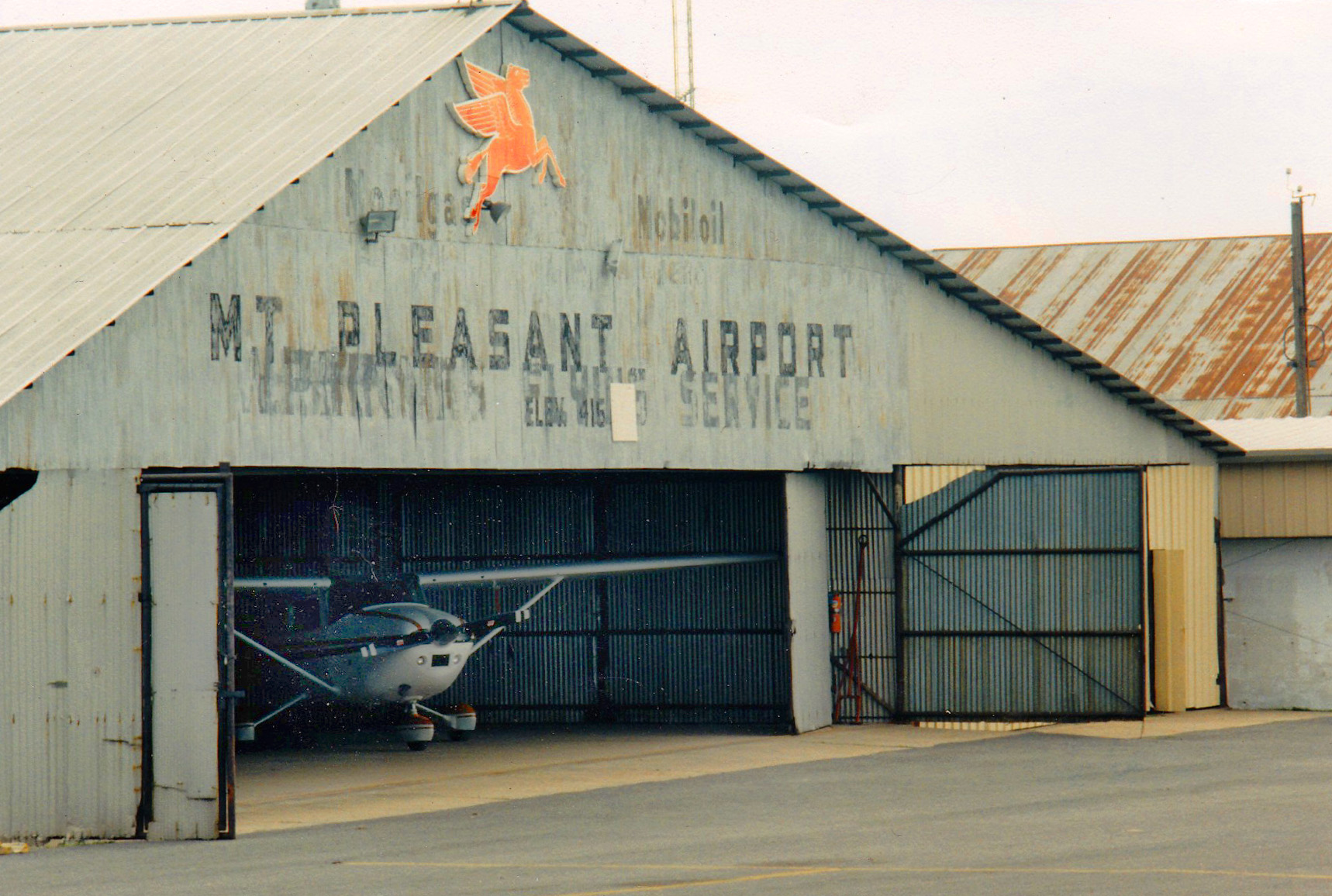
A photo of the old Mount Pleasant airport in a dusty box recalled fond memories of time spent there. The big tin hanger with the Mobil flying red horse over the doors and the windsock at the roof’s peak caught my eye. Faded letters above the doors noted for aviators, the airport’s name and elevation.

I remembered Bill Phinney was the airport manager when pilot friends taking me up for fun created a keen interest in flying. People like David Brogoitti, Ronny Narramore, Jim McGuire, Gale Braddock and James Spann kindled an interest that ultimately lead me to enrolling in flight school.

Doyle Amerson got me through ground school and first solo stages before his untimely death. Soon afterwards, Grady Firmin returned from military duty as a flight instructor guiding me to the goal … a private pilot’s license.

Preflight for the adventure 30 years ago was routine. Family on board and knowing my mother would be waiting for us, I taxied the aircraft onto the main runway and applied full power for the takeoff roll.

About midpoint of the runway, the airplane began to feel light and ready to fly. A check of the airspeed indicator to verify liftoff speed didn’t look right. The ground fell away beneath us, but the airspeed indicator was not moving. Climb out felt normal. We were airborne, but critical instruments were not functioning.

“Bill,” I said frantically into the mic. “We’re airborne, but the airspeed indicator isn’t working.”

“Probably a dirt dauber in the pitot system,” Bill said. “Come on back around and land, and I’ll clean in it out.”

Taking a few seconds to process, I responded, “How do I set up an approach without an airspeed indicator?”

After a similar silence on Bill’s end, he said, “Go on to Mount Pleasant they’ve got a long, wide runway up there.”

The typically short trip aloft seemed like an eternity without benefit of useful, if not vital information. The pitot-static system is a pressure system used in aviation instruments to determine an aircraft’s airspeed, rate of climb, altitude, and altitude trend. Lack of this data lends new meaning to flying by the seat of your pants.

Pilot training emphasizes a need for being sensitive to the feel and sound of your aircraft. I’m pretty sure I could have described every sensation shared between the two of us that day in a relationship nearing intimacy.

With my “oneness with the airplane” and little else at my disposal, I guided the craft toward the runway threshold as the airplane slowly transitioned from a body in fight to a mass of metal with wheels on the ground. The sweet sound of the tires gently touching the asphalt conjured visions of a bumper sticker popular at the time … “God is my co-pilot.”

Taxiing the plane to a stop in front of the very hanger pictured in the photo in my hand last weekend, I wiped sweat from my brow, dried my hands and looked up to see mom waiting for us, smiling and waving.

No maintenance was available on Saturday. So, assuming that if we did it once, we could do it again, the visit was cut short in order to ensure completing an encore performance before dark, and hopefully as successful, at the Center airport.

An old saying among pilots allows as how there are three useless things to an aviator: runway behind you, altitude above you and fuel at the pump. With this in mind and the sun setting behind me, I took the airplane to an altitude of comfortable height and aligned it with the Center runway heading miles prior to seeing the airport. The result was a long, gradual straight-in approach to home.

Once again, wheels gently kissed the runway without even waking the kids as they slept in the back seat.

It’s been a number of years now since I’ve piloted an airplane. I just wonder if dirt daubers are still a threat to working the bugs out of flying?

— Leon Aldridge

Originally published in the Center (Texas) Light and Champion and the Mount Pleasant (Texas) Daily Tribune August 2014

The weirdest and most surreal adventure

“Space, the final frontier. These are the voyages of the starship Enterprise. Its 5-year mission: to explore strange new worlds, to seek out new life and new civilizations, to boldly go where no man has gone before.” —Captain Kirk

We had no idea what lay in store before embarking on our first mission chosen for the newly acquired ship.

“Strange new worlds?” Well, I wasn’t sure about the others, but I had been there before.

“New civilizations?” Nope, didn’t expect to be passing through any uncharted regions on this voyage.

“To boldly go where no man has gone before?” Not likely. We were all pretty sure Indianapolis had been explored and settled long ago.

The mission: blaze a trail to Indianapolis, Indiana for the 71st running of the Memorial Day classic, Indy 500 auto race May 24, 1987. Then return successfully to Center, Texas, without the loss a single soul, all while traveling in an early 70s vintage Winnebago that by reasonable rationale should have been scrapped at least 100,000 miles ago.

Logic is the beginning of wisdom; not the end.” — Spock

While testing retirement waters the last few months, a recently retired friend was working hard to convince me how much fun I would have doing fun retirement things—like camping. I explained to her that I didn’t think I was cut out for retirement. “I don’t own an RV and I have a miserable record of failure at gardening attempts.”

She none-the-less assured me that camping in a motor home was “lots of fun,” but admitted without hesitation, “I’ve never driven ours.”

The thought of my one-and-only time driving an RV made me smile. We counted it a success when we made it back alive.

“I have been, and ever shall be, your friend. Live long, and prosper.” — Spock

Oscar Elliott and I met at South Ward Elementary School in Mount Pleasant, Texas, in 1959. He was in the sixth grade and I was in the fifth. In the 56 years since, Oscar and I have survived numerous adventures, living to tell about the ones that we dare.

Gary Hart and I became friends when he moved to Center, Texas, in the mid 1980s to open the community’s first McDonald’s restaurant. It was only a few years prior that Wal-Mart had opened its doors in Center. New galaxies were already being discovered in the East Texas community.

The three of us set out in Gary’s old Winnebago, newly acquired in the course of his classic car deals, something for which he was well known. Gary accumulated projects—neat old vehicles that needed anything from as little as lots of major work all the way up to complete restoration.

However, the Winnebago was different. It resembled the rest of the rusty resemblances of rolling stock in his repository with one exception. It ran. Under its own power. Or at least he assured Oscar and me that it did.

“Don’t let all the corrosion, dents and duct tape fool you,” Gary smiled.

“Ahh, Mr. Scott, I understand you’re having difficulty with the warp drive. How much time do you require for repair?” — Spock

The wrecking yard refugee that was to be our trusty transportation to Indy sat quietly rusting in the parking lot next to Gary’s fast food franchise at 9 a.m. on the designated departure date. “Gary sometimes runs a little late,” I warned Oscar.

After finishing lunch about noon, we rumbled out of Center rolling north with plans to drive without stopping. The schedule was four-hour shifts at herding the old heavyweight with a refrigerator full of food and a heart full of hopes that the noisy little fridge functioned.

“Checked everything out, we presume,” I asked Gary about an hour into the voyage.

“Absolutely,’ Gary again assured us. “She’s in tip-top shape.” That was about ten minutes before the alternator belt gave up the ghost with a nasty noise. Lucky for us, it expired within sight of a garage.

One repair down and somewhere in northern Missouri at about 2:00 a.m. on a stretch of highway that had expansion joints the size of speed bumps, Oscar was struggling with his sleep shift in the rear bedroom, Gary was piloting and I was riding shotgun. Sleeping was no easy endeavor with the smell of musty drapes flapping in the window and rotting plywood the only thing preventing us from plummeting to the pavement. Any sleep Oscar may have managed ended abruptly when a tire on the inside rear dual exploded, sending the elderly RV to rocking and its passengers to praying.

“So much for the Enterprise.” — Beverly Crusher

“We barely knew her.” — Picard

Once again, lady luck lingered with us when we determined the glow ahead to be an all-night truck stop. However, it was at that very moment, dead tired, several hours behind schedule and sitting on the side of a dark highway, that we lulled to laugh and lauded the worn out Winnebago with the logo, “Star Ship Enterprise.”

“Ru’afo, we’re getting too old for this.” — Admiral Dougherty

The trip going to Indy evidently eradicated the eccentricities from of the ailing Winnie. The races were great, the trip home uneventful and the experience endearing. However, I still harbor no hallucinations of having an RV as part of my retirement plan—should this test turn out to be a real retirement.

“I think that is the weirdest and most surreal adventure we ever went on. I can barely remember anything that happened.” — Oscar Elliott

— Leon Aldridge

Everyone really does have a story

Eddie Burke had a story, and learning Eddie’s story taught me that it’s true—everyone really does have a story. HorseshoeAfter meeting Eddie, I began to challenge students at Stephen F. Austin State University, where I taught writing, to find the story in every person they met with the assurance that it would not only make them a better writer, but also a better person.

It did me.

Eddie’s obituary simply reported, “Eddie Gene Burke, 69, died Sunday in a local hospital. An Army veteran of the Korean War, he was born Nov. 1, 1927 in Beaumont, Texas and was a retired musician in the entertainment industry and a 10-year resident of Las Vegas.” The obit also listed a handful of survivors and noted, “Graveside services will be at 8 a.m. Friday in Palm Valley View Memorial Park.”

There were far too many details about Eddie the brief obit failed to reveal. It said nothing about how he could write. Eddie could write a poem, write a story, or write a song. He could sing a song, play a piano, cook for a restaurant, or preach a sermon on Sunday morning. I knew those things about Eddie because I saw him do all of that—in the same week.

Obits also often fail to convey the desperation or the hope that a person can display when life causes it or demands it. At well past 50 years of age and without a job, but with a terminally ill wife and a modicum of experience, Eddie sat across the desk from me applying for an entry-level sports writer’s job at the Center newspaper.

That’s how we met.

“What is your writing experience,” I asked the quiet, humble man looking back at me through dark rimmed glasses. He was a short and frail person whose narrow face was both etched by hard times and anxious with an immediate need. He was balding, wore a tattered coat in the dead of winter and sat on the chair’s edge, wringing his hands in his lap.

With a voice barely above a whisper, Eddie told me his last job was cooking at a small restaurant on the lake, but was looking for something with a little more income in his quest to care for his wife. For experience, he said that he had worked at the Beaumont Enterprise, but confessed that was more than 20 years ago. What he didn’t confess to until after he had drawn a couple of paychecks was that it was a part-time stringer’s job. But, that didn’t matter, we were desperate for a sports writer and Eddie was desperate for a job.

Eddie hit the ground writing. He wrote pages, and pages, and more pages. And that was just about last night’s basketball game. Eddie wrote with a vengeance and with great detail about the game. He wrote about the coaches. He wrote about the players, about the cheerleaders, about the spectators and about the concession stand.

Between sports assignments, he wrote about his coffee cup, about his desk and about the traffic light on the corner. His style was, let’s just say a tad shy of journalistic standards, but for what he lacked in writing skills, Eddie more than made up for in volume.

Eddie wanted to succeed.

Obits also often fail to reveal successes achieved and lost. One night as we worked toward deadline while listening to 50s music on the radio, Eddie nonchalantly offered, “I used to play piano for the Big Bopper.”

“Really,” I countered instantly with a tone of doubt. Eddie was also a talker. His stories were interesting, but you had to wonder. “If this guy has done half of what he’s talked about…”

“I played piano on Chantilly Lace,” Eddie continued, never looking away from his work. “I cut a record of my own, too. ‘Rock Mop’ on the old ‘D’ label down in Houston … where the Big Bopper started out.”

Later at home, I wasted little time digging through music reference books, and it didn’t take long to oust the truth. There it was, “Rock Mop.” Recorded on the “D” label June 8, 1959. Flip side, “Too Many Tears.” Both titles written and recorded by Eddie Burke.

Shortly after that revelation, radio storyteller “Tumbleweed” Smith stopped in the newspaper office checking with local columnist and historian Mattie Dellinger for new program material.

“I got one for you,” I quickly offered Smith.

We asked Eddie if he would play a little piano for us at the bank’s community room across the street. He apprehensively obliged us, but fear and trepidation gripped his demeanor as sweat appeared on his brow.

He gingerly touched the keys with trembling fingers for several minutes before the first note rang true. “It’s been a while,” Eddie murmured weakly as he looked at us and smiled, almost apologetically.

Soon however, remnants of “Pinetop’s Boogie” from the 1920s were easily recognizable, followed by strains of random tunes that became more polished with each bar he played. While Smith’s tape recorder rolled, Eddie perfectly executed the mournful country standard “You Win Again.” He played honky-tonk, he played blues, he played rock and roll, and the more he played, the better he got. Eddie “closed the show” with Jerry Lee Lewis’s rocker, “Great Balls of Fire” putting on an exhibition that would have made “The Killer” himself smile. He stood on the piano stool, playing and singing, before kicking it behind behind him while swiping his fingers the length of the keyboard for a rousing finale.

Eddie Burke was back.

He had a new found happiness that reflected in his writing skills and his attitude for weeks. Sadly, however, Eddie’s wife died in late spring. After that, the flame’s brightness kindled from rediscovering his musical talent also faded, and it wasn’t long before Eddie disappeared. He left as mysteriously as he had arrived, leaving his key under the door early one morning with a note apologizing for leaving.

We wondered what happened to Eddie. Someone said they thought it was him they had seen hitchhiking north on 59 toward Carthage. Then one night almost a year later, my phone rang. “Guess who this is,” a familiar voice loudly and cheerfully asked. “I’m in Vegas and I’m playing piano at the Horseshoe.”

In the years that followed, Eddie sent me playbills, cards, photos and entertainment clippings from Las Vegas documenting his return to the entertainment industry. One packet included an autographed picture of a smiling Eddie Burke standing beside Fats Domino at the piano, and a clipping that noted he was opening for the 50s rock and roll singer in the desert city of lights.

Eventually, Eddie’s health began to fail, but he was back on top at the end, a place he hadn’t been since long before that cold winter day in East Texas more than ten years earlier.

Obits seldom address friendship. Perhaps we don’t learn the value of friends until we’ve been up and down, a trip that Eddie made like a yo-yo. He befriended a lady the last few years of his life in Las Vegas, and they married before his death. She called to tell me Eddie had died, and that she was sending the newspaper obituary clipping with a note.

“He loved you Leon,” she wrote. “Some of his happiest times were when he worked for you at the newspaper, the friendship you two shared and allowing him to learn that he could still play the piano.”

Since then, I’ve read many obits and thought, “Wonder what else about that person’s life, like Eddie’s, would be an inspiration for others—if we only knew his or her story.”

Because everyone really does have a story.

— Leon Aldridge

Originally published in the Boerne (Texas) Star – November 1996  •  The Center (Texas) Light and Champion – July 2014  •  The Mount Pleasant (Texas) Daily Tribune – July 2014

I’ll take beaches over bugs any time

So, here I am lounging on a Florida sugar sand beach, watching blue-green IMG_2020waves and listening to the ocean’s roar while Gulf breezes cause me to forget that it’s 100-plus degrees back home in East Texas.

No stranger to the region, like a moth drawn to a flame, I’ve been lured by the Sunshine State’s sandy shores to revisit here many times over the years.

The scenario is a vast improvement over one of just a few days ago. I was lounging in an East Texas hospital bed watching the sterile clock on the wall count off minutes and hours, listening to the rhythmic clicking of a medical device plumbed into my arm as it dispensed fluids allowing me to forget about pain—and almost everything else.

We’ll reserve descriptive details of the experience for the setting where such conversations belong—at family reunions where comparing one’s latest medical problems and procedures are prime points of comparison. Suffice to say, however, while the medical malaise that landed me in an infirmary scant days before the Florida trip’s departure date was scary at the moment, it ended well.

Pondering recent medical matters during early morning walks on Florida beaches this week has prompted me to count blessings. First, that my years numbered 67 fading in the rear view mirror before seeing the inside of an ambulance or spending the night in a hospital room, at least one with my name on the door.

For better or worse, those two were crossed off my “never have” list last week.

Another is that the fortunately few times I’ve required acute attention to reinstate a healthy status quo have been neither serious in nature, nor in attitude. Likely through some derivation in my DNA, facing medical urgency invokes humor more often than fear.

More than humor or fear, excitement is usually the mood during the summer of one’s college graduation. That was perhaps the summer I first recall working my way through a trip to an emergency room, laughing all the way.

With degree in hand, full-time job secure and my first home purchase completed, I moved into 107 Dogwood Lane in Mount Pleasant. No newcomer to the home I purchased from Doris Neeley, no introduction was needed either for next-door residents, Mr. and Mrs. Nat Hoggat.

Décor for a single-guy, recent college grad’s domicile was by no stretch demanding. A sofa borrowed from parents on one wall and cinder block and board shelving supporting a tiny television and lamp on the other completed the living room. While it was a far cry from the exquisitely furnished ambiance the house had become accustomed to when Mrs. Neeley and her son, and my friend, David lived there, it was my first home purchase—my castle.

I was barely done with unpacking (paper plates, three pairs of blue jeans and my velvet Elvis painting) before the Hoggats called on a Saturday evening wanting to come over and welcome me to the neighborhood.

Minutes before the retired couple’s arrival, I engaged a moth (also known as a candle fly in the south) in hand-to-hand warfare over rights to the living room lamp. The insect fluttered from under the shade, I swatted, and he darted—right into my ear.

The more I tried to remove him, the more entrenched he became. In desperation, I stuck my head under the kitchen faucet hoping to flush him out. The sound of the tiny creature treading water in the proximity of my eardrum was excruciating. At first it resembled a rumble, then acquired an odd resemblance to a doorbell.

My neighbors! They were at my door.

“Come in,” I said opening the door and standing aside, observing the startled looks on their faces. Could it have been the wet head and the towel in my hand? “Are we early,” asked Mr. Hoggat.

We made small talk as they sat on the sofa facing me where I was perched on the edge of a chair borrowed from the kitchen. “I really like the day lilies you have planted along your fence,” I said, smiling at Mrs. Hoggat. “ I enjoy them every day.”

“Good,” she replied. “Perhaps you could plant some flowers in your yard for me to admire.”

I opened my mouth to offer light hearted remarks about “brown thumb” gardening skills, but instantly closed my eyes and winced in pain as the winged insect in my ear sprang back to life at that very moment producing sounds rivaling the intensity of a high school marching band taking the field. Grimacing, I jerked my head to the left and back to the right in hopes that the blasted bug would take exit of my cranial cavity.

It stopped moving and I stopped flopping my head about. Thankful for the respite, I opened my eyes to the sight of an elderly couple staring at me with wide-eyed wonderment. Disbelief. Horror.

“Is everything OK,” Mr. Hoggat asked.

“Actually, no.” I admitted. “I have a bug in my head.”

“Oh my,” they said in unison as they rose and quickly headed for the door without looking back. “You should get that seen about right away.”

The good news was that it took ER personnel less than five minutes to flush the errant insect, ending the candle fly’s deafening diatribe in my ear. The bad news was that for the five years I lived on Dogwood Lane, my neighbors never came back to visit. In fact, I was pretty sure that they retreated into their house every time I stepped outside.

The best news however, is that while I’m still drawn to the warm Florida sand, I have yet to encounter another moth drawn to my ear.

Once no small convenience; the church key

Some really good words are disappearing from our vocabulary. Take for instance, the compound word ‘church key.’church key 2  mod

Truth be known, it had been quite some time since I heard anyone refer to a church key for either of the term’s two meanings until recently. My ears perked up however, when I overheard my friend and mentor at the Naples Monitor, Morris Craig, engage the Methodist church secretary about the small brass device used to disengage the lock securing the front door at the Northeast Texas house of worship.

I was slightly embarrassed, however, that my first connotation at hearing the phrase wasn’t Sunday go-to-meeting related. What it did call to mind was a friend in Boerne, Doug Dugosh, who was a local entrepreneur of distilled spirits down in the Hill Country when I lived there.

The story he related to me some years ago was about a lady who came in his place of business one day and asked him for a church key. He said he handed her one, she thanked him and left.

Doug said a couple of young beer distributors delivering product at the time were standing nearby, and asked, “What did that lady just ask for?”

“A church key,” Doug said he told the pair who appeared to be in their early 30s. He said he could tell by the blank stare on their faces that they didn’t have a clue what he was talking about.

“I had to explain to them what a church key was,” he laughed.

A church key was a commonplace item when I was growing up in Mount Pleasant in Northeast Texas. Although some may not have known both meanings of the term, I had learned what a church key was from my father and I didn’t know of anyone who ever had to ask what it was.

On the other hand, purchasing products of the brewer’s art was not as convenient then as it is today. Maybe that’s because there were no convenience stores then. Securing a case of “Jax, the beal jeer,” as the slogan of the day playfully advertised my dad’s preferred brand, required a drive of 30-40 miles across a couple of counties and at least three rivers.

Most of the places to buy beer in the 50s and early 60s employed an unfinished wood motif decorated in neon viewed through thick smoke and furnished with pool tables. The nicer places were dubbed “taverns” while the others were simply called “joints.”

In those days, the can tops were as smooth and flat as the parking lot down at the local Esso filling station. The individual who invented the “pop top” had yet to come up with that million-dollar brainstorm. This prehistoric hurdle was not unique to cans however. Bottles of everything from Pepsi to Pearl were capped with lids that required a tool to access the container’s refreshing contents.

The required tool, a church key, had a piercing point on one end to puncture cans on one end while the other end was round and designed to remove bottle caps with ease.

According to Wikipedia, the term is thought to have been derived from the tool’s shape. The predominant version is “that the ends of some bottle openers resemble the heads of large keys such as have traditionally been used to lock and unlock church doors. The other is that it was at one time a joke that opening a beer is an activity that usually has little to do with pious or ecclesiastical circumstances—historical connections between monasteries and brewing notwithstanding.”

Just as cans devoid of pop tops were weren’t unique to beer cans, church keys were not unique to beer drinkers. It was also commonplace at one time to find one wired under the hood of a car, convenient for opening cans of motor oil also requiring a tool in order to release the can’s contents.

Either way, anyone who has been hot and frustrated without a church key to open a cool container of beverage, or an essential can of oil for an old Chevy six cylinder, will never place a small value on the convenience of a church key.

On the other hand, I may need more than a small convenience to get out of the trouble I could be in for tying beer cans and the church house together in one tribunal.

I wonder if the preacher remembers church keys?

Leon Aldridge

Originally published in The Monitor, Naples, Texas – December 15, 1999

Music is what feelings sound like

“Leadville, Colorado,” I whispered in my wife’s ear. “Mid 1970s. Oscar Elliott Musicand other friends from Mount Pleasant. Motorcycle trip through the Rockies. Restaurant at the motel where we spent the night it snowed. That song was playing on the jukebox.”

The setting was Saturday night at the Texas Country Music Hall of Fame induction ceremony in Carthage. The Oak Ridge Boys lead singer Duane Allen from Lamar County, Texas, was inducted, and the annual show was, as usual, outstanding. The song that spurred the memory was, “The Y’all Comeback Saloon.”

Terry is used to the habit acquired from my Uncle Bill, mom’s “little brother.” The game goes something like this: A group of friends listening to music from “back in their day.” The objective is to, in as few notes into the song as possible, blurt out a place, a car, a name (frequently old girl friend or boy friend} and a couple of details to seal the deal.

As a journalist introduced to the newspaper business through photography, the saying, “a picture is worth a thousand words” resonates strongly with me. On the other hand, any old wordsmith worth the paper his or her thesaurus used to be printed on can also argue for a thousand words and they’ll tell you more about the picture than you will ever see.

Still working in right-brain mode, anyone who understands that music is what feelings sound like does the same thing by playing off memories evoked by music.

I credit my mother for the roots of my music appreciation. When my sisters and I were kids, she was still enjoying a small collection of 78 r.p.m. records accumulated from her central Kentucky high school years. Songs by Tennessee Ernie Ford, Patty Page, Eddie Arnold and Hank Williams, Sr. remind me of Saturday afternoons in West Texas as she played them over and over, along with the soothing melodies of big band music from orchestras such as Glenn Miller, Tommy Dorsey and Benny Goodman.

As a grade-schooler at the end of the 1950s, the rock and roll sounds of Elvis Presley, Ricky Nelson and Fats Domino drove me to exchanging allowance money for 45 r.p.m. records at Richardson’s White’s Auto Store in Mount Pleasant

Maybe that love for music and memories is why high school and college band years were spent playing a sousaphone (a.k.a. tuba or bass horn). There’s nothing finer than a John Phillip Sousa march. Rousing instrumental songs like “King Cotton,” “The Washington Post,” or “El Capitan” vividly recall images of Friday night football, spring concerts, a couple of bowl game appearances intertwined with road trips, the thrill of hitting a yard-line marker with your heel, a memorable stage band performance with “Doc” Severinsen or spending time in band study hall with my first real girl friend.

During the mid 1960s, a car radio tuned to KLIF in Dallas was the primary source of music during the day. But, by night it was WNOE in New Orleans, often with a date watching the moon rise over the city lake listening to the Righteous Brothers singing “Unchained Melody.”

It wasn’t until college years in the late 60s, early 70s that my interest turned to country and western music, mostly because my appreciation for late 60s rock and roll was an on again, off again affair. Didn’t like it much then, but have come to appreciate it more the last 20 years or so, again because of memories.

My “Classic Rock” years were spent drag racing and spending time at the tracks. Common practice was track announcers filling empty time between rounds of racing with music. Jefferson Airplane, the Grateful Dead, Blood Sweat and Tears today paint vivid pictures of changing spark plugs at Interstate Raceway in Tyler on Saturday night, or waiting for the next call for stock classes at Dallas International Motor Speedway.

Perhaps I owe some of my appreciation for country music to Johnny Garner. Let me hear “Crazy” by Patsy Cline and I’ll tell you about the night he and I sprayed a late night paint job on a truck at Sandlin’s Body Shop in Mount Pleasant in about 1970 while the radio kept us entertained.

Play “Does Fort Worth Cross Your Mind” by George Strait and you will have to endure memories of some specific afternoons that involve Joe T. Garcia’s and close friends, one in particular.

“Music is what feelings sound like” is inscribed on a plaque hanging at home where I’ve been attempting to cross another item off my bucket list, learning to play the guitar.

Don’t know where I’d be without the memories and feelings music has brought into my life, but I’m pretty sure it’s a place not nearly as comforting.

Did I tell you about the memory that comes to mind when I hear Floyd Cramer’s “Last Date?” No? Well, play it for me sometime and I’ll tell you the story.

Leon Aldridge

Originally published 8/11/2014 in the Center Light and Champion and the Mount Pleasant Daily Tribune.

Make a note and let’s get back together

Hi Daddy“Make a note of this conversation, Robin, and let’s get back together again in about ten years.”

Admonitions such as this to my daughter were commonplace during the years my kids and I spent raising each other. I say that because I’m pretty sure they did as much to help me mature then, as I hopefully did for them.

Part of this reciprocal learning process was for me to realize that every child’s personality, even siblings born to the same parents, is completely different—different likes and dislikes, different motivational factors, different outlooks on life. All of this, of course, means two different methods of child rearing.

In those days, Robin and I communicated frequently and at length. So much so that at times we lapsed into leaving written communiqués for each other, which gives rise to this weekly missive. I have saved everything, some would say almost literally, to the point that I now need to thin out a life-long collection of memorable artifacts. It was either that or move out, and although it was a tough decision, living indoors is something I’ve become really fond of doing.

The archival dig has unearthed hundreds of inner-house notes and messages. To the point of differences in siblings, this was not the case with my son, Lee. He didn’t talk until almost two years of age. Then for a while afterward, we thought he would never quit. These days, conversations with him can go either way.

One direction is when he calls and shares excitedly on a variety of topics. All that’s required of me is some sort of “listening noise” just to let him know I’m still on the line. Things like, “Uh-huh,” “Really,” or “That’s great.”

The other? It’s when the conversation sounds more like me asking, “How’s everything with you?”

“Good.’

“How’s work?”

“OK.”

“What have you been doing lately?”

“Not much.”

Like pulling teeth. But, I have to say, “He came by it honestly.”

Going through the boxes of keepsakes from rearing my children, I was reminded of the most rewarding conversations with Robin—the “make a note and let’s get back together” sessions.

Robin and I would meet on the back porch for rocking chair discussions, better known as debates. These were more often than not, to allow her a chance to sell me on something which she was reasonably convinced from the outset was going elicit a quick “no” from me. So, a rocking chair conference was called.

She would present her case. And, she was good at what she did. It was no small coincidence that Robin was on the Bandera High School debate team, and also no fluke that they always placed well in UIL competition. She got lots of practice working on ol’ dad at home.

They usually went something like me rocking, looking out across the back yard down toward the Medina River and listening quietly, nodding or wrinkling my brow every so often, trying hard not to tip my hand on which way I might have been prejudiced.

She often made a good case therefore gaining my approval of said request, an action that occasionally earned me a nod for “Dad of the Day.”

Other times, after hearing her out for 20-30 minutes, or whenever she paused—whichever came first—if the proposal failed to smack of “good idea,” I rendered my verdict. “Robin, I’ve listened to what you’ve said, I’ve taken it into consideration and I don’t think that’s a good idea because …”

“Dad—why not, that’s not fair,” was the typical outburst to such a ruling. To her, this was automatic granting of another 10 minutes for a rebuttal. Should she fail to sway me at that point, that’s when the infamous words were delivered. “Make a note of this conversation, Robin, and let’s get together again in about ten years.”

Little did I know at the time that those notes would turn out to be moments of sheer delight after Robin married and was raising her own family. “Dad,” she started a conversation one day, “Do you remember the times we would talk on the back porch and you would tell me to make a note to get back with you in 10 years?”

As I began to nod, she continued, “Well, you won’t believe the conversation Sarah and I had today. It was the same talk we had once, but this time I was the parent, and it all came back to me—you were right. Your ‘no’ response was the right answer.”

My “kids” are 35 and 37 this year, and in case you haven’t picked up on it, I love them both very much.

Funny, it never occurred to me until just now. I wonder if she’s using the “make a note and let’s get back together” tactic with her children?

An ode to truck stop fine dining and friendly waitresses

The constant clatter of diesel engines and sporadic spewing of air brakes oddly harmonize in concert amid a profusion of pumps lined up on acres oftbird-3 asphalt—all at one complex rivaling the size of a small third-world nation.

The center of attention is a neon embellished eatery with signage flashing, “Open 24 Hours” … as if they really needed to advertise. Willie and Waylon wail from a jukebox somewhere just inside where clinking china cups and saucers combine with conversational chatter of big rig drivers laughing off one more tale of life on the road, and finishing off one last cup for the road.

The aroma of steaming eggs and sizzling bacon wafts throughout, sending hunger signals off the chart and increasing the craving for that first cup of coffee. Waitresses shouting orders to busy cooks finish off this surreal sensory circus.

Truck stops.

The great oases beckoning to road weary drivers along the nation’s concrete super slabs. Great food and friendly waitress stories born in truck stops are legend from coast to coast, but the stories take on a personal meaning with each individual truck stop dining experience.

Such was the case early one morning last fall while traversing southern states in a ’56 Ford Thunderbird headed back to the East Texas pine thicket. As the sun began tinting fading darkness with traces of orange, violet and red, I had already been rolling for more than an hour. “Tranquility” doesn’t do justice for describing the sensations of early morning, long-distance traveling in a classic car that has been on the road since Eisenhower’s first term.

Tranquility gave way to hunger when I spotted the brightly illuminated billboard proclaiming “good food” at the truck stop just ahead. Seemed like the perfect solution to my immediate need.

After roosting the little ‘Bird at the edge of the parking lot and entering the building, I mounted the last empty bar stool at the counter. I was still looking down, making sure the split in the plastic cushion didn’t interfere with a pleasant dining experience, when a white china mug hit the counter just short of my chin. Rolling my eyes upward, I saw a name tag letting me know that it was Gail who was sloshing coffee in the mug without spilling a drop on either of us.

Coffee was still splashing when she firmly planted a menu right beside the mug. As my eyes continued upward to meet hers, she smiled and greeted me with a “good morning, honey,” no less sincere than one with which she might have awakened her significant other scant hours ago.

As Gail walked away, heads slowly rotated in unison as every guy at the counter turned to get a glimpse of jeans that fit tight enough to dramatically and delightfully demonstrate moves sufficient to create a flurry of “backfield in motion” flags at any football stadium in the land.

Turning blurry eyes back to the menu, I raised the coffee mug and trembled at the excitement of my first sip of the day. One taste of truck stop Joe exuded “good morning world” vibes strong enough to miraculously restore 20/20 vision faster than a Southern tent revival faith healer. After all, it’s hard to remain sleepy drinking coffee resembling Quaker State 30-weight with more than 10,000 miles on it. Taste wasn’t bad however, that is for coffee that was strong enough to easily support a spoon in an upright position.

In a flash, Gail was back packing an order pad and pencil. “What ‘cha havin’ this morning sweetie,” she asked between smacks of chewing gum.

“What do you think about the sausage and cheese omelet,” I asked.

“My favorite,” she smacked though a smile.

I hardly had time to take in the ambiance and size up the clientele before tight-fitting jeans was back with an omelet the size of Big Tex’s hat. It was accompanied by two biscuits the size of Cadillac hubcaps smothered in cream gravy with hash browns hanging precariously off one side of the plate.

Moments later and almost ready to declare defeat after eating little more than half the plate’s contents, I caught a glimpse of an older couple approaching the restaurant. The silver-haired “Missus” opened the door, heard the music, took one look at the gimme cap crowd and Gail’s jeans before spinning her hubby around in his loafers, grabbing him by the arm and making a hasty retreat.

Still sopping gravy with the remains of the last biscuit, I thought to myself, “How sad. Those folks just missed the best omelet east of the Mississippi and the opportunity to collect a first-hand story about a great truck stop meal and a friendly waitress named Gail … sporting some of the tightest jeans south of the Mason-Dixon line.

Leon Aldridge

Originally written for the Boerne (Texas) Star – October 11, 1995