A child’s dream of a world to come

Searching for a couple of needed replacement parts for Blackbird on EBay

Model cars blog
Model car kits built by the author in 1959 and 1960

this week failed to yield the desired results, but it did inspire me to research another long forgotten topic from a long time ago. Model cars.

An adult’s vision begins with the dream of a child and model kits are in many ways one of those visions.

While searching for real world car parts needed for my classic ’57 Thunderbird last week was less than fruitful, the number of model car kits and parts for sale online was an eye-opener. To clarify, we’re talking about plastic model car kits that were produced and sold on store shelves when Blackbird was still a very young chick on America’s highways. The model kits allowed youngsters like me to build, customize and dream about cars that we were not yet old enough to own or drive.

The surprise to me was learning these glue together kits are now collectible and fetching much more than the $1.29 they sold for at the five-and-dime stores in Mount Pleasant, Texas when I was buying them prior to reaching teenage years. Some of the like-new kits (unassembled model car kit, all the parts and instructions still in the box) were on EBay at asking prices of $30-$50 or more. Even assembled cars, or partially assembled cars, were bringing bids of $20-$30.

What great memories the thought of building model cars conjured. Quickly forgetting Black Bird’s needs, I was lured into a memory land of kits I gazed at though the eyes of a 10-year old on a 25-cents a week allowance for taking out the garbage and pulling weeds from my mother’s flower beds. Models I had not seen or thought of in half a century.

At the peak of my model car building days, my bedroom was garage to some 100 assembled and painted model cars displayed on shelves. Most of the them were customized to some degree: lowered, smoothed bodies, custom painted, fashioned after real cars of the era.

The popular scale was 1/25th and the preferred brand, at least In my circle, was the AMT “three-in-one” kits. Build ‘em stock, custom or in racing trim. Monogram and 1/24-scale boulevard cruisers and hot rods were a close second. Opening the box exposed the builder to all of the parts needed that were molded, most in white plastic, on “runners” or “trees” to facilitate manufacturing of the kit. Removal of each part from the tree was required by gently twisting them to snap off. After that, each part had to be painted the correct or desired color, depending on individual preference for stock appearance or a customized version. Bumpers, grilles and wheels were typically chrome plated as were some engine parts on custom cars. So, each kit also required the purchase of Testor’s paints and plastic glue. Then an X-Acto knife, sandpaper and other tools were required. Before long, I had a model car custom workshop in my parent’s garage on Redbud Street turning out what I was certain would be the finest scale versions of the cars. Models that looked exaclty like the cars I saw in the hot rod magazines sneaked into history classes at school.

Moore’s Discount Center on the west side of the square in Mount Pleasant staged a handful of model car contests in the very early 60s. The pride for winning came not only in the trophy awarded, but for also having your winning custom car on display in the store window for a week.

Scale model cars were soon exchanged for the real thing as attaining driver’s ed age rolled around. The models collected dust as spending money on kits, glue and paint escalated into buying gas, oil and tires for the real thing.

Years had passed when one day my mother called some 20 or more years ago to deliver an ultimatum. “I’ve cleaned out closets and the attic,” she said, “and there’s several boxes of things you may want to keep. If not, I’m throwing them away.”

Much to my surprise, one of the boxes contained a half dozen or so of the model cars I had built and displayed in my bedroom circa 1960 or so. They were suffering a little from box wear and maybe some attic heat, but these were the model cars I had built. As I looked at each one, blowing the dust away and pushing on parts that were turning loose, the memories flowed faster than model plastic glue on my mom’s dining room table on a summer afternoon.

I’ve saved them, sometimes placing them on display for not only my own enjoyment, but to share memories with others. Learning recently these icons of an era and a part of my past were becoming collectible caused me to find them in the closet this week and get them out one more time. Maybe I’ll put them on a shelf in the garage to take their respective place among my automotive culture alongside Black Bird, Miss Vicky and Liz.

If you are acquainted with her, and possibly concerned about my mention of shopping for parts for the ’57 Ford Thunderbird in my garage dubbed and affectionately referred to as Blackbird, she’s fine. I was simply seeking to upgrade some of her carburetor linkage. Cars knocking on the door of 60 years old tend to acquire incorrect parts over the years and other parts tend to wear out. Not unlike me, now that I think about it.

But not to worry, Black Bird and I can always sit in the garage and gaze on the model car survivors, the dreams of a child from an era long, long ago.

—Leon Aldridge


Advice and inspiration from good friends

MoonFB_2330
“Moon Over Murvaul” —photo by Leon Aldridge

Sage advice gleaned from a good friend and business associate some years ago suggests that reaching desired goals sometimes requires utilizing the 25th, 26th and 27th hours of the day. Being one who has never hesitated investing the time required for completing a task, I have been on a first name basis with those three hours most of my life. The only drawback is they typically are available only when it’s dark outside and everyone else is enjoying a good night’s sleep.

Arriving at a time in life that I used to envision as one when I would slow down and take things a little easier, I instead find myself with foot still on the accelerator and gaining speed, still depending on those three elusive hours. Compounding matters is the fact that I more often than not, tend to take on more than I can get done. Some delight in crossing things off their “to do” list, but not me. I throw everything on it and feel great if I get half of them done.

While I’ve long wondered whether this was a healthy approach to feeling any sense of achievement, I may have moved closer to an answer recently. An ex-military fighter pilot and former Navy Blue Angels flight demonstration team pilot got my attention a couple of weeks ago on one salient point while applying military planning to business strategy. Paraphrasing his comparison of flying combat missions in the Middle East to running a business, as long as you return from the mission, there are no failures. Some are successful, the others you learn from in order to increase the success rate of future missions. Maybe that’s been my subconscious mind set all along. I succeed at completing some, I learn from the others that I’m not going to get the rest done, but at least it gives me something to look forward to.

One of those learning missions for me in 2015, a year wrought with more surprises and adjustments than most, was posting a regular column or two in this cyberspace hole every week as I cheerily promised I would do at the outset. Started great off the line and built some speed early in the mission, then along came some of those surprises and challenges rendering the column space more a learning experience than a successful mission.

Also on my list was to recapture some fun in my photography endeavors. Years of using a camera as a tool to put food on the table neutralized a desire to get out and shoot purely for pleasure. Therefore, two of my “goals” in 2016, as I addressed them in this same space as the new year rolled in, was to resume regular writing for fun and to regain pleasurable photo pursuits.

Already well into the new year, I was still fumbling for the switch to ignite these endeavors when along comes long-time friend and photographer Susan Prewitt from my hometown of Mount Pleasant, Texas. She unknowingly fanned the flames for one, if not both, of those personal goals when she challenged me last week to a seven-day Nature Photo Challenge on Facebook. The objective was to post a new nature photograph every day for seven days.

Something else on my list to do? Will this one be a successful mission or a learning experience? I already knew the answer because on the list with working extra hours and putting too much on my “to do” list in the first place is the fact that I can’t say “no,” especially to a good friend like Susan.  My smiling response to her? “I accept your challenge. I’m on it.”

Sunday was four days in, and I’m already lamenting that it’s only a seven-day mission. Posting Sunday night’s photo, a “moon set” picture taken at Lake Murvaul in Panola County reminded me of two things. One, capturing that set of images was fun. Two, it required several sessions at 3:00 to 4:00 a.m. during full moon phases meaning I was working on the moon’s schedule as opposed to mine.

Accepting Susan’s challenge helped fire up my return to photography purely for fun, ensuring that learning experience would become a successful mission. The fact that this column was posted soon after, I’m thinking, is no coincidence. I’m leaning more toward the theory that returning to photos for fun was also the stimulus to remember that I was writing for fun as well.

Also not coincidentally, I’m pretty sure the 25th, 26th and 27th hours of the day are found somewhere around 3:00 to 4:00 a.m.

— Leon Aldridge

————————

About “Moon Over Murvaul”—While living on Lake Murvaul in about ’04, I woke up early one morning and couldn’t go back to sleep. Part of why I couldn’t sleep was because the moon light was so bright, you could have read a newspaper in the bedroom. Despite the fact that it was between 3:00 and 4:00 in the morning, the moon light lured me into the back yard and down to the pier with camera in hand where I spent the next half hour or so shooting frame after frame of the setting full moon.

This became a ritual with me for the next several months during the ensuing full moon phases. The result was a collection of fantastic full-moon-setting shots that I treasure. The one I posted to Facebook for the challenge, the same one accompanying this column, resembled what I would call a harvest moon. I’ve seen many harvest moons rising, but this was my first setting harvest moon to witness.

I’m not sure whether that’s because a harvest moon set is that unusual, or if my being up that early in the morning is really unusual.

Resolutions are not my strong suit

Made your resolutions for 2016? A good friend asked me that question this week to which I responded, “I’ve always had problems with resolutions, I do better setting goals.”HNY16

Honestly, my response was a lame way of dodging the fact that yours truly hadn’t made any resolutions yet. And as long as we’re speaking honestly, that’s because keeping resolutions has never been one of my strong suits. For me, resolutions are just something that goes in one year and out the other, in a manner of speaking.

However, after popping off to my friend, I felt as though resolving to something was in order. So, goals it’s going to be for 2016.

Goals, so the experts say, are supposed to be well defined, have a time line and a target date, and include a reward for attaining them. Check back with me this time next year for a progress report, and we’ll try to answer the proverbial question, “So, how’s that working for you?”

In fact, I think I’ll make my first goal: being here this time next year for a progress report, and we’ll try to answer the proverbial question, “So, how’s that working for you?”

Certainly, most of us desire to enjoy as many years as possible while we’re here. Personally, I’ve always favored what comedian Groucho Marx said on that topic. When reportedly asked in an interview what he hoped people would say about him a hundred years from now, he responded, “Boy, doesn’t he look good for his age?”

Getting the maximum mileage toward reaching a ripe old age and looking good along the way begs an entirely new set of goals altogether, the primary one being a positive and happy outlook on life. Marx had something to say about that as well, possibly one of the very few serious Groucho Marx quotes recorded. “I, not events, have the power to make me happy or unhappy today. I can choose which it shall be. Yesterday is dead, tomorrow hasn’t arrived yet. I have just one day, today, and I’m going to be happy in it.”

So, if we seek a longer life, my question would be why would we want to live it being unhappy? Hopefully, we would not, unless you’re like one of my relatives about whom I jokingly say, “… was in a good mood last time I saw them, but was able to get over it.” Funny? Yes, unless you know my relative.

Two of my favorite theories on how to be happy were put forth in a book entitled The Upward Spiral by Alex Korb. The postdoctoral researcher in neuroscience at UCLA says listening to music from the happiest time of our life is one key to happiness. Korb, says that we love our favorite songs because they’re associated with an intense emotional experience in our life, adding that the music we enjoyed when we were around the age of 20 is the type of music we will probably love for the rest of our life.

If you know me, you know that I’m walking, talking, living, breathing proof of that premise. The happiest memories of my life have always been centered in music. Listening to music, studying music, making music, thinking about music—makes no difference. I can’t be involved with music and be unhappy.

As for music being rooted in an intense emotional experience in life, let me tell you about my Uncle Bill, my mom’s baby brother (no, he’s not the crabby relative, he’s likely the happiest family member we have) who taught me a great game many years ago. It works like this: get a bunch of friends together and a bunch of tunes from the time period Korb suggests. Start the first song and have everyone shout out (1.) the name of the first city that comes to mind, (2.) the car they were driving at that time, and (3.) the name of the girl or guy they were dating. Guarantee a happy person won’t make it through the first verse of any song, which makes me pretty sure my aforementioned crabby relative has never played the game.

The next thing you’ll notice when you play the game is that everyone is all smiles. When a favorite song and the memory of an emotional experience collide, you can’t keep me from smiling, even around my aforementioned crabby relative.

And, this gives credence to another of Korb’s happiness factors that I like. Smile. Smile when you are happy. Smile when you’re not happy. Smile all the time. “Why would I want to do that,” my aforementioned crabby relative might ask. My mom had the answer for that. She said it makes everyone wonder what you’ve been up to.

Korb has a different theory, though. He says, “The brain isn’t always very smart.” His explanation is that the brain tries to sort out random information by looking for clues on how to react. He says that when you smile, even when you aren’t happy, it fools the brain into thinking you must in fact be happy. So, it therefore sends out happy signals counteracting how you really feel. I think Korb is on to something there as well because aforementioned crabby relative never smiles.

So, there’s my goals, aka resolutions, for 2016. I’m going to keep on enjoying my favorite music and relishing in those intense emotional memories it evokes. That will make me smile which will keep my brain thinking that I’m happy all the time and make everyone keep wondering what I’ve been up to … especially, my aforementioned crabby relative.

The reward will be living another year to do it all again. Then, as Groucho Marx also said, “Getting older is no problem. You just have to live long enough.”

Happy New Year! My wish for 2016 is a happy, blessed and prosperous year for us all, even my aforementioned crabby relative.

Leon Aldridge


Christmas lives in the heart of a child

Christmas
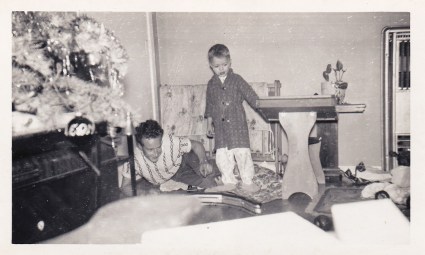
Christmas 1951

Darkness filled most of the small white frame house on Cypress Street in Pittsburg, Texas. A small bedside lamp cast a warm glow on the book from which my grandmother read Christmas stories to me. Silently, I lay beside her, excited and thinking about Santa’s pending arrival at any minute.

The year must have been about 1952 or ’53. Why we were at my father’s parent’s house for Christmas fails to come to mind, but I do recall I had not yet started school most likely meaning I was about four years old, five at the most.

Going to sleep was the farthest thing from my mind. Memories of my grandmother reading to me, or engaging in simple play activities like cutting pictures from a catalog, or making toys from empty spools and string are among some of the best. No doubt, I was enjoying her recounting stories of the season. Foremost on my mind however, was jolly Saint Nick and what he may have in his bag for me.

Then, I heard a noise. It came from the living room. The bedroom door was ckosed, so I couldn’t tell for sure. It also meant I couldn’t see the Christmas tree with it’s lights still glowing in the living room.

I listened carefully, but my grandmother continued to read. Then, I heard it again. This time I was sure it was a bicycle bell, the kind that bolted to the handlebars and was activated by the rider’s thumb. “Ding-ding. Ding-ding.”

Before I could think about what was taking place, my grandmother closed the book, turned off the lamp and whispered in my ear, “There’s ol’ Santy Claus. We better go to sleep or he won’t leave us anything.”

My heart raced one minute and stopped the next. Santa was in the house and I was still awake! I scooted under the bed cover, pulled the pillow around my head and closed my eyes so tightly; nothing could have pried them open. “Please, let me go to sleep quickly,” I thought.

Fast forward about 30 years. I’m watching my children play games in the glow of the fireplace at our house in Center, Texas, and listening to their excitement about Santa coming to visit. “Bed time kids,” I announced. “Better get to bed and go to sleep if you want him to stop here. He stops at the houses where children are fast asleep.”

Off to bed they went. “If only they would do that so willingly every night,” I said to myself. “Got those toys put together, Santa,” the kid’s mom called out to me.

“Won’t take long.” Visions of slumber danced in my head.

Insert tab ‘A’ into slot ‘B’ and secure with slotted screw ‘12’ the instructions read. Just how hard could it be to assemble a little girl’s playtime kitchen? Obviously harder than the degree of difficulty I was prepared for on that particular Christmas Eve.

Midnight, then one in the morning crept by as I worked to finish the assembly of Santa’s goods and ensure that all needed batteries were properly installed. I thought about how many times my parents must have faced similar Christmas Eves making sure that Santa’s delivery was on time, completely assembled and ready for smiling faces come sunup on Christmas Day.

I recalled that night long ago that I heard Santa at work in my grandmother’s living room. Christmas morning, when I saw my first shiny bicycle, maroon and white with training wheels, little did I realize the “Ding-ding” of the mechanical bell was probably my frustrated father attempting to fit all the parts together, performing the task out of love for his children.

Not wanting to disappoint young hearts, I stayed with this chore out of love for my children on yet another Christmas night 30-plus years ago until everything was arranged and ready under the Christmas tree … just as the pale blue light of dawn announced the arrival of one more Christmas morning in the 1980s.

I came to realize, as no doubt my parents had done before me, that Christmas is all about the children. Christmas lives in the heart of a child. And often times, adults best understand the true meaning of Christmas through the heart of a child and through giving the gift of love.

Merry Christmas! And may we all enjoy the season with a gift of love through the heart of a child.

Leon Aldridge


The Christmas lights are up at our house

“This is the last year I’m doing this.”Lights2

That lofty ultimatum was issued by yours truly setting out to decorate for Christmas last Saturday. As hard as I tried otherwise, the “Bah Humbug” spirit just seemed to take over.

Dragging out all the lights and decorations; deciding which pieces of Yule cheer and what string of lights had one more year left in them; and what needed replacing; what would stay and what would go … it was overwhelming. I was pretty sure there was something I would rather be doing, maybe that root canal waiting at the dentist’s office.

An SUV load of large containers filled with “Christmas decorations past” rescued from storage buildings was supplemented by an equal sized SUV load of “Christmas decorations present” sourced from all over town. Braving rain looming on the horizon, I pressed on confident that I could produce one last encore performance to transform our corner into the Winter Wonderland envy of the neighborhood before hanging up the ladder and the staple gun.

“Why did I feel this way?” After due consideration, Ellen Griswold’s line in the movie modern classic, “Christmas Vacation,” said it best when she responded to her daughter with, “I don’t know what to say, except it’s Christmas and we’re all in misery.”

Don’t get me wrong. I like the Christmas season. I like everything about it. Everything except putting up the decorations. Perhaps I’ve reached that stage in life. You know the one, the “I’ve been doing this all my life and I don’t need the frustration any more” stage.

Undaunted, I set out Saturday to make my last time a good one. Surely nothing could be as bad as the year I strung lights across the front of our 100-plus-year-old Victorian home. Ceilings in the 1900 structure were 12 feet high, and the house sat a good four feet off the ground. The thrill of dashing through the snow in a one-horse open sleigh can’t hold a candle to dangling lights above your head with one hand and operating a stapler with the other while standing atop a 20-foot ladder.

Attaching lights all the way across the front required a routine that was something like, climb the 20-foot ladder, staple as far as you can reach, go back down the ladder, move the ladder over ten feet, repeat the previous steps several times until all lights are securely affixed to the roof’s edge all the way across the front. Then plug the end of the strand into the extension cord.

And that’s where the project went south, when I discovered that it’s impossible to plug two matching ends of an electrical cord together.

The remedy for such a malady? Easy. Just repeat the above steps in reverse order to get the lights down, and then do it all over again starting with the opposite end, the one with the plug on it.

Despite that setback however, I continued to decorate the house and yard for several more Christmas seasons there before we moved across town to our current location. Any doubt I might have had about this being my last Christmas decoration was quickly dispelled before I finished when I (a.) found one brand new string of lights to be defective—after I had installed them (b.) accidentally cut another line and had to repair it; and (c.) climbed the ladder countless times only to discover the string of lights I was working with had wrapped itself around the bottom of the ladder. Oh yeah, let’s not forget the three trips back to town for “just one more “ extension cord.

All that behind me, I’m now happy to report that the Christmas lights and decorations are up at our house in Center, Texas.

Well, almost, but the few adjustment that will be made over the course of the next few days are standard procedure. Distributing seasonal festoons on the house, in the house, and around the yard is more of a journey than a destination.

Did they work you ask?

Clark Griswold: Russ, we checked every bulb, didn’t we?

Rusty Griswold: Sure, Dad.

Clark Griswold: Hmm … Maybe we ought to just go up there and check…

Rusty Griswold: Oh, woo. Look at the time. I gotta get to bed. I still gotta brush my teeth, feed the hog, still got some homework to do, still got those bills to pay, wash the car…

My electrical engineering skills are slightly less than Clark Griswold’s in the “Christmas Vacation” movie. Yes, I have a couple of extension cord and outlet splitter configurations that easily classify as an “electrician’s nightmare.” The good news is that when I plugged the last two strands together and sang, “Joy to the world…” the lights did come on and there was no reported decline in power at the generating station.

My last Christmas decorating endeavor complete, I stepped back into the darkness of the balmy Spring winter weather currently gripping East Texas to evaluate the results.

So, how did it look? Envision Clark Griswold declaring, “I dedicate this house to the Griswold Family Christmas.”

OK, so maybe I will do it another year or two.

—Leon Aldridge

Memory is the diary we all carry with us

It’s been said that we don’t remember days, we remember moments. What’s often amazing are the moments we remember on the days we forget everything else.

Age 3
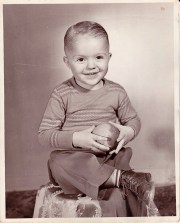
Leon Aldridge – Age 3

Recalling our earliest childhood years dominated conversation with a good friend recently. By chance, or by destiny, my friend and I both arrived in Mount Pleasant, Texas in 1959 coming from opposite directions. We talked about what we remembered as new students at South Ward Elementary that year, but marveled more so at what we were able to remember prior to that time.

The Aldridge family hit town in late March coming from small-town Seymour in West Texas, some 50 miles the other side of Wichita Falls. This pilgrimage east followed one from Crockett in East Texas in early 1955 where had lived since 1951. Basically, we zigzagged between East and West Texas about ten years before arriving in Mount Pleasant to stay for a while.

I can remember our Crockett home, a small frame structure paired with one next to it in the middle of an empty field. The two houses were not far from downtown just off Highway 21 east, but isolated with a long unpaved driveway to a shared double garage. Wooded areas surrounded both houses on three sides. That solitude was shared only with neighbor, Lacy Hooks, and his wife. Mr. Hooks worked at Knox Furniture in downtown Crockett

We didn’t have a television, nor did have a telephone. What we did have was the sound of rain falling on a tin roof, the smell of mom’s morning glories covering the trellis on the front porch and a splendid view of an open field through a large picture window. That field also provided memories of excellent kite flying with my dad in the spring, and an occasional covering of winter snow.

The woods next door provided a rescued baby rabbit for a pet on one occasion, and the kitchen provided warm memories of sharing late night crackers and milk with dad. It was his favorite bedtime snack.

A green 1950 Studebaker provided transportation for our one-car family until the fateful Sunday afternoon dad and the neighbor went fishing. Timbers failed while navigating an old wooden country bridge sending them off the side and into a dry creek bed some distance below. I remember the sight of the crumpled car at the Studebaker dealership, and of my father in bandages coming home from the hospital. They were banged up and bruised, but otherwise all right.

The Studebaker dealership is of course long gone, as is the iconic American auto brand. But, Knox Furniture store was still there the last time I went through Crockett a couple of years ago.

My youngest sister, Sylvia, was born in Crockett. I remember dad leaving middle sister Leslie and me in the car near a hospital side door while bringing our newborn family addition to the door for her older siblings to see. My mental picture of that event also includes mom in a bathrobe, standing behind dad, both them beaming with smiles.

Dad worked for the old five-and-ten-cent store chain, Perry Brothers in those years. He often brought home small empty wooden crates in which china dishes had arrived at Perry’s. They served a variety of uses, but it was great fun when we got to incorporate them in playtime.

One pinnacle of playtime was the day I launched a crate in the creek behind our house to see if it would float. And, it did. Beaming in that delightful discovery, I then talked Leslie, who was no more than three at the time, into getting in “the boat” to see if it would still float. It didn’t. Fortunately for Leslie, the creek was shallow.

Leslie also aided my experimentation once by jumping off the roof of the house solely to test my theory that a bed sheet with the corners tied together would function similarly to a parachute. It didn’t. Fortunately for Leslie once again, she landed in a rather large clump of shrubs near the house, so she wasn’t hurt—too badly.

Mom seldom spanked us deferring that chore to dad. I can still hear her saying, “You just wait until your father gets home!” But, on the rare occasion she was really mad, there was no waiting around for dad. She administered her own swift punishment via a hairbrush applied to the posterior of the convicted perpetrator who was made to stand on the toilet lid in order to accept what was coming to them. One such hairbrush spanking in Crockett sticks in my mind, and I’m reasonably certain that it was somehow related to my employing younger sister Leslie as a guinea pig in playtime scientific experiments.

When I wasn’t in trouble, dad would take me to town following his lunch break on summertime Saturdays. He would give me a quarter that was ample funding for admittance to the double-feature afternoon matinee western or sci-fi flick, plus a bag of popcorn and a Coke.

The last of summer movies in 1954 was the beginning of first grade classes for me in the basement of an old brick school building. The room was supplemented by small windows along the ceiling that allowed just enough sunlight in to somewhat dispel the feeling of actually being in a basement. The teacher was your quintessential older schoolmarm with gray hair up in a bun wearing lace-up, high-heeled shoes. I recall the black chalkboards above which resided examples of cursive writing, an American flag, and the obligatory portrait of George Washington—the unfinished one rendering the appearance of clouds at the bottom.

The first grade also saw my first (and last) playground fight near the front steps of that huge brick schoolhouse. Don’t remember what it was about, or who won it. What I do remember thinking was that I didn’t particularly enjoy it and I made a note to never get in another one, if I could help it.

First grade classes moved into new classrooms after the Christmas break. We moved from the basement dungeon “into the light” as the new structure employed lots of glass and open spaces. Prominent memories from that spring included standing in line at the gym to take doses of the Salk polio vaccine from little paper cups, and a spring tornado coming through town one day around noon. The sky was completely black, dark as night, and we huddled with the teacher in a walk-through space behind the chalkboard used for coat and book storage.

We left Crockett with our memories early in 1955 arriving in Seymour about the same time Elvis did for an appearance at the high school gymnasium. But that’s a different memory on a different day.

Now, where did I leave my keys five minutes ago?


Every Day Should Be Veteran’s Day

Aldridge Army
Leon D. Aldridge U.S. Army 276th Combat Engineers 1942-1945

My father stood at the base of the massive, towering stone buttresses supporting the majestic Cologne Cathedral. I watched him as he soberly examined the structure that has stood on the banks of the Rhine River in Germany since 1248.

Standing with him that fall day in 1984, I marveled at the incredible monument of religious history not realizing that in his mind, my father was reliving a night 40 years earlier. Then I saw the tears.

“You see that spot right there,” he said pointing into a huge crevice created by two of the many massive buttresses supporting the 767-year old structure.

“Forty years ago,” he continued, “half a dozen of us huddled in that space for most of the night. The rest of our outfit was scattered around the cathedral and down toward the river. We had secured the road for the infantry behind us when we encountered what was left of German defenders in the village. You could have read a newspaper from the light of the flashing gunfire. I wasn’t sure I was going to make it out of that spot,” he said.

Pausing for a moment, he continued, “We huddled there and returned fire for several hours until the village was secured. Two of us walked out the next morning.”

My dad never talked much about his service in World War II, at least not about battlefield experiences. On this rare occasion, I listened as we stood there, tears still glistening on his cheeks, “I wasn’t sure I was going to make it out of there that night, and I never expected to be standing here again.”

Leon D. Aldridge graduated from Pittsburg High School in the spring of 1941 as Hitler was marching through Europe destroying smaller nations. He was a freshman student at Texas A&M in December of 1941 when Japan attacked Pearl Harbor. He was not long into the spring semester of 1942 when the letter arrived, the one that read, “Greetings, having submitted yourself to a committee composed of your local neighbors and friends, you have been selected …..”

He reported to Camp Gruber, Oklahoma and was assigned to a combat engineers battalion that trained in Dixon, Tennessee where he became Private Leon Aldridge in the U.S. Army 276th Engineer Combat Battalion, known as “Rough and Ready.”

After training in Tennessee, he shipped out for Belgium in the Netherlands, but not before meeting a 1941 graduate of Winchester, Kentucky High School who was to become his wife of 63 years and my mother.

Before V.E. Day would arrive, Private Aldridge would rise to the rank of Master Sargent and the 276th Combat Engineers would return home wearing battle ribbons for participation in three campaigns: Ardennes, Rhineland and the Central Europe Campaign.

While he was reluctant to talk about his wartime experience before this day 30 years ago, we walked around the cathedral as his emotions detailed memories of a night 40 years earlier. When we reached the side facing the Rhine, he pointed south and said, “Remagen about an hour down the river, is where I was standing on the abutment when the bridge fell.”

Combat engineers typically preceded the infantry and armored in order to build roadways and bridges for their advancement. Hence his presence at the Ludendorf Bridge at Remagen, a pivotal point in the European campaign and the eventual defeat of the Axis powers.

The bridge was the last German hope for preventing the advancing Allies across the Rhine River. After allowing German forces to cross, Hitler’s troops attempted to destroy the structure with explosives. The result was substantial damage to the bridge, but not total destruction.

The 276th Combat Engineers worked under gunfire for the next five days to complete repairs while units attached to the 276th built floating structures downstream known as “Bailey Bridges.”

On March 9, 1945, the 276th returned the bridge to operational status and American troops began crossing as the combat engineers continued working to strengthen the damaged bridge. On March 17 as the battalion replaced wooden flooring, steel trusses began to creak and groan, rivets started “popping like gunfire,” according to my father, and the structure collapsed into the Rhine. “Some scrambled for safety,” he said, “but many were not so fortunate.

“I had been on the bridge earlier that morning,” he continued. “Part of the unit fell back for materials and supplies. We were back to the abutment, waiting for the unit ahead of us to advance across. Just as we started onto the bridge, it fell into the river. Five more minutes and I would have gone into the river with it and the others who were lost that day.”

My father died in 2007. He was proud of his service and I was proud of him. His story of duty and sacrifice as part of the nation’s military is but one tiny, individual example of why America has survived for almost 240 years as a free and proud nation. Fortunately, I got the opportunity to thank him. If he were here today, I would hug him and thank him again.

November 11 is Veteran’s Day, but every day should be Veteran’s Day. Thank a veteran today, and everyday for their service to our country.

Leon Aldridge, Jr.

Adapted from a column published November 10, 2104 in the Center Light and Champion and the Mount Pleasant Daily Tribune

She had more than those who thought they were rich

If you know me, you knew my grandmother whether or not you had the opportunity to meet her in person.

Granny-small
Hattie Lois Aldridge • 1905-1993

That’s because there’s hardly a day goes by that I fail to quote her on some tidbit of wisdom, things I call “Grannyisms.” My father’s mother, who we all called “Granny,” had a tremendous influence on my life. Hattie Lois Aldridge not only contributed a great deal to my values and beliefs, but she did likewise for anyone she came in contact with. She appeared hard on the outside about “what the world was coming to,” but generous to a fault on the inside.

She never drew a paycheck in her life that I know of, but managed the meager earnings of my grandfather to run a household and raise a child. Funny thing is, she always had more money than those who thought they were rich.

She only worried about two things. “Sit down, I’ll put on some coffee and fix something to eat,” was always her first concern. She wanted to be sure you weren’t going to leave her house hungry.

The other thing she made sure of was that you left her house with money in your pocket. “Here,” she would tell me when I was a youngster, extending her hand with a dollar bill in it. Then she would look around and touching her finger to her lips, she would say, “Shhh, don’t tell anybody.”

As I grew older, she continued to ask, “You need any money? I don’t want you to run out of money.”

Maybe that came from living through the depression, or maybe she was simply generous to a fault. “Neither a borrower nor a lender be,” was the advice offered by Polonius in Shakespeare’s Hamlet. I doubt Granny knew who Polonius was, or what Shakespeare had to do with anything important to her. However, she subscribed to the same principle. I’m betting that not one financial institution ever earned the first cent’s worth of interest from her. More often than not, if someone really needed something, she simply gave it to them. However, these little donations were not free. With them came a lecture on the value of a hard-earned dollar.

“Money doesn’t grow on trees,” she would say as she offered money to anyone in genuine need. “You need to save some for a rainy day.”

She was a giver, but when she knew genuine need wasn’t at stake, she leaned toward the lending side. The first time I learned applicable lessons from her on financing was when she loaned me the money to buy my first car, a ’51 Chevrolet purchased for the princely sum of $250.

After digging through her many purses she called “pocketbooks” stuffed here and there, she pulled a roll of money out of one and counted out $250. The next thing that came out of the black purse was a little black book. She turned the pages until she found a blank one and carefully wrote the date and the amount of money.

“You can pay me twenty-five dollars a month,” she said. “Can you do that?”

“Sure,” I said. “’I can do that.” And make payments I did as Granny meticulously recorded every single payment and the date in the little book until the balance was down to zero. She charged no interest, but made a point of noting how much the interest would have cost me had I borrowed the purchase price of the old car from the bank. “Take care of the pennies and the dollars will take care of themselves.” That scene and similar admonitions were repeated a few more times when I was younger, each time with a lecture about the value of hard work and “taking care of your money.”

Every time, she searched pocketbooks, dresser drawers and coat pockets to find a roll of bills—places money should not have been stashed.

“Granny,” I asked once, “Why don’t you put some of that in the bank?”

“Don’t need ‘em,” she quipped “Besides,” she said one afternoon while searching a dresser drawer, “After I’m gone, I’m going to sit up there, look down and laugh because y’all won’t throw away one scrap of paper until you’ve looked through it.”

Truth is, it did take several days following her funeral to search everything. Hat boxes, shoe boxes, greeting card boxes, envelopes, purses, pocketbooks, photo albums, letters, books. Nothing escaped the search, but you know what? Not one red cent was found. Not a single penny.

We all chuckled about the thought of her laughing at us all right, because she knew she wasn’t leaving anything behind. There was no money in the house when she died in October of 1993. All she left behind were the lessons she tried to teach us about how to manage money.

I miss my Granny, but am never without an opportunity to recall one of her “Grannyisms.” Don’t know that she ever said this for sure, but I credit her with it because she lived it every day. “If you really want to feel rich, just count all the things you have that money can’t buy.”

—Leon Aldridge

Adapted from a column published in the Naples Monitor September 8, 1999

What Was It That Was So Funny Anyway

There are advantages to growing older. No doubt, one of them will come to mind soon; however, memory fails me at the moment.  IMG_20151007_0001

My friend in Center, Texas, Tem Morrison called last week to ask if I would take a look at some old car parts. That’s tantamount to asking my dog if he wants to take a look at a pork chop. Tem asked me Thursday and I told him I’d see him early Friday. Problem is, my “light didn’t come on” until late Friday morning.

Blazing a straight line across the downtown square to his office, I apologized profusely while painfully admitting that lapses in memory were occurring at an alarmingly increased rate with me in recent years.

I related to Tem the story of businessman, Cortez Boatner. Mr. Boatner owned a furniture store in my hometown of Mount Pleasant, Texas, and was a well-known and successful businessman. He always wore a dress shirt and a tie when he came in Perry Brothers to visit with my father. For that matter, my father and most of the other businessmen in town also wore dress shirts and ties then. Mr. Boatner always had a small spiral notebook and pen in his shirt pocket. At some point during most conversations, out came the notebook and Mr. Boatner started making notes.

“As a youngster,” I told Tem, “I used to think that was funny. But you know, as I’ve gotten older, I’m finding it hard to remember now exactly what I thought was so funny about it.”

As youngsters, my sisters and I delighted in teasing our mother about her memory, or the lack thereof. Actually, it probably wasn’t that bad. She probably wasn’t any worse at forgetting things, its just that she had this uncanny, comical way of dong it.

Banana pudding was my dad’s favorite dessert and mom made it often. That was during an ‘Ozzie and Harriet’ time when the entire family sat down together for the evening meal. About three bites into dessert one evening, dad stared into the pudding bowl, stirred it with his spoon as if searching for something, then asked, “I don’t think there’s any bananas in mine.”

Right on cue, the rest of us did the same search to discover that there really were no bananas in any of our bowls either, just pudding and vanilla wafers.

“Oh no,” mom exclaimed on the verge of tears. “I must have forgotten to put the bananas in it.” Sure enough, the unpeeled bananas were still on the kitchen counter where she had prepared the evening meal. We consoled her as we ate every morsel in an effort to sooth her remorse.

Then there was the when her sewing scissors mysteriously disappeared. “They were right here,” she said as the frustration in her voice registered higher with each word. “I just had them in my hand.”

“Had what, mom?”

“My sewing scissors.”

In the 50s and 60s , back before it was dangerous for kids to play with scissors, mom’s sewing scissors were the best to fashion a pirate’s hat or a princess’s tiara from scrap paper. However, the “scissors rule” was that we were never, ever, ever to use mom’s good sewing scissors for one of our fun projects, at least don’t get caught doing it.

“Did one of you get my good scissors,” she quizzed us.

“No,” we chimed in unison. “Besides, mom. You said you just had them.” As mom continued searching for her scissors, I raided the refrigerator searching for leftover banana pudding, preferably some with bananas. Moving the bowls around, certain there was pudding in there somewhere, I saw them. There they were. On the shelf right beside the ironing bag. Mom’s good sewing scissors.

These days, a cloths iron is almost an antique. But there was a time when clothes waiting to be ironed were sprinkled with water and stored in a plastic bag in the refrigerator. Everything was ironed. My mother ironed school clothes, she ironed church clothes, she ironed play clothes, she ironed my father’s work clothes, she ironed sheets and pillowcases.

“Mom,” I called out trying to contain my laughter. “Were you ironing before you were sewing?” We giggled as mom retrieved them from the refrigerator, and she would graciously smile each time over the years that we recounted the story, time and again.

I think about my mother on days I make lists like Mr. Boatner used to, then spend my time at the store trying to remember what was on the list I left at home. So, as I think about it now, I’m wondering again. What was it that was so funny about that?

—Leon Aldridge

Adapted from a column originally published in the Center Light and Champion and the Mount Pleasant Daily Tribune July 2014

The last one to leave the ball

“Early morning sunlight fell from the upper windows of the cavernous building in Liz 57 Ford_1454downtown Center and bounced off her graceful, timeless curves. Her aging body showed signs of wear, but for an old girl her age, she was still a beauty in the dim light as well as in my heart.”

So began a column I wrote 22 years ago this month while serving as editor and publisher of the Boerne Star in the Texas Hill Country. The weekly newspaper piece was about “Liz,” a member of the Aldridge family for 59 years come this November.

The story of Liz in the 1993 story continued: “The old green ’57 Ford affectionately dubbed “Liz” by my father’s mother sat silently. The car never objected to being neglected while others in the collection were driven and pampered. One might have surmised she actually enjoyed the peace and quiet of retirement, and furthermore relished in her warehouse storage space alongside a varying variety of vintage cousins.

“Over a dozen or so years, scores of wrecking yard refugees came and went in a seeming quest to resurrect and relive automotive history from the 5Os and 6Os. At first, I paraded tail-finned, rag-topped, white-walled and chrome-plated memories past her as she sat quietly and watched.

“But as the dual-carburetor, dual-exhaust, gas guzzlers of a previous generation passed in and out of the building, one remained. On this particular morning, three survivors were being surveyed in preparation for yet another move to a new home in Pipe Creek, Texas. One of them was granny’s Liz.

“My fingers disturbed the thin coating of dust on her still smooth skin sending particles swirling through the air as they twinkled in beams of morning sunlight.

“I opened the driver’s door and once again smiled at the aroma greeting my nostrils. The interiors of old cars always present a unique smell, regardless of their age, make or background—a unique olfactory experience that I prefer over that of a showroom new car any day.

“The seat springs groaned lightly beneath my weight. ‘Not bad for an all-original car,’ I thought as I scanned the metal and chrome dash, then gazed across the expanse of the big green hood. I touched the ignition switch, but on this particular morning, I let Liz rest choosing the peace of deafening silence in the warehouse over that of her V-8 motor.

“Liz was born at the Garland, Texas Ford assembly plant in the fall of 1956 and was welcomed into into the Aldridge family in November at Travis Battles Ford dealership in Pittsburg, Texas. For a quarter of a century, she lived in a white frame garage at the corner of Cypress and Madison Streets in Pittsburg and ran errands for my father’s parents—to town, to work, to the doctor. On many of those trips, I was a youngster in the back seat watching my grandmother drive and listening to my grandfather caution her at every intersection, ‘Watch out sister,’ he might say, ‘There’s a stop sign ahead.’

“After age and illness confined him to a bed, Liz hibernated, untouched in the garage. Several Christmas seasons passed while my grandmother stayed home to care for the man she loved. When he died just days before Christmas of 1967, dad and I went to the garage to check on Liz. Although suffering from neglect, she had traveled only 17,000 miles in ten years, and a new battery and some fresh gas brought her back to life.

“Granny and Liz were quickly reunited, and the two were back on the street going places of which neither had likely dreamed in a while. The old Ford responded well to granny’s loving touches, and the “green blur” with the little old lady peeping over the steering wheel was once again a common sight buzzing around Pittsburg.

“It was the summer of l98I that granny gave in to the temptation of power steering, automatic transmissions and air conditioning. “You still want Liz,” she asked one day.

“You know I do,” I replied, and Liz was headed for a new home in Center.

“Summer’s late evening breeze wafted the smell of freshly mowed grass through the open windows as I guided Liz south that Saturday in May. Driving the old car kindled long forgotten memory after memory. Driving lessons from my grandfather on shifting a “three-on-the-tree;” cruising the Kilgore College campus when Liz served subbing for one of my ailing hot rods; and dating. “Vivian Thompson, where are you today,” I mused that summer afternoon.

“Opening my eyes and looking at the empty seat beside me on this day was an instant return trip to reality. The memories stirred by the old car were very real, but old girl friends were still only a memory. Giving a gentle push to Liz’s door brought the usual solid and rewarding ‘click’ as the door closed and latched with ease.

“I walked away a few steps and stopped to look back. Liz sat majestically in the corner bidding me good-bye with a gleam in her chrome. She knew it would be a while before I came calling again. But she also knew I would be back another day to share in the secrets the old car and I knew on each other.”

The scenario above has been replayed numerous times since that column appeared in print, but Liz is still in the family. She still sits quietly in the garage wearing only 46,000 miles and all but a few of the parts she left the factory with 59 years ago. She still mostly sits at home while her ’55 Ford Crown Victoria and ’57 Ford Thunderbird current cousins enjoy the parties on cruise nights and at car shows.

But, she knows that when the more glamorous and valuable garage mates have moved on, as others before them have, she’s the family member with the priceless memories. And she also knows that she will be the last one to leave the ball when the lights are dimmed for the last time.

— Leon Aldridge

Adapted from a column originally published in the Boerne (Texas) Star September 1993