My old columns: lots of perspective and little skill

“Time’s a funny thing, bending, warping, stretching, and compressing, all depending on perspective.”

—Lisa Genova, American neuroscientist and author

                                                         – – – – – – – – – – – – –

Continuing efforts to file and archive my columns, some written 40 years ago, have offered renewed perspective on not only events in my life but also on my writing skills over the years.

Some are funny, some are sad, and some should have never seen the light of ink and newsprint. Yep, some are bad. Reading them now, however, helps me see how my perspective on life has changed and my writing skills have improved over the decades, at least a little. Preserving my columns provides me with a historical glimpse of myself and ensures that I never forget where I’ve been or from where I came.

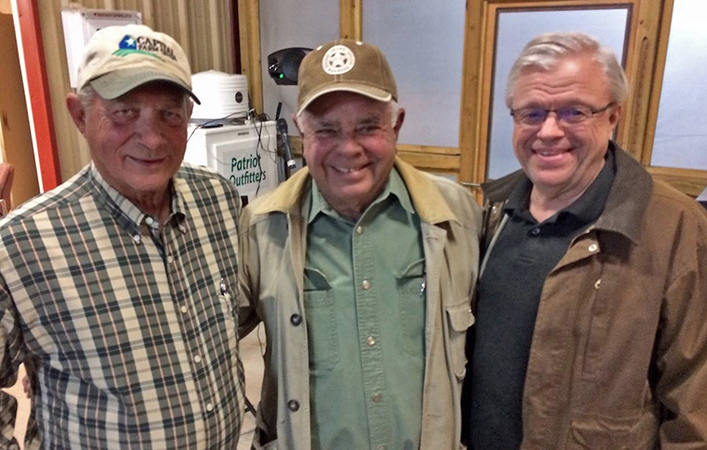
Also enlightening has been the perspective on societal change in just a scant few years. Like thoughts I penned just six years ago about a conversation with retired Texas Ranger Max Womack at the Waco Civic Center. I was serving as the event photographer where he was being honored at the Texas Rangers Association Foundation Reunion.

“You from Waco,” he asked with a smile in his voice that matched the one on his face.

“No sir,” I replied. “I live in Center; grew up in Mount Pleasant.”

“So, you know where Talco is,” he said, his smile growing larger at the mention of the northern Titus County community.

“Yes sir,” I said. “A high school classmate at Mount Pleasant was from Talco, and I worked in the Talco oil field myself some years ago during college.”

“Been there lately,” Womack asked?

“No sir, been a while.”

“Not much there anymore,” the retired Ranger said. “I lived in Talco when I was younger. Left there in 1951 to go to work for the DPS (Department of Public Safety).”

Texas journalist Mike Cox, author of several non-fiction books about the Texas Rangers, records them as the oldest state law enforcement agency in North America dating to 1823 when the ”Father of Texas,” Stephen F. Austin, called for “ten men … to act as rangers for the common defense… “

In the almost 200 years since, the Rangers have been compared to other world-famous elite law enforcement agencies such as the FBI, Scotland Yard, and the Royal Canadian Mounted Police. When a tough law and order job needed doing throughout Texas, the solution usually included Texas Rangers like Captain William “Bill” McDonald who served from 1891 to 1907. His 1906 leadership in the Twenty-fifth Infantry case made him known as “the man who would charge hell with a bucket of water.” He’s also credited with making a statement that serves as the epitaph on his tombstone at Quanah, near Wichita Falls, “No man in the wrong can stand up against a fellow that’s in the right and keeps on a-comin’.”

McDonald is also associated with the legend about a town in frontier Texas that sent for the Rangers to quell a riot. When the mayor met the train, a single Ranger stepped off. The mayor asked, “Just one Ranger,” to which the Ranger’s response was, “There’s just one riot, ain’t there?”

The historical version of “one riot—one Ranger” appears to have been based on a whimsical statement made by McDonald during that time that was used by author Bigelow Paine in his book, Captain Bill McDonald: Texas Ranger.

“One Ranger—one riot,” came to mind that night just six years ago as I listened to Womack’s acceptance speech. His Ranger service began in 1969 in a newly created district in Atlanta where he retired from East Texas’s Company B in 1989. He recounted investigating crime and enforcing the law in a lighthearted manner evoking frequent laughter from the audience. Although humorous, it belied the real-life courage and dedication displayed by men and women like him who exemplify the Texas Ranger Association Foundation website’s declaration, “To preserve and perpetuate the history and heritage of the Texas Rangers.”

Reading my column last week in the perspective of Dallas’s elected official’s recent removal of the Texas Ranger statue captioned, “One Riot, One Ranger” that stood in the city’s Love Field Airport for 58 years, because “it might be offensive to some,” caused me concern.

What if some sensitive folks were to read my early columns and find my writing skills back then to be offensive? They might even want to remove my statue for journalism skills. Oh wait. No need for worry—that statue doesn’t exist.

—Leon Aldridge

– – – – – – – – – – – – –

(Photo at top of the page: Texas Ranger Hall of Fame and Museum, Waco, Texas. http://www.texasranger.org)

Aldridge columns are published in these Texas newspapers: The Center Light and Champion, the Mount Pleasant Tribune,  the Rosenberg Fort Bend Herald, the Taylor Press, and the Alpine Avalanche.

© Leon Aldridge and A Story Worth Telling 2020. Unauthorized use and/or duplication of this material without express and written permission from this site’s author and/or owner is strictly prohibited. Excerpts and links may be used, provided that full and clear credit is given to Leon Aldridge and A Story Worth Telling with appropriate and specific direction to the original content.
Talking more about politics and religion might open some doors

“We should never discuss politics or religion … (pick one: at the dinner table, at work, in polite company).”

—Old axiom handed down for generations

– – – – – – – – – – – – – – – – –

I’ve heard that saying all my life but never thought about it too strongly one way or the other until recent years. These days, however, it sure seems like we’ve forgotten that we’re all products of our varied upbringing, experiences, and education. And while it’s just not possible, or even desirable for everybody to agree on everything, being civil about it should be.

Speaking of religious views for example, my experiences on the topic were admittedly of one focus until I entered college. My mother, a devout member of the church of Christ, reared me with the unwavering mandate that I would pass through the doors at the Southside congregation in Mount Pleasant every Sunday morning with her. That was her declarative statement, not her suggestion or invitation. While she never questioned me about where I went or what time I got home Saturday night, there was no question as to where I would be when the church doors opened come Sunday morning.

Occasional experiences attending other churches included a few times at the Baptist or Catholic church in Mount Pleasant with friends and more often, attending the Methodist Church in Pittsburg with my grandmother. She was was a member there for 63 years although, as far as I know or was ever discussed, she never succeeded in getting my grandfather to darken the church doors, as some folks like to say.

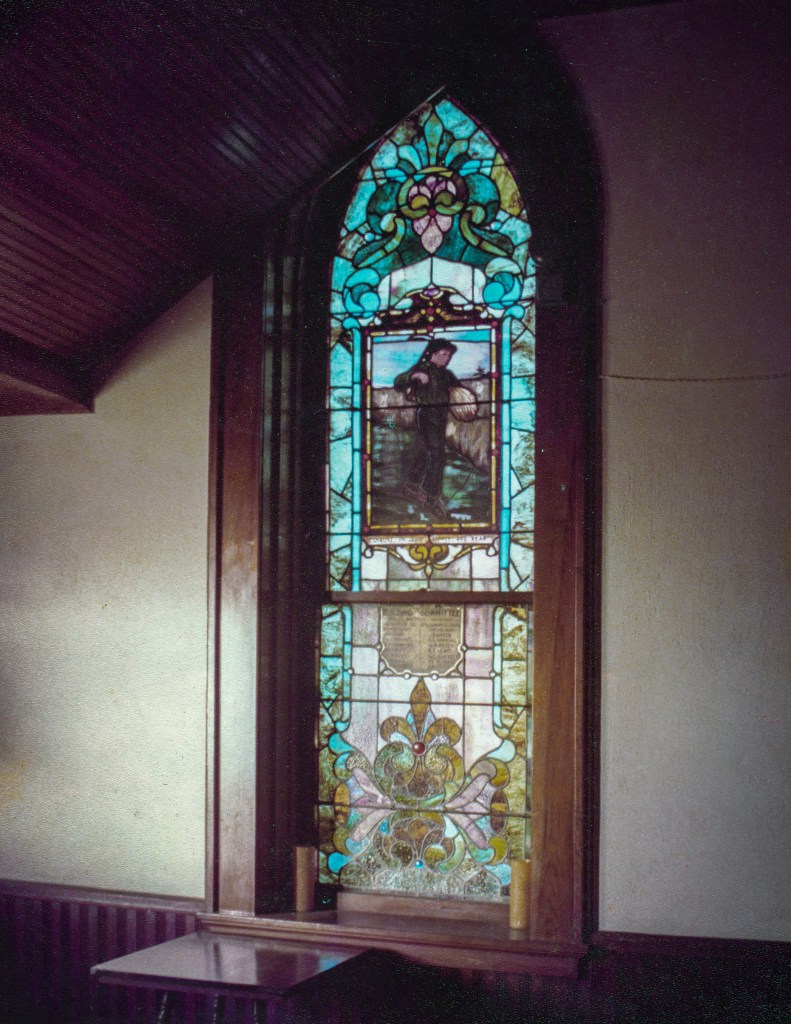
Stained-glass window in the First Methodist Church in Pittsburg, Texas, taken in the early 1920s. Photo by Leon Aldridge

My impressions of the Pittsburg Methodist Church were inspirational in some ways other than Biblical matters. One was the sight and sound of the massive pipe organ. The other was soft sunlight falling through tall stained-glass windows. One Sunday, I asked for permission to return during the week to take photos inside and was told that I could do that anytime I desired; the church house doors were never locked.

With that, you have the sum total of my upbringing and experiences on religious views … except for that one time which was perhaps the most “moving” religious experience of all. It happened around 1960 on South Jefferson Street in Mount Pleasant, and it didn’t even involve a church house door.

Home was 206 Redbud Lane back when South Jefferson was two lanes, I rode my bicycle to town, everything past South Ward School was cow pastures, and the west side of Jefferson south of Pleasant Street was mostly wooded acreage we called “the big woods” and a great place to play.

Good friend, neighbor, and fellow Southside Church of Christ regular, Ronald Rust, and I spotted a huge tent going up next to “the big woods” one afternoon and thinking maybe the circus had come to town, we parked our bikes to watch the activity. But instead of elephants and tigers, at day’s end the tent was filled with benches, a platform, a piano, and a podium.

When the banner heralding the commencement of a “tent revival” that night went up, after supper we returned to our vantage point across the street as darkness approached. Taking a seat on the soft summer grass, Ronald and I prepared to observe our very first tent revival.

After watching spirited singing and piano playing, enthusiastic preaching, and Bible proclaiming that could be heard for blocks, we sneaked across Jefferson and into “the big woods” for a closer look. As the service reached what was perhaps its crescendo exuberant with frequent ‘amens’ and other expressions of congregational affirmation, two young, wide-eyed, and spellbound church of Christ boys hid in the bushes watching religious practices the likes of which they had never seen.

In fact, we didn’t even notice two figures approaching in the darkness until they were upon us. Startled, and not knowing whether their intent was making sure we weren’t pranksters or praying over us to receive the Holy Ghost, we scampered out of the woods, across Jefferson and back home on Redbud without ever looking back.

In less innocent times today, the rash of church house shootings, having to lock church doors for protection during worship services, and the vandalism of houses of worship is unfathomable. Add the out-of-control local governments in some places imposing unconstitutional church closings and prohibitions on religious services and it’s clear that freedom of religion has joined political views and the growing list of other topics in the arena where differing opinions are no longer tolerated.

Maybe talking more about these subjects would be a good thing instead of running away like frightened kids or violently attacking and condemning those with whom we disagree. We just might relearn how to have civil conversations, respect each other’s views, and remain friends by agreeing to disagree.

Who knows, such civility might even lead to more people darkening church house doors again—if that’s what they choose to do.

—Leon Aldridge

. . . . . . . . . . .

Aldridge columns are published in these Texas newspapers: The Center Light and Champion, the Mount Pleasant Tribune,  the Rosenberg Fort Bend Herald, the Taylor Press, and the Alpine Avalanche.

© Leon Aldridge and A Story Worth Telling 2020. Unauthorized use and/or duplication of this material without express and written permission from this site’s author and/or owner is strictly prohibited. Excerpts and links may be used, provided that full and clear credit is given to Leon Aldridge and A Story Worth Telling with appropriate and specific direction to the original content.

Reflections of duty, honor, service, friendship, and flying

“If you go looking for a friend, you’re going to find they’re very scarce. If you go out to be a friend, you’ll find them everywhere.”

– Zig Ziglar, motivational speaker and author

– – – – – – – – – – – – –

Friendships come in many types, some with frequent visits and others that time attempts to distance. Even with the latter, the best will pick up where it left off as if the time between was mere days rather than years. 

Augustus Randolph “Randy” Presley, Jr.

They’re found in places like schools, jobs, and neighborhoods. For me, flying and the old Mount Pleasant airport facilitated many fond friendships like the one Randy Presley extended to me many years ago. I knew who he was before that because everyone knew him as a businessman and community leader always offering a smile, a good story, and friendship to everyone he met. 

We were also friends through Glass Club Lake just down the road where several Mount Pleasant residents had cabins. When I moved back to East Texas from Boerne just outside San Antonio, buying a place on the small lake in the summer of 1998 led to one of our catching up and storytelling sessions at the annual stockholder’s meeting and fish fry.

“I’ve got one for you,” I said. “Watching the San Antonio news three or four years ago, I saw something about a sonic boom prompting phone calls and furor. When the reporter interviewed the Air Force pilot about the incident, I pointed to the TV and told my kids, ‘I know him, that’s Jack Presley from Mount Pleasant.’” By then, Randy’s smile that had been growing larger by the minute turned to laughter as he picked up on the story about his son where I left off, “Well, here’s the part of that story the news didn’t report.”

That return to northeast Texas was short-lived before a dozen or so years later when I returned once more with the new owners of the Mount Pleasant Tribune. Randy called to welcome me back, but it was his response to my column on a legendary Paris, Texas, pilot and subsequent emails that came to mind last week upon learning that Randy had passed from this life at 90.

“I really enjoyed the article about Junior Burchinal,” that response began. “I doubt if anyone in Mt. Pleasant spent more money with Junior than me! I always wanted to fly a P-51 Mustang and after convincing him that I could fly a T-33 from the back seat with him in front, he finally checked me out in his.”

The Junior Burchinal P-51 Randy flew (in current owner’s paint configuration) — Tom Griffith photo on mustangsmustangs.com

“The P-51 was a plane I had always wanted to fly ever since I soloed off the old E. P. Hendricks grass strip outside of town across the highway from the old Willie Banks store on US-67,” Randy wrote in later emails. “I flew his Cubs and Taylor Crafts until Gus Hoffman built what (became) the first Mt. Pleasant Municipal Airport. Those were a really interesting few years flying (Burchinal’s) planes. His airport was a place that took up all the spare money I could find and from which I did a lot of fun flying.”

“I flew 55 combat missions before the North (Korea) gave up,” he wrote another time. “It was interesting times and I am glad that we saved the country from communism. I always regretted missing the opportunity to fly (P-51s) while I was still in the USAF. In Korea, there was as many as three squadrons of F-51’s, as they were legally referred to in later years. I was flying the F84G ‘Thunderjet.’ We did the air-to-ground work while F-86’s flew top-cover for us. The old F-84G was not supersonic and anytime your airspeed got past the ‘red line’ the controls would lock up, and the only thing you could do was pull off power and put out the speed brakes to get (it) under control again.”

“So much for my long flying tales. I apologize for the long email,” one of his last messages ended. “As you can tell, I still have a lot of interest in aviation although age has stopped much of my flying.” 

In another message, he fondly recalled a return to Korea some years ago with one of his squadron classmates. “I was really amazed at how South Korea had progressed and the capital of Seoul is now a beautiful city.” Again, he ended his missive with, “I got carried away and sent you a lot more than I planned. This was for your information only and not something I wanted published. Always good to hear or read about you. RP”

I’ve honored his request until now, but these tidbits will be nothing new or revealing to those who knew Randy. They’re simply his reflections on a lifelong penchant for duty, honor, service, friendship, and his love for flying.

—Leon Aldridge

(Photo at top of page: A Republic F-84G Thunderjet like the aircraft Randy flew during the Korean War — The Warhawk Air Museum photo, Nampa, Idaho)

– – – – – – – – – – – – – – – – –

Aldridge columns are published in these Texas newspapers: The Center Light and Champion, the Mount Pleasant Tribune,  the Rosenberg Fort Bend Herald, the Taylor Press, and the Alpine Avalanche.

© Leon Aldridge and A Story Worth Telling 2020. Unauthorized use and/or duplication of this material without express and written permission from this site’s author and/or owner is strictly prohibited. Excerpts and links may be used, provided that full and clear credit is given to Leon Aldridge and A Story Worth Telling with appropriate and specific direction to the original content.
National media could learn from community journalists

“In the end, the discipline of verification is what separates journalism from entertainment, propaganda, fiction, or art.”

—Bill Kovach – American journalist and co-author of the book, The Elements of Journalism: What Newspeople Should Know and The Public Should Expect

– – – – – – – – – – – – – – – – –

Self-incarceration at home might be good when there’s a controversial virus lurking about, but it can sure take its toll on one’s sanity. Many folks who are otherwise ordinarily easy-going types are doing crazy things now. Like me climbing up on my soapbox about the sad state of what is being pedaled as journalism by the majority of the national media outlets.

My father cautioned me, “Son, don’t argue with idiots. Most bystanders can’t tell the difference.” Sorry Dad, this bunch is destroying our country and sorely in need of advice.

My thoughts have nothing to do with politics or societal differences of opinion. Your politics or philosophies may not agree with mine, and that’s perfectly normal. Dad was also quick to remind that it would be a boring world if we all thought the same thing and agreed on everything. So I’m holding out hope that maybe someday we’ll return to a society where civilized people discuss differences and respect each other enough to disagree and still remain friends instead of stooping to belittle, defame, and strip rights away from those with whom we disagree.

The downward spiral in parts of the profession in which I’ve invested a lifetime in learning, practicing, teaching, and mentoring is not just disturbing, in my opinion, it has also contributed to and continues to fuel the fires of civil unrest we’re dealing with today. The worst part is that it’s killing one of the basic cornerstones of the republic—a credible press reporting balanced news covering all sides of every story, even those that may be distasteful to the reporter.

Despite the unsavory state of national networks and publications, responsible journalism is far from dead. It thrives in fact, where dedicated journalists still work to give their audience fair and balanced reporting aimed at preserving and improving local communities where they reside and work. It’s called community journalism, and national news outlets would do well to take lessons.

Wherever they get it, virtually every major news source burning newsprint and air time appears to be sorely in need of J-school 101 refresher courses for principles they either failed to learn or have forgotten while catering to personal agendas and stockholders focused more on bottom lines than getting to the bottom of the truth.

I’ve been blessed with good community journalism mentors in my career, many who were fortunate to have worked for Carmage Walls, one of the most respected community newspaper owners in recent times. Mr. Walls, a Georgia native, was dedicated to holding his newspaper publishers to high standards for producing a quality product for the readers, giving back to the communities that supported them, and returning a profit to their stockholders…and in that order.

Letters he wrote to young publishers in the ’50s and ’60s set forth principles and expectations that remain today as the philosophy of Southern Newspapers, the company for which his daughter Lissa Walls serves as chief executive officer.

In one, he wrote, “My conception of a newspaper is that it is the greatest force for good or evil in a community. It is a semi-public utility. We who are fortunate in holding stock in a newspaper I consider but temporary custodians of this service vehicle in the community. By our ownership of the stock we also assume tremendous responsibilities, first to the public that we service, second to the employees, and lastly to the stockholders.”

In another, he said, “I believe our democracy and way of life in this country could not be continued without our free press,” adding, “I am convinced that too many newspapers are edited to please the publisher-owner-editor without enough regard to the reader.”

What a vast disparity looms between those philosophies aimed at addressing what is on the minds of most Americans regarding the preservation of our nation for future generations, and the shallow, petty, lop-sided, and thinly disguised attacks on elected leadership and policy spewed by many news “celebrities” today.

Before I surrender my soapbox (I’m scared of heights anyway) and return to my otherwise ordinarily easy-going persona, I’ll offer another Bill Kovach quote. “If we’re going to live as we are in a world of supply and demand, then journalists had better find a way to create a demand for good journalism.”

That demand, in my opinion, can come only with a swing back to fair and balanced reporting, open and civil exchange of views free of agendas, and clear reporting of the facts void of bias and distortion. In other words, responsible journalism that is not entertainment, propaganda, fiction, or art.

—Leon Aldridge

– – – – – – – – – – – – – – – – –

Aldridge columns are published in these Texas newspapers: The Center Light and Champion, the Mount Pleasant Tribune,  the Rosenberg Fort Bend Herald, the Taylor Press, and the Alpine Avalanche.

© Leon Aldridge and A Story Worth Telling 2020. Unauthorized use and/or duplication of this material without express and written permission from this site’s author and/or owner is strictly prohibited. Excerpts and links may be used, provided that full and clear credit is given to Leon Aldridge and A Story Worth Telling with appropriate and specific direction to the original content.

Validating old sayings by the life he lived

“When your door of opportunity opens, remember it’s because someone oiled the hinges for you.”

— Old saying validated by Jim Chionsini as an “Old Italian Saying.”

. . . . . . . . . . .

I never heard of old Italian sayings before I met Jim Chionsini. Since that day, however, there’s hardly a day passes that I don’t think about one.

A huge door of opportunity opened for me the day I met Jim at a Lion’s Club meeting in Center, Texas, a little more than 40 years ago. He was the new owner of the East Texas Light newspaper in Center and I was new in town seeking employment with my short newspaper resume. Following that meeting, I shaved my editor’s beard, donned a dress shirt, and walked through the newspaper office door not realizing the professionalism, life philosophy, and friendship waiting on the other side.

Jim Chionsini

That’s the first time I heard those words that would become second nature to me for the rest of my life. “That reminds of an old Italian saying,” he replied. “Challenge people with more than you think they can accomplish and you’ll both learn something. You learned just how much you can accomplish when challenged, and I learned a lot about your work ethic.”

Jimmy preached the gospel of success via hard work employing his old Italian sayings to punctuate the sermons. When he named me publisher at Center and moved his office across town, he left me with the thought, “Remember that old Italian saying, you lead by example when you unlock the door in the morning and lock it at night.” That lead to another thing I learned about Jimmy, that he practiced what he preached, never asking anyone to do something he would not do himself, or that he had never done.

East Texas Light Christmas party 1980. Left to right: Ad manager Richard Pierce obviously very amused at something Jim said; editor Gary Stewart; Jim Chionsini. Photo by Leon Aldridge

Some thought I was the hardest working new publisher in Center when I was seen in the office well before 7 a.m. and locking the door most days way after 6 p.m. or later. Part of that was anticipating Jimmy’s good morning call with his list of detailed questions. If luck prevailed, my answers to most were satisfactory. But there was always that one question which left me fumbling for an answer: more often than not, his very first question. Noticing that trend, I asked him after stuttering for an answer one morning, “How do you always know which question is the one that I am least prepared for?” Even on the phone, his huge smile could be “heard” as he replied, “By going to work before you do and staying later than you do…which by the way is what you pay me for.”

Perhaps his favorite old Italian saying was, “Success comes from 90-percent hard work and 10-percent luck. And if you’re not lucky, just add another ten-percent of hard work.” He attributed that one to his father who was also a successful business owner with A&A Machine Shop in La Marque, Texas. Jimmy was proud of his Italian ancestry, referring often to his family’s history of work ethic to become successful in America. That conversation went hand-in-hand with his staunch patriotism and appreciation for a country where that opportunity is still afforded anyone desiring it enough to work for it.

While his attributions of many old Italian sayings were to family and friends, it didn’t take long to figure out they were often inspirational quotes borrowed from many sources. What transformed them from catchy sayings on a mug or a poster was when Jimmy ordained one thereby elevating it to validated “Old Italian Saying” status, he lived it.

Left to right — Robert Swonke, Jim’s long-time friend and business partner; Jim Chionsini; Leon Aldridge at Jim’s “No Name Ranch” near San Angelo, Texas.

Over time, the challenge became finding appropriate sayings that were unique for his consideration as “Old Italian Saying” certifiable. I sent him my last submission on May 3 when I fired off an email with, “All things may come to those who wait, but only the things left by those who hustle.” His swift reply was, “I believe this will qualify.”

My mentor, employer, business partner, and good friend, James Armand (Jim) Chionsini passed from this life July 21, 2020. If I had a saying to submit to him for an old Italian saying expressing what he meant to me and countless others, it would be, “You don’t get respect, you earn it by giving it to others.”

It’s one he personified with his lifetime of respect, honesty, generosity, and concern for anyone who walked through his door.

—Leon Aldridge

(Photo at top of page: (left to right) Albert Thompson, Jim’s long-time friend and business partner; Charles Hutchins, A&A Machine Shop owner and former partner with Jim’s father; Jim Chionsini; Leon Aldridge at the A&A Machine Shop 60th anniversary in 2017.)

. . . . . . . . . . .

Aldridge columns are published in these Texas newspapers: The Center Light and Champion, the Mount Pleasant Tribune,  the Rosenberg Fort Bend Herald, the Taylor Press, and the Alpine Avalanche.

© Leon Aldridge and A Story Worth Telling 2020. Unauthorized use and/or duplication of this material without express and written permission from this site’s author and/or owner is strictly prohibited. Excerpts and links may be used, provided that full and clear credit is given to Leon Aldridge and A Story Worth Telling with appropriate and specific direction to the original content.