History not found in books

“Count your age by friends, not years. Count your life by smiles, not tears.”
— John Lennon

– – – – – – –

Nothing defines the perspective of time for a writer better than aging manuscripts in a life’s collection of work. Less than subtle reminders of lives chronicled half a century or more ago; people who were witness to history not available in books.

May 1 will mark 50 years since I penned a piece printed in the Naples Monitor on Thursday, May 1, 1975. An interview with a gentleman born when Ulysses S. Grant, commanding general of the Union Army in the Civil War, was serving as the 18th president of a United States with only 38 states.

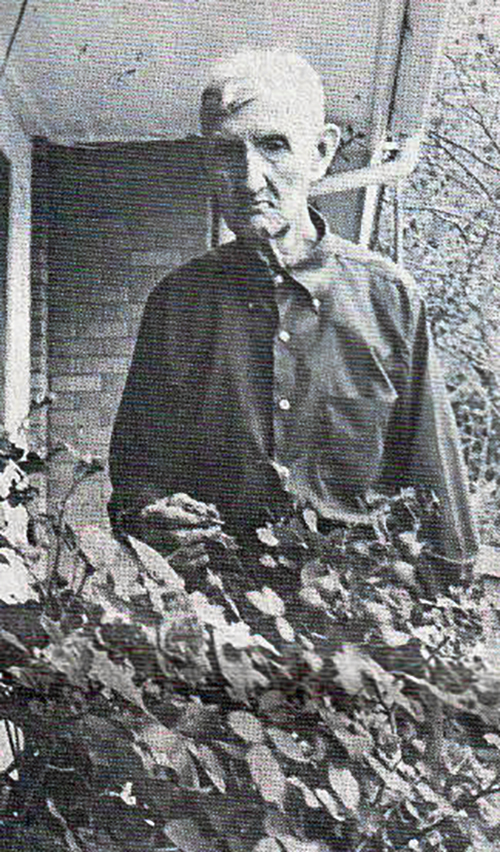
Burgess Peter Jacobs, aka “Papa Jake,” had just celebrated his 99th birthday when we talked. “Came here the 15th day of January 1907,” he said with a big smile. “I stepped off the train at the Naples depot with a wife and five kids. Came from North Carolina where I worked in a sawmill and raised a little patch of cotton.

“There were no brick buildings,” he reminisced, recalling dirt streets and wood sidewalks as if it were only yesterday. “Charlie Pope built the first one in 1908 or ’09. You know where the Lee Davis’ store is? He put his name in the brick on that building. Course, when Lee moved in, he covered up Charlie’s name.”
“We call these “Mama’s blooms.”

His crystal-clear mind revealed knowledge like someone reading from a history book. “The big business here was the sawmill, but it shut down a few years after.”

When questioned about occupations through the years, he called on quick wit and humor. “Like everyone else — as little as I could. Two years in Bowie County and a year in West Texas before settling down near Naples.

“I farmed mostly. Until about 17 or 18 years ago,” Jacobs continued. “My house was in Morris County, but I farmed in Cass County. About as far as from here to the street,” he said, looking out the window.

“Tax collector came one day. Spent the whole day measuring,’ lookin’ and askin.’ When he discovered I lived in Morris County, he tore up the papers and Ieft. I could have told him if he had asked,” he chuckled.

Laughter and a zest for life filled his stories. “This fellow was runnin’ for sheriff in Cass County once and came by to ask me to vote for him. I told him that no one was coming that far to get me, and no one there was going to bother me. So I didn’t need a sheriff.”

Shifting to birthday cards, he showed me one from President Gerald Ford. “Seen a lot of presidents come and go,” Jacobs said, proudly displaying the greeting. “But sure was surprised to get a letter from one.”

According to Jacobs, family has commemorated his birthday since the early 1920s by staging the family reunion on the Sunday falling nearest his birthday. And family came large for Papa Jake.

Looking fondly at a picture of him and his wife, Quincey Adalee, he added, “I was married to her for 69 years, five months and a few days. I liked a little being 20; she was a little over 16 when we married.” After a noticeable hesitation, he said softly, “She’s been gone about ten years now.”

The couple had nine children and 42 grandchildren. Asked about great and great-great-grandchildren, Jacobs shook his head and laughed. “I don’t know. I can’t count ’em all. I just call ’em my dirty dozen.”

Papa Jake reported his daily activities included “watching a right smart of television. Like to watch the wrestling. Listen to the news on radio. I walk to the mailbox every day. Used to get the mail for the ladies around here ’till I got to where I couldn’t see too well.”

Jacobs expressed pride in seeing roses growing around his house. Especially the white roses. “We call them “Mama’s blooms,” he said, holding his wife’s picture.
I attended his birthday party Saturday night at the Naples Community Center and the family reunion Sunday. “He did not miss a minute of the activity while spreading  humor and warm smiles,” I wrote. “Posing for pictures with family that came from as far as California to attend.”

You can read history books all day long. But none will touch your soul the same as talking to someone who has lived it.

Papa Jake was a living example of the old saying that you are only as old as you feel. Smiles on a weathered face and laughter in an aged voice recalling family, friends, and a century of living left me thinking I was the old timer in that conversation.

Fifty years ago, come May 1.

—Leon Aldridge

– – – – – – –

Aldridge columns are featured in these publications: The Center Light and Champion, The Mount Pleasant Tribune, the Rosenberg Fort Bend Herald, the Taylor Press, the Alpine Avalanche,  the Fort Stockton Pioneer, the Elgin Courier, The Monitor in Naples, and Motor Sports Magazine.

© Leon Aldridge and A Story Worth Telling 2025. Excerpts and links may be used, provided full and clear credit is given to Leon Aldridge and ‘A Story Worth Telling.’

Adventures meant to be

“Blessed are the curious, for they shall have adventures.”
— Lovelle Drachman, author

– – – – – – –

Adventure was not on my mind after another day at the newspaper office almost 40 years ago. I was simply cruising the day’s mail that included the newest issue of Hemmings Motor News (aka “the car nut’s bible). And the best place to satisfy anyone’s curiosity about any car for sale.

I braked to a stop in the Chevrolet ads when I saw, “For sale by original owner, 1965 Malibu SS, factory L-79 engine. Stored in Iowa.”

Cars collectors are known for many strange behaviors. Including, but not limited to, buying long lost siblings to something they had back in the day and “shoulda kept it.” Or wanted to have but couldn’t afford it then. And just about anything hidden away in storage for some time. Better known today as a “barn find.”

My story is no different. While still a student at East Texas State University, I became the third owner of a 1965 Chevy Malibu SS factory born with that same L-79 high horsepower motor as the car in the ad. I parted with the vehicle too soon, vowing quickly to replace it … if I ever found another one.

It was way after dark the night I saw the ad some 15 years after taking that vow. But I dialed the number anyway, apologizing profusely for the late hour when a lady’s voice said, “Hello.” My inquiry was met with, “My husband is working the night shift, all I can do is read the window sticker for you.”

That’s when I sensed my first adventure that was meant to be.

Combing the huge auto Pate Swap Meet near Fort Worth the next day, the car in the ad still weighed heavily on my mind. Near dawn the next morning, DFW airport was fading from view at my American Airlines window seat. Before lunch, I was shaking hands with the man who had special ordered the car as a high school student. Drooling over all the paperwork he had on the car and loving his stories.

“Because I wasn’t 18 yet,” he laughed. “The dealership required my mother to sign for the car because of the high-horsepower engine. And the car took five months to get, not because of the motor, but because I ordered a vinyl top. Figure that one out!”

Just days before my arrival, He had brought the car to his home in the northern Chicago suburb of Northbrook, Illinois, from his father’s home in Iowa, where it was stored. “They don’t salt the roads in the winter like they do here,” the car’s owner said, “Salted roads are the best way I know of to get the rust worm in your car.”

Technically speaking, a barn is not required for an old car to gain the status of barn find. When the rescue story is told, any neglected shelter leaving a coat of dust on a desirable relic will elevate that hidden ride to “barn find” status at the next storytelling night.

“Barn finds” are on the opposite end of the spectrum from beautifully restored cars bought at televised auctions for stratospheric prices. Often a little more revered in some circles. And almost always, the beginning of an automotive adventure.

The first decision with a barn find is whether to drive it home or trailer it. The owner had already changed the oil, filled the tank with fresh fuel, and washed away the “barn” dust. I checked fluids, tires, hoses, belts, and electrical.

My curiosity satisfied after a short test drive, I opted for the adventure … “Let’s drive ‘er home.” By 5 a.m. the next day, I was beating rush hour traffic out of the city. On board were some basic tools, an extra fan belt, a fire extinguisher, and a spare quart of oil. All acquired from an auto parts store the previous evening.

And a hand full of fast food joint coupons pulled from the newspaper.

Now, if you’re considering something similar at home, let me be transparent on this one point. Taking time to thoroughly assess a stored vehicle before driving it any distance is critical. Looking back, I could have been — should have been — much more thorough in this, my first rodeo, before putting Chicago in my rear-view mirror and a smile on my face.

Another point of perspective is that was back when gas station road maps were the only form of navigation, interstate highways were not as connected as they are today, and the only decent coffee was at truck stops.

GPS says in 2025 the nearly 1,000-mile trip will require 13 hours of driving time with good traffic. I made the same trip non-stop again in 2016, attending the Muscle Car and Corvette Nationals, using only Waze and hot, black coffee. Took me fourteen hours in a rental car.

The mid-1980s adventure in an aged muscle car that hadn’t seen daylight in a long time consumed 21 hours. On tires that “looked pretty good” but were manufactured before date coding where the rubber meets the road was a thing. I was easy on her, too. Monitoring gauges, listening for noises, and stopping regularly for visual inspections.

Granny always joked that “God takes care of old folks and fools.” Whatever the case, He was with me on that trip right up the time I turned into my driveway at 1 a.m. Without incident. Four tanks of gas, one quart of oil, and a myriad of tasteless fast food later.

Other trips would follow. The value of the treasure rescued aside; the adventure has always been the best part. Because even when the journey is without incident, there is always an interesting story to tell.

Like this one. One I’ve shared countless times in almost 40 years.

Every time with a smile.

—Leon Aldridge

– – – – – – –

Aldridge columns are featured in these publications: The Center Light and Champion, The Mount Pleasant Tribune, the Rosenberg Fort Bend Herald, the Taylor Press, the Alpine Avalanche,  the Fort Stockton Pioneer, the Elgin Courier, The Monitor in Naples, and Motor Sports Magazine.

© Leon Aldridge and A Story Worth Telling 2025. Excerpts and links may be used, provided full and clear credit is given to Leon Aldridge and “A Story Worth Telling.”

Still trying to remember where …

Take care of all of your memories, For you cannot relive them.”
— Song lyrics by Bob Dylan and The Band

– – – – – – – –

Memories. I write about them often. Because at this age, I have a lot of memories to keep up with. And possibly because that’s all I can remember.

Most amazing are moments remembered when I forget everything else. My phone. My keys. My checkbook. It will come to me in a minute, but while we’re waiting, let me share a conversation with a good friend not long ago. We talked about what we remembered as new South Ward Elementary students in Mount Pleasant. Back when Fred Flintstone was still in Bedrock kindergarten .

By chance or destiny, we arrived in northeast Texas just a few years apart; coming from opposite directions. The reminiscing was fun. But what we agreed was really the amazing part was how much we remembered about grade school.

My first-grade year was 1954 at Crockett, Texas. The small white frame structure my parents rented sat in the middle of an empty field next to the only nearby residence. Two houses not far from downtown with a long, shared dirt driveway, surrounded by woods on three sides.

We didn’t have a television, or a telephone. What we did have was the sound of rain falling on a tin roof, the smell of Mom’s morning glories covering the trellis on the front porch, and late-night crackers and milk with Dad. It was his favorite bedtime snack.

A green Studebaker was transportation for our one-car family until the fateful Sunday afternoon when Dad and the neighbor, Mr. Hooks, went fishing. Old timbers on a country bridge failed, sending them off into a dry creek bed below.

The crumpled car and my father in bandages are scary memories. He and Mr. Hooks were banged up and bruised, but otherwise, all right.

My youngest sister, Sylvia, was born in Crockett. I remember Dad showing off our newborn sibling at the hospital’s back door, where middle sister Leslie and I waited in the car. Mom in a bathrobe, ws standing behind Dad. Both beaming with smiles.

My father worked for the long gone five-and-ten-cent store chain, Perry Brothers. Small wooden crates in which china dishes were received at the store served many uses, from garage storage to creative kid’s activities. One pinnacle of playtime was the day I launched one in the creek behind our house to see if it would float.

It did.

Basking in that delightful discovery, I then talked Leslie into boarding it to see if it would still float.

It didn’t.

Thank goodness the creek was shallow.

The bungled boating caper, plus the time I talked Leslie into jumping off the roof, certain that a bed sheet was a good parachute, probably accounts for less-than-good memories of parental punishment. Mom seldom administered any, deferring that chore to Dad. But her warnings were stern enough. “You just wait until your father gets home!”

Dad was good to take me to town following his lunch break on summertime Saturdays. Clutching a quarter and a dime, I walked to the nearby theater where the two coins were ample funding for a double-feature matinee plus popcorn and a Coke.

The last of 1954 summer movies was the beginning of first grade in the basement of an old brick school building.

The quintessential teacher, whose name I don’t remember, wore gray hair up in a bun and lace-up, high-heeled shoes. We wrote 1+1=2 on black chalkboards over which hung examples of cursive writing and the obligatory portrait of George Washington. The unfinished one that renders the appearance of clouds at the bottom.

First grade was my first and last playground fight. It went down near the front steps of the old schoolhouse. I don’t remember what it was about or who won it.

I do remember thinking that I didn’t particularly enjoy it and made a mental note to never get into another exchange of fisticuffs if I could help it.

First-grade classes moved into new classrooms after the Christmas break, from the basement into the modern mid-1950s structure with lots of glass and open spaces. That’s where we stood in line for the Salk polio vaccine. It’s also where a spring tornado turned the sky black, dark as night, as we huddled behind the new green chalkboards.

We left Crockett with our memories in 1955, arriving in Seymour where we lived until 1959 when we moved to Mount Pleasant where we stated long enough to call it home. It was the last relocation my parents would make.

I could tell you about our arrival in Seymour. It was about the same time that a young entertainer named Elvis performed at the Seymour High School gymnasium.

But that’s a different memory for a different day.

Right now, I’m still trying to remember where I laid my keys five minutes ago.

—Leon Aldridge

– – – – – – –

Aldridge columns are featured in these publications: The Center Light and Champion, , The Mount Pleasant Tribune, the Rosenberg Fort Bend Herald, the Taylor Press, the Alpine Avalanche,  the Fort Stockton Pioneer, the Elgin Courier, The Monitor in Naples, and Motor Sports Magazine.

© Leon Aldridge and A Story Worth Telling 2025. Excerpts and links may be used, provided full and clear credit is given to Leon Aldridge and ‘A Story Worth Telling’ with appropriate and specific directions to the original content.

I don’t even like writing about it

The late afternoon storm intensified with every word I drafted. It was dry and cozy inside where I was writing, but rain, wind, thunder and lightning filled the skies outside.

“It’s lightning! Get out of that tub now,” my grandmother was quick to announce when storm clouds rolled into East Texas. Baths at her house in Pittsburg were fun as a youngster. Mainly because there was no waiting in line for the old-fashioned tub. Unlike bath time at home where having two sisters meant waiting in line for the only bathtub in the house.

“Aren’t you done yet,” was a common cry through the bathroom door Saturday nights. Except for that night in Seymour, when just about the time I settled in to soak in the bubbles, my mother burst through the door in a panic.

“Get dressed now.”

Gillette commercials on the television touting smooth shaves meant the Friday night fights were coming on. But the constant siren blaring from the fire station downtown signaled something more sinister.

“There’s a tornado coming,” Mom shouted.

“I’m wet,” I pleaded.

“No time,” she said. “Get dressed wet. We have to get to the cellar.”

The first flash of celestial electricity sent my parents and my grandparents into national disaster mode. Mom just made sure everyone was inside, but Granny dashed through her house, issuing orders and unplugging her electrical appliances. Both of them. The Kelvinator refrigerator that stood in the corner of her dining room for more than 50 years, and the small, black, 1940s radio in the living room.

“Don’t touch the faucets,’ she always warned. “Get away from those windows, you’ll get struck.”

I ‘ve known only two people struck by lightning. I attended the small country church service for the first. The second person still laughs today when he relates his encounter with the phenomenon of nature.

Research reveals a 1 in 1,222,000 chance of getting hit by lightning. That computes to 0.0000008%. Your odds of winning a Las Vegas jackpot are better.

The odds of striking a photo of a lightning bolt are good, however, with a flash of knowledge. Back in the ancient days of film photography, I read that lightning storms follow a regular pattern of building in intensity, peaking, then decreasing, all in a measurable cycle between discharges. One summer night, I tested that theory from an upper-story balcony of the Palacio Del Rio Hotel in San Antonio. Timing the flashes and shooting long exposures on that cycle netted a half dozen frames with decent images on a 36-exposure roll of Kodachrome. Still hanging on my wall is a framed photo of a cloud-to-ground lightning bolt heating the night air with the Tower of the Americas in the foreground.

One lightning bolt can scorch anything in its path with 50,000-degree Fahrenheit temperatures and reach more than ten miles to do so. I’ve never experienced it, and don’t won’t to, but intenisfying electrical charges reportedly fill the air in the seconds right before lightning strikes. Metal objects as small as jewelry will sometimes buzz. Hair will stand on end.

If you experience these signs, it goes without warning, don’t wait to seek shelter. Lightning can travel from the clouds, through a human body, and into the ground in about three milliseconds.

Which is what happened to the one person I know who was struck by lightning and lived to tell about it. Motivational speaker and my friend and colleague from Stephen F. Austin State University teaching days, Miles McCall, can put a humorous spin on just about any experience.

I’ve been struck by lightning,” Miles mentioned casually one day. He said it with a smile.

“Some friends and I were sailing on Lake Sam Rayburn that summer day. One of them had brought his dog. And we were having fun when a storm blew up,” he begins. “One of those quick ones.” For Miles, sailboats and Jimmy Buffet songs make for a perfect outing.

“Wisely, we headed for shore arriving just as the storm hit. But unwisely,” he laughs about it now, “We found shelter under a huge tree. Smart, huh? All I remember after that was a brilliant flash and a deafening clap of thunder.”

“Moments later, I looked around, and all of my friends and the dog were lying sprawled on the ground,” Miles said. “I thought, ‘Oh no’ they’re dead. Then one of the guys gets up and takes off running. Then I thought, ‘Oh no, they’re alive and I’m dead!'”

“We were all OK,” Miles concludes with a laugh, “Except the poor dog, he didn’t make it. The soles of our shoes were burned off and our feet were blistered. The earth and the asphalt under the tree spreading from the base outward in all directions was cracked and split open.”

According to Miles, the group surmised their saving grace was the charge hitting the tree and traveling out in the root system before connecting with them through their feet.

As I finished writing this missive, the rain, lightning, and thunder was moving out of Center. And that was my saving grace. Because I don’t like lightning.

Not even writing about it.

—Leon Aldridge

– – – – – – –

Aldridge columns are featured in these publications: The Mount Pleasant Tribune, the Rosenberg Fort Bend Herald, the Taylor Press, the Alpine Avalanche,  the Fort Stockton Pioneer, the Elgin Courier, The Monitor in Naples, and Motor Sports Magazine.

© Leon Aldridge and A Story Worth Telling 2025. Excerpts and links may be used, provided full and clear credit is given to Leon Aldridge and ‘A Story Worth Telling’ with appropriate and specific directions to the original content.

Choose friends wisely, they will shape your life

“Count your age by friends, not years. Count your life by smiles, not tears.”
— John Lennon (1940 – 1980) English singer, songwriter and musician.

– – – – – – –

When traveling alone, something I’ve done far too much of in my lifetime,  I’ve spent unknown hours just thinking. My brain’s hard drive revs up with the open road, shifting a myriad of memories into overdrive.

With the touch of a button, I have satellite radio, Bluetooth, and even antique CDs for entertainment. All waiting to be turned on as I sit thinking, listening to the hum of the highway that is still my preferred pastime for making miles fly by.

Driving last Saturday, alone, I reflected on knowing most of my life is in the rearview mirror, anticipating that whatever time is left will fly by all too quickly. That’s a thought that becomes increasingly poignant every time I’m headed home dressed in my Sunday best with a folded funeral home program in my pocket.

Loving parents instilled many good things in me. One being to “choose your friends wisely; those you call friend will shape your life.” Many good friendships were forged with members of my Mount Pleasant, Texas, high school graduating class. Friendships that have lasted a lifetime.

Ronnie Lilly and I graduated in that generation of students that remembers hearing the news at school that President Kennedy had been assassinated in Dallas.

A couple of years following that memory, in the fall following high school graduation, Ronnie and I were roommates at Kilgore College along with a third “partner in adventure.” Our mutual friend and high school classmate, Mike Williams. Memories of said adventures include sharpening our skills at at the pool hall, late night card games, the night clerk at the corner 7-11 we affectionately nicknamed “Hostile,” overflowing the washing machine with soap at the laundromat across the street from the girl’s dorm, and one memorable night that we drove to downtown Dallas. Seeking verification of rumors regarding the fun of experiencing a Texas O.U. weekend in “Big D.”

Then traveling back to Kilgore that same night.

Ronnie was driving, I was riding shotgun, and Mike fell asleep in the back seat. Arriving at our Kilgore apartment just before dawn, Ronnie and I went in and hit the hay while Mike continued snoozing in the car. He awoke sometime after sunup, initially miffed at us thinking we had stopped to rent a motel room and left him in the car.

Through these memorable moments of fun and more, we miraculously still found time to attend a few classes.

Following spring finals, Ronnie and I flipped a coin to determine whose old Chevrolet, his ’57 or my ’58, was more likely to make a trip to Southern California. Memorial Day weekend, we were headed west in his car. The first night, we bunked with my aunt and uncle in the Texas Panhandle, then continued on to the second night in Las Vegas where we stayed at The Thunderbird on the old Vegas strip. Before the days of high-rise hotels and sprawling casinos.

After learning that the bellman knew where Mount Pleasant, Texas was and had family living there, we were just walking and gawking when we heard Dean Martin singing. Following the voice to the hotel’s nightclub entrance, we caught a glimpse of the crooner performing through an open door. No one was there at the moment to tell us we couldn’t, so we walked in and quietly disappeared into the shadows at the back of the room. After enjoying most of a couple of songs, this tall gentleman in a black suit walked up beside us and graciously offered two 19-year-old underage kids from Texas some options to consider. We heeded what we agreed was his best one. To leave … immediately.

Staying with my Uncle Bill in the Los Angeles San Fernando Valley suburb of Canoga Park that summer, Ronnie and I packed a lot into the experience. Working days to make money for school in the fall. Cruising popular hangouts Saturday nights listening to the Beach Boys on jukeboxes, and drooling over California cool cars and hot rods. Occasional weekend trips up the coast to Pismo Beach roaming the dunes in sand buggies with Uncle Bill and his friends.

Pismo Beach sand dunes, summer of 1967. Ronnie Lillly (left) and Leon Aldridge (right).

And those Sunday afternoons. Watching surfers at Malibu Beach and conducting memorable observational research on the still somewhat new beachwear fad of the mid 1960s. Bikinis.

Loaded with memories by Labor Day, we headed east back to Texas. Crossing the desert in the middle of the night to avoid excruciating daytime temps put us in Southern Arizona well before dawn. Sleep was beckoning, but a motel was nowhere to be found. It wasn’t the Hilton. It wasn’t even Motel 6. But we found a couple hours of shut-eye stretched out on picnic table in a middle-of-nowhere roadside park. Nestled near a rock bluff that, by dawn’s early light, was one of the most spectacular views of the trip.

Ronnie’s faithful ’57 made the journey without a hiccup in spite of one minor inconvenience. The gas gauge didn’t work. That proved to be a problem just once, however. Not far over the state line from New Mexico into Texas. In the middle of another nowhere between Carlsbad and Pecos. Ronnie flagged down a guy in a pickup for a ride into town for gas while I stayed to safeguard the car. About the time I reclined across the car’s front seat for a quick nap, some helpful motorists stopped to offer assistance. A host of hippies in a VW van covered with flowers and love symbols. I assured them everything was all right and gas was on the way back. So they rolled on, waving peace signs as they departed.

Ronnie returned with a can of gas, and we were back on the road. I was never sure, however, if he really believed me about the bus load of hippies. “We’re back in Texas,” he laughed. “We left all that behind in California two days ago. You sure you weren’t dreaming while you napped?”

It really happened.

Someone once said, “Life is an adventure best shared with good friends.” I’ve been blessed with many good friends like Ronnie Lilly, sharing adventures and making memories that have lasted a lifetime.

Friends and family gathered in East Texas last Saturday to remember Ronnie and celebrate his life. Afterward, I drove home. Alone. Dressed in my Sunday best. A funeral home program folded up in my pocket.

Thankful for memories and for friends like Ronnie.

Friends who have definitely shaped my life.

—Leon Aldridge

– – – – – – –

Aldridge columns are featured in these publications: The Mount Pleasant Tribune, the Rosenberg Fort Bend Herald, the Taylor Press, the Alpine Avalanche,  the Fort Stockton Pioneer, the Elgin Courier, The Monitor in Naples, and Motor Sports Magazine.

© Leon Aldridge and A Story Worth Telling 2024. Excerpts and links may be used, provided full and clear credit is given to Leon Aldridge and ‘A Story Worth Telling’ with appropriate and specific directions to the original content.

Slowing the pace of life

“Uninvited, he sat down and opened up his mind,
On old dogs and children, and watermelon wine.
— song lyrics by Tom T. Hall

– – – – – – –

Those finer things in life celebrated in song by the American singer-songwriter nicknamed “The Storyteller” admittedly possess powers soothing to the soul. But my most trusted tool for slowing the pace of life was, for many years, something a little different.

My grandfather’s rocking chair.

I never knew where the piece of furniture came from. It was relegated to the front porch before I was born. It’s origin was one of many things I’ve wished I’d quizzed my grandmother about. I had a long list of questions for her, but many remained forever unanswered that October day in 1993 when she closed her eyes for the last time.

The plain wooden rocker with arms and a homemade red oil cloth seat cushion resided on their front porch along with the high-back cane rocker Granny called hers.

The chairs appeared to beckon them to the front porch every evening after supper with some sort of magical power. When John Kennedy occupied the White House, he taunted the value of rocking chairs as therapeutic for back problems. But for my grandparents, I think it was more than that.

My father’s parents settled in northeast Texas long before Kennedy was president. In fact, when they moved into their Cypress Street residence in Pittsburg on Halloween night, 1930, Herbert Hoover was in his second year as president. The railroad brought them to Camp County. Granddaddy worked for the Cotton Belt. He retired in the early 1950s when steam locomotives were still an occasional sight.

So, it’s probably not just coincidence that the small white frame house where they lived most of their life was across the street from the railroad tracks. Or the fact that his chair was perfectly positioned to spot approaching locomotives.

Rocking, talking, and occasionally singing hymns like “Blessed Assurance” were regular activities every evening. And waiting for a passing train when Granddaddy would glance at his pocket watch to see if it was on time. If not, he might declare something like, “The 6:15 is running a little behind this evening.”

My grandfather died in 1967, and with his death, regular after-supper porch sitting also ended. My grandmother lived in the house for another 26 years before joining him, but I don’t recall her ever using the rockers again.

Infrequent use and dirt daubers started were taking their toll on them by the time Granny moved the chairs inside to the living room.

After she died, my sisters and I out picked a few things for memories. Both rocking chairs went to my Hill Country back porch, where they once again waited for evening company.

My occasional “rocking and thinking spells” were mostly monitoring Hill Country sunsets. But when north winds caused Granddaddy’s old rocker to sway gently on some days, I saw him occupying his chosen chair. I was certain more than once that I caught a glimpse of a curl of pipe smoke rising above the brim of his hat.

The first night they spent at my house, I settled into his chair and began to rock. I relaxed and wondered. Did the old chairs really possess magical powers? Maybe, but my grandparents’ life seemed much more manageable at “front porch time.” My rocking was more intense when I consulted the chair to work out details of earning a living, rearing children, and other mindful matters.

Things like, “Dad, I need a new dress for the banquet,” or “Dad, the pickup’s making a funny noise and steam’s coming out from under the hood,” were always met with the same answer. “Give me a half hour and meet me at the rocking chair.”

Over time, the rocker became tattered and a little worse for wear, but I couldn’t bring myself to replace it. Changing anything about the chair would change its appearance, and most likely its powers as well I feared. For that reason, both retained their “as is” condition while I continued rocking and pondering.

During a move back to Shelby County a couple of decades ago, the relic rockers suffered crippling injuries. Consequently, they were confined to storage intended to last only “a few weeks.” But I never located that rare “round tuit” to b ring the back to life. Sadly, they still rest in storage, waiting for their resurrection.

With a little spare time on my hands, the rocking chairs crossed my mind last week. Maybe it was strains of “Blessed Assurance” reminding of their wait for attention. Or perhaps it was catching “old dogs, children, and watermelon wine” on the radio.

Really, I’m thinking it was just the same song my grandparents heard when they rocked in the evenings. The one calling them from the complexities of a hectic society. Wishing for that simpler time in life they remembered.

—Leon Aldridge

. . . . . . . . . . .

Aldridge columns are published in these Texas newspapers: The Center Light and Champion, the Mount Pleasant Tribune,  the Rosenberg Fort Bend Herald, the Taylor Press, the Alpine Avalanche,  the Fort Stockton Pioneer, and The Monitor in Naples.

© Leon Aldridge and A Story Worth Telling 2024. Unauthorized use and/or duplication of this material without express and written permission from this site’s author and/or owner is strictly prohibited. Excerpts and links may be used, provided that full and clear credit is given to Leon Aldridge and A Story Worth Telling with appropriate and specific direction to the original content.