“Real winners don’t stand alone in the winner’s circle. They help others get there.” —Author unknown but admired.
– – – – – –
“You should write that story,” a friend said.
“Maybe,” I replied.
More than just another one of my reminiscing diatribes about drag racing from “…a long time ago in a galaxy far, far away…” this was a learning experience story. If loud and fast cars are not your thing, I totally understand. Simply substitute something that is “your thing,” but don’t miss the moral of the story.
I was drag racing before the ink on my driver’s license dried. At tracks like Stracner Drag Strip at Bettie, Texas. You’ve probably never heard of either unless you grew up in East Texas and loved loud and fast cars.
Working my way through college and supporting my loud and fast car addiction at Sandlin Chevrolet and Olds in Mount Pleasant, I was fascinated when Dick Smothers (of the well-known TV comedy duo) fielded a team of “ram air” high-performance Oldsmobile muscle cars.
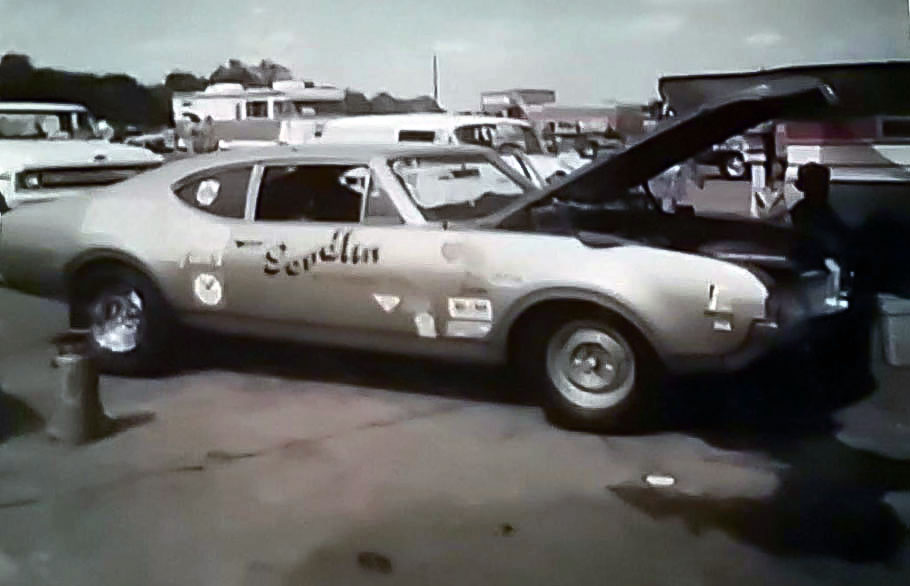
The perfect storm emerged when I bought one of the Olds muscle cars and entered the 1970 National Hot Rod Association’s (NHRA) SpringNationals event at Dallas, competing in the same class with one of the Smothers Brothers cars. A professionally prepared example from California driven by Willard Wright, a drag racing champion in his own right before being recruited by the Smothers Brothers. True to his skill, Wright held the national record for the class and was a consistent winner in every event across the country.
Some might have called it “a bummer” to have been paired with the national record holder in final eliminations. It turned out to be a story still worth telling, however, with the bonus of a lesson I never forgot.
I harbored no fantasies of taking out the national record holder. Short of a million-to-one shot error on his part, like a “red light” foul start, or a mechanical problem with his car.
He pulled to the line in the left lane and I staged in the right. The starting line “Christmas tree” counted down to green and we both left strong. In less than 13 seconds, it was over. To no one’s surprise, Wright advanced to the next round, and I headed for the trailer.
To some, that might have seemed a great disappointment. But to this “working-my-way-through-college” kid who loved loud and fast cars, I got to play with the “big boys” at a national event—a long way from Friday nights at Bettie, Texas.
Back in the pits, good friend and race car mechanic Oscar Elliott was waiting. Our plan? Load up and watch the rest of the races as spectators. We came, we saw, we got to play, we had our moment on the big stage.
But wait, this story wasn’t over yet.
The smell of hot rubber and exhaust fumes still hung heavy over the car when I saw someone walking toward us. “There you are,” he hollered. Extending his arm for a handshake, he added, “My name’s Willard Wright.”
Momentarily astounded, I could do no better than stammering, “H-hello.”
“Great race,” he said. “Tell me what you’ve done to the car.”
I looked at the national record-holding driver who had just knocked me off on the way to another winner’s circle.
“Well, we started by ….”
Then I detailed everything I could think of about how we dismantled a new car and put it back together in compliance with NHRA’s deep rule book and my shallow pocketbook. After listening intently, Wright had questions. “Did you (do this), have you (done that)?”
After answering questions and me taking notes on his tuning tips for the unique Oldsmobile motors, he said, “Sounds like you’ve done all you can do without factory backing and sponsorship cash. Good job, though—you ran me as close as anyone — right there with me at the finish line. Not bad for a couple of ‘East Texas boys’ running as independents.”
With that, we shook hands again. “Good to meet you and good luck—you’ll do well.” Then he was gone as quickly as he had appeared. We stood in awe, watching him disappear into the crowd.
“That was Willard,” Oscar said calmly, finally breaking the silence.
“Yeah,” I drawled. “That was Willard.”
That was also more than a memorable racing experience. It was the day a national record-holding champion tracked down a loud-and-fast-car loving kid from a small town with a big dream to say, in essence, “Good job, how can I help you become better?”
And …well, that’s a story worth writing about.
—Leon Aldridge
(Photo at top of the page – The Smother’s Brothers 1969 Oldsmobile Cutlass G/SA national record holding car driven by Willard Wright. The same one that handed me a loss at a national event, but gave me a great story about a championship driver with more than just talent: one with class and with a desire to help others find the winner’s circle. The photo is not mine. I take no credit for it and am realizing no income from it. I use it strictly for editorial purposes. I found it on an Oldsmobile racing social media page several years ago that also listed no photo credit.)
– – – – – – –
Leon Aldridge is a veteran editor, publisher, and communications professional, currently enjoying semi-retirement while awaiting his next challenge. His columns appear in: The Center Light and Champion, The Mount Pleasant Tribune, the Rosenberg Fort Bend Herald, the Taylor Press, the Alpine Avalanche, the Fort Stockton Pioneer, the Elgin Courier, The Monitor in Naples, and Motor Sports Magazine.
© Leon Aldridge and A Story Worth Telling 2026. Feel free to use excerpts with full and clear credit given to Leon Aldridge and ‘A Story Worth Telling.’

