A monument to the ‘taste of flight’

“Once you have tasted flight, you will forever walk the earth with your eyes turned skyward, for there you have been, and there you will always long to return.”
— Leonardo da Vinci (1452 –1519), Renaissance artist and inventor who documented theoretical flying experiments.

– – – – – –

As a licensed pilot, granted one who hasn’t taken the controls of an aircraft in many years, I can still feel da Vinci’s intoxicating longing for flight.

Even as a kid, my young eyes were turned skyward. Dreaming of a day that I might taste the feeling of flight.

That same longing obviously lingered in two little-known, long-ago aviators from Shelby County in East Texas. Their flying adventures were reportedly the subject of family reunion stories for many years—into the 1980s, for sure.

Standing for a long time as a “monument,” of sorts, to their tastes of flight was the abandoned frame of an old airplane in the Southern part of the county known as the Dreka community.

I first saw what was left of the rusty remains in Florence Duncan’s yard on a dirt road some 40 years ago. A stop at Mrs. Duncan’s house, while visiting family friends nearby, introduced me to her and to the fabled stories of the flying machine. Even then, it was already slowly succumbing to grass and weeds.

“It’s been there since ‘bout 1947,” she said of the old airplane’s skeletal parts. “I keep it there for sentimental value.”

“Two of the boys (family members Ernest Duncan and Duncan Rolland) bought the airplane and wanted to turn one of our fields in front of the house into a runway for it,” Mrs. Duncan reminisced. “My husband, Dean, and I told them ‘No.’ But you know what? They cut my persimmon tree and flew it there anyway.”

“It was an old airplane,” she continued. “Duncan said he gave $150 for it.

When they lit it out there that first time, they hit a terrace and broke one of the wheels.

“They fixed it with bailin’ wire before they decided to go to Center in it,” Mrs. Duncan continued. “They came back in a little while, but they didn’t set down on the field quite soon enough. The wheel they wired up didn’t hold, and the airplane crashed, almost flipped over.

“I was scared to death,” Mrs. Duncan recalled. “I went runnin’ out toward the field. The whole family was right behind me. When I got close enough, I heard Ernest say, ‘I told you we should have lit it down in Center.’ That’s when I knew they were all right. I couldn’t believe they crawled out of that airplane and walked away from it.

“After the crash,” she said, “Van Bertherd, a young man just down the road, thought he could do better. He worked on it and headed down to the corn patch with it. The corn was just coming up at the time, and the plane got stuck.

“We wound up havin’ to take the mule down to the field,” Mrs. Duncan continued, “then towed it to a level stretch on the road. Van got it off, just barely clearing the fence and the pine trees, but came right back. Said it needed lots more work.”

According to Mrs. Duncan, the wrecked aircraft was eventually dragged to a corner of the yard where children climbed and played on it. “Pretending to fly,” she said. “I went out there once and asked where they were flyin’. ‘Way up high over Dallas,’ they said.

“Duncan was shaken up for a long time by that wreck , but he admitted later to wishin’ the airplane had been salvaged,” Mrs. Duncan recalled. “Said it would be an antique now, worth a lot more than the $150 he paid for it.”

When I saw it in the 1980s, the wreckage of the Dreka flying machine had reportedly  spent years serving as a kid’s playground, target practice, and neglect. By then, little remained but the bare frame, which had once been covered in fabric that had long since rotted away. There were no wings or motor. By appearance, it was a small plane with a cockpit just large enough for a pilot and a passenger in tandem.

A visit to the area last week revealed no trace of the old airframe. I couldn’t even locate Mrs. Duncan’s residence in the heavily forested region. She reportedly passed away in the early 1990s.

I do remember her closing remarks during our visit back then, however.

“I’m glad Duncan and Ernest weren’t hurt in the crash,” she said. Then added, “About the only thing I’m still mad about is my persimmon tree.

“It never did come back.”

—Leon Aldridge

(PHOTO ABOVE — Mrs. Florence Duncan standing next to the Dreka airplane wreckage in her yard about 1981 or ’82. Photo taken by Patricia McCoy, a reporter for the East Texas Light during my first tenure at the newspaper as publisher.)

– – – – – – –

Aldridge columns are featured in these publications: The Center Light and Champion, The Mount Pleasant Tribune, the Rosenberg Fort Bend Herald, the Taylor Press, the Alpine Avalanche,  the Fort Stockton Pioneer, the Elgin Courier, The Monitor in Naples, and Motor Sports Magazine.

© Leon Aldridge and A Story Worth Telling 2025. Excerpts and links may be used, provided full and clear credit is given to Leon Aldridge and ‘A Story Worth Telling’ with appropriate and specific directions to the original content.
My hometown

“Home is not a place … it’s a feeling.”
—Uncredited bit of wisdom I picked up years ago.

– – – – – – –

“So, where’s home,” asked the man whose hand I was still shaking. A mutual friend had just introduced us as we all met for lunch at a local restaurant.

“East Texas,” I replied with a smile. “I live in Center, but I grew up in Mount Pleasant. I claim them both as my hometown.”

Even as I said it for the umpteenth time, that statement still sounded somewhat unusual. Odd that I’ve had a Center mailing address through a dozen presidential terms, and while my home in Mount Pleasant years ago was a fourth of that, I still call it my hometown. And what about the various Texas communities where we lived before settling in Mount Pleasant to stay when I was eleven?

Someday, I’ll examine the paper trail in a cardboard box full of evidence of my parents’ pilgrimage from the time before my own memories began. A collection of letters, receipts, car registrations, repair bills, church bulletins, report cards, and black-and-white school pictures.

It wasn’t until after my mother’s death that I realized she had amassed this veritable family history in her cedar chest. I guess I owe her thanks, or maybe the blame, for my own tendency to hang on to similar seemingly worthless pieces of paper.

My family’s last move to Mount Pleasant was just in time for me to finish fifth grade at South Ward Elementary. But evidence in Mom’s hoarded documents hints at previous addresses in Ballinger, Muleshoe, and Midland. Plus, Pampa up in the Panhandle.

My first and oldest cognitive connections from around the age of three or four are of Pampa. I also remember Crockett where we lived next and where I entered first grade. A move to Seymour, Texas, followed where I completed third and fourth grade, and all of fifth grade except those last few weeks spent in Mr. Mattingly’s home room in Mount Pleasant.

So, I contemplated, what really qualifies one place over another as “my hometown?”

To me, it’s where our heart was first grounded. Places we associate with the “firsts” in life, such as our first friends. Friends remembered from fifth grade in Seymour are tall, skinny Joe, with whom I played basketball at recess. Mike, a neighbor I rode bicycles with to the park. And Carolyn, the first girl I exchanged valentines with in fifth grade.

Many firsts became memories in Mount Pleasant. Some with those end-of-the-year fifth graders from South Ward when we graduated from high school together seven years later. And some of those graduates who became college roommates and long-time friends beyond high school.

First dates, first jobs, my first car, and house—those memories all began in Mount Pleasant.

“Home is sometimes a place you grow up wanting to leave and grow old wanting to return to,” I added to the lunch conversation. I thought about Mount Pleasant, and how after college, I tried to plant roots there twice. But that path just wasn’t in the cards.

I took the path more traveled, rooting in Center many years ago. Enough years to see my children begin school and make their first memories. Enough years to amass many friends and loved ones, and to lose some of both. Enough years to have tasted happiness and to endure heartache.

And even enough years to see good eating establishments come and go. Which is where this missive started. Over lunch.

“So, while my home has been in Center for most of my life, I also consider Mount Pleasant my hometown,” I concluded, thinking about some of my “trips home.”

I return occasionally. Navigating new highways and bypasses makes driving more stressful than it was when I learned to drive there. And, though the old streets are familiar, the places and the faces have constantly changed over time. while the memories of “firsts” linger there like it was yesterday.

“I never thought about having two hometowns,” my new acquaintance offered as we worked on chips, salsa, and sweet tea.

“Yeah,” I drawled. “I think home is anywhere we leave a piece our heart.

“Because hometown is not really a place … it’s a feeling in the heart.”

—Leon Aldridge

(Photo info: My youngest sister, Sylvia, on the front porch at 206 Redbud Lane in Mount Pleasant, Texas, “home and hometown” to me and my sisters Leslie and Sylvia. There is no date on the photo, but I’m guessing about 1962 or ’63. I have no clue what she was modeling on her head. It may or may not have had anything to do with what appears to be Easter baskets behind her. The house that was our home is still there today, but it’s been extensively remodeled and doesn’t look the same as I remember it. Sylvia moved to her eternal hometown December 14, 2023. )

– – – – – – –

Aldridge columns are featured in these publications: The Center Light and Champion, The Mount Pleasant Tribune, the Rosenberg Fort Bend Herald, the Taylor Press, the Alpine Avalanche,  the Fort Stockton Pioneer, the Elgin Courier, The Monitor in Naples, and Motor Sports Magazine.

© Leon Aldridge and A Story Worth Telling 2025. Excerpts and links may be used, provided full and clear credit is given to Leon Aldridge and ‘A Story Worth Telling’ with appropriate and specific directions to the original content.
Time flies and I’m still looking

“I’m having a hard time remembering names,” my friend’s frustration said. “I can’t remember them like I used to!”

“I can relate,” I offered. “Bad news is, it’s the massive amount of data build up in our brains as the years fly by. The searches take longer. The good news is it will come to you. It does for me. In an hour or two. Or a day … or so. Sometimes.”

“Another frustration,” I continued, “is trying to remember where I put things. Like last week searching for a photo of an airplane I owned. I know I have it … somewhere. How do we accumulate so much ‘stuff’ in one lifetime.”

My searching did, however, turn up photos of other airplanes. And a name lost to memory. Reverend Isaac Newton Burchinal, Jr. and his WWII airplanes.

“Reverend who,” my friend inquired? 

“Better known as ‘Junior’ Burchinal. His Flying Tiger Air Museum was a collection of WWII airplanes at a small Northeast Texas crop dusting strip west of Paris. Not exactly museum pristine examples, but airworthy none-the-less.

A story of Flying Tiger’s P-51 Mustang often repeated recounted a demonstration ride during which Burchinal pulled the old fighter plane up and over in a loop for the thrill seeking passenger. As the aircraft reached to top of the maneuver fully inverted, the passenger reported seeing not only a spectacular view of the earth from an upside down perspective, but also an assortment of nuts, bolts, and small parts falling from their hiding place in the bottom of the airplane raining down through the cockpit. This is the same plane that at the time had stenciled on the nose, the nickname “In God We Trust.”

The ‘refound’ photos reminded me of the day Burchinal flew his B-17 bomber to the old Mount Pleasant airport in the mid 1970s.

While learning to fly, I visited the colorful aviator’s field where he flew them often for local shows, and as a stunt pilot for Universal Studios in movies like “The Great Waldo Pepper” and “Midway,” plus the television series, “Baa, Baa, Black Sheep.” 

Not only were the planes fascinating, but I was in awe that anyone could fly the big warbirds off the small asphalt strip that ran uphill on one end with a fence and traveled highway on the other.

Burchinal’s Mount Pleasant visit was at an air show our fledgling Mount Pleasant flying club, the Northeast Texas Aviation Association, staged. I called him to inquire whether we might afford him and one his planes for our show. A deal was sealed; he was bringing his B-25 Mitchell bomber. That was until the afternoon before he called.

“Leon, this is Junior Burchinal up here in Paris,” he said. “I’ve got some bad news. We’re having problems with the B-25. It won’t make the trip tomorrow.”

My heart began rapidly losing altitude. Visions of, “what now,” spiraled out of control. “But, if it’s all right with you,” he added, “we’ll bring the B-17 for the same money.”

“All right,” I stammered, my spirits pulling out of the dive. “Yes sir, that is good news.” He continued to apologize, almost as many times as I thanked him. 

Early the next morning, as club members scurried about working on last minute preparation, I heard the huge four-engine B-17 coming over downtown Mount Pleasant. Mesmerized by the sight and sounds, I watched it make a long straight-in approach to the airport. Just as wheels touched pavement, a WW II “Corsair” fighter made a hi-speed pass over the airport before circling back to land.

Both planes taxied to the ramp. Burchinal climbed out of the single seat fighter, followed by a young lady who appeared literally to unfold and crawl out of a small seat added behind the pilot. He introduced the bomber crew, then the young lady as his daughter, before apologizing again for not bringing the B-25. “But I brought the Corsair to make up for it.”

No one could have dreamed as time was flying by, that the B-25 that couldn’t make the show would later land at the Vintage Flying Museum at Meacham Field in Fort Worth for a few years there. Or that it would decades later find a home at Mid-America flight museum in Mount Pleasant. And I would have never imagined that I saw it in Fort Worth about 20 years ago where I grabbed a fun photo of me in the pilot’s seat, never dreaming I would duplicate that photo just a few years ago at Mid-America Flight Museum.

The good news last week was finding the photo of Burchinal’s airplanes and reminiscing.

The bad news this week is that time still flies, and I’m still looking for that photo of my old airplane. It’s around here somewhere. I’ll find it in a day or two.

Maybe.

—Leon Aldridge

(Photo: Original Flying Tigers pubicicity black-and-white photo from the 1970’s of I.N. Birchinal Jr.’s B-17 Flying Fortress WWII bomber “Balls of Fire” flying above the Red River north of Pairs, Texas. )

– – – – – – –

Aldridge columns are featured in these publications: The Center Light and Champion, The Mount Pleasant Tribune, the Rosenberg Fort Bend Herald, the Taylor Press, the Alpine Avalanche,  the Fort Stockton Pioneer, the Elgin Courier, The Monitor in Naples, and Motor Sports Magazine.

© Leon Aldridge and A Story Worth Telling 2025. Excerpts and links may be used, provided full and clear credit is given to Leon Aldridge and ‘A Story Worth Telling’ with appropriate and specific directions to the original content.
The picture looks great in her house

“City people make most of the fuss about the charms of country life.”  
— Mason Cooley, American writer and educator 1927-2002

– – – – – – –

“Which one do you like?”

The request for consultation from a friend trying to decide between two pieces of artwork was noted. One, a small country farmhouse with a red barn. The second, a white frame country church building.

“I like them both — either will complement the art in your house,” I offered, trying to be helpful but not persuasive. “Visualize each one in your house for a moment; the better choice will come to you.”

Art, like beauty, is the eyes of the beholder. My art collection, I like to call “an eclectic extravaganza.” Some pieces by recognized artists. Some by obscure unknowns. A few, my own personal work from another lifetime spent earning a degree in art.

Likewise, appreciation for where we choose to live is defined by personal tastes and experience. “I like the country farmhouse picture,” my friend smiled. “I wonder sometimes what it would be like to live on a real farm.”

Country life, from a city perspective, often seems charming. Farming, however, is dedication and hard work. I learned this as a city kid in the early 1950s, spending time at my country friend’s house.

His family lived on a muddy county road in deep East Texas near Crockett. Where a dirt driveway circled a huge oak tree. A gate on the left led to the simple four-room farmhouse, and another on the right connected to a cow pasture and hay meadow. Beyond the tree was a shed sheltering a well-worn Ford 8N tractor and an equally used GMC one-ton flat-bed truck, both of late 1940s vintage.

The truck was the only vehicle the tenant farming family owned, serving double duty as a work vehicle and the only means of transportation to town for Saturday provisions or to church on Sunday.

The old frame house sat up off the ground with nothing to keep a cold North wind from blowing under it. Except a couple of hound dogs calling under the house their home that delighted in barking at anything that moved … and some things that didn’t.

A well-worn path from the back door forked about halfway across the yard. One way led to the smokehouse where pork was cured. The other, more heavily traveled trail passed the firewood stack on the way to the outhouse. Also known as the privy. The “John.” Predecessors to indoor porcelain bathrooms with running water.

In fact, the only indoor plumbing was a hand-operated well pump at the kitchen sink. Electricity was limited to four bare bulb lights, one hanging from the ceiling in each room. Heat was supplied by a wood-burning stove in the kitchen and a small fireplace in the living room.  

A telephone was still on the “maybe someday” list. A television was just a dream.

Air conditioning? A rare commodity anywhere in the early 1950s. The few businesses that had it boasted of the luxury, enticing customers with “refrigerated air” signs in their windows. However, it was enjoyed in very few homes then, especially rural farmhouses.

My initial experiences of country life, all those years ago, included many memorable firsts. Things like riding on a horse. On a tractor. And on the back of a flatbed farm truck.

It was also the only time I took a Saturday night bath in a number three washtub in the middle of the kitchen floor. And my first time sitting in a hot outhouse on a summer afternoon listening to dirt dabbers buzzing.

It was also where I saw family love and friendship. Dedication and hard work. Where I enjoyed home-cooked meals in the most literal sense of the word. Vegetables from the garden, milk from the cows, meat from the smokehouse. Where raising crops, cattle, and farm products was not only their livelihood, but also their means of providing food for the table.

Granted, farming and farm living have changed immensely since my so-called city boy childhood experiences eons ago. For the better, thankfully. But many good memories of those brief farm living experiences remain.

Except for outhouses. Those are probably best left to humorous stories and a sense of gratitude that they are gone.

My friend made her artwork selections last week, and we were off to dinner. I had silently picked my favorite; had I been buying one — the church picture. Because without country churches, family farms would be vastly different, yesterday and today.

By the way, the canvas of the country church looks great in her house.

—Leon Aldridge

– – – – – – –

Aldridge columns are featured in these publications: The Center Light and Champion, The Mount Pleasant Tribune, the Rosenberg Fort Bend Herald, the Taylor Press, the Alpine Avalanche,  the Fort Stockton Pioneer, the Elgin Courier, The Monitor in Naples, and Motor Sports Magazine.

© Leon Aldridge and A Story Worth Telling 2025. Excerpts and links may be used, provided full and clear credit is given to Leon Aldridge and ‘A Story Worth Telling’ with appropriate and specific directions to the original content.

Time flies faster than we realize

“Time flies.”

— 19th Century English idiom. One that I undertsand better with every passing year.

– – – – – – –

That carelessly tossed-about old saying has a special meaning seasoned in humor among old pilots. Like me. Those who smile when standing in the shadow of propeller-driven aircraft as old or older than we are. Feeling goose bumps with every smoky, rumbling startup of an antique radial aircraft engine.

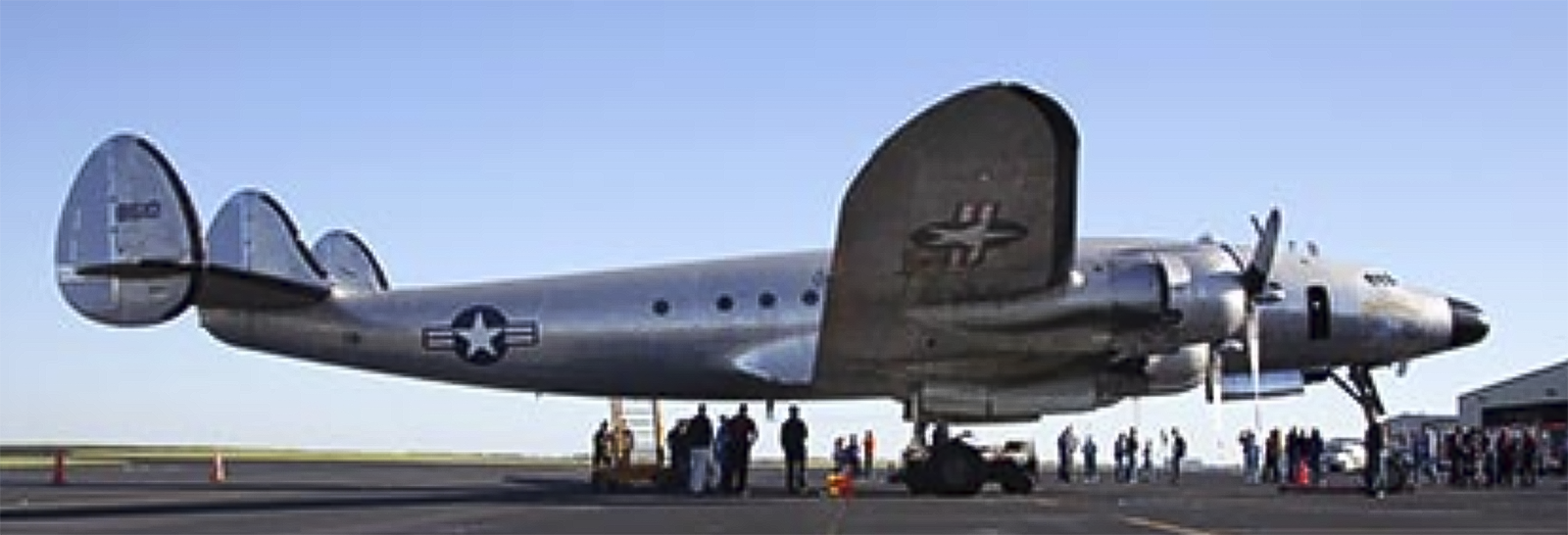
Even so, it still doesn’t seem like it’s been almost ten years since the time Frankie Glover at Mid America Flight Museum up in Mount Pleasant sent me the message. “Columbine II will be arriving in Mount Pleasant tomorrow afternoon. I’ll keep you updated.”

Columbine II was the name given to the U.S. presidential aircraft used by Dwight D. Eisenhower from 1952 to 1954. Better known as “Ike,” the five-star U.S. Army general served as Supreme Commander of the Allied Expeditionary Force in Europe during World War II. He had been elected president by the time I entered the first grade.

Photo above and at top of the page: Leon Aldridge 2016 at the Mount Pleasant, Texas, Airport)

The historic aircraft’s stop in Northeast Texas some 60 years later was no coincidence. Mount Pleasant native Scott Glover and his MAFM team in the Northeast Texas city played a key role in the first phase of efforts to get the historic aircraft back to flying condition after years of neglect, ignored in the Arizona desert. The second step was helping the owners fly it to the restoration shop to Bridgewater, Virginia. The Mount Pleasant based museum helped in that effort as well.

Scott and his crew in the MAFM’s WWII era B-25 “Mitchell” bomber, “God and Country,” escorted Columbine II from the Grand Canyon state to Mount Pleasant. The Texas stop not only gave Northeast Texas residents a chance to see the historic aircraft, but also provided a break in the nine-hour trip from Arizona to Virginia, where it has since been undergoing a long and tedious restoration to its early 1950s configuration as the presidential aircraft.

President Dwight D. Eisenhower air plane landing in Harlingen Texas Oct. 18th 1953. Photo Credit — US ARMY – Harlingen Arts and Heritage Museum

Given its name by First Lady Mamie Eisenhower in honor of the official state flower of her adopted home state, Colorado, the former presidential plane is a military version of the Lockheed Constellation. “Connies,” as they were called, were a highly successful four-engine propeller-driven 1950s airliner. Known for their speed, range, luxury, and pressurized cabin for comfortable long-distance flights, this Connie carries tail number 8610, confirming it as the first presidential aircraft to use the universally recognized call sign, “Air Force One.”  The official designation for any aircraft once the President of the United States is on board.

I kept my camera busy that day in early 2016, capturing fleeting images of time flying by. The beauty of the plane’s porpoise-shaped aluminum fuselage and distinctive triple rudder tail design stood out against the East Texas afternoon sun. Breathtakingly elegant as it floated toward the runway in its landing approach and touched down on its uniquely tall landing gear.

The day reminded me of another time that had flown by, the night Mount Pleasant was host to a sitting U.S. President.

I was an MPHS student, and a member of the Explorer Scout Post called upon to assist with crowd control for the scheduled arrival of President Lyndon B. Johnson. The president was coming to town for a celebratory function at the National Guard Armory on North Jefferson Street, honoring an East Texas citizen and friend.

Darkness arrived as onlookers crowded to the airport, many skeptical that the president was really coming to the small Texas town. Anticipation mounted as the presidential plane touched down and taxied to the apron near the terminal.

Flashbulbs lit up the night sky when President Johnson emerged, waving and smiling. The crowd cheered. Performing our assigned task, we stood firm with backs to the crowd and arms spread wide against the encroaching throng.

I looked to my left and caught a glimpse of the president as he neared. Waving, tipping his hat, and shaking hands. But nothing could have prepared me for what happened next.

As the president neared, he paused, grabbed my hand, and shook it vigorously. “Nice uniform, son,” he said before moving on to the next handshake and ultimately the waiting car taking him to his scheduled event on the other side of town.

All I could think was, “The President of the United States just shook my hand.”

I hurried home on nearby Redbud Street and charged into the house. “I shook the president’s hand tonight. He shook my hand.”

My father, who voted pretty much Democratic in those days, smiled and commented, “Well, how about that.”

You might say time has flown since I shook a president’s hand at the Mount Pleasant airport. Even since the time since I saw another president’s plane, the first Air Force One, at the Mount Pleasant airport.

Looking back, however, the feeling is more like one moment, it’s today, the next it’s a memory.

Because time flies faster than we realize.

—Leon Aldridge

– – – – – – –

Aldridge columns are featured in these publications: The Center Light and Champion, The Mount Pleasant Tribune, the Rosenberg Fort Bend Herald, the Taylor Press, the Alpine Avalanche,  the Fort Stockton Pioneer, the Elgin Courier, The Monitor in Naples, and Motor Sports Magazine.

© Leon Aldridge and A Story Worth Telling 2025. Excerpts and links may be used, provided full and clear credit is given to Leon Aldridge and ‘A Story Worth Telling’ with appropriate and specific directions to the original content.

Some things never change

“The good physician treats the disease; the great physician treats the patient who has the disease.”
— William Osler (1849 -1919), one of the founding Johns Hopkins Hospital professors and creator of residency programs.

– – – – – – –

“Come in Dr. Reitz.” With those words, my grandmother welcomed the Pittsburg, Texas, family physician of many years into her home. “Thank you for coming. S.V. isn’t feeling well; he’s coughing and feverish.”

Sylvester Aldridge was my grandfather’s full legal name. No middle initial. Why she called him S.V. was a question I never thought to ask.

The good doctor pulled a chair next to the bed, opened his small black bag, and took out a tongue depressor and a thermometer. “I expect your fruit trees will be blooming before long,” he small talked with my grandfather.

Standing silently at the edge of the room, I was just tall enough to peek over the windowsill. The physician’s shiny new 1951 Chevy sitting in the driveway caught my eye. When I looked back at him, we made eye contact. I can still hear his deep voice say, “My, you’re getting to be a big boy.”

Dr. P.A. Reitz had delivered me into the world a little more than three years before that day. On a cold January 20, 1948, evening at the M&S Hospital he founded in Pittsburg. I don’t remember much about that day, but I was told light snow was falling outside.

I do remember house calls, once a common convenience by small-town physicians that slowly slipped into the past in the years that followed. A time when doctors wore suits and ties in the clinic and for house calls. And nurses wore white uniforms and caps. When “scrubs” were seen only in operating rooms.

Much of my childhood healthcare fell to Dr. Reitz. Dad’s years with Perry Brother’s five-and-dime stores moved us from one small Texas town to another before Mount Pleasant became the last stop. Many of my summer days, however, were still spent at my grandparents’ house.

“He’s going to need some stitches, Mrs. Aldridge.”

The wound for which I still display a scar on my head was inflicted during an afternoon of friendly playtime. Granny was enjoying afternoon coffee inside with her friend, Mrs. Martin. Outside, Mrs. Martin’s grandson and I whiled away the time with comic book fantasies. I don’t remember if I was the good guy or the bad guy, but I became the wounded guy when the other youngster got the drop on me with a piece of pipe. From atop a car in the driveway.

“Get a good grip on him,” Dr. Reitz cautioned my grandmother. His recall of my extreme dislike for doctors wielding needles was impeccable.

Those aged memories offer a different perspective on healthcare of today. Opinions abound, but popular views rival genealogical histories of Biblical proportions.

“Therefore, in all the days of medicine, throughout the land, specialization begat doctors passing small towns for big cities; and that begat the decline of rural hospitals; which begat small towns with clinics staffed by P.A.s and nurse N.P.s who take care of routine exams and illnesses begatting acute cases to emergency rooms or specialists.”

In bigger cities.

– – – – – – –

Dr. P.A. Reitz, one of Pittsburg’s best known, most respected and beloved citizens, died at M&S Hospital early Monday morning after suffering a massive heart attack,” the 1978 newspaper article in my archives read.

The yellowed paper news story bore no attribution. I suspect from the heartfelt and personal tone used by the writer, it might have been published by Pittsburg’s long-time local newspaper, the Gazette.

Dr. Reitz was born April 18, 1904, in Kansas. He moved to Pittsburg in 1935. He was a graduate of the University of Nebraska Medical School and completed his internship at Parkland Hospital in Dallas. He served in the U.S. Army in Europe during World War II.

“He was a family doctor for 43 years …” the story shared. According to the newspaper tribute, Dr. Reitz gave M&S Hospital to the citizens of Pittsburg in 1968.

“The business community closed Thursday afternoon for his funeral at the First Methodist Church,” the clipping concluded. “Interment was at Rose Hill Cemetery.”

I still visit Dr. Reitz … in a manner of speaking. My father and mother, Leon and Indianola Aldridge, are buried at Rose Hill Cemetery. Right next to Dad’s parents, Sylvester and Hattie Lois Aldridge.

Just across the narrow lane at the Pittsburg cemetery, maybe 50 feet away, are the graves of Percy. A. and Hazel Reitz.  

I miss small-town hospitals with doctors’ offices in or near the facility. Doctors who made house calls and knew their patients like family. That said, I get it that change and adaptation are inevitable aspects of life.

Some things never change, though. Like needles. I still don’t like needles.

And I still don’t know why Granny called my grandfather S.V.

—Leon Aldridge

– – – – – – –

Aldridge columns are featured in these publications: The Center Light and Champion, The Mount Pleasant Tribune, the Rosenberg Fort Bend Herald, the Taylor Press, the Alpine Avalanche,  the Fort Stockton Pioneer, the Elgin Courier, The Monitor in Naples, and Motor Sports Magazine.

© Leon Aldridge and A Story Worth Telling 2025. Excerpts and links may be used, provided full and clear credit is given to Leon Aldridge and ‘A Story Worth Telling’ with appropriate and specific directions to the original content.

The cost of conversation is going up

“If it’s a penny for your thoughts and you give your two cents worth, where did the other penny go?”
— Comedian George Carlin

– – – – – –

“Are they really going to going to stop making pennies.”

“Must be true, I read they will stop production in 2026,” I said. The lowly penny surfaced as a topic of conversation at dinner with friends last week. Sadly, it appears that a penny saved is no longer a penny earned, as Ben Franklin once noted. As a matter of economic fact, they’ve been a monetary loss for most of 20 years.”

According to the U.S. Mint, the production cost of a penny was 3.69-cents in 2024. About 3 cents for manufacturing and the rest for administrative costs and distribution.

“Rising costs aren’t the real reason pennies are going away,” someone added. “No one spends them anymore. Most pennies put into circulation are given as change in cash transactions, then never reused. There were about 240 billion in circulation last year. That’s 700 pennies per person; most in jars or dresser drawers.”

“I have my share,” I laughed. “At least that many on my dresser, more in my car’s console, and not telling how many under the front seat.”

“I save pennies I find on the ground,” said another. “Haven’t you heard the poem? ‘So don’t pass by that penny when you’re feeling blue. It may be a penny from heaven, that an angel’s passed to you.” Finding a penny is a reminder that someone in heaven is thinking about you.”

Adding to the poetic perspective, I contributed, “‘Find a penny, pick it up. All day long you’ll have good luck.’ I’m guilty of picking up a heads-up penny for luck. But if I spot one that’s tail’s up, I turn it over and leave it for someone else to find good fortune.”

While financial fortune might be hard to measure in pennies today, the copper coins represent more than mere monetary value to many. The humble penny represents priceless value in conversational expressions that have coined philosophies of American life for generations.

My grandmother’s favorite was, “Take care of the pennies, and the dollars will take care of themselves.” Survivors of the Great Depression, like my grandparents, characterized the less fortunate by saying, “They’re so poor, they don’t have two cents to rub together.”

“A penny for your thoughts” attributes value in wisdom to the meager one-cent piece. However, I am also quick to remind that “advice is worth what you pay for it.”

Today, “rattling money,” as one longtime friend always described pocket change, can be little more than a nuisance amid plastic money or folding money … or in my case, no money. However, it was historical appreciation for a penny that caused me to pause long enough to peruse a wheat penny in my pocket pile a couple of years ago.

Some my age will remember that the first version of the still-current penny, portraying a likeness of “Honest Abe” on one side, was first issued with two grains of wheat and the words “one cent” on the other. “Wheat pennies,” as they are called by coin collectors,” were minted from 1909 to 1958 when the reverse side was replaced with a likeness of the Lincoln Memorial in 1959.

Finding a wheat penny in pocket change, or anywhere today except in a coin collection, is rare enough. But the odds of someone giving me one in change at a Center, Texas, business that day might have been good enough to win the lottery. It bore the date 1919, minted when plenty of Indian Head pennies produced from 1859 to 1909 were still familiar in pockets and cash registers.

The coin had been in circulation for nearly 100 years the day it ended up in my pocket.

It was crazy to think that World War I had just ended when someone first pocketed the penny. The same year that Congress approved the Grand Canyon as a national park. The year a flight from New York to Atlantic City established the first commercial airline service. When Woodrow Wilson was president. The 19th Amendment to the Constitution, giving women the right to vote, was newly ratified.

And the year before my father’s parents became newlyweds in 1920.

So, what’s a 1919 “wheat” penny worth? Besides lots of memories and some sage sayings about life and luck? Around a dollar, maybe two, according to numismatic value guides.

“What will we ever do without pennies,” one of my friends lamented.

“One thing for sure,” I concluded, “The cost of conversation will go up.”

“From now on, it’s going to be ‘a nickel for your thoughts’ to start discussions like this.”

—Leon Aldridge

– – – – – – –

Aldridge columns are featured in these publications: The Center Light and Champion, The Mount Pleasant Tribune, the Rosenberg Fort Bend Herald, the Taylor Press, the Alpine Avalanche,  the Fort Stockton Pioneer, the Elgin Courier, The Monitor in Naples, and Motor Sports Magazine.

© Leon Aldridge and A Story Worth Telling 2025. Excerpts and links may be used, provided full and clear credit is given to Leon Aldridge and ‘A Story Worth Telling’ with appropriate and specific directions to the original content.

History not found in books

“Count your age by friends, not years. Count your life by smiles, not tears.”
— John Lennon

– – – – – – –

Nothing defines the perspective of time for a writer better than aging manuscripts in a life’s collection of work. Less than subtle reminders of lives chronicled half a century or more ago; people who were witness to history not available in books.

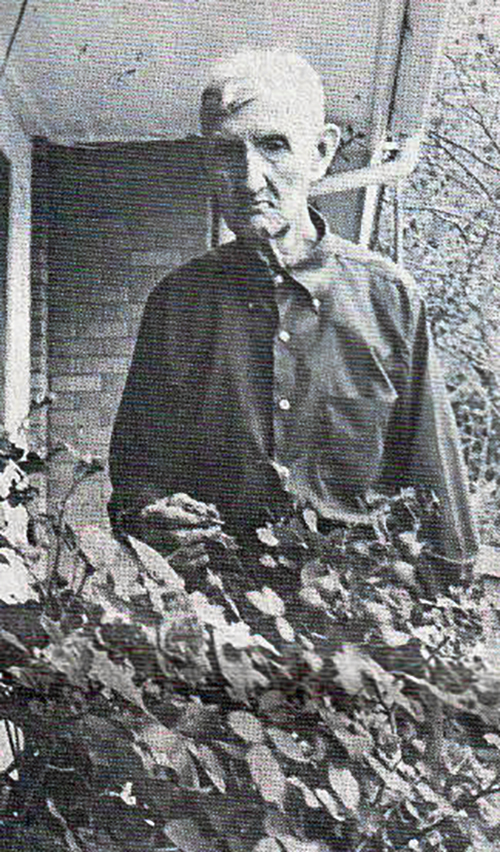
May 1 will mark 50 years since I penned a piece printed in the Naples Monitor on Thursday, May 1, 1975. An interview with a gentleman born when Ulysses S. Grant, commanding general of the Union Army in the Civil War, was serving as the 18th president of a United States with only 38 states.

Burgess Peter Jacobs, aka “Papa Jake,” had just celebrated his 99th birthday when we talked. “Came here the 15th day of January 1907,” he said with a big smile. “I stepped off the train at the Naples depot with a wife and five kids. Came from North Carolina where I worked in a sawmill and raised a little patch of cotton.

“There were no brick buildings,” he reminisced, recalling dirt streets and wood sidewalks as if it were only yesterday. “Charlie Pope built the first one in 1908 or ’09. You know where the Lee Davis’ store is? He put his name in the brick on that building. Course, when Lee moved in, he covered up Charlie’s name.”

“We call these “Mama’s blooms.”

His crystal-clear mind revealed knowledge like someone reading from a history book. “The big business here was the sawmill, but it shut down a few years after.”

When questioned about occupations through the years, he called on quick wit and humor. “Like everyone else — as little as I could. Two years in Bowie County and a year in West Texas before settling down near Naples.

“I farmed mostly. Until about 17 or 18 years ago,” Jacobs continued. “My house was in Morris County, but I farmed in Cass County. About as far as from here to the street,” he said, looking out the window.

“Tax collector came one day. Spent the whole day measuring,’ lookin’ and askin.’ When he discovered I lived in Morris County, he tore up the papers and Ieft. I could have told him if he had asked,” he chuckled.

Laughter and a zest for life filled his stories. “This fellow was runnin’ for sheriff in Cass County once and came by to ask me to vote for him. I told him that no one was coming that far to get me, and no one there was going to bother me. So I didn’t need a sheriff.”

Shifting to birthday cards, he showed me one from President Gerald Ford. “Seen a lot of presidents come and go,” Jacobs said, proudly displaying the greeting. “But sure was surprised to get a letter from one.”

According to Jacobs, family has commemorated his birthday since the early 1920s by staging the family reunion on the Sunday falling nearest his birthday. And family came large for Papa Jake.

Looking fondly at a picture of him and his wife, Quincey Adalee, he added, “I was married to her for 69 years, five months and a few days. I liked a little being 20; she was a little over 16 when we married.” After a noticeable hesitation, he said softly, “She’s been gone about ten years now.”

The couple had nine children and 42 grandchildren. Asked about great and great-great-grandchildren, Jacobs shook his head and laughed. “I don’t know. I can’t count ’em all. I just call ’em my dirty dozen.”

Papa Jake reported his daily activities included “watching a right smart of television. Like to watch the wrestling. Listen to the news on radio. I walk to the mailbox every day. Used to get the mail for the ladies around here ’till I got to where I couldn’t see too well.”

Jacobs expressed pride in seeing roses growing around his house. Especially the white roses. “We call them “Mama’s blooms,” he said, holding his wife’s picture.

I attended his birthday party Saturday night at the Naples Community Center and the family reunion Sunday. “He did not miss a minute of the activity while spreading  humor and warm smiles,” I wrote. “Posing for pictures with family that came from as far as California to attend.”

You can read history books all day long. But none will touch your soul the same as talking to someone who has lived it.

Papa Jake was a living example of the old saying that you are only as old as you feel. Smiles on a weathered face and laughter in an aged voice recalling family, friends, and a century of living left me thinking I was the old timer in that conversation.

Fifty years ago, come May 1.

—Leon Aldridge

– – – – – – –

Aldridge columns are featured in these publications: The Center Light and Champion, The Mount Pleasant Tribune, the Rosenberg Fort Bend Herald, the Taylor Press, the Alpine Avalanche,  the Fort Stockton Pioneer, the Elgin Courier, The Monitor in Naples, and Motor Sports Magazine.

© Leon Aldridge and A Story Worth Telling 2025. Excerpts and links may be used, provided full and clear credit is given to Leon Aldridge and ‘A Story Worth Telling.’

It’s the 1970s, all over again

“Sooner or later, everything old is new again.”
― Stephen King, American author known for horror novels.

– – – – – – –

Marveling at the things my grandparents must have seen in their lifetime was something I often did when I was much younger.

Having reached that “grandparent” stage, I find myself drawing similar conclusions about my own life. Remembering things that have faded away. Seeing others miraculously survive to live another day.

Dad’s father was born in 1888. We gathered at Rose Hill Cemetery in Pittsburg to celebrate his life in 1967. During my second year of college when the whole world was still new and changing to me.

My grandfather went to work at 13. Child labor was common then. Ten percent of girls between the ages of 10 and 15, and 20% of boys had jobs to help support the family. The internal combustion engine was gaining popularity, and mass production of powered buggies called “automobiles” was catching on. But only the wealthy could afford one.

Connecticut became the first state to pass a speed limit that year, limiting motor vehicles to 12 mph in cities and 15 mph on country roads.

My grandmother lived until October of 1993. The Wright Brothers flew one of the first airplanes at Kittyhawk in 1903, two years before she was born. She lived to watch man’s first walk on the moon on her black-and-white television. She was never convinced it really happened, though. Truthfully, she was never sure television was real, either.  

My grandmother flew in an airplane one time during her life. With me after I earned a pilot’s license in 1974. She spent most of the 30-minute flight around northeast Texas to see her house in Pittsburg singing “Nearer My God to Thee.”

She went to be with God in 1993 without ever flying in an airplane again — with or without me.

My grandmother, that flight, and life since then crossed my mind a couple of weeks ago. Along with my 1970 Chevrolet pickup in which I drove her to the airport. I loved that truck. My first air-conditioned vehicle. It was equipped with AM/FM radio, tape player, and CB radio. All at a time when a pickup truck was still primarily a utilitarian vehicle.

The woman who watched man walk on the moon via television, however, never owned a radio until after she was married. When she married my grandfather, electricity was still years away from most rural homes. And cars then had little more than headlights, horns, and a hand crank for a starter.

Radios appeared in cars in the late 30s and evolved into sophisticated sound systems over the decades. Basic AM, and FM radio, still survive today despite some electric car makers having dropped AM claiming electromagnetic interference affects the performance of EVs. Don’t count AM out yet, though. Congress has responded by threatening legislation requiring auto manufacturers to keep it.

It was surprising to learn however, that despite rumors of its demise, the last bastion of vehicular radio devices in my pickup that day 50 years ago when Granny consented to a trip into the wild blue yonder has surprisingly made a comeback.

Citizens Band Radio (CB) originated in the U.S. around 1945. Primary purchasers were farmers and the U.S. Coast Guard.

I was introduced to CB radio in the early 1960s as a member of Mount Pleasant’s “Emergency Service” Explorer Scout Post 206. Back when an FCC-regulated call sign, a license and “professional radio etiquette” were required. The two-way radios provided communication with first responders for our scout post aiding at wrecks and fires. Howard Townsend was the Post Advisor, monitoring our radio sets and conversations to ensure regulations were strictly followed.

But CB became a cultural craze in the 1970s. It was depicted in films such as ‘Smokey and the Bandit’ and ‘Convoy,’ on TV shows, and in music. Their use in trucker blockades to protest 55-m.p.h. speed limits and keeping tabs on radar speed enforcement became a thing of legend. And with it all, regulation went out the window when enforcement became impossible. The FCC threw in the towel on licensing in 1983.

CB antenna on author’s 1956 Ford Thunderbird for a trip from Center, Texas to Daytona Beach, Florida in October of 1984.

Popularity rendered CB radio as its own worst enemy. Frequencies were overloaded, making communication difficult. Business users switched to other frequencies before the introduction of mobile phones saw CB’s popularity drop faster than temperatures in a Texas Blue Norther. Everywhere, that is, except among over-the-road truckers, touring motorcycle riders, and classic car clubs traveling to shows and events in caravans.

As a touring cyclist and an old car enthusiast, I knew CB radio never really disappeared. At least not in my garage. And from what I have read recently, CB radio sales are flourishing better than sometime in the 1990s. While “entertainment radio” still evolves, CB has survived. It’s making a comeback to live another day. And it’s the 1970s, all over again.

“Breaker, breaker one-nine. Anybody have eyeballs on that CB I used years ago. Negatory? Well, CBs are back again, good buddy!”

—Leon Aldridge

(Photo credit: From Leon Aldridge personal collection of a few thousand Kodachrome slides. Photo at top of the page: CB Mounted on motorcycle for a trip from Mount Pleasant, Texas to Leadville, Colorado in October of 1975. Safely secured by a state-of-the-art bungee cord. )

– – – – – – –

Aldridge columns are featured in these publications: The Mount Pleasant Tribune, the Rosenberg Fort Bend Herald, the Taylor Press, the Alpine Avalanche,  the Fort Stockton Pioneer, the Elgin Courier, The Monitor in Naples, and Motor Sports Magazine.

© Leon Aldridge and A Story Worth Telling 2024. Excerpts and links may be used, provided full and clear credit is given to Leon Aldridge and ‘A Story Worth Telling’ with appropriate and specific directions to the original content.

A return for the championship round …

“Compound interest is the eighth wonder of the world. He who understands it, earns it … he who doesn’t… pays it.
— Albert Einstein (1879-1955) German-born physicist, considered one of the most influential scientists.

– – – – – – – –

It’s your shining moment on the big television game show. The emcee declares loudly, “For today’s jackpot and a chance to come back next week for the grand prize championship round … what is the Eighth Wonder of the World?”

While there appears to be no single official list of “wonders of the world” found among internet intelligence, real or artificial, several unofficial lists claim legitimacy. Included are Natural Wonders of the World, Ancient Wonders of the World, and the New Seven Wonders of the World. The latter still leaves one wondering what the Eighth Wonder of the World might be.

But if, like me, a card-carrying Texan old enough to remember when a dollar’s worth of gas would get you to school and back all week, then you don’t have to be an Einstein to know the correct answer. The architectural masterpiece dubbed the Eighth Wonder of the World in Houston was part of our youth.

All of this came to mind recently after passing the world’s first domed sports stadium for the first time in many years. I was lost in Houston, a common occurrence when I visit there, but I knew where I was when I saw the Astrodome.

Originally named “The Houston Domed Stadium,” the name was reportedly changed in 1965 when the new expansion team, the Astros, opened the stadium with a 2-1 exhibition victory against the New York Yankees. It was the age of space exploration, and Houston had just landed the NASA Space Center. Local businessman R.E. “Bob” Smith teamed with former Houston Mayor and Harris County Judge Roy Hofheinz to develop what would become known as the Astrodome.

“The Eighth Wonder of the World is looking a little forlorn,” I thought when I saw it recently. Less glamorous than when it was a frequent destination for me in the late ’60s and early ’70s. Astros Baseball games. Oilers football games. Motorcycle races. The Fat Stock Show and Rodeo.

My relationship started with sports. Sitting high in the only domed stadium in the world. Taking it all in with Mount Pleasant friend, Randy Brogoitti. The baseball was great, but the after-game concerts by country music stars of the day were icing on the cake.

Into the ’70s, my focus shifted to championship motorcycle racing. Anticipation for the January trek from Mount Pleasant to Houston for Camel Pro Series racing began building the day after Christmas. The Mount Pleasant crowd making the trip differed yearly, but Oscar Elliott and I were always there. My archive of thousands of Kodachrome slides includes trackside shots of 70s standouts like Yamaha rider Kenny Roberts. Waiting to be viewed one more time. Along with press and trackside credentials for many of the events.

Fat Stock Show and Rodeo entertainment hosted in the ‘Dome included names like Alabama to Alan Jackson, Bob Dylan to Chicago, Conway Twitty to Dolly Parton, and more. Record attendance concerts over the years included Elvis Presley, The Rolling Stones, Willie Nelson, and George Strait, who set the venue record at 80,266 at the last show in the Astrodome in 2002. Strait’s “One Last Time” performance closed the Rodeo and said goodbye to the Dome.

Even Evel Knievel staged one of his historic motorcycle jumps, successfully clearing 13 cars there two nights in a row.

But for all its records, glory, and history, time caught up with the Eighth Wonder of the World in 2008 when the Houston Fire Department declared it non-compliant with fire codes. The seating was removed, and parts of it demolished, rendering it closed.

In 2014, it was listed on the National Register of Historic Places.

In a 2023 competition by the American Society of Heating Refrigerating and Air Conditioning Engineers (ASHRAE), a University of Houston architecture team spent the summer studying the building. A plan was proposed to transform the iconic structure into an indoor public street with a botanical garden, retail space, hotel rooms, and a massive museum dedicated to the Dome’s history.

The concept was awarded first place. However, according to information available, county leaders have yet to respond. Still, local architects are hopeful the plan will save the historic architecture.

Seeing the famous stadium recently renewed old memories. Restoration will take lots of money at simple or compound interest rates. But maybe she will get a chance to return for the championship round soon.

“Yes, Alex, I’ll take $1,000 for Eighth Wonder of the World in Texas.”

– – – – – – – –

Update: This piece was penned last Monday and appeared in print publications around midweek. Thursday, an article posted in the Texas Flyover, an excellent online news source with all Texas news content, announced the unveiling of a $1 billion redevelopment plan by the Houston Astrodome Conservancy. The plan seeks to turn the empty Eighth Wonder of the World into a multipurpose space with four modern buildings, a retail village, and a central boulevard inspired by New York’s High Line.

It also stated that The Conservancy hopes to raise up to $750 million from private sources.

So, it appears that the historic structure will get to return for the grand prize championship round after all.

—Leon Aldridge

– – – – – – –

(Photo credit: Wikimedia Commons – Reliant Astrodome)

Aldridge columns are featured in these publications: The Mount Pleasant Tribune, the Rosenberg Fort Bend Herald, the Taylor Press, the Alpine Avalanche,  the Fort Stockton Pioneer, the Elgin Courier, The Monitor in Naples, and Motor Sports Magazine.

© Leon Aldridge and A Story Worth Telling 2024. Excerpts and links may be used, provided full and clear credit is given to Leon Aldridge and ‘A Story Worth Telling’ with appropriate and specific directions to the original content.