We’ll work on prayers for continued intervention

“Family reunions. Where generations are united, and memories are rekindled.”

— True statement. Author unknown.

– – – – – – – –

What were the odds, we surmised while talking about it? A miracle? Nothing quite so divine, but certainly, some intervention was involved. On that, we all agreed.

Whatever it was, the tale was told more than once at the family reunion in Abilene last weekend. Where sharing memories while making new ones reign supreme.

I’ve read recently that family reunions in America are declining. Please don’t ever tell my family.

The descendants of my mother’s parents, Arthur George and Bernice Conlee Johnson of Winchester, Kentucky, just conducted a memorable long weekend get-together in West Texas. Forty-nine reunion believers from my mother’s side of the family who were raised on the importance of family togetherness traveled from as far away as Ohio, Tennessee, and Center in Deep East Texas to catch up, recount memories, and keep the family tradition alive and well.

My earliest childhood memories of Kentucky Johnson family reunions were in the Blue Grass state where every sibling was present. No small feat for a family that scattered as they grew up. Mom moved to Texas, where she stayed. She was followed later by two sisters who also made Texas their home. Another sister settled in Ohio, and the youngest, a brother, stayed in Southern California after discharge from the Navy, before later moving to Texas.

Reunions have remained a time for stories. Updated news about each new family. About growing up. About happiness and about sorrow. Plus a few about the challenges of sometimes simply getting everyone to the gatherings. Where snappy cheese dip and Ale-8-1 soft drinks—both Kentucky traditions rooted in the Winchester area, were plentiful.

After some 70-plus years, the stories are still repeated. I’ve heard most of them more times than I can count. Including some I heard again this year for the umpteenth time. But I’ll listen to them as long as they are still being told because, with each recitation, there are variations that only time and the love for recounting family history firsthand can enhance.

So how does a family with deep Kentucky roots come to converge on Abilene for family reunions?

Families expand, family trees grow new branches, and generations move to meet new opportunities. Wherever they are held, getting together will require traveling across the country. And that’s where the intervention mentioned above is essential.

Like the time Uncle Bill, Mom’s baby brother, made the trek to Kentucky from California in the mid-50s with his family, traveling in his red Mercury convertible. He made it as far as the Oklahoma Turnpike before the car quit on him in the middle of the night.

I’ve heard the story numerous times and I have some recollection of it as well. But my pre-schooler memories are somewhat less than vivid. Except those of that gorgeous red convertible.

We were traveling from West Texas with a plan to meet Bill at a predetermined point on the turnpike that night. After reaching the meeting spot and waiting more than a reasonable amount of time, Dad decided to start backtracking, and perhaps by intervention, found Bill and his family stranded.

As you process the story, think about this. It was a time when cell phones and GPS devices were still science fiction. Before air-conditioned cars when trips were often planned at night because it was cooler.

Dad got help, the car was repaired, and everyone made it to Kentucky in time to enjoy snappy cheese and Ale-8s.

Intervention was still working well this year when history repeated itself. As in years ago, family members were coming from all directions. Flying. Driving. I left East Texas before lunch on Thursday and headed west without knowledge of anyone else’s itinerary.

Approaching the destination city as dinner time neared, I called Abilene cousin Fred Scott, who gave me the address of a restaurant on the east side of town near ACU where inbound early arrivals were converging. I plugged the address into GPS, smiled, and relaxed because I was less than an hour away.

But less than five minutes later, cuz’ was calling. “Where are you?”

I thought, “A couple of minutes closer than I was when we just talked.” Before I had time to question his question, he said, “Kama’s car has broken down on I-20 at the 315 mile-marker. Are you anywhere near that?”

“Let me see … I don’t know.” His daughter was stranded on the interstate with her kids. My relaxed feeling turned to tension and concern. Then I saw it. Mile marker 324 flashed past me. “I’m right behind her,” I called back.

In less than 10 minutes after answering the call, I was pulling up behind them on the service road. Neither of us knew we were traveling anywhere near each other.  Coincidence? I think not.

Everyone made it to dinner and the storytelling sessions were underway. “You won’t believe what happened today!”

Family. United in generations of love and often repeated stories. The best parts of a reunion. I’m somewhat concerned, however, that the snappy cheese and Ale-8 tradition has been waning recently. I’ll take the lead to correct that before next year.

In the meantime, we’ll work on prayers for intervention that everyone continues to arrive safely.

—Leon Aldridge

– – – – – – –

Aldridge columns are published in these newspapers and magazines: The Center Light and Champion, the Mount Pleasant Tribune,  the Rosenberg Fort Bend Herald, the Taylor Press, the Alpine Avalanche, The Fort Stockton Pioneer, The Monitor in Naples, and Motor Sports Magazine.

© Leon Aldridge and A Story Worth Telling 2024. Excerpts and links may be used, provided full and clear credit is given to Leon Aldridge and ‘A Story Worth Telling’ with appropriate and specific directions to the original content.
The halls of justice through the eyes of a journalist

Breakin’ rocks in the hot sun
I fought the law, and the law won,
— Song lyrics by Sonny Curtis, a 1966 top ten hit for the Bobby Fuller Four

– – – – – – –

Got to thinking last week about my long-standing association with courthouses. Halls of Justice for defining those who “fought the law.”

Some things become part of our lives, whether we plan them that way or not. For me, one has been viewing the justice system through the eyes of writing news stories. Hanging out around courthouses. And memories of personal stakes in some of those stories.

Like laughable admonitions among courthouse reporter colleagues years ago. Joking about, “sure glad we’re not wearing three-piece suits and being addressed as defendant.” It was funny … back then.

However, the one time I found myself in that situation, it was wasn’t that funny. It ended well, at least for me. The rest of that story in a minute.

That day and a couple others crossed my mind last week. Memories stirred by Center’s Rayford Copeland briefing the local Lions Club on pending grant applications to restore the Historic Shelby County Courthouse. According to Copeland’s presentation, the red brick “castle” design is the only remaining Romanesque Revival courthouse in Texas.

Shelby County Historical Courthouse, Center, Texas. (Photo by Andi Foster)

Although partially restored at times over the years, the structure now needs a complete restoration for proper preservation. The estimated cost in the master plan presented to count commissioners a few weeks ago for grant application approval was $7 million.

Self-taught brick mason and Scotland native architect J.J.E. Gibson reportedly completed the courthouse around the end of 1885. The county is said to have occupied it in early 1886. Gibson might be astounded at the restoration cost 139 years later. His bill for construction in 1885 dollars? Try $26,000.

A December of 1992 chamber ribbon cutting celebrated the moving of county business into the current courthouse a block down San Augustine Street. Since then, the period-correct courtroom of the 19th-century edifice has been used for community events. Everything from weddings to the local VFW’s recent Memorial Day remembrance.

Despite her age, she still looks good after more than 100 years of hosting trials for Lady Justice and a jury to decide. One of those proceedings was the first time I raised my right hand to swear, “So help me, God,” testifying in defense of newspaper headlines published atop a murder trial story. The defense attorney was doing what they get paid to do: lobbying for a change of venue where fewer people know about the crime.

Holding copies of the newspaper with headlines embellished in red magic marker, the lawyer asked me to read them aloud.

I did.

“Do you really think my client can get a fair trial in Center with publicity like that,” he asked.

“Yes sir,” I responded. “It’s factual, without opinion, and does not even mention the defendants name.” I still remember sitting on the witness stand that day, and like others, was in awe of what a beautiful reflection of its era the old courthouse was then. I still get the same feeling when entering it today.

The only time I might have been more in awe was in the highest “courthouse” in the land. The U.S. Supreme Court.

“And what is your association with this case,” asked the person on the phone. “Your interest in press credentials?”

“I’m the editor and publisher of the newspaper in Boerne, Texas,” I said. “Where the case being heard originated.”

“Oh,” she responded as if I had just answered the $64,000 question. “Absolutely, you need to be here.”

U.S. Supreme Court, Washington D.C.

That’s how I found myself sitting in the Supreme Court press gallery in Washington D.C. Listening to arguments in a case about which I had written stories while covering the Boerne, Texas City Council. Chronicling their dispute with a Catholic Church Archbishop that led to the case styled “City of Boerne v. Flores, 521 U.S. 507 (1997);” a landmark “church and state” case.

CNN on my right. BBC in front of me. Butterflies in my stomach. Second row of the press gallery. Watching from mere feet away, Justices Thomas, Breyer, Ginsburg, Souter, Kennedy, Scalia, Rehnquist, O’Connor, and Stevens counter the opinions of seasoned attorneys for both sides.

The Cliff Notes version goes something like this. In 1997, San Antonio Archbishop Patrick Flores sued the city of Boerne, Texas, claiming violation of rights under the 1993 Religious Freedom Restoration Act (RFRA) when the city denied a permit to replace the old church building located partially within a historic district. The city contended the RFRA was unconstitutional in attempting to override local ordinances. Church vs state.

The court ruled 6-3 that, in layman’s terms, the RFRA had in fact been improperly applied in that case. In short, Boerne prevailed. The church in Boerne’s historic district still stands today … with a new addition behind it just outside the historical preservation district.

Now, about the rest of that courthouse story about a three-piece suit and being addressed as defendant?

Following a month’s-long investigative reporting series on alleged misuse of government resources by public officials, a group of them sued the newspaper for libel. Named me, the newspaper, and its owner, for multi-millions in damages. After a week-long trial, the quick verdict was “not guilty.” Ultimately, all plaintiffs in the suit resigned or were defeated in the next election.

Great stories, all of them, worth telling about “hanging out around courthouses.” Sorry, I don’t have a “breaking rocks in the hot sun” story to include. I just happen to like that old song.

And, if anyone should ask, just one story about “wearing a three-piece suit and being addressed as defendant” is enough for me.

—Leon Aldridge

(Photo at top of the page by Leon Aldridge. A dramatic view of the Shelby County Historic Courthouse captured one cold February evening some 40-plus years after the first time I saw it. The magnicent structure has been photographed countless times, but the light cast on it by the setting winter sun begged me to shoot just one more photo.)

– – – – – – –

Aldridge columns are published in these newspapers and magazines: The Center Light and Champion, the Mount Pleasant Tribune,  the Rosenberg Fort Bend Herald, the Taylor Press, the Alpine Avalanche, The Fort Stockton Pioneer, The Monitor in Naples, and Motor Sports Magazine.

© Leon Aldridge and A Story Worth Telling 2024. Excerpts and links may be used, provided full and clear credit is given to Leon Aldridge and ‘A Story Worth Telling’ with appropriate and specific directions to the original content.
I knew what happened to my patience

“The rise of powerful AI will either be the best or the worst thing ever to happen to humanity.”

— Stephen Hawking (1942 – 2018), English theoretical physicist, cosmologist, and author  

– – – – – –

All I needed was a thingy-ma-bob for my computer. All I knew was that I was without Internet, telephone, and patience when this device died a digital death.

I didn’t know what happened to the piece of technology, but I knew exactly what happened to my patience. It vanished nanoseconds after trying to deal with computerized customer service. Someone said, “That’s artificial intelligence. You know, it’s called AI.”

“Lord give me strength!”

With every new technological advancement since I entered the workforce decades ago, we’ve been told this will revolutionize the world, make your job easier, afford us all a better living.

I’m still waiting.

So, who remembers Dupont’s long-running marketing slogan, “Better Living Through Chemistry?” The company dropped that once familiar slogan after research altered public perception of bug killers, preservatives, additives, and other things enhanced by chemistry leaving the slogan with a bad connotation.

Truth be known, recreational pursuits with certain forms of chemistry in the late ’60s and most of the ’70s probably didn’t help much either.

My dilemma was lacking the services of a “landline via Internet” house phone to reach out and touch the phone company. Not to worry, I had a cell phone to “dial-up” the phone company’s customer service number.

No problem. Just get it off the Internet. Yes problem. No internet.

No problem. Retrieve it from a paid bill neatly filed away somewhere. Oh yes, another problem. I’ve been paying the bill online. Doing my part to save a tree meant also meant no phone number.

It’s in the phone book. Where was the last place I saw one? The kitchen? Oh wait. That was at the house I moved away from. Twenty years ago. When I last had an actual hardwired landline telephone.

So, I went to the office for a phone book to locate the elusive customer service phone number.

Once back at home, if I thought I had problems before … I spent another ten minutes wandering the house, then the driveway, and the backyard, trying to locate a signal. Got one. On the patio, standing on a picnic table, facing south, waiting for bars so that maybe the call would squeak through.

“Lord give me strength!”

At last! I was connected. “Your call will be answered in the order it was received. You can also get answers to many of your questions by contacting us online.”

“No, I can’t!” my frustration shouted. Repeating that response every minute for the following 15 to 20 times artificial intelligence offered the same unintelligent advice made no difference.

A voice! Was it a real person? “Please listen as our menu has changed.”

Thus, began a quandary of AI options I call the “I Need Help” game show quiz. Answer the questions correctly and you will advance to the next round and a chance to win the grand prize. However, one wrong answer and you’ll lose all your earnings and get sent home to start all over.

Your first question toward the grand prize is, “What number are you calling from?”

“I’ve already answered that one. A dozen times.”

“What’s that you said? I’m sorry, I’m unable to understand what you are saying. Please hold while I transfer your call.”

“Noooo!”

Ordinarily, one bar of service at my house is good for 10-12 minutes. It was a miracle that this call had endured for more than 25 minutes before the call dropped. After it was transferred.

No problem. All it took was another 15-20 minutes of answering all the same questions. Again. But this time, good news. I got a real person. Bad news, real person didn’t have all the answers already supplied twice to artificial intelligence. We started over with 20 questions.

However, real person was miraculously able to see inside my computer and confirm my real-time diagnosis. My computer thingy-ma-bob was not working. “You will need a new one,” she said. “No problem; I’ll transfer you to sales.”

“Noooo.”

Problem. Real person in sales had no idea why he was talking to me. Not to worry, it took no more than another 15 minutes to describe what had already transpired between artificial intelligence, real person number one and me.

“So, you need a new one?”

“Lord give me strength!”

“What was that,” real person asked?

“Nothing, just a little prayer.”

Total phone time invested: one hour and seventeen minutes.

After a couple of weeks, however, the thingy-ma-bob was still AWOL. Follow-up calls and more lovely conversations with artificial intelligence and real people concluded that the device was never shipped.

So today, I am still waiting for the new thingy-ma-bob to arrive. This has allowed me time to ponder the obvious question: What will be the next great advancement that will make life easier or better? After AI?

“Lord give me strength!”

And while you’re at it, maybe a little common sense to replace some AI.

—Leon Aldridge

– – – – – – –

Aldridge columns are published in these newspapers and magazines: The Center Light and Champion, the Mount Pleasant Tribune,  the Rosenberg Fort Bend Herald, the Taylor Press, the Alpine Avalanche, The Fort Stockton Pioneer, The Monitor in Naples, and Motor Sports Magazine.

© Leon Aldridge and A Story Worth Telling 2024. Excerpts and links may be used, provided full and clear credit is given to Leon Aldridge and ‘A Story Worth Telling’ with appropriate and specific directions to the original content.
Signs of our time

“Hard work spotlights the character of people: some turn up their sleeves, some turn up their noses, and some don’t turn up at all.”

— Sam Ewing, Former American baseball player for the Chicago White Sox and the Toronto Blue Jays.

– – – – – – –

Now Hiring. Help wanted. Positions Open.

Signs of our time. Try driving through town, reading a newspaper, or scrolling on your smart phone without seeing a help wanted sign. America is looking for people who want to work.

If you are wondering why that is, reread that last sentence slowly, then pause. Let it sink in.

Maybe it’s just another sign of change, but today’s work ethic is a mere shadow of the once-revered trait. One that prevailed when I started filling out job applications. I remember working at Buford-Redfearn Insurance and Real Estate on North Jefferson Street in Mount Pleasant. During Nixon’s administration. The first one. Office hours at most businesses then were 8 to 5, six days a week. But we got off an hour early on Saturdays at Buford-Redfearn. Got to go home at four.

While that might not pass for a perk in today’s culture, it was the work ethic of a nation that was strong and independent. A time when taking pride in your job meant a job well done. When the “do what you gotta do” philosophy of the American work ethic was not just a job, but a way of life.

The workday started on time and ended when the work was done. Then someone invented the five-day workweek, and in less than one generation, the work ethic culture began slipping away.

The current lack of individuals willing to exchange an honest day’s work for a paycheck was the topic of conversation at a local coffee convention one day last week. “It’s a crisis,” said one caffeine consumer.

“Oh, I get applicants,” another local business manager chimed in. “But not many who would recognize work, even if they tripped over it.”

“In my lifetime, I’ve seen the six daywork week evolve into the six-day weekend,” I laughed facetiously. Really intending it for humor.

“Dedicated to your job is considered old fashioned now,” someone else chimed in before asking for a coffee refill.

“Arrive at work five minutes early and be involved in your job before eight,” my father reared me. “And work until straight up five, then get ready to go.” These days, phone calls one minute before opening time now go unanswered. And if you wonder whether there’s life after death, just get between employees and the door two minutes before quitting time.

“Jim Chionsini, who gave me my first publisher’s job,” I offered, “said the publisher is the one who unlocks the door every morning and turns on the lights, and the one who turns them off at night and locks the door after the last employee leaves.”

The group of gray hairs was on a roll. Solving the country’s workforce shortage.

“Applicants now ask ‘How much time do I get off with this job,'” one said. “And employers are asking ‘Who’s going to do the job?’”

“Between two-day weekends, three and four weeks of vacation, birthdays off, personal leave time and an increasing calendar of state and federal holidays, there’s no more time for work,” another testified from across the table.

Enter the “new American work week,” we all agreed. Tuesday. That’s it. One day. Work places will still be occupied on the other days, more or less, but not much will get accomplished except on Tuesday.

Look at the Wednesday newspapers, and you’ll find the “Weekender” edition. Radio D.J.s proclaim Wednesday as “hump day”… over the hump and downhill toward the weekend. “Hey, the weekend is almost here!”

Thursday will be spent discussing weekend plans. Can’t be bothered with getting any work done. Got to see what everyone else is doing this weekend and see if they’ve got a better plan than we do before it’s too late to change ours.

And Friday? Forget that. Anything that comes in Friday can wait until Monday. We’ve got too many errands and phone calls to make, getting ready for the weekend.

Plus, Friday is already the national day of two-hour lunches, one-hour coffee breaks, and “Hey, nothing’s happening this afternoon, let’s close up early.” And if weekend travel is more than twenty miles, gotta get off early and on the road.

And then here comes Monday again. After three days of preparation and two days of play, a day at work is needed to recover. Don’t make too much noise. Take that project to someone else, please. And hey, can you get that phone? I need coffee.

Monday is also the day to postpone those Friday orders until Tuesday while we meet at the coffee pot to see who had the best weekend. Real work on Monday? Come on, get serious!

So, there you have it. The official six-day weekend. Okay, so it’s not official yet.  But it’s being tested in Beta version.

It really began as humorous banter. But was it really that funny? We all laughed.

“I’m trying to figure out where to sign up for it,” I concluded with the last sip of cold coffee. “But for now, I have to get back to the office. We’re short-handed.”

“Maybe I’ll get around to it Tuesday. Not today, though. It’s Thursday.”

—Leon Aldridge

– – – – – – –

Aldridge columns are published in these newspapers and magazines: The Center Light and Champion, the Mount Pleasant Tribune,  the Rosenberg Fort Bend Herald, the Taylor Press, the Alpine Avalanche, The Fort Stockton Pioneer, The Monitor in Naples, and Motor Sports Magazine.

© Leon Aldridge and A Story Worth Telling 2024. Excerpts and links may be used, provided full and clear credit is given to Leon Aldridge and ‘A Story Worth Telling’ with appropriate and specific directions to the original content.
The one thing to always remember

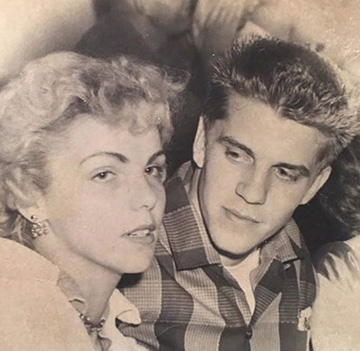
One summer night, we fell in love.
One summer night, I held you tight.
You and I under the moon of love.

— “One Summer Night” song lyrics by Danny Webb, recorded by the Danleers, June 1958

– – – – – – – – –

“What’s this you speak of … this summer romance thing,” a reader responded to a passing reference in last week’s column.

I get comments on my column just about every week. Some with condolences. Some inquisitive. Even a few that are complimentary. But this one would be hard to handle, and I knew it before I opened my big mouth. For two reasons. One, I’m the least qualified to comment, qualify, or quantify on all things romantic. In any season. Check my references. And two, anyone who has to ask about the virtues of summer romance just may be less qualified than me. 

Noting both points, I ignored my better judgment and jumped right in any way.

Romance comes in all shapes, sizes, packaging, and with a myriad of marketing campaigns, I explained. Poems, novels, magazines, songs, drug store paperbacks, and notes filled with romantic expressions of love, once exchanged in afternoon high school English classes. When hearts were young and first introduced to intellectual romantic literature. Like Shakespeare and Mad magazine.

Through it all, I’m convinced however, that while memories fade with time, it’s those long-ago summer romances that are seldom ever forgotten.

“Wow, is that the voice of experience,” my questioner drawled.

“Maybe, dear reader,” I responded. “Many long-time sweethearts confess their marriage of half a century or more all started with love at first sight. Others say it took a little longer for the love light to shine. Some are still searching for that eternal flame. But everyone’s storybook of love reads a little bit differently. It all comes down to remembering one thing.

Still ignoring better judgment, I just kept talking. “First time smitten for me actually started in the spring before school was out. The band banquet. Youth Center parties. Watching Batman on television together. Her family moved after graduation, and for me it was working in the East Texas peach orchards. Harvesting money for college in the fall. I traveled to see her once that summer and again during the fall. But it was two lives, two worlds, and too much geography in between at that age.”

Such a touching example would have sufficed, but no. I kept digging myself in deeper. Sharing that time a couple of summers later. While toiling in the Talco oil fields for another year’s funding for books and tuition. She was a recent high school graduate. There were summer night movies at the Martin Theater. Cruising Mount Pleasant streets to see who else was out, cruising the streets after the movie. It’s what we did then. Back when cars were fast and cool and music spoke to hearts of summer romances.

But it was another September casualty. I went back to school, and she went with a job that took her to another city. A really long way off. I made one really long trip to see her. But once again, two lives, two dreams, and a really lot more geography between.

“So, what was that one thing you mentioned to remember,” my reader asked. 

“In a minute. I’m not through. The third time can be the charm. Sometimes.”

By this time, I felt like I had learned two things. I would need more than one summer job to keep me in college, in summer romances, and in my first love: fast, loud, high-powered cars that won races on Saturday night. That’s why, for a young heart, that third summer romance was a match made in hot rod heaven. She went racing with me. 

However, that summer ended with a fork in the road as well. It wasn’t two lives this time. It wasn’t even two worlds. But for reasons I long wondered about when I thought about her, our summer romance had crossed the finish line.

“Life with its seasons can be profound and perplexing at the same time,” I tried to wrap up. I was in this discussion way over my head and outside my skill levels. I needed an exit ramp. There may be no seasons for love, but there is a time to talk and a time to hush. I was grasping for the latter. 

“Sometimes we never look back,” I tried to sound wise and all knowing. “And other times, we remember on a summer afternoon, and wonder ‘what if?’ Such is the nature of summer romance,” I stopped. Then added, “And that’s all I have to say about that.”

“Wait,” he said. “You haven’t told me the one thing to remember.”

“Two things actually. One, true love knows no seasons, it survives only on a two-way street of happiness. Two, just be careful — the brain is fickle. It works 24/7/365 until you feel the magic of “one summer night … under the moon of love.”

“Oh, and one thing more, I added. Always, always, alway avoid personal advice columns on topics about which you are least qualified to write.”

—Leon Aldridge

– – – – – – –

Aldridge columns are published in these newspapers and magazines: The Center Light and Champion, the Mount Pleasant Tribune,  the Rosenberg Fort Bend Herald, the Taylor Press, the Alpine Avalanche, The Fort Stockton Pioneer, The Monitor in Naples, and Motor Sports Magazine.

© Leon Aldridge and A Story Worth Telling 2024. Excerpts and links may be used, provided full and clear credit is given to Leon Aldridge and ‘A Story Worth Telling’ with appropriate and specific directions to the original content.
Over faster than a summer romance

“He’s a pinball wizard
There has got to be a twist.
A pinball wizard’s
Got such a supple wrist.

 — Song lyrics ‘The Pinball Wizard” by The Who

– – – – – – – –

Remember video games?

Yeah, I know they’re still around. I’m talking about early iterations: Nintendo, Pac-Man, Pong, Odyssey. I don’t know the history of video games, but I’m confident my son does.

If I remember correctly, Lee was about seven or eight when he fixed a defunct Apple 2e computer I tossed aside after buying a new Mac Plus. He had it working and was playing games on it in short order. He celebrates his 44th birthday this month and video games have been his life-long hobby. A whole room in his house is dedicated to gaming—thousands of games, hundreds of collectible consoles.

I called games “a fad” in the 80s. Sitting in darkness one night trying to master one. Small objects cascading down the screen and me trying to zap them before they reached the bottom. I am trying to remember what it was called. Lee would know.

Cut me some slack, though. I grew up embracing pinball machines and pool tables for recreation. Frequenting a Pittsburg, Texas pool hall in the old icehouse by the railroad tracks. Where the last time I passed there, church services were being conducted. And my East Texas State University transcript would likely look better had I devoted as much time to studies as I did to Pope’s Pool Hall in downtown Commerce.

When “gaming” was mastering flipper buttons on a pinball machine. Pumped by the rush of ringing bells and flashing of lights, keeping the silver ball in play as long as possible. Becoming one with pinball machines like that one I happened upon one night a few years ago. In a dim corner of an old convenience store in rural Wisconsin, between the Milwaukee airport and my destination hotel.

Dubbed something about “asteroids and aliens,” the game room refugee rested among a couple of tables for convenience store cuisine “dine-in” experiences. Like hot dogs that have been lingering under a heat lamp since the Christmas holidays.

The machine’s faint warm glow beckoned the next pinball wizard to save the solar system.

I paid my tab for hotel room necessities: a bottle of water, aspirin, and a crossword puzzle magazine. Pocketed my change from the store clerk, who conducted the entire transaction without diverting her attention from a dog-eared paperback romance novel and a diet Coke.

Before reaching the door, I stopped. Surrendering to the machine’s siren song, I went to the dark corner, set my sack on a nearby table, and dug for loose change. Feeding the coin slot awakened an aurora of slumbering electronics. Lights flashed, bells rang, and a deep electronic “Darth Vader-ish” voice issued dire warnings regarding my future in the universe.

With a crack of my knuckles, I rolled up my sleeves and gripped the sides of the machine. Following a couple of practice taps with the flipper buttons, I pulled the release knob back and sent the first ball flying around the top and into play.

Game on!

I bounced it off the bumpers. Lights flashed faster. Bells chimed louder. My score was running up faster than numbers on a Walmart gas pump.

My old “pinball posture” was back. I twisted and turned with every ball. I hammered the buttons. I talked to the machine. I defended my ship and the galaxy, fighting gallantly without thought for my own safety. Alien invaders went down one after another, victims of my lightning laser fire with the silver balls.

In mere minutes, I had fought my way to galactical glory faster than Luke Skywalker.

Then it happened.

I met my outer space Waterloo in the form of a sonar-sounding, gun-toting, light-year traveler. It was over faster than a high school summer romance in September. Like awakening from an afternoon nap dream, beamed from far reaches of the solar system back to an aged Midwestern C-store at sundown. The machine slipped back into its slumber.

The cashier was still deep in her alter ego romance and aspartame aspirated refreshment. But I felt other eyes looking at me—a young alien defender who had yet to attend grade school graduation. “Are you through, mister,” the lad asked softly and politely?

I threw my shoulders back, looked at my score with pride, and said, “I am. It’s your turn now. Do you play this pinball machine often?”

“Yes sir,” he said, reaching in his pocket for his fare to fight space aliens.

“So, what’s your best score,” I quizzed him. Smiling with pride at my more than 100,000 points still flashing on the board.

“Just three hundred and forty thousand,” the youngster replied as he fed the coin slot and took his stance at the controls. “But I’m going to beat that tonight.”

I picked up my bag and headed for the door, tossing a “good luck” to the kid. And to the romance reading clerk. Still 20 minutes from my hotel, I drove into the night, looking forward to a cozy evening with a crossword puzzle.

Fourteen across. “Popular space-themed pinball machine from the 1960s.” Six letters, third one is an O.

—Leon Aldridge

– – – – – – –

Aldridge columns are published in these newspapers and magazines: The Center Light and Champion, the Mount Pleasant Tribune,  the Rosenberg Fort Bend Herald, the Taylor Press, the Alpine Avalanche, The Fort Stockton Pioneer, The Monitor in Naples, and Motor Sports Magazine.

Nights when storms are raging

“If you don’t like the weather, just wait a few minutes. It will change.”

— Attributed to both Will Rogers and Mark Twain, depending on what you read.

– – – – – – –

A different column for this space was taking shape about the middle of last week. One intertwined with memories of growing up in Mount Pleasant. But that was before spring storms wreaked damage and havoc on much of Northeast Texas late last week, including my hometown.

I’ve lived most of my life in Shelby County. Still, there’s something about the place where you grow up riding bicycles, playing marbles in the dirt, learning about life, and making friends at school. The place that always remains as home in the heart. For me, that was the south side of Mount Pleasant, Texas.

The column I was whittling on can wait while we pray for communities hit by storms to get back on their feet. As I was crafting this second effort column Sunday afternoon, many residents in the storm’s path still lacked electrical service. Many more were surveying storm damage and the aftermath of flooding, processing the impact it will have on their lives.  

Just a couple hours south, down here in Center, we missed the straight-line winds, tornadoes, and other hissy fits Mother Nature was spewing across several states.

I watched reports of weather happening not that far away, remembering other nights here in Deep East Texas when winds wailed, and thunderstorms raged. Waiting out tornado watches and warnings in the wee hours before daring to go to sleep.

And here I am again, pondering sleep on a Sunday night in Center with storms again passing through East Texas. This time, unleashing on Center.

Tornado season in East Texas always reminds me of grade school years in West Texas, where storm cellars were commonplace in the 1950s. And still are. Underground shelters that provided excellent storage for vegetables from the garden and a place for kids to play hide-and-seek on hot summer afternoons.

But when skies darkened, and weather threatened, families huddled in the cellar. Some trying to ignore the storm long enough to steal a nap on Army surplus cots in the warm glow of kerosene lantern lights.

Dad was not a storm sleeper. He was a storm watcher. Often standing at the top of the stairs in the cellar doorway to watch the show. Black funnels like the one that danced through Seymour, Texas one night. Surreally illuminated by lightning and sparks from snapping power lines. Debris filling the air.

I remember that one and another in East Texas at Crockett. My first year of school in 1954 when a mid-day tornado turned noonday skies to midnight black. When violent winds whipped large trees around like saplings while parents picked up children huddled near a row of lockers at one end of the classroom.

I attribute weather like that, and my father’s affinity for storm watching, to my once secret dreams of being a storm chaser. Hunting down tornadoes, then playing tag with them to gather weather data.

What I have done in reality is keep one eye on developing weather and another on a place to hide should violent storms get too close for comfort.

That skill was learned from the best weather warning system I ever had. A couple of small dogs. Miniature schnauzers named Benny and Sassy. Benny was especially adept at weather prognostication. Sensing an approaching storm long before the weather service reported it on radar,. Anytime he hid under my chair and whined, I checked weather channels.

Once storms blew in, both of them headed for the bedroom. Benny was too old to jump on the bed, so he went under it while Sassy hit the topside and burrowed under the cover. I usually joined the one on top of the bed but kept my options open for joining the senior canine hunkered under it.

With the same curiosity my father displayed decades ago, I used to bravely step outside and watch the weather. Observing late afternoon storms approaching across water was magical when I lived on Lake Murvaul. Seeing nature’s power building and rain rolling toward me were mesmerizing.

However, the first up-close lightning flash usually sent me running, trying to beat the dogs back in the house.

Resuming our respective spots in and under the bed, I usually drifted off to dreamland as storms diminished, tornado watches expired, and dogs relaxed. Thankfully, like Mark Twain or Will Rogers indicated, the weather does always change.

That said, my all-clear for slumber remained reliant on one last thing.

I never went to sleep before the dogs did.

—Leon Aldridge

– – – – – – –

Aldridge columns are published in these newspapers and magazines: The Center Light and Champion, the Mount Pleasant Tribune,  the Rosenberg Fort Bend Herald, the Taylor Press, the Alpine Avalanche, The Fort Stockton Pioneer, The Monitor in Naples, and Motor Sports Magazine.

© Leon Aldridge and A Story Worth Telling 2024. Excerpts and links may be used, provided full and clear credit is given to Leon Aldridge and ‘A Story Worth Telling’ with appropriate and specific directions to the original content.

In good shape, for the shape I’m in

I’m trying hard to remember. What was so dad-gum funny about that?”— I said that. About 30 years ago.

– – – – – – – –

“Hello, how are ya,” a friend greeted me. We met last weekend where I shop for vitamins.

“I’m in good shape for the shape I’m in,” I joked, laughing like friends do when they run into each other. “But, keeping me in shape these days is getting to be like those old cars of mine. The older we both get, the more maintenance we both require.”

We laughed again and waved as he went one way, and I went the other.

It’s a common commentary on life, I suppose. Joking about aging. Until aging really starts happening to us.

Like my sisters and me at the family reunion some years ago. “You remember,’ I posed the question. “How we used to laugh at Mom and her brothers and sisters. They drove halfway across the country to drink coffee and talk about their aches, pains, and surgeries?”

We laughed.

“Well,” I continued, “here we are, we’re at that age. Talking about our aches and pains and surgeries. And I’m trying hard to remember. What was it that was so dad-gum funny about that?”

I’ve always tried to care for myself, as I do with the old cars I enjoy tinkering with. Routine maintenance for me and for them, to keep us all on the road and between the ditches.

During my three score and ten, plus a half dozen, I’ve jogged, walked, worked out at the gym and at home, water skied, bicycled, or laid on the couch and slept late in varied attempts to stay in shape. Or not.

Like the television commercial that touts a body in motion stays in motion, my goal was always to stay active. I’ want’ve always thought it better to wear out rather than rust out. 

Just as I keep the rolling stock in the garage nourished with quality lubricants and fluids, I’ve also tried eating healthy. Reinforcing diet with vitamins and supplements.

The result? So far, so good. I guess. At this mature age of social security benefits and increased fiber, my checkups are good. And I require only one prescription medication. Still, the journey has had its moments. Shopping to supplement my supplements last weekend reminded me of early one morning in the 1980s, touring Arkansas in a car born in 1957.

Hitting the road early, I wasn’t far into the morning when I sensed my heart racing. Feelng warm. A glance in the mirror revealed a bright red face staring back at me. As if that wasn’t enough, I began to itch. Fiercely.

A quick exit off I-40 took me to St. Mary’s Hospital in Russellville, Arkansas. “Taken any medicine this morning,” the nurse asked.

“No.”

“Have you eaten anything this morning?”

“Just fast-food fake breakfast. Sausage biscuit. Orange juice. Coffee. Black,” I said. Mentioning again how the itching was escalating.

“Where do you itch,” she asked?”

“More all over than anywhere else,” I offered.

“It might be the orange juice,” she commented while checking my blood pressure.

“I’ve never been allergic to anything.”

“No medications,” she doubled back to ask again.

“No. Although I did take my morning ration of vitamins.”

“What did you take?”

“Let’s see … I take vitamins A, B complex, C, niacin, lecithin, bran, brewer’s yeast, zinc, bone meal … that’s all I can think of at the moment.”

She continued writing. “Why do you take lecithin.”

“Helps reduce cholesterol and lower blood pressure. Is that what’s making me itchy and red-faced?”

“No,” she said. “I just like to test people to make sure they know why they’re taking vitamins.”

“No one told me to expect a pop quiz,” said. “Does trying to stay out of hospitals count as a reason to take vitamins?”

Until that moment, I never knew that some nurses have no sense of humor.

I contemplated my fate. Was it circulation, heart trouble, or old age? After all, I was approaching 40.

”Good morning, ” announced the doctor. “Do you like broccoli?”

“Broccoli,” I asked before pausing? “Yes, I like broccoli. But tell me, doc, what does green veggies have to do with our unplanned, but nice, chat?”

“You eat lots of it?”

“Sometimes.”

“I think that’s causing your symptoms this morning.”

“Broccoli,” I paused. “As a rule, sausage biscuits don’t come with broccoli. Even in Arkansas. It wasn’t even listed as a side on the menu.”

“You told the nurse you take niacin.”

“I did. And I do.”

“And you took niacin this morning. I’m guessing before breakfast?”

“Maybe,” I conceded.

“I think you’re experiencing a niacin reaction. If you eat broccoli, you’re probably getting a sufficient amount of it without added niacin. If so, an extra dose on an empty stomach can trigger the symptoms you’re experiencing.

“Seriously,” I asked. “I turned around on the interstate, delayed my trip half a day, saw my life flash before my eyes, and spent quality time with you this morning. For a niacin reaction. Shouldn’t you at least keep me for observation or something?”

“Nope, just lay off the niacin a few days and reduce your dosage,” he laughed. “No joke, you’ll be fine in an hour or so.”

It really wasn’t funny at the time. But funny is sometimes a matter of perspective. Like having a temporary health scare and a trip to the ER while your antique automobile that never once hiccupped during five-days covering three states waits on you in the parking lot.

Now that’s funny!

—Leon Aldridge

– – – – – – –

Aldridge columns are published in these newspapers and magazines: The Center Light and Champion, the Mount Pleasant Tribune,  the Rosenberg Fort Bend Herald, the Taylor Press, the Alpine Avalanche, The Fort Stockton Pioneer, The Monitor in Naples, and Motor Sports Magazine.

© Leon Aldridge and A Story Worth Telling 2024. Excerpts and links may be used, provided full and clear credit is given to Leon Aldridge and ‘A Story Worth Telling’ with appropriate and specific directions to the original content.

Maybe, just maybe, it’s not too late

“Remember the good times? When phones were dumb, and people were smart?”

 — Spotted on a tee shirt. Worn by someone using a smartphone.

– – – – – –

Old movies and television shows are the best. People enjoying life with each other. Without a cell phone. Where the only phones we had were tethered to the wall with a cord.

In that not-so-long-ago time when there was no expectation of being instantly and always available. Before being anatomically attached to a cell phone was considered a vital sign of life.

“Is he going to make it, Doc?”

“It doesn’t look good. His heartbeat is strong, but he’s losing cell phone signal.”

Who can argue that smartphones have enhanced some aspects of life? But who can deny that, like most technology hailed with the hooray of reducing workload and making life easier, they have also heaped harmful effects on society? One, the inability to develop quality interaction and conversation skills without hiding behind an electronic device. And two, the mental health hazard of never comprehending it’s not only OK to enjoy personal time disconnected from the world, but it’s also healthy.

“Wow, look at that gorgeous sunset!”

“Hold on. I haven’t checked messages in ten minutes.”

With all this weighing heavy on my mind last week, I launched an experiment. I turned off my phone. That’s off. Not silenced. For 24 whole hours.

It was pure heaven. Peace and serenity unequalled since television stations (all three of them) signed off at midnight with the National Anthem.

After a couple of hours, it crossed my mind that my kids might try to contact me. Not my daughter. She started practicing cell phone use only during selected hours long ago. And my son? He calls more than my daughter, but he’s a busy guy and travels a lot. If he misses me, he’ll leave a message or call back. Maybe someone involving business will need me. Maybe not. This was a Saturday.

Satisfied that anyone wanting to talk to me could wait, I relaxed and enjoyed the bliss of no one “reaching out to touch me.” To coin a twist on an old AT&T jingle.

But when I turned the despised device back on …

“Have I offended you?” The tone of the first text message was hurt.

“Have you seen that message I sent you? It’s been half an hour since I sent it, and I haven’t heard from you. Call me. Now.” Let’s label that one impatience.

“Where are you,” another yelled? Such frustration.

The idea of going “you can’t hear me now” mode came to me a couple of weeks ago. In a business meeting where everyone was reviewing reports and participating in discussions. Or at least doing a better than reasonable job of pretending to be interested.

Except this one guy. Silent. Head bowed. “How inspiring,” I thought. “While the rest of us are laboring with the load, he is praying for divine guidance in plotting a business course.”

Then I saw it—thumbs flying on his cell phone under the table. “It must be important,” I thought. Apparently. It was important enough that he spent the entire meeting head down, looking at his phone. Chuckling and texting.

Or maybe it was the day I heard someone shout, “What’s the matter with this guy? Everybody today has a cell phone permanently attached to their hip.” Frustration and rage. Because he had not received a response—in less than five minutes.

Actually, his exact words varied slightly regarding the precise part of human anatomy to which he felt phones were forever affixed, but you get my drift. I must admit however, when you notice how many people have cell phone protrusions in their pockets and which pocket predominately protrudes … I don’t know. Maybe Mr. Impatient’s analogy was more than a metaphor.

Call me crazy, I know, but I bought an old phone at an antique store, just like the one we had at home when I was a kid. A black one with a dial. Ours was in the kitchen. It was the only phone in the house. Convenience or coincidence, the cord was long enough to reach the dining room. So it was easy to grab a chair and talk.

“Leon, the phone’s for you.” My sister sounded perturbed. “Hurry up. I’m expecting a call,” was her last shot before surrendering the phone to me.

“You kids get off that phone, now,” Mom chided from the living room where she watched Perry Mason on our black-and-white television. “It’s a school night.”

It was just a few years later when my mother stood on the front porch and said, “Bye. Call me when you get there. Call me from a payphone if you need me along the way. I love you.” I was leaving Mount Pleasant, driving to my uncle’s house in Southern California. I was nineteen years old, way before cell phones were even science fiction fodder.

My favorite act of rebellion against being surgically attached to a cell phone might be the prank I pull in restaurants. Where for some inexplicable reason, business associates and family alike feel it’s rude to ignore phone messages, but not to ignore those with whom they’re having dinner.

When that happens, I often ask everyone to place their cell phone in the middle of the table for just a minute. Once all the phones are stacked neatly together and curiosity peaks, I announce, “First one to touch their phone picks up the tab for the whole table.”

Then I start a conversation. Like the ones in old movies and television shows. People enjoying life with each other. Without a cell phone.

“Say, did anyone see that episode of Perry Mason where he …?”

Maybe, just maybe, it’s not too late to reverse the intelligence of people and phones—back to the way it used to be.

—Leon Aldridge

– – – – – – –

Aldridge columns are published in these newspapers and magazines: The Center Light and Champion, the Mount Pleasant Tribune,  the Rosenberg Fort Bend Herald, the Taylor Press, the Alpine Avalanche, The Fort Stockton Pioneer, The Monitor in Naples, and Motor Sports Magazine.

© Leon Aldridge and A Story Worth Telling 2024. Excerpts and links may be used, provided full and clear credit is given to Leon Aldridge and ‘A Story Worth Telling’ with appropriate and specific directions to the original content.

God is still my co-pilot

“Go on to Mount Pleasant. They’ve got a long, wide runway up there.”

— Center Airport Manager Bill Neve’s advice after I reported instrument issues with my airplane.

– – – – – –

It was almost forty years ago. Give or take a flight or two. A sunny Saturday afternoon. Piloting a Piper Cherokee 180 out of the Center Airport. Destination Mount Pleasant, to visit my parents.

The short 45-minute hop with a panoramic perspective of East Texas was easy. A familiar one made many times flying a variety of aircraft. Previous trips had been routine, but this one went in a different direction from the get-go.

Before we got the bugs worked out, you might say.

Memories of that trip grew wings again last week in a discussion about airplanes and the old Mount Pleasant airport. The field where I learned to fly was located smack dab in the middle of what is today Preifert Manufacturing’s complex.

The present-day Preifert event center, in fact, started life as a hangar at that old Mount Pleasant Municipl and remains as the last reminder of where the airport used to be. Whether it is the one that was called “the main hangar” back then, I don’t know. The hangar once adorned with a Mobil flying red horse and a windsock at the roof’s peak. The one with faded letters noting the airport’s name and field elevation. About 400 feet above mean sea level as I recall.

Bill Phinney was the airport manager. Pilot friends who encouraged my interest in aviation to take off at there included David Brogoitti, Frank Glover, Ronny Narramore, Jim McGuire, Gale Braddock, James Spann, and others for which brain cells are failing to fire at the moment.

Instructor Doyle Amerson got me through ground school and my first solo before his untimely death. Soon afterward, Grady Firmin returned from military duty as a Vietnam-era military pilot and flight instructor, guiding me across the finish line to getting a private pilot’s license.

The preflight for that trip to Mount Pleasant a few years ago was routine. With family on board, I taxied onto the runway and applied full power for the takeoff roll.

Midway of the runway, the airplane began to feel light and started to fly. That was good. However, clear of the ground and just as I saw Highway 7 passing underneath us, the airspeed indicator fell to zero. That was not good.

Contradictory to the instrumentation, we had power and the airplane was performing as it should. We were airborne and climbing. I could feel it. But critical flight instruments were not functioning.

This lack of primary data gave new meaning to the old saying, “flying by the seat of your pants.”

“Center unicom. We’re airborne, but we have instrument issues. Pitot instruments not functioning.”

“Probably a dirt dauber,” Bill said. “Come on back around and land, and I’ll clean in it out.”

The pitot-static system controls three flight instruments: airspeed indicator, altimeter, and vertical speed indicator. So, we were flying but I had no idea how fast. I could tell we were gaining altitude, but I had no idea how high or how fast.

Silence. “Ahhh …,” I hesitated before replying. “How do I set up a landing approach without knowing airspeed, altitude, or rate of descent?”

After silence on his end, Bill suggested I continue to Mount Pleasant and the bigger runway.

What was typically a short trip felt like an eternity. Time to listen to the plane. Pilot training emphasizes becoming sensitive to the feel and sound of your aircraft at all times. I felt and heard everything this one offered me for the duration of the flight. It was a 40-minute relationship best described as intimacy between man and machine.

Mount Pleasant appeared on the horizon. Using my “oneness with the airplane” and little else other than the seat of my pants, I began descending. Runway in sight, I executed an approach catching every clue the airplane offered. Then the sweet feel of tires touching asphalt offered visions of a bumper sticker popular at the time … “God is my co-pilot.”

Taxiing the plane to a stop at the terminal was followed by a long sigh. Which was followed by wiping sweat from my brow before pausing for a prayer of thanks.

No maintenance on weekends. An attempt to clean the blocked pitot tube with a piece of wire was the best amateur effort I had to offer. However, the only test I could administer was to fly it. “We did this once, we can do it again,” I told myself. After a shortened visit with Mom and Dad, we were back at the airport, loaded and ready for take off. In time to beat darkness back to Center.

The second trip sans flight instruments was not as scary as the first. Shadows were long and the sun’s orange glow mere moments from the horizon behind me when wheels gently kissed the runway. Again. At Center. Perhaps one of my best landings. Sleeping kids in the back seat didn’t even wake up.

Re-flying that trip in my mind last week reminded me that some things never change.

One, it’s been a while since I was “pilot in command” of any aircraft, but memories still stir up a smile. Two, apparently, dirt daubers are still a threat to working the bugs out of flying. I still see red “Remove Before Flight” flags on pitot tube covers.

And the most important. That God is still my co-pilot. In the air or on the ground.

—Leon Aldridge

– – – – – – –

Aldridge columns are published in these newspapers and magazines: The Center Light and Champion, the Mount Pleasant Tribune,  the Rosenberg Fort Bend Herald, the Taylor Press, the Alpine Avalanche, The Fort Stockton Pioneer, The Monitor in Naples, and Motor Sports Magazine.

© Leon Aldridge and A Story Worth Telling 2024. Unauthorized use and/or duplication of this material without express and written permission from this site’s author and/or owner is strictly prohibited. Excerpts and links may be used, provided full and clear credit is given to Leon Aldridge and ‘A Story Worth Telling’ with appropriate and specific directions to the original content.