Looking back to see how far we’ve come

“I have great respect for the past. If you don’t know where you’ve come from, you don’t know where you’re going.”

— Maya Angelou, (1928 – 2014) American memoirist, poet, and civil rights activist.

. . . . . . . . . . .

I’ve been looking back through tons of archived yellowing newsprint for the last year or more. Perusing things I’ve written in preparation for authoring a collection of my work for posterity. For my children. For future garage sales.

And, the strangest thing has been happening.  The more I read, the more I learn about the person who started all of this. For instance, this piece I penned December 4, 1975, and published in The Naples Monitor. One that I had long forgotten ever having written. 

“Every county has an abundance of old cemeteries and Morris County is no exception,” it started. “Cemeteries rich in history, sentiment, and knowledge. Most of it not recorded anywhere outside of weathering marble that is all too often crumbling and surrounded by overgrown grass and weeds.”

That intro paragraph evoked memories of my mother and her sisters combing Kentucky cemeteries every summer during family reunions. Hot summers driving miles to graveyards on hillsides and behind country churches. Time, that as a kid, I preferred to have been splashing in a mountain stream somewhere close to a picnic lunch instead of cleaning decaying grave markers trying to read names and dates.

“Besides being the final resting place for the earthly remains of relatives, friends, and loved ones, old country cemeteries reflect a lot about us,” I wrote.

“Public cemeteries are, relatively speaking, something of recent times. Before becoming the “here today and there tomorrow” mobile society that moves every few years we have become, people were often born, lived and died in the same area, if not the same parcel of land.”

A good example of which played out about the same time this 1975 missive appeared in print. I was standing at the parts department counter at Sandlin Chevrolet and Oldsmobile on Mount Pleasant’s north side. The same place where the business established in 1937 still sits today. 

A sign a couple hundred yards north of there on Highway 271 north declared the tiny burg of Talco to be 17 miles away.

While I waited for my order to be filled, an older gentleman came in looking for a part for his aging Chevy truck, announcing that he had just come from Talco. While one of the parts guys, probably Alvie Neely or “Cotton” Huff, both of whom worked there at the time, was in the back retrieving what he needed, the old guy gazed out the window at the 271 and Highway 67 intersection in front of the Titus County dealership. 

“This north end of Mount Pleasant sure has changed since the last time I was down here,” he drawled. 

“Really,” I asked. “How long’s it been since you ventured over from Talco,” I inquired. Just to make conversation while we both waited.

He thought for a minute before replying, “… near about 17 years. I don’t get far from the farm very often,” he laughed. 

“Hence,” my 49-year-old column continued, “most families had their own cemetery where family members were buried.” Like the Kentucky mountaintop property where my mom’s great-grandparents were born, lived, died, and were buried. A hike that required wading a river up to that plot one summer in the 1980s leading to a small family cemetery with Johnson tombstones bearing date in the 1700s. 

“Visits to one of the older plots will often reveal family lineage bearing birth and death dates etched in stone; some with a line of wit, wisdom, or philosophy inferring that the one interred is ‘gone but not forgotten’  or is ‘waiting for us on the side.’

Like to one I read about once, where supposedly inscribed in stone was, “Here lies poor ol Henry Howell, shined his shoes with his wife’s guest towel.”

“Other times, associations formed by the departed are recorded, such as military records from recent skirmishes to the Civil War or earlier. Here in the South, the inscription C.S.A. is common on old markers noting the person had served in the military for the Confederate States of America. Others often honored membership in a brotherhood or a lodge.

Also common on older markers is the deceased’s cause of death. Particularly if it was some sort of plague, pestilence, or territorial dispute that may have robbed families and communities of multiple members.

While all this enlightenment tells us much about the departed person while still among the living, a glance around the local Boot Hill can also offer insight into the living before they became cemetery residents. 

Learning more about ourselves by studying our past.

Or in my case, reading what I wrote a lifetime ago revealing more about who I am today.

—Leon Aldridge

(Original art and photos above by Leon Aldridge, 1975)

. . . . . . . . . . .

Aldridge columns are published in these Texas newspapers: The Center Light and Champion, the Mount Pleasant Tribune,  the Rosenberg Fort Bend Herald, the Taylor Press, the Alpine Avalanche the Fort Stockton Pioneer, and The Monitor in Naples.

© Leon Aldridge and A Story Worth Telling 2024. Unauthorized use and/or duplication of this material without express and written permission from this site’s author and/or owner is strictly prohibited. Excerpts and links may be used, provided that full and clear credit is given to Leon Aldridge and A Story Worth Telling with appropriate and specific direction to the original content.

Appreciating those who appreciate what we do

“The same world spins around,
I guess some things never change.”
— Song lyrics by Tim McGraw, American country music artist

– – – – – – –

“The newspaper business just isn’t what it used to be,” a good friend called to lament last week. Like me, he’s had that printer’s ink in his veins since the time we learned to write about the world around us.

“Yes, it is,” I disagreed sharply. “Different opportunities and tools with digital and all that stuff, but it’s still the same business.”

“Enlighten me learned one,” he laughed. “I’m not feeling it today.”

I reminded him that it’s first, still all about people and what matters most to them. Keeping readers informed and earning their trust. “Schools, taxes, elections, local issues, the economy, politics, fairs, ribbon cuttings … only the names in the news have changed.”

“It used to be fun, though,” my naysayer retorted.

“It still is,” I touted him. “For instance, anyone tell you lately you need to be tougher. Write about ‘the way things really are’ in this town? Then, the same day, you get a call from a reader who opens up on you, blasting an article you ran last week that ‘was too harsh.’ Tells you, ‘Some things just don’t belong in the paper. It would help if you were a little gentler with the people who live and work here. I’m ready to see some good news for a change.’”

Been told by anyone from the senior population lately, “You should do more articles about our seniors in the community. They really are your biggest readership, you know. They deserve more coverage.” Then told the next day by a parent who is active in parent-teacher organizations that you should publish more school news. “All you ever have is things about the senior citizen’s gatherings and the historical columns about how things used to be. Our future depends on the young people.”

“I think I see where this going,” my friend said.

“Anybody walked into your office lately, picked a paper up off the counter, flipped through it before paying, and say, ‘Is there anything in here worth reading this week?’ You want to tell him, “We only had enough advertising for ten pages, but we ran 14 because we value our dedication to delivering all of the news.”

But you hold your tongue instead, and even manage a smile. Because it’s all about them. The readers. Not us; we merely report it.

“Does your phone still ring with one of your best advertisers saying, ‘Hey, my boy got stopped for DUI last night. You know kids will be kids,’ he laughs. ‘Do me a favor, will you. And keep his name out of the paper.’ We still take a deep breath and say, ‘if a name is on the records, it will be in the paper. If it’s not on the record, it won’t be in the paper. Simple as that and we can’t make exceptions because playing favorites is not fair and balanced journalism, and that’s not an option with us.’”

“That’s not fair,” they still growl.”  You’re going to ruin his life.” We apologize and humbly suggest that, yes, it really is fair. Because we don’t make the news, we simply strive to report it fairly. For everyone.

“You know how much I spend with you, don’t you” he asks? “Well, cancel my advertising. See how fair you think that is.” Click.

We take a deep breath and walk up front to greet the advertiser who is waiting to see us. The one who greets us with a smile and says, “That ad you did for me this week looks great! Can I get a half-dozen copies of the paper? I want to put my up in the store where customers can see it.”

“Sure,” we tell them, and hand him a dozen copies with our thanks. “What do I owe you,” he says, sticking his hand in his pocket. “Nothing,” we wave him off. “We appreciate your business.”

I reminded my friend that we’ve been through this scenario, and more, since we first got into this business, and we’re still going through it today. Because we believe in what we do and we don’t know of anyone else who will do it if we don’t.

“So, you see,” I concluded. “Nothing has really changed.” 

That’s supposed to cheer me up”” he asked?”

“Yes, but if not, think about this. The total strangers that still tell us they like the paper because we put out a good product. That we do a good job reporting the news. Aren’t those still the ones you remember the longest?” 

“Like the guy at the gas pump a couple of weeks ago,” I continued. “Didn’t know him from Adam. We made eye contact from opposite sides of the pump. I nodded and said, “Hello.”

He replied, “I enjoy your columns and I enjoy reading the paper every week.”

“Thank you,” I told him. And added how much I appreciated his support.

Then there’s the little lady who came in yesterday to renew her ”prescription,” as she called it. “I just love getting the paper,” she smiled. “I wanted to make sure mine was paid up.'”

I thanked her with a smile and told her how much I appreciated her reading the paper.

“So, you see,” I told my colleague. “It’s still all about people and what matters most to them—keeping readers informed and earning their trust. Only the names in the news have changed.”

And more than ever, appreciating the ones who appreciate what we do.

—Leon Aldridge

– – – – – – –

Aldridge columns are featured in these publications: The Center Light and Champion, the Mount Pleasant Tribune,  the Rosenberg Fort Bend Herald, the Taylor Press, the Alpine Avalanche,  the Fort Stockton Pioneer, the Elgin Courier, The Monitor in Naples, and Motor Sports Magazine.

© Leon Aldridge and A Story Worth Telling 2024. Excerpts and links may be used, provided full and clear credit is given to Leon Aldridge and ‘A Story Worth Telling’ with appropriate and specific directions to the original content.

Wondering, is it too late to be trendy

Style icons always change, and they usually inspire my haircuts more than anything else.

— Maya Hawke – American actress and singer-songwriter.

– – – – – – –

A haircut isn’t something I think about a lot these days. Because a small crop is easier to manage, haircuts are a minor thing anymore.

If I look in the morning mirror and the old guy looking back at me has hair over his ears, he’s off to Boyd’s Barber Shop in Center for a trim. Boyd runs an old-fashioned barber shop, he does a good job, and the haircut comes with the latest politics, public opinion, and what’s happening around town.

Sitting in a barber chair is also a reminder of Saturdays spent as a kid reading Popular Mechanics magazine while ‘getting my ears lowered’ at Chris Durant’s shop in Mount Pleasant. Just in time to make the matinee next door at the Martin Theater. No appointment needed. Just go in, take a seat, find something to read, and wait for the barber to call, “Next.”

Hairstyles have trended since then. I see long hair, short hair, hair on top of the head, shaved on the sides. I see artistic designs sculpted in hair. I see green hair, purple hair, blue hair. Sometimes, different colors and cuts on the same head. All attempts at being trendy.

Sometimes, it’s fun to be classified as trendy. But if you’re like my Uncle Bill,  my mother’s baby brother, you simply pick one hairstyle and stick with it. Because what goes around comes around. Uncle Bill is 89 and wears his hair just like he’s always worn it. In a style that was trendy when he adopted it as a youngster. But Uncle Bill didn’t change with new styles coming along. He stuck with the ducktail haircut he’s sported since he was a kid just coming out of the 1940s.

My Uncle Bill Johnson in the early 1950s with a ducktail haircut.

Over the years, the ducktail has been trendy, then faded away only to return a generation or so later. And I hear it’s coming back again.

In case you missed it, the ducktail is a men’s haircut style first popularized during the early 1950s. It was also called the duck’s tail or sometimes simply D.A., which is an abbreviated reference to another name derived from the south end of a northbound duck. And that’s all I’m going to say. You’ll have to figure out the rest on your own.

The hairstyle’s origin is credited to Philadelphia barber Joe Cirello, who said he invented it in 1940. History records that he called the combed-back hair held in place on the back of the head by pomade ‘The Swing,’ after the music style of the day. After becoming a fad with young males in the early 1950s, it was also sometimes associated with those discontented with authority during the era.

Picture James Dean in the movie “Rebel Without a Cause.”

Uncle Bill in the 60s – still wearing a ducktail haircut.

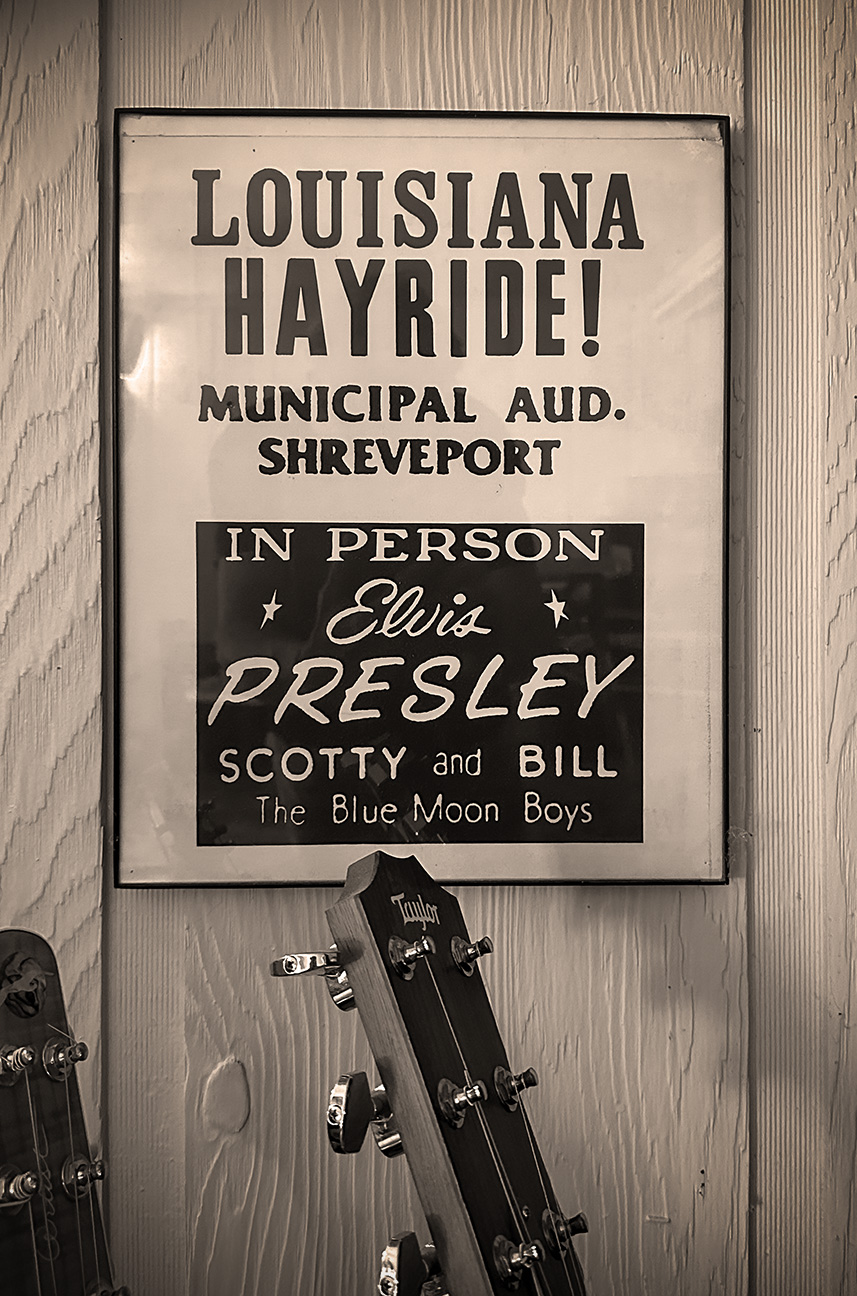
In any case, Uncle Bill adopted the look early in his life and stuck with it. After Elvis Presley, poodle skirts, and custom Mercurys in the 1950s came the British Invasion in music, the Vietnam War, and the “one giant step for mankind” in the 1960s. Through it all, Uncle Bill kept his haircut despite being told he was “out of style” as the 1970s approached.

Did it bother him? Nope. He continued to comb his hair back in a ducktail fashion, just like he always had, like “Kookie” on the 1950s television series “77 Sunset Strip.”

The first revival of ducktails came with the 1950s comeback in the 1980s. Mainstream marketing utilized 1950s cars and music to sell new products, and flat tops and ducktails were back in vogue. Uncle Bill was back in style—again—but oblivious to it all because he never abandoned his original hairstyle.

Uncle Bill today. Still wearing his ducktail haircut.

And now, with hints of another comeback for D.A.s, Uncle Bill will find himself back in style. Again. Even in shades of gray, his hair is combed back on both sides to meet in the back, just like it was in the 1950s.

Uncle Bill has always been my hero. But I’ve never gotten caught up in being trendy and I’ve never styled my hair in a ducktail cut. The flat top was my style from grade school and halfway through my senior year of high school when I let it grow to a late 60s length. After helping the ag major cowboys at East Texas State University defend the flagpole from which a group of hippies tried to remove the flag.

The only change in the years since has been color.  And I didn’t make that change; time and raising kids did it for me. “My hair is turning gray,” I bemoaned to my barber one day in my late 40s. Comb and scissors still clicking away, he replied, “Just be glad it’s not turning loose.”

Today, I’m still blessed with hair to comb, although gray. But I’ve been wondering, should I try being trendy. Like Uncle Bill?

Who knows, I may have enough hair to cover that place on the back where it’s getting thin.

—Leon Aldridge

– – – – – – –

Aldridge columns are featured in these publications: The Center Light and Champion, the Mount Pleasant Tribune,  the Rosenberg Fort Bend Herald, the Taylor Press, the Alpine Avalanche,  the Fort Stockton Pioneer, the Elgin Courier, The Monitor in Naples, and Motor Sports Magazine.

© Leon Aldridge and A Story Worth Telling 2024. Excerpts and links may be used, provided full and clear credit is given to Leon Aldridge and ‘A Story Worth Telling’ with appropriate and specific directions to the original content.

One sentence to describe your life

“I’m going to finish my book of columns this year.”

— I said that. Which means I really have to do it now.

Reviewing columns you’ve written for almost half a century will jog memories. Floods of them. A few that stand out more than others.

For me, those are pieces about people I’ve met along the journey. Ordinary people with extraordinary stories. Like one I penned about a Naples resident back when I was a much younger journalist working at The Monitor.

In fact, that stint in Morris County was my first newspaper job. The date at the top of the page that week was May 13, 1976. Reading it last week for the first time in decades was a flashback.

Somewhere among the collections of good advice and old sayings, that one begins, there is one admonition that Andrew J. Young of Naples has apparently followed throughout his life.

“Keep a song in your heart.”

When I visited him recently, he showed me songbooks stacked beside his bed marked with page numbers on the front. Selected pages revealed their significance. The ones with credits that read “Copyright 1953 by Stamps Quartet Music Co., Inc. Words and Music by Andrew J. Young.”

A yellowed piece of letterhead stationery tucked in a scrapbook page announced “Andrew J. Young — teacher, scoring for orchestra, arranging, songs, anthems, and choral pieces, composer and editor.”

Born in Marietta, Texas, 82 years ago, Young said he was a farm boy until he was nearly 23. “I was raised on the farm,” he said. “But when I left it—I left it. I have no desire to plant flowers, put out peach trees, or anything like that.”

Young said music has been his life’s work. “Been playin’ the piano since I was five years old. My mother sat me down in her lap and started me out just like she did my sister. Made me play five days a week, all the time I was at home.”

Then leaning closer, Young added with a gleam in his eye, “I hated it. Thought it was something for girls only, you know, kind of sissy.”

“In 1917, I went off to the war. Wasn’t quite 23 years old,” Young remembered. “They gathered up several thousand of us and sent us to England. We were sent to perform all kinds of trades. I had signed up for the air corps, so they put me in a group that trained under the British Air Force, which the United States didn’t recognize at the time … they trained us in the basics of flyin’ an airplane.

“They flew ‘Jenny’s’ back in those days,” he recalled thoughtfully. “Didn’t even have parachutes. Came home after Armistice Day and haven’t been in one since.”

Young’s thoughts drifted. He gazed, pointing toward the sky with his cane. “Looked out the other day and saw one of those jets goin’ across the sky. Watched it until it went clear out of sight.” Bringing  his thoughts closer to earth, he continued, “I’m gonna fly in one of them someday, just to see what it’s like.”

While his love has been music, his labor has been a brick and plaster mason. Young said he’s done quite a bit of work in the area, including the David Granbury Memorial Hospital at Naples and the school building and rock fence at the James Bowie School at Simms.

“I’m going to try to talk them into lettin’ me lay just a few of the brick on the new hospital addition,” he grinned. “If they’ll let me.”

‘Mr. Andrew,’ as he is known by almost everyone, is probably best remembered for conducting the old singing schools that used to be a way of life in northeast Texas. Three-week affairs. Eighteen days, eight hours a day of the science of music.

“I started teaching singing schools before the war,” Young said. “Taught them all through the years. Taught 57 in Cass County alone. More than anyone living or dead.”

“You know, there’s joy in takin’ someone who can’t even sing … never even thought about carryin’ a tune and teachin’ them about music,” he said.

“Day before yesterday, I was in Wyninegar’s (drug store in Naples),” Young laughed. “This fellow came up to me and said, ‘I think l know who I’m talkin’ to. You taught me in a singing school at Rocky Branch in 1915.’ And I told him he was right, except it was l916. l remembered it because I taught the one at Rocky Branch right before I went into the war.”

“Spent some time in California doing some plaster work,” the musician turned brick mason continued. “Came back to Naples and heard that there was a lot of work goin’ on in Texarkana. So I moved over there and wound up stayin’ several years.

“The seventh day of August last year, I was brought to Naples and put in the hospital with pneumonia,” he said. “Didn’t know anyone or anything for 27 days. I was brought from the hospital to here at Redbud (nursing home) and have been here ever since.

“With the help of the folks here … and above,” Young added, pointing his cane upward, “I have gained my strength back, and can play the piano again … and walk to town every day.”

Still active in piano playing, ‘Mr. Andrew’ plays for many activities at Redbud. He maintains the pianos and keeps them in tune. In addition, he advertises actively for piano repairs and tuning work.

If we were all were charged with one sentence to describe our life, Andrew J. Young could have done no better when he said, “Singing and playin’ the piano … it’s been my life.”

—Leon Aldridge

– – – – – – –

(Photo at top of the page: Andrew Young at the piano at Redbud Nursing Home in Naples, Texas taken by Leon Aldridge in May of 1976.)

Aldridge columns are featured in these publications: The Center Light and Champion, the Mount Pleasant Tribune,  the Rosenberg Fort Bend Herald, the Taylor Press, the Alpine Avalanche,  the Fort Stockton Pioneer, the Elgin Courier, The Monitor in Naples, and Motor Sports Magazine.

© Leon Aldridge and A Story Worth Telling 2024. Excerpts and links may be used, provided full and clear credit is given to Leon Aldridge and ‘A Story Worth Telling’ with appropriate and specific directions to the original content.

Simple principles that still work

“Grandmas hold our hands for just a little while but hold our hearts forever.”

— Unknown

– – – – – – –

It was a simple principle. And it worked.

The little red plastic car had a magnet in it. Another magnet was molded in the hand-held piece shaped to fit two fingers. Two tiny fingers.

“Remember how I showed you,” I recall her telling me. “Do it the way you’re supposed to, and it will work.”

I sighed and tried it again. The way she had told me to do it in the beginning. And just like magic, when I waved my finers over the toy car, it rolled across the tabletop. Propelled by the scientific principle of opposing magnetic fields.

My dad’s mom spent a lot of time with children. Her grandchildren, the neighbor’s children, anybody’s children who came to her house.

She had lots of practice. She did it most of her life. Born in 1905 and married at age fifteen, she was raising my father by the time she was 18.

My father was adopted by his brother and his wife in 1924 when he was not yet a year old.

The couple my dad knew only as mother and dad were biologically his aunt and uncle. My sisters and I knew them as grandmother and granddaddy. However, the family relationship would not have been any different by any other names. Nor could the love have ever been any stronger.

Raising kids and running a household was all that Granny ever knew. In her 88 years, she never had an employer and never drew a paycheck. But she worked seven days a week, loving her family, raising her child, and (to hear her tell it) helping raise other children—hers, her neighbors, her friends.

Nobody knows to what degree she actually “raised” them. But if she ever wiped their noses, fixed them a meal, refereed a disagreement, or helped get them back on the “straight and narrow,” she laid claim to some part or parcel of their raising.

She was just that way. She helped where she was needed, giving of herself and what little she and my grandfather had to offer.

And it wasn’t necessarily a question of need. Most of “Granny’s kids” had good homes. They simply enjoyed visiting hers because of the warmth and love they found there.

I was blessed with loving parents. But I was “twice blessed.” I had her for a grandmother.

During visits to her house, she sometimes crafted toys from spools, paper, string, and other improvised household items.

On rare occasions, we frequented the toy store on Main Street next to the post office to splurge for a model kit.

That could be where the toy car I found myself playing with again last week came from. I just remembered it stayed in “my drawer” in her chifforobe. The same bottom drawer where some of my father’s old toys aged with mine.

When I grew from toy cars to real ones, she continued to help “raise me,” offering advice, solicited and otherwise, on navigating the perils of adulthood while enjoying the happiness of a life well lived.

When I decided to buy my first car at age 14, I told her all about a used 1951 Chevy I found, sharing with her my experience of going to the bank with my father to learn about financing. She promptly warned me about the evils of borrowing money. That it was better to “save up to buy what you need.”

“I raised your father better than that,” she added with a scowl.

The she pulled her “pocketbook” from its hiding place in the closet and gave me the money to buy the car. But only after making it plain that she expected to see  me every week when I got paid at my new after-school job at Beall’s Department Store.

“You can just pay me,” she said. That way, “You don’t have to pay any interest.”

The toy car resides in a display case with other automotive memorabilia. And it still works perfectly when I play with it. Employing time-tested principles that have never changed.

I try it every now and then, just to think about her. Recalling her philosophies about the happiness of a life well lived.

All, time-tested principles that still work today.

—Leon Aldridge

– – – – – – –

Aldridge columns are featured in these publications: The Center Light and Champion, the Mount Pleasant Tribune,  the Rosenberg Fort Bend Herald, the Taylor Press, the Alpine Avalanche,  the Fort Stockton Pioneer, the Elgin Courier, The Monitor in Naples, and Motor Sports Magazine.

© Leon Aldridge and A Story Worth Telling 2024. Excerpts and links may be used, provided full and clear credit is given to Leon Aldridge and ‘A Story Worth Telling’ with appropriate and specific directions to the original content.

The real reason we need more prayer

“The trouble with our praying is, we just do it as a means of last resort.”
— Will Rogers (1879 — 1935) American vaudeville performer, actor, and humorous social commentator.

– – – – – – –

“More old coffee drinkers solving the world’s problems, and more prayer. That’s what this country needs.” Record that as the official declaration of one seasoned group of aging caffeine consumers. The one in which I hold charter member status.

That need intensified last weekend for a country already severely in need of more time on its knees. Moving one step deeper into the abyss of discord, miscommunication, and intolerance for differing opinions. And coming at a time when we thought things couldn’t get any worse. Before another misguided soul stepped into the limelight and proved us wrong.

“We need to get this once strong nation back into pews. Where preachers can remind us who tend to forget, that prayer is needed,” touted one of the coffee faithful. “Before it’s truly a last resort.”

“Some of that “ol’ time religion,” another concluded. “Preachers that preach the Bible.”

“Anyone besides me ever tried that,” I jumped into the fray. “Preaching a sermon?”

Everything got quiet. All eyes turned in my direction. It occurred to me that maybe I should have just taken another sip of hot coffee and added another “amen” to the chorus.

“Well,” I quickly tried to recover. “It just so happened that the preacher at the small country church where I was a member needed to be gone one Sunday. He asked if one warm body wanted to step forward and fill the pulpit in his absence. That’ when everyone else stepped backward. And that’s how it happened that I was ‘called.’ Not so much by the spirit as by default.”

With the best message I could cobble together, I stepped to the pulpit the following Sunday morning, and placed one hand on each side of the podium. Not to look authoritative or anything like that, you understand. It was to keep my hands from shaking and my knees from folding.

Recalling an associate preacher at a large church in Abilene some years before, I began by borrowing on one of his lines. “I am not the regular minister,” he would say. “The regular minister is out of town this morning, which makes me the irregular minister.”

I chuckled, remembering how his comment made people laugh—unlike the rows of blank stares I got when I tried it. So, still hanging on for dear life, I jumped off into my notes. Which were more personal stories than book, chapter, and verse.

I’ve always admired preachers who can blend personal experience with scripture to deliver a personalized message with meaning. Often, small-town country preachers, adept at imparting earthly wisdom punctuated by the word.

Like the elderly East Texas preacher I knew who suggested that it was good for the soul to spend 30 minutes exercising, “taking care of our earthly bodies.” He followed his own teaching, too. Exercised himself, he did. By walking several miles a day. Usually with a cane pole over his shoulder. While the minister swore his walks were “for his health,” we noticed that he generally walked in the direction of a fishing hole.

Perhaps the old preacher’s best suggestion, however, was to “make two or three good friends among the old folks while you’re still young.” I always wondered, though, why most of the advice for young men comes along after we’ve passed that point in life when our obituary will no longer contain the word “untimely.”

Last week’s coffee shop conversation about prayers and preachers also reminded me of my daughter, Robin. Some years ago, she called me with a sampling of “down to earth” sage advice on churchgoing. Gathered from bulletins and signs.

“One preacher up in Tennessee,” she chuckled, “said if a church wants a better preacher, it can get one by praying for the one it has. Another,” she added, “said some church members who are singing ‘Standing On the Promises’ are merely sitting on the premises.” Another was advice sorely needed more today than ever. “According to the Bible, we were called to be witnesses. Not lawyers and judges.”

But the best might have been an Ohio minister who shared how “I turn my troubles over to God every evening. He’s going to be up all night anyway.”

When all the coffee was gone and all the issues sufficiently solved for another day, our coffee drinkers club adjourned. Resolved in agreement as how one thing might, in fact, be the best sign of the need for more prayer. Before it really becomes our last resort.

That is thinking that things just can’t get any worse right before sitting down to watch the nightly news.

—Leon Aldridge

– – – – – – –

Aldridge columns are featured in these publications: The Center Light and Champion, the Mount Pleasant Tribune,  the Rosenberg Fort Bend Herald, the Taylor Press, the Alpine Avalanche,  the Fort Stockton Pioneer, the Elgin Courier, The Monitor in Naples, and Motor Sports Magazine.

© Leon Aldridge and A Story Worth Telling 2024. Excerpts and links may be used, provided full and clear credit is given to Leon Aldridge and ‘A Story Worth Telling’ with appropriate and specific directions to the original content.

Just a different side of the river

“A nation’s culture resides in the hearts and in the soul of its people.”

— Mahatma Gandhi (1869-1948) Indian independence activist and writer.

– – – – – – –

“So how is it pronounced,” she asked?

“Suh – BEAN,” I said slowly and deliberately. “The first syllable is pronounced like ‘uh.’ The last rhymes with ‘bean’ as in ‘beans and peas.’ And there is an ever so slight emphasis on the last syllable. ” … “Suh – BEAN,” I repeated.

“And you know this how,” my friend inquired with just a hint of doubt.

“Cultural experience,” I told her. “How one pronounces a word depends on the culture in which they learned it. Like I did while living in Sabine Parish, Louisiana, a few years ago … and a different side of the river.

“Variants exist,” I warned.  “One, used predominantly by residents on the Texas side of the river. It’s pronounced rhyming the first syllable with the word ‘sad,’ drawing it out and shifting a heavy emphasis to that first syllable … SA-bean.”

That conversation about the 360-mile-long Sabine River which serves as part of the boundary between Texas and Louisiana, occurred a year or so ago. It came up again last week while in an antique store in Shreveport where I walked into a conversation — literally.

The emporium of relics was huge. A maze of two stories and multiple rooms to navigate. One filled with books where two men sat at a long table talking . I first suspected they might have been lost and trying to figure out how to find their way out of the humongous building. I know I was.

Not wanting to interfere with their dialogue, but also not wanting to appear rude, I briefly glanced in their direction, smiled, and nodded. The younger of the two sat on the other side of the table from where I stood. Snippets of what I overheard sounded as though he may have been interviewing the older gentleman at the end of the table.

“Lots to look at, isn’t there,” the first commented.

“Yes, sir,” I responded. Pausing briefly, I then added, “I couldn’t help but overhear someone say something about The Sabine Index. In another lifetime many years ago, I worked for The Sabine News in Many, Louisiana. An upstart competing newspaper to the Index.”

“Robert Gentry,” the younger man said with a wide smile.

“That was him,” I countered. “Editor and owner of the Index when I was serving time in Many.”

“Now he was a character,” the older gentleman added, bearing down on the ‘he.’

I laughed. “I was a 20-something rookie hired by two Texas guys, recent purchasers of the News. They sent me down there as editor, but the local partner was seldom in the office. So, I wound up as a young, transplanted Texan directing an editorial effort competing with Mr. Gentry. With little to no knowledge of what a large Louisiana legend the man was.”

Robert Gentry conducted his own funeral and prepared his final resting place while he was still alive. Which, as far as I could discern from research last week, he still is. A lifelong journalist, country music historian, author, political consultant, concert promoter, businessman, and colorful Louisiana native just begins to describe him. Look him up online.

His 2011 funeral was at Rebel State Commemorative Area near Marthaville, La. Long-time friend and four-time Louisiana Gov. Edwin Edwards delivered the eulogy, “insults, and other remarks,” according to recorded accounts.

Gentry’s wife sang vocal selections. A procession to “When the Saints Go Marchin’ In” was conducted. A list of Louisiana speakers, including elected officials and well-known personalities, commented. And country music legend Gene Watson and his Farewell Party Band closed the service.

As a political consultant, Gentry was the last public relations director for Louisiana Gov. Earl K. Long. He also directed country, gospel, and bluegrass programs at the Rebel Historic Site he founded, which was later taken into the state’s park systems. Performers included Roy Acuff, Gov. Jimmie Davis, Grandpa Jones, Kitty Wells, Bill Anderson, Bill Monroe, Ernest Tubb, and Lester Flatt, to name just a few.

Before owning the Index, Gentry worked at the Natchitoches Enterprise and Times. During his ownership of the Many newspaper for more than 47 years, it was considered one of Louisiana’s premier weeklies.

“And that’s where I met him,” I told the gentlemen last week. “The Sabine News never held a candle to The Index, but I consider my time producing a newspaper in the same community with Mr. Gentry a learning experience. Plus, it was an excellent introduction to the differing cultures of the two states.

“And,” I remarked, “I’ll never forget the day I left the News and Many. I went to Mr. Gentry’s office to tell him I was leaving town and thank him for the learning experience afforded me just by working in the same market with him. And you know what … he offered me a job.”

Not wanting to further hinder the conversation I accidentally meandered into last week, I moved toward the door with a wave and said, “Thank you for the memories.”

“Thank you,” said the older gentleman.

Then added, “And thank you for pronouncing Sabine correctly rather than the way people who have never lived in Louisiana pronounce it.”

—Leon Aldridge

– – – – – – –

Aldridge columns are featured in these publications: The Center Light and Champion, the Mount Pleasant Tribune,  the Rosenberg Fort Bend Herald, the Taylor Press, the Alpine Avalanche,  the Fort Stockton Pioneer, the Elgin Courier, The Monitor in Naples, and Motor Sports Magazine.

© Leon Aldridge and A Story Worth Telling 2024. Excerpts and links may be used, provided full and clear credit is given to Leon Aldridge and ‘A Story Worth Telling’ with appropriate and specific directions to the original content.

Today’s electronic devices aren’t so very different

“Never open the door to strangers.”

— Uncredited, but excellent babysitting device.

– – – – – – –

Conversation at the coffee shop last week centered around today’s electronic devices. How, in many households, they are a bigger influencer on children than parenting. How in worst case scenarios, they have become babysitters.

It reminded me of piece that has been around a while, but still very applicable today. I don’t know the original author. I borrowed it from a fellow publisher back then who admitted that he didn’t know either. And that he had borrowed it as well.

It’s called, “A Stranger in the House.”

A few months before I was born, the story begins, my dad met a stranger who was new to our small town. From the beginning, Dad was fascinated with this enchanting newcomer, and soon invited him to live with our family. The stranger was quickly accepted and was around to welcome me into the world a few months later.

As I grew up, I never questioned his place in our ramify. My parents were complimentary. Mom taught me to love the Word of God, and, Dad taught me to obey it. But the stranger was our storyteller.

He could weave the most fascinating, tales. Adventures, mysteries and comedies were daily conversations. He could hold our whole family spell­bound for hours each evening. He knew about the past, understood the present, and seemingly could predict the future. The pictures he could draw were so lifelike that I would often laugh or cry. He was like a friend to the whole family.

He took Dad, my brother Bill and me to our first major league baseball game. He was always encouraging us to see the movies and he even made arrangements to introduce us to several movie stars. My brother and I were deeply impressed by John Wayne in particular. The  stranger was an incessant talker.

Dad didn’t seem to mind, but sometimes Mom would quietly get up while the rest of us were enthralled with one of his stories of faraway places, go to her room, read her Bible and pray.

I wonder now if she ever prayed that the stranger would leave? You see, my dad ruled our household with certain moral convictions. But this stranger never felt an obligation to honor them. Profanity, for example, was not allowed in our house not from us, from our friends, or adults.

Our longtime visitor, however, used occasional four-letter words that burned my ears and made Dad squirm.

To my knowledge the stranger was never confronted. My dad was a teetotaler who didn’t permit alcohol in his home, not even for cooking. But the stranger felt like we needed exposure and enlightened us to other ways of life. He often offered us beer and other alcoholic beverages. He made cigarettes look tasty, cigars manly, and pipes distinguished.

He talked freely (probably too much, too freely) about sex. His comments were sometimes blatant, sometimes suggestive, and generally embarrassing. I know now that my early concepts of the man and woman relationship were influenced by the stranger.

As I look back, I believe it was the grace of God that the stranger did not influence us more. Time after time, he opposed the values of my parents. Yet, he was seldom rebuked and never was he asked to leave.

More than 30 years passed after the stranger moved in with the young family on Main Street. He was not nearly so intriguing to my Dad as he was in those early years.

But, if you were to walk into my parents’ den even today, you still see him sitting over in a corner, waiting for someone to listen to him talk and look at his pictures.

His name? We always just called him “TV.”

Conclusion among coffee drinkers last week was about how this generation’s electronic devices aren’t so very different than what someone penned about television decades ago.

They are just the new stranger in our homes.

—Leon Aldridge

– – – – – – –

Aldridge columns are featured in these publications: The Center Light and Champion, the Mount Pleasant Tribune,  the Rosenberg Fort Bend Herald, the Taylor Press, the Alpine Avalanche,  the Fort Stockton Pioneer, the Elgin Courier, The Monitor in Naples, and Motor Sports Magazine.

© Leon Aldridge and A Story Worth Telling 2024. Excerpts and links may be used, provided full and clear credit is given to Leon Aldridge and ‘A Story Worth Telling’ with appropriate and specific directions to the original content.

Remembering what you have learned

“Fine honey, as long as you get it delivered.”

— Heber Taylor III, author and former Galveston News editor

– – – – – – –

One perk of living a long life is recalling smart people you’ve met. One trick to living a long life is remembering what you learned from them.

Wise men like Ben Grimes up in Naples, Texas where my love for the printed word began. Ben dropped by The Monitor office one morning back during the brief time my title at the Morris County newspaper was owner and editor. Told me he couldn’t stay long; just dropped in for coffee. Said his wife had asked him to mow the grass.

Ordinarily, Ben wouldn’t have been so bent on completing a chore like yard work to the point he’d let it interfere with coffee. But he quickly sipped the hot cup, sharing that morning how he figured out long ago how any married man could always get the last words in any conversation.

His secret? Just make sure those last words are, “Yes, dear.”

My Uncle Bill, mom’s younger brother out in Sweetwater who has always been my hero, approached the concept of marriage conversation from a different perspective. “If a man utters a sentence alone in the woods where no woman can possibly hear him,” he once asked philosophically, “Is he still wrong?”

Yet another take on the matter of matrimonial bliss was noted some years ago by former Galveston County Daily News editor and columnist Heber Taylor III. He had not only the philosophy, but a great story to illustrate.

Heber’s father, Heber Taylor II, hired me as a journalism instructor when he was the communication department chair at Stephen F. Austin State University. The elder Taylor also offered words of wisdom. But on another topic we’ll save for another day.

The younger Taylor recounted in a column, his experience about being approached by a young man. A groom-to­-be seeking Taylor’s advice about a strong marriage.

“There are nine magic words for a successful marriage,” Taylor wrote, “And if you learn them while you’re young, you will save yourself a lot of grief.”

With that admonition, the editor started his story about the day his wife bought a piano. “The Wise Woman (as he always called her) contacted me during the busiest part of the day and said something about a piano,” he wrote.

“It was the crucial time of my day — deadline. If I’m five minutes late, I will have angry readers and even angrier bosses.”

So, to save time, Taylor said he uttered those nine magic words to his wife. “Fine honey, as long as you get it delivered.” He then returned to press day duties, giving the matter no more thought.

Until he went home that evening.

“It’s always a bad sign,” Taylor told the story, “When a crowd is gathered around your house watching a spectacle unfold.” He said a wrecker truck was parked squarely in the middle of his yard with the boom fully extended. Dangling by a length of cable was a piano with a wiry little man riding on top of it, swinging back and forth.

Taylor said he quickly determined that the object of this bizarre exercise was an attempt to set the piano on the upstairs porch of the house, and into the grip of three big men waiting to grab the instrument.

“A guy eating ice cream jabbed me in the ribs,” said Taylor. “And bet me five bucks the piano would fall, taking all those guys down with it.

“Miraculously,” the wide-eyed husband added, “He was wrong. However, the men on the porch did slip twice, eliciting exclamations from the crowd.”

Taylor said he told the prospective groom that the bruised and bleeding workers were glad when it was over. And how they voiced concerns about the woman who had orchestrated such a scheme. But added that he felt it was best not to disclose that part to his wife. Another good tip for a long marriage.

“Weren’t you mad at her for ruining you financially,” Taylor said the young man asked him.

“Oh, she would have done that anyway,” Taylor confessed. “That’s not the choice you have to make as man of the house. The choice is, do you want to be ruined financially. Or do you want to be ruined financially, and be mashed to death by a piano while all the neighbors watch?”

Taylor said he could see right away the young fellow was beginning to understand about a successful marriage. He was already mumbling to himself … as he walked away.

I remember that August morning more than 25 years ago in downtown Naples when Ben and I shared the intricacies of navigating married life. And sharing Taylor’s good advice. Looking back, Heber presumably survived the piano predicament. And Uncle Bill may still be in the woods testing his theory.

But I’m confident of one thing. Ben mowed the grass that summer morning. Because of one other important piece of marriage advice.

Benefits of the “Yes, dear” ticket expire the very first time a husband forgets something he has promised to do.

—Leon Aldridge

. . . . . . . . . . .

Aldridge columns are featured in these publications: The Center Light and Champion, the Mount Pleasant Tribune,  the Rosenberg Fort Bend Herald, the Taylor Press, the Alpine Avalanche,  the Fort Stockton Pioneer, the Elgin Courier, The Monitor in Naples, and Motor Sports Magazine.

© Leon Aldridge and A Story Worth Telling 2024. Excerpts and links may be used, provided that full and clear credit is given to Leon Aldridge and A Story Worth Telling with appropriate and specific direction to the original content.

Just wondering … are we simply too soft

“These are the good old days.”
— Long-time Mount Pleasant friend and old soul, Oscar Elliott (1947-2016)

– – – – – – – –

Rain was starting to fall. Mom ran around the house in a flurry of activity. “Put the windows down,” she called out to my sisters and me. “Quick.”

Summers in the late 1950s were hot. Closing all the windows in the house when it rained typically elevated already high East Texas humidity levels up into the Amazon Jungle range.

Once windows were closed, Mom charged out to the clothesline grabbing at still-damp laundry hanging on the line. And dad was already in the driveway rolling up car windows. “Leon,” he called out. “Come put your bicycle in the garage. It’s going to get wet.”

Air conditioning debuted at our house in 1959 in the form of one small window unit. Largely inspired, I think, by a night we spent at that small Arkansas motel with the neon sign teasing, “Refrigerated air.” During one of our trips to the Crater of Diamonds tourist attraction where middle class dreamers could spend a sweltering day in the hot sun digging for diamonds.

Before that, we had no air conditioning at home. Schools were not air conditioned. Nor were many churches. Dad worked for the five-and-dime chain, Perry Brothers. Their stores, like the schools, churches, and other businesses of the day, were “cooled” by open doors and ceiling fans.

Nature’s air conditioning at its best.

It was hot.

At home on Redbud Street in Mount Pleasant, the doors and windows were always open. Even at night when screens were the only thing that let cooler air in and kept bugs out. Most of them, anyway.

Our first AC was a tiny window unit no bigger than a breadbox.

A what, some will ask? Breadboxes were decorative boxy containers for keeping bread fresh. Big enough for a loaf of Sunbeam bread in a white paper wrapper plus a box of saltines. Usually placed on a countertop although ours, for some reason, once resided on top of the refrigerator. Clearly labeled “BREAD.” Just in case anyone wondered.

Breadboxes were popularized by the 1950s game Twenty Questions quote that spilled over into the television game show “What’s My Line?” Where humorist Steve Allen asked, “Is it bigger than a bread box?”

The small unit Dad purchased at the local Western Auto Store on time payments of $5 per month was mounted in the living room window where it became not unlike a shrine where everyone gathered for praise and comfort. And it was fine … for the living room. But no more. Living room doors between the hallway and the kitchen were closed during the day, making it the haven for cool hangouts.

It was turned off at night to conserve electricity in favor of evaporative coolers, or as they were called “swamp coolers,” to work the night shift.

Evaporative coolers earned that name for a reason.  One, they provided a cool breeze at night, albeit damp, so long as the humidity wasn’t too high. Two, they mildewed every leather shoe and belt in the closet, regardless of the reported humidity level.

It was hot.

But hot was the norm. At home or anywhere. Even traveling. Air-conditioned cars were rare and expensive then. That trip to Arkansas to spend the night in a “refrigerated air” motel room in the family’s un-air-conditioned Ford station wagon was hot. Sitting in the back seat, summer air coming through a car window at 55 to 60 miles per hour offered little relief. And if you drew the short straw and had to sit behind Dad, there was that smoking thing. Dodging airborne cigarette ashes as he thumb-tapped the burnt remains out the driver’s window. The only thing worse than solar-heated air was solar-heated air laden with cigarette ashes.

“Dubs on Mom’s side,” my sisters and I clamored when ordered to load up in the car.

“You got it last time,” we accused each other. “No, I didn’t, you did.”

“Stop that,” Mom chided. “Just get in the car and be quiet.”

It was hot.

And it was also hot last week the day I walked in my back door after work. The indoor/outdoor thermometer glared “89 degrees” at me just before the heat knocked me down. That was the inside temperature. Outside, it was 85, in the shade. With a heat index of about 185 in the sun.

My aged air conditioning system had given up the ghost. Fried the freon. My efforts at patching it every summer while speaking nicely, promising, “Just hang in there one more summer,” had expired.

Problems created by recent rains, flooding, and power outages in East Texas had repair people booked into the next millennium. However, my preferred repair service came to my aid. After we concluded memorial services and a proper sendoff for the deceased compressor, the damage assessment was made.

I had an appointment for replacement—three days and several thousand dollars hence.

Three days turned into four, then five, thanks to this country’s current supply chain circus and delivery dilimas.

However, a week in a house sans air conditioning, circa summer 2024, gave me cause to reflect on the “good old days.” How we once coped with hot weather because coping was the only option. Because hot was the norm. But we didn’t complain because, in the “good old days,” we had nothing different to compare it to other than one night in an Arkansas motel room.

It caused me to question. Have we, as a society, simply become too soft? Unable or unwilling to deal with a once common way of life? Growing up living a wonderful life in conditions we would consider today as “hardships.”

While drafting this missive last Sunday afternoon, I arrived at a conclusion or two. While basking once again in the comfort of cooled air flowing throughout my house … “Thank you, Jesus.” Courtesy of a 2024 air climate control system much bigger than a 1959 breadbox.

One, it is still hot.

And two, Oscar’s sage advice was spot on — then and today.

“These are the good old days.”

—Leon Aldridge

. . . . . . . . . . .

Aldridge columns are featured in these publications: The Center Light and Champion, the Mount Pleasant Tribune,  the Rosenberg Fort Bend Herald, the Taylor Press, the Alpine Avalanche,  the Fort Stockton Pioneer, the Elgin Courier, The Monitor in Naples, and Motor Sports Magazine.

© Leon Aldridge and A Story Worth Telling 2024. Unauthorized use and/or duplication of this material without express and written permission from this site’s author and/or owner is strictly prohibited. Excerpts and links may be used, provided that full and clear credit is given to Leon Aldridge and A Story Worth Telling with appropriate and specific direction to the original content.