Elvis must have enjoyed the coffee at Floyd’s

“It is inhumane, in my opinion, to force people who genuinely have a medical need for coffee to wait in line behind people who apparently view it as some kind of recreational activity.“—Dave Barry, American author and columnist

Coffee is indeed somewhere between medicinal and therapeutic. It’s also plausible to me that the benefits of coffee may be to some degree determined by what sort of container from which one’s java is enjoyed.

Such was the topic of office conversation last week when comparisons arose about the virtues of caffeine consumption from one of the increasingly popular insulated metal cups versus my favorite: the classic curved-side, thick bottom, porcelain mug.

Honestly, I’ll drink good hot coffee out of almost anything, but I do like the old-fashioned mugs.

The classic mug revered by many coffee drinkers is actually a product of World War II. Research notes the military commissioned Victor Insulator Company to design a mug employing thick walls for insulating properties and durability, plus extra weight on the bottom to avoid tipping over. The result quickly became an American eatery icon and what has come to be commonly called the “diner mug.”

The diner mug is also the basis of many coffeeshop and cafe memories for me growing up in a coffee drinking family. It was a pre-interstate highway time of small roadside cafes in every Texas wide-spot. If reducing your speed was required to get through a town, you could bet it had a cafe or diner.

Each one had not only tables and booths but also offered a counter near the kitchen where the coffee-only klatch or the dine-alone dinner clientele perched on stools. Chatter was constant as white-dress uniform wearing waitresses moved about rapidly refilling coffee mugs. They already knew what the regulars wanted and they greeted everyone as “sweetheart” or “honey.”

It was also a time when these small roadside cafes and diners were known for their coffee, good or bad. My grandfather always looked for one crowded with trucks on the parking lot. He swore that’s where the best cup in town was served.

His guaranteed first coffee stop on regular trips between Pittsburg in East Texas where I spent summers with my grandparents and Seymour out west of Wichita Falls where we lived at the time was a small cafe in Greenville. The inconspicuous eatery sat on the north side of what is now I-30 but was known then by its original designation of U.S. Highway 67. A simple sign noted the name of the place as, “Floyd’s Cafe.”

Floyd’s was known for good coffee. I know it was, or my grandfather would not have stopped as often as he did. But with every visit, my attention was fixed on a brightly colored plate hanging on the wall adorned with the hand-printed words, “Elvis Ate Here” and the date, “3-14-58.”

A music fan since about the time Elvis ate at Floyd’s, the anticipation of stopping there grew with each trip. My grandparents got their coffee, and I got to see the “Elvis plate” in the same cafe where Elvis ate.

By the late 60s when I was a student at nearby East Texas State University in Commerce, Floyd’s was still a good place for coffee…or a chicken fried steak or hamburger for that matter. And  Elvis’s plate was always there.

Floyd’s and Elvis were both gone way too soon after I left ETSU, and presumably Elvis’s plate as well. Also fading from Americana by then were uniformed waitresses and lunch counters.

Through it all, though, the venerable diner mug filled with hot medicinal coffee has remained. And for that, I am truly thankful every morning.

—Leon Aldridge

Aldridge columns are also published in the Center, Texas, Light and Champion and the Mount Pleasant, Texas, Tribune newspapers.
Sometimes, sharing is not an easy thing to do

“Sharing is good, and with digital technology, sharing is easy.”— Free software movement activist and programmer, Richard Stallman.

With all due respect to Mr. Stallman, I beg to differ on the easy part. At least for some of us on some days.

Experience teaches that “learning curve” and “over the hill” are synonymous terms commonly shared to gauge different points on the same journey. Being able to now see over the top of the hill has shown me this is the point where that learning curve thing isn’t quite as easy as it used to be.

A typically easy Saturday morning last week quickly exploded into exasperation when I clicked the “publish” button on my blog site. That’s the button that magically catapults this column into cyberspace every Saturday morning, automatically sharing it with social media.

The magic was missing this time, however. Instead of receiving acknowledgment that my column was on digital newsstands everywhere, a warning label screen declared something to the effect of, “Not today, new rules.”

New Facebook rules had just turned a routine Saturday morning task into anything but routine. In a flash, “easy” went out the window and that learning curve thing? It shot exponentially straight off the chart. In non-geek terms, the warning label screen shared that Facebook no longer allows third-party sites like WordPress that I use to automatically share posts with them in the same manner that it has previously.

A frantic message to WordPress customer support returned information on how to restore harmony between Facebook and my column. Their prompt and understandable (for non-geeks like me) response spelled out two realizations: one, there is a difference in a Facebook page and a profile. Who would have thought it? Not me, I thought they were all “pages.” Two, I would have to create a brand new Facebook “page” just for my column, separate from my Facebook “actually not a page” I had been using ever since I learned how to spell Facebook.

In the meantime, Saturday morning was slipping away and concern for my faithful readers was mounting by the moment. The newspaper business makes you that way. Fortunately, it didn’t require much of a learning curve to think, “Hey, just post the link to Facebook manually and sort out the other stuff later.”

Done, I checked my “actually not a page” to make sure the column link was there, albeit late, and then it was back to my easy Saturday morning and coffee. Hours later, still in my routine, I checked Facebook to see what the court of public opinion was returning on the current edition of, “A Story Worth Telling.” Being a column writer makes you that way.

That’s when the second wave of exasperation hit. The column had garnered some “likes” and even three comments. Oddly though, the comments were from my two children and my sister, all of whom quickly let me know they could not see the column by clicking the link.

So, what was up with this? Others were obviously connecting to the column because they “liked” it, right? Checking the blog site provided a different answer. The column had never published to the web. This is where that “seeing over the top of the hill” thing comes in—this one was on me. I failed to follow through with the final phase when I became frustrated over falderal about new rules.

So, what did the Facebook “likers” like? Obviously, just the posted photo and teaser. But, to a person, they politely never mentioned I had posted a link that went nowhere.

Just goes to show that while sharing your love, your world or your thoughts isn’t easy for everyone, polite “friends” never share your mistakes. But family? Oh, they will share it with you in a heartbeat.

—Leon Aldridge

P.S. If my learning curve issues prevented you from accessing last week’s column, you can catch up here: Some people with cats go on to lead normal lives  I’m pretty sure this link will work …

Aldridge columns are also published in the Center, Texas, Light and Champion and the Mount Pleasant, Texas, Tribune newspapers.
Some people with cats go on to lead normal lives

“You can train a cat to do anything it wants to do.”—Uncredited wise cat lover.

“There’s a cat in the travel trailer.”

My wife is a cat person managing a nice size herd. Her frantic declaration on the phone last week caught me off guard, but offered so many creative responses that were beckoning. I struggled to choose the right one. The potential for one-liners was limitless. Not liking the thought of eating alone or conversations with myself, however, I went with, “The door’s not locked, let it out.”

“No,” she said with a tone that let me know even that was a wrong response, “Not inside the trailer, in one of the storage compartments.”

“Impossible,” I countered. “They stay locked.” Clearly, something was amiss that further phone conversation was not going to fix. “I’ll be there in ten minutes,” I said.

The critter’s pathetic pleas were loud. But, a thorough search of every nook and cranny in the RV revealed nothing that would not be needed at the nearest KOA. And, the last time I checked, a cat was not one of those needs.

Sliding out from under the trailer, I noticed the cries for help now appeared to be coming from a higher source—the massive sweet gum tree right behind me.

At the top of a 12-foot extension ladder, they were still way above me—far enough that I saw not a trace of fur in the forest of green.

“I see her, there she is way up at the very top,” Terry said.

“And, you know it’s a she…how,” I asked. Even as the question rolled off my lips, I had the perfect answer. Fortunately for me, reminders of eating alone and talking to myself crossed my mind again before I verbalized it. “Mystery solved,” I said. “See you later.”

“We can’t just leave it up there,” she rebutted.

“You’re forgetting the incident with Miss Kitty some years ago,” I suggested. Miss Kitty came with my wife. The cat’s seniority outranked mine. She found herself way up a tall pine one day, and I felt compelled to rescue her. My arms were barely long enough to reach the aging and overweight cat from a point on my ladder way past where my fear of heights kicks in. Turns out that was not relevant anyway. In a heartbeat, my extended offer of help was not only rejected, it was met with caterwauling and claws.

I could attempt an explanation of what transpired next, but if you were a fan of Mississippi humorist, Jerry Clower, just envision his ‘coon-hunting story. The one about ol’ John Eubanks’ efforts to extract a raccoon from way up high in a sweet gum tree and the moment he discovered he was face-to-face with a “souped-up wildcat”—not a raccoon.

“Just shoot up in here amongst us,” ol’ John cried out amidst the fight, “one of us got to have some relief.”

Scratched up and trembling, I descended the ladder back to earth where our retired neighbor, Mr. Bud, greeted me. He had witnessed the whole thing, beginning to end.

“That cat will make it down just fine,” he drawled. “Did ‘ja ever see a cat skeleton in a tree?”

Seeing as how that theory held true with Miss Kitty years ago, I opted to test it again last week. It still works. Later that evening, said cat was lounging on the patio, purring and washing its face. No, I still have no clue as to the cat’s gender and truthfully, I don’t care.

I’m just glad there are no cat skeletons in the tree and glad that I’m still enjoying company for meals and conversation.

—Leon Aldridge

Aldridge columns are also published in the Center, Texas, Light and Champion and the Mount Pleasant, Texas, Tribune newspapers.
Roads traveled since one night up the road in Longview

“I believe that all roads lead to the same place – and that is wherever all roads lead to.”—Willie Nelson

I’ve been a music fan since Willie, Waylon and the boys first attained outlaw status, and Willie was “On the Road Again” forever changing country music.

That was also about the time I was on the roads around Mount Pleasant, Texas, in my Chevy van: the one with the desert mural outside and orange shag carpet inside. The same one in which life-long friend Oscar Elliott and I cruised back then while listening to “Blue Eyes Crying in the Rain.”

The Red Headed Stranger was on my mind again last week for a couple of reasons. One was an article about him in the recent issue of the AARP magazine. The other was the 1,500 or so slides from my early photography work I’m sending off for conversion to digital media. Those Kodachrome moments include shots from my first Willie concert—the concert that almost wasn’t.

It all started with a phone call from another long-time Mount Pleasant friend, Randy Brogoitti. “Willie is doing a concert in Longview,” he said. “You wanna go?”

We were both recent graduates of what was East Texas State University in Commerce, Texas. I was in Mount Pleasant. Randy was just down the road in Kilgore. “Sure,” I responded. I was all in and all excited.

willie-ray-2
Willie Nelson and Ray Price at the Texas Country Music Hall of Fame Museum in Carthage, Texas in 2003.

The excitement was short-lived when a few days later, Randy called back, “Bad news,” he said. “It was a scam. Somebody sold tickets and took the quick road out of town.”

I’ve seen Willie several times over the years since, but what happened next is one of the best Willie stories I can tell.

“Good news,” was Randy’s next call. “Willie heard about what happened and he’s coming to Longview to do a free concert; doesn’t want his fans to be disappointed.”

We arrived early at the Jaycee Expo Hall at the Longview fairgounds securing seats near the front, then watched as the faithful fans flocked for the night that Willie was on the road to Longview.

People watching is something I’ve long enjoyed, but the people coming in that night were a little different than what a naïve twenty-something-year-old from a small East Texas town was used to watching.

Pocket half-pints and strange smelling smoke slowly surrounded us as show time neared. Fearful of a second-hand smoke buzz or worse, we surrendered and escaped toward the back near an exit where both crowd density and atmospheric quality was substantially improved.

Sometime later, K.C. and the Sunshine Band took the stage for two hours delivering what has remained with me as the quintessential 1970s live performance.

It was way after 10 p.m. when a white Mercedes stopped outside the expo hall, doors opened and the high-flying crowd enthusiastically cheered Willie, unmistakable with signature ponytail, headband and entourage of musicians.  Straight off the road without rehearsal or warm up, Wille and his band performed for three hours without a break staging what I have remembered as the second quintessential 1970s performance of that night.

Fast-forward 30 years and up the road from Center to Carthage at the Texas Country Music Hall of Fame where the reveal of inductees for 2003 was set and an older Willie, accompanied by Ray Price was making the official announcement.

An older me with press credentials snagged a spot mere inches from the podium where I captured pictures of Willie as he shared the news that Kris Kristofferson, Lefty Frizzell and Johnny Bush were soon to be the newest hall of fame members. I was also afforded the opportunity to follow and photograph the legendary duo through the Country Music Hall of Fame Museum where they viewed exhibits and reminisced about old times making music together.

I savored the moment myself recalling all of the roads and the years between Mount Pleasant in a shag carpeted van and the almost wasn’t a concert by Willie that lead to that day in Carthage.

The levity of those roads and years did not escape me last week. Neither did the fact that they have led to now reading about Willie in the AARP magazine and an increased appreciation for the improved air quality at most Willie venues since one night long ago up the road in Longview.

—Leon Aldridge

Aldridge columns are also published in the Center, Texas, Light and Champion and the Mount Pleasant, Texas, Tribune newspapers.

(All photos by Leon Aldridge)

Something mesmerizing about that label going around

“I like the phonograph best.”—Thomas Edison’s response when asked, “Of your thousand-fold patents, which is your favorite invention?”

A trip to the big city chain book store a couple of weeks ago searching for a current record price guide got me to thinking. My first thought was that price guides today are more expensive than many of the records I bought when I first became serious about collecting them almost 40 years ago.

Honestly, that was the second thought. My first was thinking, “It’s time for an updated evaluation of my accumulation,” that had me in the book store to begin with.

I’ve been accumulating records since grade school when I began buying them at White’s Auto store in Mount Pleasant. However, I didn’t consider my accumulation a collection until the late 70s when records began disappearing in favor of the then new format: CDs.

Record 45-smLike many kids in the 50s and 60s, I watched American Bandstand after school. Also like others, I bought records based on who appeared on Dick Clark’s popular TV show, plus what I heard on the radio. A record was the only format available then except reel-to-reel tape, a format typically used only by serious audiophiles and recording musicians like Burton Harris in Mount Pleasant.

It was also the format that lead to 4-track and 8-track cassette tapes in the mid 60s that morphed into cassette tapes in the 80s before CDs replaced tapes, and eliminated records. In recent years, digital downloads and online buying has relegated CDs and music stores to a fraction of their former glory. Time changes everything

And, time often comes full circle just as records have done. Today, whatever your taste in music might be, it’s instantly available. It’s free on YouTube, streamable on Spotify, or buyable on iTunes. So, why is technology that was allocated to history almost three decades ago now making this miraculous comeback?

Partially because at the time when vinyl records began to disappear, I remember serious audiophiles arguing that an LP’s vinyl grooves produced a warmth and depth that digital code could not.

When records started a comeback a few years ago, those sentiments were echoed by one musician born after records were history. Shelby county singer and songwriter, friend and mentor to my guitar-picking efforts, Thomas Morrison said it best. He termed the “unbelievable sound” of some old records his father had given him an “amazing discovery.”

He also discovered something I’ve always said about records. “When you listen to a record,” Thomas said, “It’s like you’re listening to a tangible piece of history—something you don’t feel when you listen to a digital music file.”

What he discovered is the same feeling I get when listening to Elvis Presley on an original Sun label record. For both the quality and the connection Thomas described, I still play records on a regular basis. Plus, there’s just something mesmerizing about watching those labels going around.

What goes around comes around. Or, in my case, it just never went away. And it would appear the same is true as far as vinyl LPs spinning on a turntable are concerned.

In 2017, 14 million LPs were sold in the U.S., up more than 1,000-percent from 10 years earlier. While researching that sales figure, I was disappointed to learn that I missed “Record Store Day” last April celebrated in honor of independently-owned record stores.

Not only did Edison celebrate the phonograph as his favorite invention, but he was also prophetic in stating, “The phonograph will undoubtedly be liberally devoted to music.”

I wonder if he had any idea phonograph records would be enjoying a second hurrah more than 100 years later, or that people like me would spend a lifetime accumulating…make that “collecting” them.

—Leon Aldridge

Aldridge columns are also published in the Center, Texas, Light and Champion and the Mount Pleasant, Texas, Tribune newspapers.

Appreciating the difference in the trip and the journey

“Are you traveling or just going somewheres?”—Hattie Lois Aldridge, 1905-1993.

I used to think my father’s mother asked that question with a smile simply as one of her signature funny quips: no meaningful content other than a “hello” greeting.

The fact is, Granny was onto something even back then. Some people “travel” whereas the majority tends to be just “going somewheres.”

She would have known the difference. My grandfather was notorious in the 1950s for leaving Pittsburg in East Texas at 3:00 a.m. intent on arriving at my parent’s house in Seymour out west of Wichita Falls for breakfast. If he stopped, it was because the car needed gas or his thermos needed coffee.

Even today, we all know that drill when only fuel or food will interrupt our fervent rush to get somewhere. In the car complaining because we’re late getting started, hit the interstate, set the GPS and drive over the speed limit while complaining about the “Sunday driver” ahead.

Windows up, air on, satellite radio jamming. Skip the slower secondary roads missing local flavor and historical sites while thinking one more time, “Some day, I’m going to stop there.” Eventually, we arrive at our destination tired, grumpy and complaining about the trip.

Complaints were few in this space a few weeks ago when we praised changes in travel speed and convenience since the days when my grandfather made his trips. There are times, however, when going from point A to point B focusing on the trip rather than the destination is the better choice.

Times like now as I’m contemplating my next road trip in a car that’s almost as old as I am. I’ve toured most of the lower 48 and bits of Canada and Mexico in the comfort of modern motoring machines, and I do enjoy the luxury. But, the best memories are those of adventures in a car that was new during Eisenhower’s first term in the oval office.

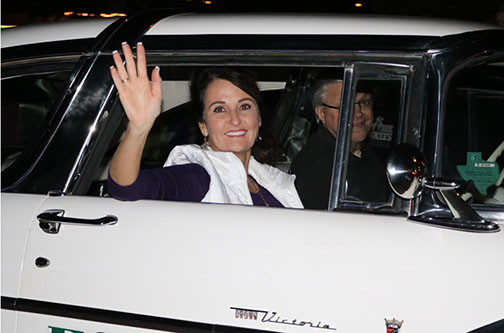
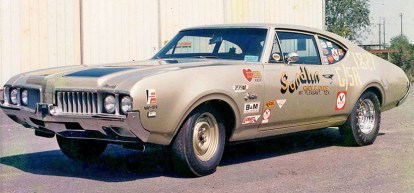
Journeys like jaunts to Florida’s east coast in a ’56 Ford Thunderbird, or the numerous short trips around Texas and Louisiana in my ’55 Ford Crown Victoria.

Windows down, no air conditioning, radio off. Aware of the surroundings recognizing the fragrance of newly mowed hay fields or flowers blooming. The fresh feeling of rain in the air from the distant thunderstorm. The mechanical music of vintage motors clicking and tapping under the hood.

During my grandfather’s day, that was the only way to go. Cars were yet to be offered with air conditioning, and radios were still an extra cost option. For the ones that had one, AM was the only option. Didn’t matter, you couldn’t hear it with the windows down any way, or if you were more than 40-50 miles from the station.

More than 40-50 miles from home meant stopping at places like Stuckey’s or Pecan Joe’s for snacks and perusing the souvenir post cards, salt and pepper shakers, and key chain picture viewers branded with the region’s claim to fame.

It also meant seeing billboards punctuating pastures across the country like, “See Rock City,” or the pithy sayings displayed on rows of red shaving cream signs attached to fence posts.

Passing cars
When you can’t see
May get you
A glimpse
Of eternity
“Burma Shave”

Nothing compares to traveling in a car that’s old enough to qualify for social security, following the backroads and stopping whenever you desire.

I’m looking forward to my next vintage auto trip. Going to places I have not been, “traveling” like few enjoy it any more instead of rushing just to get “somewheres”…unless it’s Stuckey’s or Pecan Joe’s.

—Leon Aldridge

Aldridge columns are also published in the Center, Texas, Light and Champion (http://www.lightandchampion.com) and the Mount Pleasant, Texas, Tribune newspapers (http://www.tribnow.com).

Any resemblance to barbershops I remember was slight

“Barbershop: Where you get news, commentary, humor, and advice, along with a haircut.”—sign in a barber shop

“Barber Shop,” the sign in the window proclaimed. The fact I was strolling through a mall a couple of weeks ago when the sign caught my eye didn’t seem right. Could be because my barbershop memories predate malls.

The sign boasted an image of a red, white and blue striped pole all right, but no real barber pole was in sight. Any resemblance to the “Artistic Barbershop” in Mount Pleasant where I got my flattop trimmed growing up in the 50s and 60s was slight.

Chris Durant’s haircuts were six bits when I began frequenting his shop in the sixth grade. That was up to a whole buck and a quarter by the time MPHS granted me a diploma in 1966.

Appointments? You couldn’t get one, even if you wanted to. You just walked in, took a seat, joined the conversation or grabbed a comic book or magazine, and waited your turn. Protocol was an unspoken system. When Chris shook his cape with a pop and called out, “next,” someone would fill the seat. Every patron knew when it was his turn.

The bonus for a kid was a piece of Double-Bubble gum and a chance to read the latest issue of Popular Mechanics while waiting. Or, sneaking a peek at Esquire when none of the grownups were looking.

Another great thing about Chris’s barbershop was its location, right next door to the Martin Theater. Parking my red bike in the rack in front of the movie theater, walking next door to the barbershop then catching the Saturday matinee with my new haircut was one-stop shopping before the term was coined.

Some years later now living in Center, I followed the trend of replacing barbershops with an appointment at the beauty shop. In my case, it was more about the fact that I married a hair stylist and have entrusted her with the care of my hair ever since—what’s left of it.

After the “Classic Cut” salon closed, the building became “Boyd’s Barber Shop” when they rented the location to longtime barber, Boyd Adams.

However, the reality is that the decline of the traditional barber shops like Boyd’s has left communities with few examples of what a barbershop once meant to the male population—a time when they were social centers where regulars waited for a shave and a haircut, a trim, or just spent time sharing stories and jokes.

Jokes were commonplace in barbershops and no topic was sacred. Politics, religion, the government, local gossip and more were all fair game. Laughter was also aimed at those present. No guy expecting to be called a regular could take himself seriously, nor be excluded from the good-natured ridicule that accompanied the buzz of clippers and the smell of talcum powder.

Regulars also recognized that the guy behind the chair was more than just the local barber, he was a political commentator, a news reporter, and always patient to hear confessions while cutting hair.

The barbershop also served as a common link between blue-collar workers and white-collar professionals. However you earned your living, when you entered the barbershop, you were just one of the guys.

Now that I think about it, most of the above pretty well describes Boyd’s Barber Shop in Center. Plus, you’ll get trimmed by a barber that has clipped the hair of patrons from presidents to Presley—Elvis that is.

Maybe we should all get one more trim at a real barbershop before they’ve all left the building.

—Leon Aldridge

Aldridge columns are also published in the Center, Texas, Light and Champion (http://www.lightandchampion.com) and the Mount Pleasant, Texas, Tribune newspapers (http://www.tribnow.com).

I’m not a golfer, but I’ve tried it before

“They call it golf because all the other four-letter words were taken.” — Pro golfer Raymond Floyd

“How about you, Leon,” the unexpected inquiry came last week from a colleague at the office where a small group of us were reviewing a selection of golfing related promotional items. “Are you a golfer?”

My eyes glazed over and my mind drifted, recalling three times when golf and I really tried to become acquainted. The first was in high school at Mount Pleasant. Golf and I, we desired a relationship, but the chemistry just wasn’t there.

Our paths crossed again at East Texas State University in Commerce (better known these days as Texas A&M at Commerce), and it appeared that the sun, the moon, and the stars would align this time when a brother-in-law with golf clubs for sale and my search for easy P.E. credits came together. When the semester was over, Coach Boley Crawford took pity on me gracing my transcript with a passing grade, and luckily my brother-in-law decided he wanted to buy his clubs back.

It would be a few years before golf and I would try one last time for a meaningful marriage. Completing Shelby Newspaper’s first week of ownership of the Siloam Springs, Arkansas, Herald and Democrat, Jim Chionsini, Albert Thompson and I huddled at Dawn Hills Country Club to assess the progress that morning and enjoy some rest and relaxation that afternoon. The only flaw in the plan (for me) was that Jim and Albert’s idea of R&R was a round of golf.

I had already been tagged as an anomaly among newspaper publishers attending press conventions where the standard first-day format is golf. Scarred by memories of failed attempts, I always managed to dodge the humiliation of participating.

Few options for dodging presented themselves that Saturday in Northwest Arkansas as I gave it my best attempt at politely opting out. “Go ahead guys,” I offered with a sweeping motion of my hand. “I’m not a golfer. I’m just going to relax this afternoon.”

“Come on,’ Jim countered. “This is not a serious golf game, just celebratory fun.”

“You don’t understand,” I pleaded. “I really don’t play golf. Y’all go ahead, I’ll be all right. I’m gonna knock the thermostat down to about 65, curl up on the couch and watch an old movie.”

“Aw, come on,” Albert joined in the beckoning. “We’re just gonna hit a few balls and have fun.”

“I don’t have clubs, don’t have shoes,” I tried one more time to beg off.

“We can rent clubs,” Albert responded, “I’ll borrow a pair of shoes out one of my buddy’s lockers.”

“You guys have no idea what you’re getting yourself into,” I said, feeling myself weakening.

Golf clubs on the cart and shoes reasonably close to my size on my feet, we embarked on Dawn Hill’s front nine. The first hole was brutal. Amassing enough strokes on one hole to equal their score for the next three, we moved on to the second. It was no better. I felt bad, but then remembered how I offered ample warning. With three holes completed, my score was close … to a nine-hole score.

Collecting my ball as Albert tallied scores, I saw Jim coming toward me. He walked up, put his arm around me and said, “Would you be terribly offended if we got you to just drive the cart and make trips to the bar?”

Relief rushed over me like a waterfall. “Offended,” I blurted. “I would be relieved. I tried to tell you guys I couldn’t play golf.”

I smiled last week at the recollection of that day almost 37 years ago. I was probably still smiling when my thoughts focused again on the office discussion and the question posed to me.

“No,” I answered. “I’m not a golfer. But, I’ve tried it before.”

—Leon Aldridge

Aldridge columns are also published in the Center, Texas, Light and Champion (http://www.lightandchampion.com) and the Mount Pleasant, Texas, Tribune newspapers (http://www.tribnow.com).

If only for a day, it was 1955 again

“A long, long time ago, I can still remember how,
That music used to make me smile.” American Pie
—Don McLean

Suicide, necker, knuckle buster, or steering wheel spinner: terms used to describe a rare piece of Americana that, to a kid from the mid-50s, was better known as a “girlie knob.”

Plans to attend the “Rust Rally” car show in Pittsburg last Saturday featuring rusty hot rods (a.k.a. “rat rods”), pinup girl contest and live “rock-a-billy” music had me searching for the iconic auto accessories I had stashed. Somewhere.

Rust Rally_5037WP
The Texas Rust Rally 2018 in Pittsburg, Texas, was the place to be Saturday, June 16. The event featured rat rods, hot rods, and all kinds of cool cars and trucks plus mini-bike races, a pinup girl contest, live music and great food.


Research reveals that steering wheel knobs were invented by Joel R. Thorp of Wisconsin in 1936. Popular in an era that predated power steering, the freely rotating knobs attached to a steering wheel made guiding the car with one hand less difficult.

Quickly becoming an accessory and a convenience, two things probably boosted their popularity. One was their adornment with images featuring scantily clad or swimsuit-wearing pinup girls, hence “girlie” knobs.

Another was a generation of crew-cut wearing youngsters learning that the devices allowed for controlling the car with one arm while leaving the other tightly wrapped around their date sitting next to them.

Finally wrapping my hands around the right box last week, I removed the dusty lid to discover the four pristine examples procured from one proprietor in Memphis, Tennessee in 1986.

With time to spare before boarding a flight back to East Texas after a business meeting, I invested it in an indoor flea market near the airport. Spotting the spectacular spinners, I knew at once they would soon be headed for a new home in Texas.

As I gazed on them with awe commonly reserved for viewing rare pieces of museum art, I overheard a couple of ladies standing beside me.

“Oh, look,” one said to the other. “I haven’t seen one of them in years. My daddy used to have one on the steering wheel in his pickup truck,” she giggled. “My mother would fuss about it, but my grandmother refused to ride with him unless he covered it with his handkerchief,” she laughed. “As kids, we used to sneak out to the barn and peek under the handkerchief when no one was looking.”

Smiling last Saturday as I peeked at my collection seeing daylight for the first time in many years, I remembered the ladies at the flea market. I also remembered Saturday afternoons in Mount Pleasant after the movie matinee when my friends and I parked our bicycles at the Western Auto Store on the square to investigate the store’s newest 45 rpm record arrivals.

Tunes by Elvis Presley and Fats Domino weren’t the only things on our mind, however. Although we perused the records, when we thought no one was looking our direction, we also managed to sneak a quick peek at the cardboard display of girlie knobs displayed behind the counter for sale at 98¢ each.

With a touch of the same juvenile delight Friday, I whispered “Perfect,” to myself as I removed the pinnacle piece from its storage spot. Still looking like new, the 1940s image of a blonde in a one-piece swimsuit against a crimson red background smiled over her shoulder as if to tease the driver.

Saturday arrived with me teasing my ’55 Ford, “Miss Vicky” up toward Camp County for the Rust Rally, rat rods and rock-a-billy music as the bathing suit blonde smiled at me from the car’s steering wheel.

If only for a day, it was 1955 again.

—Leon Aldridge

Aldridge columns are also published in the Center, Texas, Light and Champion and the Mount Pleasant, Texas, Tribune newspapers.

Unique people make hometown​ businesses special

“My two favorite types of homegrown retail establishments are bookstores and hardware stores.”—Gary Borders, in his recent column, “Looking for the Quirky Locally Owned Stores.”

– – – – – – – – – – – – – – –

Growing up in Mount Pleasant, hometown hardware stores were the norm with two of them on the downtown square: Mason’s Hardware and Roger’s Hardware.

A true appreciation for them on my part was cultivated in Center after becoming acquainted with Vance Payne at Payne & Payne Hardware.

I knew about, “the big red hardware store, on the corner on the square,” before moving to Center. Texas Business magazine featured the long-time Shelby County family business in a mid-1970s issue highlighting the store’s practice of displaying lawnmowers, wheelbarrows, and other “hardware and such like” (a Payne’s original phrase) on the sidewalk and leaving the merchandise outside on display after the store was closed.

Unfortunately, that level of public trust fell victim to the times in the years that followed that article as did many of the hometown retail establishments. Payne & Payne Hardware that opened in 1915, closed their doors in 1996.

Long-time friend and fellow columnist Gary Borders’ thoughts reminded me of the Payne & Payne hardware store in Center and of one of my favorite Vance Payne stories to tell, of which there are many.

What makes the locally owned businesses enjoyable are the unique personalities of the entrepreneurs who own them. That certainly was the case for Payne & Payne Hardware when you walked through the door and met Vance Payne’s friendly smile heading toward you.

“What ‘cha looking for,” Vance greeted me on one such occasion some years ago.

“Some roll-rubber matting ‘bout three-feet wide,” I responded.

‘Wha ‘cha gonna do with it,” Vance inquired. The question was standard fare, and I regarded it as being friendly and inquisitive. It became apparent, however, that the questioning was based on his desire to find the best solution for the customer’s need.

“Top of my workbench,” I said.

“Follow me,” Vance replied, turning and heading for the back door. Across Shelbyville street, we entered a storage building where some rummaging around produced exactly what was needed to fill my needs.

“Perfect,” I told him. “How much for six feet?”

“Five dollars,” he said.

Reconsidering my need at this unexpected bargain price, I updated my quantity. “How much for 15 feet.”

“Five dollars,” he said again without hesitation.

The silence was deafening as I did the math while racking my brain for an understanding of such business logic. So, I floated another quantity. “I think I’ll buy 20 feet, just to be sure I have enough.”

“Five dollars,” Vance said, his ever-present smile growing larger.

Deciding I was all in on this one, I teased him, “So what if I want the whole roll.?’

“Five dollars.”

“Well then, I guess I would be silly not to buy the whole roll,” I laughed. “But, why price the whole roll the same as six feet?”

“Because I need to get rid of it,” Vance said.

This was not my first negotiation with Vance Payne, and I already knew that every question drew me closer to a punch line, but I had to ask. “So, why didn’t you just price me the whole roll for five dollars to start?”

“You said you needed six feet,” he retorted, about to laugh out loud. “And, the customer is always right.”

Handing him a five and shaking my head, I headed off with the prized purchase under my arm. “A pleasure doing business with you, my friend,” I waved.

“Come back to see us,” Vance replied.

Memorable people are what you get at “homegrown” businesses. And, memorable experiences are what you got with Vance Payne.

—Leon Aldridge

Photo and epilogue: Payne & Payne “Hardware N’ Suchlike,” opened in 1915 and closed in 1996, but the building has remained to house other local businesses like Lil’s Deals as tenants. In 2017, the building was renovated in its original red color, and a new Payne family business opened its doors. Vance and Billie Sue Payne’s son, Josh, and his wife Lacie opened Payne & Payne “Home N’ Suchlike” offering home decor, registries and gifts, kitchen wares, and more.

Aldridge columns are also published in the Center, Texas, Light and Champion and the Mount Pleasant, Texas, Tribune newspapers.