Loving small town life down at the local festival

“Yeah, this is my town, Where I was born, Where I was raised, Where I keep all my yesterdays.” —”My Town” song lyrics by Montgomery Gentry

– – – – – – – – – – – – – – – – –

Last Saturday was a my-town, small-town kind of day listening to friends Dickie Gilchrist, Billy Neal, and Billy Paddy recount stories from their Center school days. You know, stories where guys who grew up “back when we did” identify memories by who drove what car, who dated whom, and the adventures that ensued from both. Stories that start with, “Do you remember …” and the follow up is something like “You know, he drove that red-and-white Ford convertible?”   

The event that brought us together Saturday was another small-town trademark, a community festival. The East Texas Poultry festival in Center, the Sassafras Festival in San Augustine, the Syrup Festival in Henderson, and the list goes on and on. Festivals that celebrate whatever is considered to be a small town’s claim to fame. We were at the Poultry Festival for two reasons, well three. The fun and the car show for sure, but let’s not forget the food. The stories I listened to about growing up in Center reminded me of similar experiences in Mount Pleasant. Only the names of the innocent (and sometimes the guilty) differed.

I’m a small-town guy. Sure, I like big-city shopping and entertainment, but I prefer sneaking into the city to enjoy those amenities, then escaping back to my small-town home. Hometown for me is technically Mount Pleasant, Texas, where I graduated from high school. Following college, opportunities and chasing dreams led me to other places, the last one being Center which quickly took on the feel of my hometown community. After this many years, I guess you might say I am lucky enough to have two hometowns.

Knowing your neighbors, their accomplishments and challenges by visiting across the back fence or by reading the local newspaper is another characteristic of a small town. There’s also something to be said for small towns when it comes to community influences outside of the home, which for me the single most important might have been law-enforcement officials.

Luckily, my “rap sheet” was short and by comparison, mostly innocent. Other than tickets for speeding, excessive noise, and improper start from a parked position (isn’t that the greatest definition of a burnout ever coined) accumulated by a kid growing up with fast cars, there was a time or two when the handling of an errant teenager by an officer of the law made a difference, a lesson they never forgot.

Like the night seeking adventure with some friends in my ’55 Chevy took a turn for potential disaster when someone who had already over imbibed in adult beverages decided to share with us. It took all of 15 minutes for a local officer to pull me over and discover he had a carload of high school boys with strong drink.

As I was fearing the worst, the officer looked at my driver’s license and said, “I know your father. He works at Perry Brothers. Do you think he would be very proud of you if he were here right now?” That was a no brainer. “No sir, I don’t think so.” After confiscating the beverages, he said, “I know where you live on Redbud Street. I’m going to drive by your house in 15 minutes and if your car is not in the driveway, I’m going to ring the doorbell and your father and I will have a conversation.”

Barely avoiding another improper start from a parked position, I allowed all but one of my friends to jump out at their house while still rolling. The unfortunate one had to walk a couple of blocks because I was out of time and not risking that conversation.

Granted, these are different times in which we live and raise children. But for having grown up in one small town and having lived most of my life in another, I wouldn’t want to keep my yesterdays anywhere else.

—Leon Aldridge

(East Texas Poultry Festival drone photo at top of the page
by Buster Bounds, Center, Texas.)

– – – – – – – – – – – – – – – – –

Aldridge columns are published in these Texas newspapers: The Center Light and Champion, the Mount Pleasant Tribune,  the Rosenberg Fort Bend Herald, the Taylor Press, and the Alpine Avalanche.

© Leon Aldridge and A Story Worth Telling 2019. Unauthorized use and/or duplication of this material without express and written permission from this site’s author and/or owner is strictly prohibited. Excerpts and links may be used, provided that full and clear credit is given to Leon Aldridge and A Story Worth Telling with appropriate and specific direction to the original content.

If you’re lucky, ‘just a dog’ has changed your life

“I feel sorry for people who say, ‘It’s just a dog.’ They’ve probably never experienced the most genuine love and companionship a human being can know.” —Me

“Benny’s a good boy!” Those words scored a look every time from the miniature schnauzer, provided his radar wasn’t locked onto a squirrel. If dogs understand us, and I think some do, Benny knew they meant he belonged.

“Benny’s a good boy,” also worked for training. Those words plus a tasty treat and he knew he had done something to please.

And, “Benny’s a good boy,” were also the words I said to him over and over last Saturday morning while stroking his head and watching through moist eyes as he slipped away crossing that Rainbow Bridge.

Benjamin Jon Fran Song, his AKC “Christian name,” moved in February of 2005 although we picked him as “ours” soon after his arrival December 10, 2004.

The tiny ball of black fur, the runt of the litter soon grew to a 12-pound salt-and-pepper friend full of life and love. From his almost 15 years, I have many Benny stories you may have to endure when you see me. And if you tire of those, I might share a Max story from the days when an old re-homed basset hound we called “a fine dog” roamed Texas with me.

Benny – May 2005
Photo at top of page December 2017

Sayings about what our dogs mean to us are plentiful. I don’t have any new ones to offer, but I heartily subscribe to many I’ve heard.

“A dog is the only thing on earth that loves you more than he loves himself.” Perhaps the most popular saying about domesticated canines, it’s the best in my book. The world needs more unconditional love, and the best way to learn it is by making friends with a dog. Love one and it will love you back ten-fold—no questions asked. Scold one that loves you, and with tail tucked between its legs, it will beg forgiveness with its eyes never questioning whether you were right or wrong.

Still don’t believe me about unconditional love? Try coming home late one night to your wife and your dog with no explanation for where you’ve been and take note of which one is happier to see you.

“It’s impossible to forget a dog that gave you so much to remember.” Afternoon walks. Playtime fetching a toy as many times as you throw it. Naps at your feet letting you know your dog’s favorite place is with you.

“Dogs come into our lives to teach us about love, they depart to teach us about loss.” I thought no dog could ever replace Max. Stories about him are legend among family and friends. I sat on the floor and wept when Max’s time came thinking I could never replace that friendship. I was wrong.

In short order, Benny napped in my lap assuring me that I had a new furry friend as loving, trusting, and entertaining as Max was. And, he was right.

“No matter how many years we get with our dogs, it’s never enough.” Benny’s age started catching up with him last year. Over the years, he dodged an attempted dog napping by a couple of young punks, a brush with a passing vehicle’s tire that was too close for comfort suffering only a bad scare, and other close calls.

But, none of us can dodge dates on the calendar. The sparkle in his eyes had dimmed as other physical failings were making life a challenge. Saturday, it was obvious he was hurting, that he was not going to get better, and we both knew it was time.

“If you’re lucky, a dog will come into your life, steal your heart and change everything!” The void in my life has hurt this week, but it’s a good sadness remembering good memories a dog left in my heart. I’ve been blessed more than once by “just a dog” that has changed my life.

And if I’m lucky, it will happen again.

—Leon Aldridge

Aldridge columns are published in these Texas newspapers: The Center Light and Champion, the Mount Pleasant Tribune,  the Rosenberg Fort Bend Herald, the Taylor Press, and the Alpine Avalanche.

© Leon Aldridge and A Story Worth Telling 2019. Unauthorized use and/or duplication of this material without express and written permission from this site’s author and/or owner is strictly prohibited. Excerpts and links may be used, provided that full and clear credit is given to Leon Aldridge and A Story Worth Telling with appropriate and specific direction to the original content.
Documented: A lifetime of struggling with staying healthy

Life expectancy would grow by leaps and bounds if green vegetables smelled as good as bacon. —Doug Larson, (1923-2017) Wisconsin newspaper editor and columnist.

Struggling to construct a searchable database of my column-writing career has been an eye opener. What I’ve found “stored” in newspaper clippings, photocopies and digital files is a pretty good cross-section of my life. At the very least, it’s a record of what was on my mind once a week which is treasure trove for someone who struggles these days with remembering what was on his mind five minutes ago.

I’ve lamented not working harder at keeping a journal. However, the database project now taking shape has shown me that I just may have unknowingly accomplished something similar with weekly digests spanning some 40 years, many touching on just that topic: staying in shape.

My earliest offering on living healthy, penned and published in 1980 in the Center, Texas, East Texas Light (now the Light and Champion), began: “No meats, sweets, coffee or tea? No wheat, nuts, beans or peas? And no chocolates? What can I eat, doc?”

“All the cauliflower, white bread, and potatoes you want,” Doc Ginn assured me. “And broiled chicken or lamb once a week will curb that purine content in the blood triggering arthritic conditions in a major joint, usually the large toe.”

“Come again doc?”

“Gout,” he replied without hesitation knowing that question was coming.

“That’s an old man’s disease,” I chuckled. “Mmmmm,” was my trusted physician’s reply with a shrug of the shoulder and a smile. “Look doc, I didn’t come here to be insulted.” As if to comfort me, he added, “Gout is a rich man’s disease suffered by King Henry VIII.”

“Still, my colleagues and those previously considered friends laughed, ‘Gout?’ My own children scoffed, ‘Isn’t that what grandpa has?’ Worse, no one was impressed with the King Henry VIII story.”

That piece written during my 32nd summer concluded with, “So after all that eating healthy, I’m still falling apart. I wonder if they serve cheeseburgers at  the nursing home?”

Fourteen summers later while publishing the Boerne Star down in the Texas Hill Country I wrote: “When I turned forty, a friend (or so I thought) gave me a mug proclaiming, ‘After forty, it’s patch. patch, patch.’

“Nothing illustrates that so graphically as Monday morning when my alarm sounds at five, but it doesn’t matter. I’m already awake and have been for an hour.”

“Time was when I rose early to exercise. Surgical repair of failing parts disrupted that routine and, as habits are prone to do, you miss one day then watch years pass. I still think about exercising. But it’s hard with a standing appointment at the clinic, plus bandage, muscle relaxer and liniment bills that keep the drug stores bidding on my business.”

“The worst blow came when the doctor said, ‘You better give up caffeine,’ adding those words I‘ve learned to hate: ‘At your age.’ Withdrawal was awful. I wrung my hands and broke out in cold sweats just smelling the beans roasting. I switched to decaff, but the fake stuff just wasn’t working. I’m back on the real thing again until I get busted.”

“I’d already given up sugar, bread, staying up late, desserts, and fried foods when I read an article at the clinic about how to quit smoking. I was having a nicotine fit thinking about it before it dawned on me—I don’t even smoke!

“Just a lapse in memory, I guess which is one sign of advancing age. I can’t remember the others. With age does come wisdom though. Unfortunately for me, it’s the knowledge that I’m not as young as I used to be.”

With the database almost done and 2019 winding down, I’m acutely aware that “not as young as I used to be” is no longer a relative comparison. Now when I attempt to describe someone by noting, “He’s younger than me,” I have to remember that group is just about everyone.

I’ve abandoned hope on those cheeseburgers at the nursing home for now, but I’m fine with the healthy compromises as long as mornings simply remain difficult.

It’s when I have to give up mornings that I’ll really start to worry.

—Leon Aldridge

Aldridge columns are published in these Texas newspapers: The Center Light and Champion, the Mount Pleasant Tribune,  the Rosenberg Fort Bend Herald, the Taylor Press, and the Alpine Avalanche.

© Leon Aldridge and A Story Worth Telling 2019. Unauthorized use and/or duplication of this material without express and written permission from this site’s author and/or owner is strictly prohibited. Excerpts and links may be used, provided that full and clear credit is given to Leon Aldridge and A Story Worth Telling with appropriate and specific direction to the original content.
Real fine folks enjoying real good music in a real small town

“Music is the greatest communication in the world. Even if people don’t understand the language … they still know good music when they hear it.” — Lou Rawls, (1933-2006) American singer, songwriter, actor, and record producer.

A gathering of local folks ready to enjoy some good music at the Azalea House in Center, Texas, last Thursday night brought to mind how music is in fact a communicator. It’s an indigenous magic language possessing the power to erase every care and take us to that world described in the songs we enjoy.

In the “Real Small Town” of Center, to borrow on one of singer-songwriter Adam Hood’s song titles, the crowd gathered for an evening of his music Thursday was a cross section of friends, neighbors, strangers, working people, retirees, elected officials from both the city and the state level, and more. While the common draw was music and fellowship with music lovers, it’s safe to say that it was also an opportunity for most of us to forget the pressures and demands of daily life. I know that’s what music does for me.

Adam Hood

The roots for last week’s musical gathering were planted years ago by Dr. Danny Paul Windham, Center’s local “almost-nearly-but-not-quite-hardly-retired” dentist—a singer, songwriter, and performer himself. He and his wife, Sally have brought a number of music events to the Deep East Texas community over the years with shows at a variety of venues including their barn turned outdoor theater. And credit for those events has to belong to a 30-plus-year Thursday night tradition called “Beans and Strings” where the Windham’s open their home to musicians of all skill levels as well as anyone who just wants to enjoy the evening jam session that includes a pot of beans and homemade cornbread.

Carrying on family traditions in recent years at both Windham Family Dental on Cora Street and putting together outstanding musical events has been their son, Dr. Clayton Paul Windham and his wife, Jackie. Plus, the Azalea House—Center’ newest event venue, is their addition to the community and the fun.

The performers have always been singer-songwriter types who are talented artists connected and rooted in the business, but outside the mainstream realm of well-known big business entertainment names with bands, busses and entourages .

Reading Adam Hood’s list of accomplishments might sound like a big business entertainment name, however. He’s performed at the Austin City Limits Music Festival, was seen in a segment of “We’re An American Band” on the Documentary Channel and produced a music video ranked #5 on the Country Music Television (CMT) front page main category “Todays Top Videos.” He’s toured with and/or opened for artists such as Taylor Hicks, Pat Green, Miranda Lambert (who he wrote a song for), and Leon Russell. He’s worked in Nashville as a studio musician playing with artists like Vince Gill. In January 2015, Rolling Stone mentioned him as a “top 10 country artist listeners should know.”

But what the Opelika, Alabama, native brought to Center last week was his bluesy country style in an intimate setting, performing “unplugged’ and solo, sitting in a chair in one-room setting. He interacted with his audience telling stories about each song (many of which are stories about his life), allowing everyone there to “enjoy the healing power of music, taking people out of themselves for a few hours,” as Elton John was once quoted as saying,

“This is a real small town full of real fine folks … And, there’s a real big heart in this real small town.” Those words are from one of Hood’s song he performed last week, describing his hometown. Last Thursday night at the Azalea House, however, it could have just as easily been about Center, Texas: “A real small town full of real fine folks who love real good music.”

—Leon Aldridge

– – – – – – – – – – – – – – – –

Aldridge columns are published in these Texas newspapers: The Center Light and Champion, the Mount Pleasant Tribune,  the Rosenberg Fort Bend Herald, the Taylor Press, and the Alpine Avalanche.

© Leon Aldridge and A Story Worth Telling 2019. Unauthorized use and/or duplication of this material without express and written permission from this site’s author and/or owner is strictly prohibited. Excerpts and links may be used, provided that full and clear credit is given to Leon Aldridge and A Story Worth Telling with appropriate and specific direction to the original content.

Some parts of the good old days might need updating

“These are the good old days.” —Oscar Elliott (1947-2016) humorist, philosopher, counselor, confidant, and my lifelong friend.

Being a member of the geezer generation has its perks. My favorite is giving younger generations a hard time about how easy they have it and how much tougher it was in the “good old days” when I growing up. After last week however, I may have to update the good old days.

Second only to “when I was your age, I walked to school, rain or shine, even in the snow, uphill—both ways” are the stories of surviving the dog days of summer before the luxury of air conditioning became common place. Greek and Roman astrology associated the hottest, most uncomfortable part of summer with heat, drought, thunderstorms, lethargy, fever, bad luck and mad dogs, attributing them to the rising of the star system, Sirius.

I’m not sure about the other maladies maligned by the ancients, but with the recent wave of serious heat, even the canines are howling about the good old dog days of summer.

It was the rising serious heat that also warmed up discussions with a younger friend last week when she said, “You know, it’s just hard to imagine not having air conditioning. Wow, that must have been a long time ago. How did people survive?”

“We didn’t know any difference,” I offered, politely ignoring her “long tome ago” reference. “I was entering sixth grade before the first air conditioner was installed at the Aldridge household, and that was just for one room. Using a discount coupon from the chamber of commerce ‘Welcome Wagon’ when we moved to Mount Pleasant, Dad bought a small window unit at Western Auto to cool the living room. In the rest of the house, it was still open windows and fans.”

Continuing with cars, I said, “My father bought his first car with air conditioning when I was in college. Summer trips as a kid, driving long distances with only the benefit of that old 4/60 air conditioning system, four windows down at 60 miles per hour, was our climate control.”

Wrapping up with how I graduated from a high school that lacked air conditioning in many classrooms, I was prepared to segue into why all of the serious heat stories were so relevant right now. “Open windows and ceiling fans provided cooling as well as olfactory experiences from the outdoors like the custodian raking and burning leaves in the Fall. The band hall was in a separate building with a single window unit, and that was the only class.”

“So, I guess this heat doesn’t bother you then,” my young friend asked?

“It didn’t until the A/C at my house went down Labor Day weekend,” I said.

“How long was it down,” she gasped in disbelief.

“Going on a week,” I replied triggering another gasp.

“That’s really bad.”

“No, that’s good because I recently bought a home warranty and it paid for repairs on the first visit.”

“That’s good.”

“No, that was bad. The first trip didn’t fix it and the compressor quit working, but it turned out good because they replaced the compressor.”

“Well, that is good.”

“No, that was bad. The new compressor was defective—ran a week and died.”

“Oh, that’s bad.”

“No, that turned out good because they’re replacing it.”

“Well, that’s good.”

“No, that’s bad because it hasn’t come in yet and I’ve been without air for a week.”

 “Now, that really is bad.”

“You’re absolutely right. That really is bad,” I agreed with her. “It’s reminded me that as much as I reminisce about the good old days—these air-conditioned days really are the good old days.”

—Leon Aldridge

Aldridge columns are published in these Texas newspapers: The Center Light and Champion, the Mount Pleasant Tribune,  the Rosenberg Fort Bend Herald, the Taylor Press, and the Alpine Avalanche.

© Leon Aldridge and A Story Worth Telling 2019. Unauthorized use and/or duplication of this material without express and written permission from this site’s author and/or owner is strictly prohibited. Excerpts and links may be used, provided that full and clear credit is given to Leon Aldridge and A Story Worth Telling with appropriate and specific direction to the original content.

It excites me that some things stay the same

“The more things change, the more they stay the same.” —Alphonse Karr, 19th Century French critic, journalist and novelist

It’s September, the gateway into Fall and a month marking changes. With several seasons behind me now, I’ve seen a few things time has changed since one September in 1960.

As it always did, school started after Labor Day that year. Good friend, David Neeley, and I were just a few days into junior high. Looking down the road to that rite of passage called a driver’s license at age 14 rendered special reverence to September for young boys then. It was unveiling month for next year’s cars.

Import dealers were a change that was still a few years away in the U.S., and American car manufacturers kept new models a closely guarded secret leading to the highly anticipated and publicized unveiling date. As that day approached, dealers hid new models in warehouses out of public view while sneaking one car into the showroom by dark of night but keeping it completely covered to increase the mystique. Advertising hype added to the excitement by teasing the unveiling date with slogans like, “Coming September 12, the all-new Ford beautifully built to take care of you.”

That September school day was “new car day” prompting David and me to forgo lunch hour for a foray to see the new Fords Joel Steed Motors had on display at North Jefferson and 8th Street, a distance of some eight to ten blocks from the school. We skipped lunch at Bullington’s Drug Store downtown where a grilled-cheese sandwich and a mug of root beer was a quarter without sales tax, another change that was yet to come in Texas in 1960.

Surveying styles, colors and most importantly, engine options were so memorizing that we decided to meander on up to Sandlin’s at the north end of town to “See the USA in a Chevrolet.” Sandlin Motor Company was, and still is today, located at Jefferson and 16th, about the same distance we had already hiked. From there, we thought surely hoofing it back in time for Mrs. Moore’s fifth-period art class after lunch was doable.

Mary Margaret Moore was short in stature but tall in sophistication and perfection. Her command of the English language was impeccable and her artistic signature made John Hancock’s look like scribble. She was by the book, never wavering, consistent with one expression and tone of voice, pleasantly steadfast in the face of any event. She was one of my favorite teachers.

Common sense did not run rampant in 12-year-year-old boys then. Once done drooling over chrome and whitewall tires at Sandlin’s, our “we can do this” confidence lost its luster when it became apparent that we might be a little late to Mrs. Moore’s class.

Absentees were reported in those days via names of the missing jotted on pink slips posted outside each classroom door for office monitors to collect. Sneaking past that slip bearing our names, we quietly took our seats.

Mrs. Moore was quick to point out, however, that school policy required a tardy slip from the principal’s office to remain in class. But before sending us down the hall to Mr. Robison’s office, she paused to ask us why we were late.

When we detailed our noon-hour hiatus to her, she looked at us in complete silence for what seemed like an eternity, never changing her expression, first at me and then at David. “You boys walked all the way to Sandlin’s and back,” she asked slowly?

“Yes ma’am,” we harmonized.

“Incredible,” she said calmly. “Forget about an excuse, just take your seats.”

Things do change. School bells are ringing by mid-August now, lunch “hours” and leaving campus are a faint memory, “next year’s” cars are introduced all year long and no one gets excited because they all look alike. But thankfully some things do stay the same.

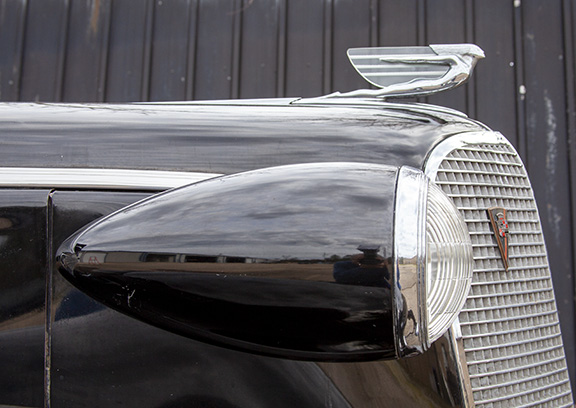
I still get excited thinking about Fall in September, and I would still skip lunch and walk a mile to see a 1961 American-made automobile.

—Leon Aldridge

Aldridge columns are published in these Texas newspapers: The Center Light and Champion, the Mount Pleasant Tribune,  the Rosenberg Fort Bend Herald, the Taylor Press, and the Alpine Avalanche.

© Leon Aldridge and A Story Worth Telling 2019. Unauthorized use and/or duplication of this material without express and written permission from this site’s author and/or owner is strictly prohibited. Excerpts and links may be used, provided that full and clear credit is given to Leon Aldridge and A Story Worth Telling with appropriate and specific direction to the original content.

Whether snow, rain, humor or tragedy, the mail makes it

“Neither snow nor rain nor heat nor gloom of night stays these couriers from the swift completion of their appointed rounds.” —Often attributed to the Postal Service although the USPS has no official slogan.

Amidst delivery frustration a few weeks ago at The Monitor up in Naples, Editor and Publisher Morris Craig and I chuckled recalling one piece of mail delivered to the newspaper when I worked my first journalism gig there some 45 years ago.

The U.S. Postal Service, like many government agencies struggling with the sheer impossibility of a bureaucracy its size, is often criticized or made light of when something does not go as planned. But the truth is that below the staggering layers of bureaucracy, many dedicated people are working diligently at your local post office to make sure that the mail arrives on time.

Newspaper publishers understand, perhaps better than some, about the complexities of the post office. Publications depend on the post office and discounted rates for affordable delivery. Even with an understanding that running the postal service is like the old Gene Pitney tune, “True Love Never Runs Smooth,” we all love the humor in life when something goes awry.

And humorous it was that morning years ago when the day’s mail included an anticipated package from the photo lab. Reaching to open it, I noticed the box flaps were pushed up by the contents forming a ridge along the taped seam. Perhaps a larger box was nixed in a rush to get the shipment out, but it was the post office stamp that really caught my attention. 

The box had been rubber-stamped in red to declare the package “First Class.” Also, apparently in a rush, the stamp’s ink hit one box flap but missed the other on the uneven surface just right failing to print a couple of letters and inadvertently misclassifying the shipment.

The word “First” was legible enough, but where the letters spelling “Class” hit the uneven flaps, the “C” and “L” failed to imprint. With one misapplied rubber stamp, the package had been reclassified from First Class to a service assumed to have been, even back then, not used in decades.

“Craig,” I called out, “Look at this. The post office is reverting to pony express again. But, by golly it made it.” 

An extra delivery effort was apparent again last week when a piece of mail arrived at my house repackaged with an apology from the postmaster that the “document was inadvertently damaged in handling.” It was torn, bent and smudged. Goodness knows what happened to the mail between California and Center. I’m just sorry it wasn’t my Publisher’s Clearing House prize check. But, by golly it made it.

The first time I received a damaged piece of mail repackaged like that was also in August—34 years ago. It arrived in Center at the Light and Champion office tattered, torn and badly burned. I carefully opened what was left of it and read the letter. While I don’t remember who it was from, I remember only that it was mailed from Fort Lauderdale, Florida. Trying to imagine what could have happened to it between the Sunshine State and Center, Texas, I left it lying on the corner of my desk. When I picked it up later that day still puzzled, suddenly the answer occurred to me.

Just a few days before, on August 2, 1985, Delta Air Lines Flight 191 service from Fort Lauderdale, Florida, to Los Angeles with a stop at Dallas/Fort Worth International Airport encountered a weather microburst on approach to landing. The aircraft struck the ground more than a mile short of the runway, hit a car, and then collided with two water tanks in a fireball killing 137 people and injuring 28.

Comprehending the tragedy that piece of mail went through reaching Center was sobering. But it made it.

—Leon Aldridge

Aldridge columns are published in these Texas newspapers: The Center Light and Champion, the Mount Pleasant Tribune,  the Rosenberg Fort Bend Herald, the Taylor Press, and the Alpine Avalanche.

© Leon Aldridge and A Story Worth Telling 2019. Unauthorized use and/or duplication of this material without express and written permission from this site’s author and/or owner is strictly prohibited. Excerpts and links may be used, provided that full and clear credit is given to Leon Aldridge and A Story Worth Telling with appropriate and specific direction to the original content.

In 1969 I still needed a paycheck to stay in school

“Remember, this was an era where you were defined by the music you listened to and the clothes you wore.” ― Karl Wiggins, humorist, satirist and Indie author writing about Woodstock

“Know what today is,” I asked a co-worker last Thursday? Watching “the wheels turn” while she searched for an answer told me that I had done it again. I keep forgetting that “younger than me” is a legitimate polling population including just about everyone these days.

My question was in reference to Woodstock. For those of you in that polling group defined above, Woodstock was the 1969 music festival that brought half a million people together at Max Yasgur’s 600-acre dairy farm in Bethel, New York to celebrate the 60s “peace, music and love” movement. It got underway August 15, 1969, concluded four days later and has since been regarded by history as a pivotal moment in pop music history legitimizing the counterculture generation. So much so that in 2017 the festival site was listed on the National Register of Historic Places.

Intrigued by the epiphany created by asking Jennie if she knew what today was before stopping to think that the trees used to make the paper for her birth certificate were still saplings in ‘69, I henceforth decided to conduct an informal poll around the office noting the variety of answers. The answers differed all right, and as might be expected, were along the lines of birth dates and musical interests. However, not one soul responded, “What’s Woodstock?”

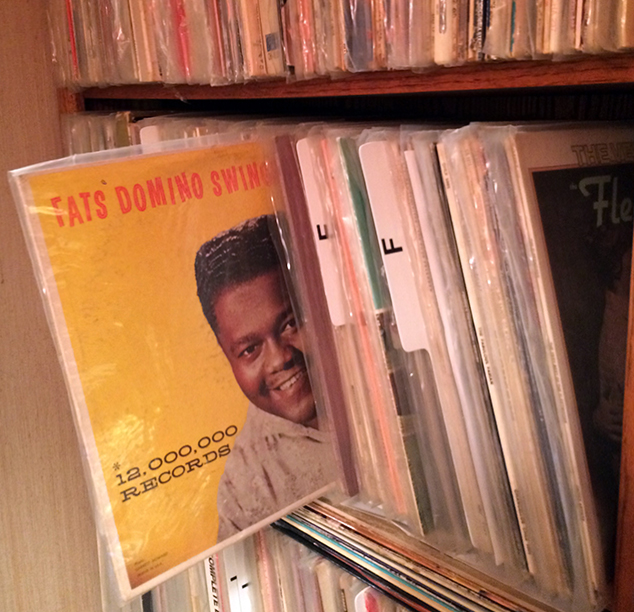
I was 21 years old the summer of Woodstock. Honestly, I was not a huge fan of popular music at the time but have come to appreciate it in its “oldies” status. While performers like The Who, Jimi Hendrix, and Grateful Dead were getting all the radio airplay, I was still clinging to “my music;” Elvis, Ricky Nelson, and Buddy Holly before “Golden Oldie” was ever a historical reference.

Church on Sunday, Boy Scouts during the week, and knowing that half the teachers at MPHS had a paddle in his or her bottom desk drawer every day instilled an allegiance in me toward God, country, and respect for authority. Despite that upbringing still shaping my life today, I’ll admit the 60s hippie culture appealed to some rebel tendencies I may have been relating to.

My definitive moment with that relationship occurred in 1969 when I was an art and psychology major at then East Texas State University in Commerce (Texas A&M at Commerce today). Cruising the circular drive in front of the Education Building with a group of guys hoping we could provide transportation for girls needing a lift across the highway to the dorms just because we were nice like that, we found a confrontation near the flagpole. A group of jeans and cowboy boot wearing ag majors were challenging bell-bottom and tie-dye wearing hippies attempting to take down the American flag.

Despite my art major inspired “chukka” boot footwear and hair over my ears and shirt collar, I felt compelled to side with the ag majors. Campus police soon broke up the gathering and returned the flag to its spot atop the flagpole. Hippies went one direction flashing peace signs and singing John Lennon’s, “Give Peace a Chance” while the ag majors went the other most likely humming a few bars of Merle Haggard’s “Okie From Muskogee.”

After classes that afternoon, I drove to Mount Pleasant listening to Patsy Cline’s “Faded Love” on WBAP in Fort Worth stopping by Chris Durant’s “Artistic Barber Shop” for a haircut before reporting to my part-time job at Sandlin Chevrolet and Olds.

Regardless of what anyone wore, the music we listened to, or who would remember what when polled about Woodstock in 50 years, in 1969 I still needed a paycheck to stay in school.

—Leon Aldridge

Aldridge columns are published in these Texas newspapers: The Center Light and Champion, the Mount Pleasant Tribune,  the Rosenberg Fort Bend Herald, the Taylor Press, and the Alpine Avalanche.

© Leon Aldridge and A Story Worth Telling 2019. Unauthorized use and/or duplication of this material without express and written permission from this site’s author and/or owner is strictly prohibited. Excerpts and links may be used, provided that full and clear credit is given to Leon Aldridge and A Story Worth Telling with appropriate and specific direction to the original content.

Memory can be funny or frustrating

“Memory… is the diary that we all carry about with us.” — Irish poet and playwright, Oscar Wilde

Long-time friend and colleague from our newspaper days, Albert Thompson, paid me a fine compliment after reading a column recently when he said, “Your memory recall is the best ever, or you keep a mean diary, or both.”

Albert’s kind words were sincerely appreciated. Fact is, he was closer to the truth than he probably realized. I’ve always said my goal in writing is to tell a good story sharing something that is memorable to me and why, and hopefully in a manner with which the greatest number of readers can relate and smile.

The memory diary we all have can be funny or frustrating, however, depending on our point of view. And that point of view I’m talking about is too often age. Memories from the age of three, four and five years old come frequently for me, many as vivid as yesterday. On the other end of life’s spectrum, however, memories of this morning better have been written on a note somewhere in plain sight if I’m expected to remember them.

Stories for a column can come from any source that jogs a memory. Just ask me, “Do you remember when …” and chances are the light bulb will come on, and I’ll respond with, “Oh yes, I remember that but haven’t thought about it in years!” Sadly, there may also be times, however, when you ask the same question, and I do not have a clue. Nothing. Not so much as a flicker in the light bulb, not even a faint glimmer. Those moments are usually defined by glazed eyes caused by the energy drain on my brain grasping for any trace of memory activity.

Many of the columns appearing in this space are created utilizing that same cranial logarithm. As the glazed stare between weekly offerings sets in, someone or something will trigger a long-lost memory and once it begins, the rest of it follows…most of the time.

Memory also typically fares better where personal interest is more intense. The best illustration for this phenomenon is best understood by those who are married when your spouse refers to “selective memory.” Like the husband who went to the police station to report his wife as missing.

“What does she look like,” asked the detective. “How tall is she, how much does she weigh, hair color, what was she wearing, things like that.”

After a moment’s thought, the distraught husband responded, “She’s about 5-6, no wait more like 5-8, I think. Weight? Oh, 160 to 170. Well, she lost some weight back in the spring, so maybe 145 now. I don’t know, it’s hard to say. Dark, brown hair, maybe. But I think she said something about dying it a couple of months ago, so I’m not sure. What was she wearing,” the husband hesitated as he repeated the question? “ Jeans…maybe. I didn’t take notice, but she usually wears jeans.”

“What was she driving,” was the next question. “Can you describe the car?”

“Yes sir,” the husband promptly replied, his voice cracking. “She was driving my classic 1955 Ford Crown Victoria, solid white with black and white interior. 46,321 miles, 312 cubic inch Thunderbird motor with automatic transmission, power steering, aftermarket carburetor, valve covers and air cleaner, 6.70×15 white-wall tires, factory wheel covers and fender skirts. It has a small scratch on the passenger door from the last time she drove it.”

“There, there,” the officer consoled the husband. “Don’t worry, we’ll find your car for you.”

If you related to that story and it brought a smile to your face, you understand how memory works. Whether it’s funny or frustrating might depend on age or other personal factors.   

—Leon Aldridge

Aldridge columns are published in these Texas newspapers: The Center Light and Champion, the Mount Pleasant Tribune,  the Rosenberg Fort Bend Herald, the Taylor Press, and the Alpine Avalanche.

© Leon Aldridge and A Story Worth Telling 2019. Unauthorized use and/or duplication of this material without express and written permission from this site’s author and/or owner is strictly prohibited. Excerpts and links may be used, provided that full and clear credit is given to Leon Aldridge and A Story Worth Telling with appropriate and specific direction to the original content.

It didn’t take long to learn that was her gift

“Life is partly what we make it and partly what it is made by the friends we choose.”— American playwright Tennessee Williams

I’m not sure whether Edna chose me as a friend, if I chose her, or if it was simply destiny that caused our paths to cross. In any case, it didn’t take me long to realize that her professional association and her friendship made a difference in my life.

Edna Keasling

Edna was employed by the competing newspaper when the company known today as Granite Publications bought The Madisonville Meteor. Prior to that day almost 30  years ago, the Dobbin, Texas, native had several years of newspaper experience covering many titles on her resume except for one: publisher.

When the opportunity arose to purchase the competitor, we quickly closed on a deal that included Edna joining our team. Shortly after that, we found ourselves needing a new publisher for the Meteor. Planning a trip to Madisonville to arrange a change in leadership for the newspaper, I called Edna about meeting with me on the details.

“I’ll be here,” she told me before quickly adding, “but I don’t want the publisher’s job.” Her reply caught me off totally off guard. Not even a hint of my plan to offer her the job had I leaked. It didn’t take long to learn that Edna was perceptive like that, however. So,, I just laughed and simply said, “OK.”

Once details for the change were finalized, Edna asked, “Are you going to be the new publisher?” I told her “no” without tipping my hand that I would wait for her to decide she wanted the job. “Can you keep things running until I can get someone in place?”

She allowed as how she thought she could do that much but reiterated her stance that she did not want the publisher’s job. It didn’t take long to learn that Edna was sometimes stubborn like that, so I just told her that was fine.

After reviewing some basics on what we needed to do “until I could hire someone,” I left Madisonville with Edna “temporarily” in charge. For the next several weeks, we talked frequently ensuring that she had the support she needed. Every conversation was concluded with her asking, “You found anybody for the job yet?” I always answered with something like, “Still looking, just haven’t found the right person yet.”

A few weeks of “have you found anybody” followed by “still looking” had gone by when one day she paused after my answer and said, “If that publisher’s job is still open, I’d like to apply.” I laughed and told her, “What took you so long, we thought you were never going to give in.”

To no one’s surprise, Edna was a superb publisher not just at Madisonville, but also at Boerne where she followed me in that position. In the years between Madisonville and Boerne that we worked together and developed a great friendship, I came to appreciate Edna for many reasons.

It didn’t take long to learn that Edna’s insistence on doing it her way was her drive for excellence, and that her expectation for those around her to excel was her hope for them to become not just the employee the paper needed, but also the individual they were destined to be. And it didn’t take long to learn that her desire to help people accomplish all of these things was her gift.

I know because in more ways than one, she did those things for me both professionally and personally.  

If you are a Saturday morning reader, chances are you are reading this as I make my way south from Center, Texas to Sam Houston Memorial Funeral Home in Montgomery for 10-12 a.m. visitation and 12 noon services for my friend, Edna Keasling.

—Leon Aldridge

Aldridge columns are published in these Texas newspapers: The Center Light and Champion, the Mount Pleasant Tribune,  the Rosenberg Fort Bend Herald, the Taylor Press, and the Alpine Avalanche.

© Leon Aldridge and A Story Worth Telling 2019. Unauthorized use and/or duplication of this material without express and written permission from this site’s author and/or owner is strictly prohibited. Excerpts and links may be used, provided that full and clear credit is given to Leon Aldridge and A Story Worth Telling with appropriate and specific direction to the original content.