Things we used to do, I won’t ‘do no more’

“Sleeping under a table at a roadside park, A man could wake up dead.” —Song lyrics, “Is Anybody Goin’ to San Antone” recorded by country music artist Charley Pride.

– – – – – – – – –

It could have been the Winfield Truck Stop decades ago. I could have been listening to Charley Pride’s unique voice on the jukebox and waiting for a late-night BLT with onion rings. But it wasn’t. I was sitting at Fancy’s Cafe in Center last Saturday night.

Same food order as the old spot up near Mount Pleasant. Same Charley Pride, this time just loud enough in the back ground somewhere to hear above restaurant chatter. Same good service. Despite being almost closing time, the waitress assured us there was no need to hurry. 

Music makes strong memories. The song Saturday night called to mind many aspects of societal change since the late 60s when I was in college and eating often at the Winfield diner. For one thing, I’ve slept on a table at a roadside park, but not under one. It was just things we used to do in 1967, and the chances of waking up dead never crossed my mind. 

Life was great for two Mount Pleasant college kids then. Ronnie Lilly and I were on our way home from Southern California following summer jobs. We left Canoga Park late one afternoon in Ronnie’s ’57 Chevy towing a Model A roadster hot rod I had purchased. Yes, school money was the job’s objective, but that’s another story worth telling. 

Crossing the desert at night so the Chevy wouldn’t overheat was a good idea, but it failed to account for other issues. Like towing an old straight-axle car on which the front tires wore out and gave up the ghost somewhere near midnight in Desert Center, California. Sweltering 97-degree heat in the middle of the night and many more miles to go made buying a couple of used tires and taking the hot rod back to my uncle’s house the smart move. Never mind that it ended my California hot rod dreaming days.

Sunrise just below the horizon found us somewhere in Southern Arizona. It also found us suffering from sleep deprivation without a motel in sight when we saw the roadside park. Can’t tell you today where we were and probably didn’t know then. But the concrete picnic tables could have been Simmons Beautyrest mattresses for all we cared.

A couple of hours of sleep and another day’s driving got us into the far reaches of West Texas. Maybe it was night driving in the desert, sleeping at a roadside park, or both. But on a lonely stretch of highway just inside the Texas border, Ronnie asked, “Did you notice the mileage when we filled up?” The gauge on Ronnie’s Chevy didn’t work but knowing how many miles we could go worked—until we forgot to check it.

The blank stare on my face pretty well summed up my, “No.” That and the trusty Chevy sputtering to a stop in the middle of nowhere. Ronnie volunteered to hitchhike into town if I stayed with the car. I added the part about opening both car doors and stretching out across the front seat for a nap until he got back.  

Again, it could have been night driving in the desert, sleeping at a roadside park, or both. Whatever the cause, my dozing was interrupted by music. “All you need is love, all together now … all you need is love, love.” 

“The Beatles,” my hazy brain asked? “Out here? Gotta be dreamin.'” Dreams became reality when I looked up to see a VW microbus adorned in bright colors, flowers, and peace signs rolling up beside the car. 

“Hey man,” the bearded driver drawled. “Need a helping hand?” Rubbing my eyes changed nothing. I was still staring a half-dozen flower-child types, all looking my direction.

“No,” I said. “Ran out of gas; my buddy hitchhiked into town for gas; should be back soon. But thanks.”

“Heavy, man, heavy,” he replied. “Peace brother,” he added, guiding the bus back toward the road with one hand and offering the well-known two-fingered peace sign with the other. I watched them fade into the distance with continued chords of “All We Need is Love” drifting on the afternoon air.

Last weekend’s recollections listening to an old song were about a time when we thought nothing about sleeping on a roadside park picnic table or hitchhiking rides 675 miles from home. Looking back, I guess on any other day, I should not even have questioned a VW van load of hippies in the middle of West Texas.   

It did remind, however, of another jukebox standard from an earlier era, one by blues singer Eddie “Guitar Slim” Jones with a verse that declares, “The things I used to do, Lord, I won’t do no more.” 

For me, that’s things like sleeping on picnic tables at roadside parks and hitchhiking.

—Leon Aldridge

. . . . . . . . . . .

Aldridge columns are published in these Texas newspapers: The Center Light and Champion, the Mount Pleasant Tribune,  the Rosenberg Fort Bend Herald, the Taylor Press, and the Alpine Avalanche.

© Leon Aldridge and A Story Worth Telling 2022. Unauthorized use and/or duplication of this material without express and written permission from this site’s author and/or owner is strictly prohibited. Excerpts and links may be used, provided that full and clear credit is given to Leon Aldridge and A Story Worth Telling with appropriate and specific direction to the original content.
Feeling like more than just part of the crowd

“A kind heart is a fountain of gladness, making everything in its vicinity freshen into smiles.” — Washington Irving (1783 – 1859) American short-story writer, essayist, biographer, historian, and diplomat.

– – – – – – – – – – – – – – – – –

I met Carlton and Martha McAlister in 1969 and fondly remember being in and out of their house on Magnolia Drive frequently that summer. Back then, few of us growing up on the south side of Mount Pleasant in the neighborhoods around South Ward Elementary School imagined the unique bond we would share today. But it exists.

It’s been 14 years since Carlton passed away. And I last saw Miss Martha four years ago at her 90th birthday party. Yet, her kind heart and contagious smile were ever-present. And despite being one who chose to blend in herself, the way she engaged people to make them feel special—more than just part of the crowd, never changed.

But blending in with the crowd was all I wanted to do Saturday before last when family and friends gathered to say goodbye to her. Try as I did though, blending in is sometimes impossible to do.

To deviate on blending for a moment, my grocery bill includes upkeep for about a half-dozen cats. It varies because one may go off on the crusades for weeks just as another walk-on discovers the food dish is always full on George Ihlo Drive.

Cats are not the only critters I keep fat and happy. Others looking to occasionally steal a meal might include a raccoon, opossum, or a skunk … like the one that waddled across the patio recently. I wasn’t wearing my glasses and almost opened the door to greet the newcomer kitty. Luckily, I saw the white stripe in the nick time.

I was also without glasses the night I noticed a group gathered at my back door for chow time. Seeing what looked like a cat congregation, I turned toward the feedbag before stopping mid stride to think, “Hmmm. Something about that bunch just doesn’t look right.

Upon closer inspection, one of them was noticeably different. The masked face and ringed tail were dead giveaways. A stranger was trying to blend in, hoping to cash in on the cat food.

Still hoping to blend in at the funeral, I followed my sister, Sylvia. Since first grade, she and Susan McAlister Prewitt have been lifelong friends, graduating together in 1971. Their class members were sitting together, so I inconspicuously eased in with Sylvia.

The officiating minister was Dr. Clint Davis, better known as Brother Clint. He also conducted services in 2016 for my lifelong Mount Pleasant friend, Oscar Elliott. A trademark of Brother Clint’s funerals is his skill for lifting spirits by blending humor into a time of sadness. He called on that talent to take a good-natured jab at the class of ’71, intentionally exaggerating their age.

Leaving the service, I shook his hand, told him my name, and reminded him of being at Oscar’s funeral. “I remember you,” he responded. “And I see your picture in the paper, I read your column every week.”

“Oh, I forget about that,” I laughed. “Please don’t hold that against me.”

I was driving home later that afternoon when Susan called to thank me for coming. Then added with a smile in her voice, “Let me tell you about my conversation with Brother Clint while ago. He said, ‘I didn’t know Leon was a member of the class of’ 71.'”

“He’s not,” Susan said she told him.

“He was sitting with them.”

“Yes,” Susan said she responded, “He graduated in 1966, but he came with his sister, my friend Sylvia, so he just sat with them. Leon’s just part of a package deal,” she laughed.

Laughing with her, I told Susan that package was expanding by the minute. I related that when I dropped Sylvia off for a class of 1971 get-together planned weeks before, the group named me a semi, sort of honorary member with a standing invitation to return.

“Just blend in,” I laughed at myself as I continued driving south toward Center in the evening sunshine, “that didn’t work out very well.” I was outed for posing as a member of the class of ’71 by the ever-observant Brother Clint Davis who I had met once six years ago. Then later the same day unofficially named an honorary member of the same group. And along the way, I renewed several friendships, many of whom bravely admitted in public to reading my columns.

Then it hit me, and my smile grew even bigger.

I had been for my final visit with Martha McAlister. And just like every time before, I left smiling, feeling like more than just part of the crowd.

In my mind, I knew she had a hand in that … and was probably smiling herself.

—Leon Aldridge

(Photo above: Martha McAlister)

. . . . . . . . . . .

Aldridge columns are published in these Texas newspapers: The Center Light and Champion, the Mount Pleasant Tribune,  the Rosenberg Fort Bend Herald, the Taylor Press, and the Alpine Avalanche.

© Leon Aldridge and A Story Worth Telling 2022. Unauthorized use and/or duplication of this material without express and written permission from this site’s author and/or owner is strictly prohibited. Excerpts and links may be used, provided that full and clear credit is given to Leon Aldridge and A Story Worth Telling with appropriate and specific direction to the original content.

Just looking for memories half as good as the Rose Motel

“Plan vacations by memories, not by clocks.”

– Author unknown, but good advice.

– – – – – – – – – – – – – – – – –

Planning a summer vacation can be easy or challenging in the weekly newspaper business, depending on how you look at it. But a couple days off when warmer weather returns has been on my mind this week.

The only break that many weekly publishers enjoy is a long weekend trip. It’s the time after one week’s edition is mailed, and before it’s Monday morning again and time to start the next edition.

I’ve known small town newspaper publishers 50 years in the business who take off one, maybe two, long weekends a year and call it a vacation. Where to go is the easy part, however. It’s usually the annual Texas Press Association summer convention for sure. And if time allows, maybe the regional press association conference. Working vacations at their best.

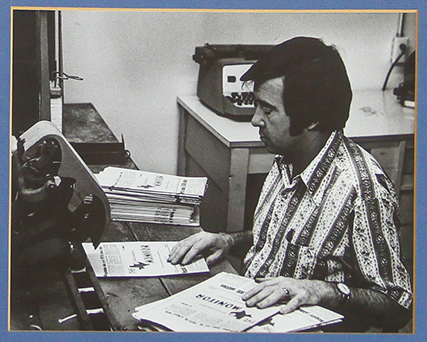
Mentor and longtime friend Morris Craig who has either worked for or owned The Monitor up at Naples since 1956, does it a little bit differently. He publishes 51 weekly editions and closes the office, skipping an edition the week after the Christmas paper. But ask him where he goes on “vacation” during that week. “Nowhere,” Craig told me once. “I stay home and rest.”

Family vacations were not frequent when I was a kid, but that had nothing to do with the newspaper business. As a manager for the Perry Brother’s 5-and-10-cent stores 60 or more years ago, my father got one week’s vacation a year. We seldom went anywhere, unless an occasional road trip to Kentucky for a family reunion on my mom’s side of the family counts.

I suppose a trip from Texas to Kentucky might be considered a vacation. Still, I remember only one certified Chevy Chase-style family vacation the Aldridges ever took that wasn’t a family reunion.

On July 13, 1960, U. S. Senator John F. Kennedy won his party’s nomination for President at the Democratic National Convention in Los Angeles. Kennedy defeated Lyndon Johnson but selected him as his vice-presidential running mate the next day. And as they say, the rest is history.

Also, on July 13, 1960, but not likely recorded anywhere other than in my childhood memory, dad pulled the family’s tan and white 1958 Ford station wagon into the parking lot at the Rose Motel in Clarksville, Arkansas as the sun was going down.

That trip and the Rose Motel remains in my mind for several reasons. At age 12, it was the first time I stayed in a motel. Road trips were usually charted to spend the night at a relative’s house; a way of travel my Uncle Freddie used to call “the biscuit trail.”

Another was the sign in the office window proclaiming “Ice Cold Air Conditioning.” The family’s first air conditioner was purchased the previous year. Perhaps only because there was a White’s Auto discount coupon in the “Welcome Wagon” basket delivered by the chamber of commerce lady. That tiny one-room window unit barely kept the living room cool leaving the rest of the house still at the mercy of a couple of leaky swamp coolers and an attic fan.

The sign also looked enticing because the station wagon in which we had made the all-day mid-July road trip was not air-conditioned. It would be my senior of high school before dad purchased his first car equipped with that creature comfort, a used ’62 Chevy.

Watching television that night was not a new experience. We added a black-and-white TV to our household a couple of years earlier. But where the image at home was snowy and required frequent antenna adjustments, the picture in air-conditioned comfort was remarkably clear. None of that usual routine with dad trying to watch the Friday night fights while mom was outside turning the antenna pole the get the best reception. In 1960, color TVs were still a year or two away before Walt Disney’s Wide World of Color marked began their popularization in homes.

“Must have someone on the roof making antenna adjustments,” dad joked with a smile that night as we relished in the small but cool room. “Really,” mom responded with a glare.

Time has taken the memory of what we did vacationing that summer in Arkansas. Whatever it was, it must not have been as exciting to a 12-year-old as spending his first night in a motel. One with air-conditioning and a TV without a snowy screen.

The goal for this summer’s trip will be similar. A long weekend to someplace where I can make memories that last half as long as those I have of the Rose Motel.

—Leon Aldridge

(Rose Motel sign, Clarksville, Arkansas: John Margolies Roadside America photograph archive photo credit: Library of Congress, Prints & Photographs Division, photograph by John Margolies, [reproduction number, e.g., LC-MA05-1])

. . . . . . . . . . .

Aldridge columns are published in these Texas newspapers: The Center Light and Champion, the Mount Pleasant Tribune,  the Rosenberg Fort Bend Herald, the Taylor Press, and the Alpine Avalanche.

© Leon Aldridge and A Story Worth Telling 2022. Unauthorized use and/or duplication of this material without express and written permission from this site’s author and/or owner is strictly prohibited. Excerpts and links may be used, provided that full and clear credit is given to Leon Aldridge and A Story Worth Telling with appropriate and specific direction to the original content.

There’s really no hurry to get anything done

“I’m in a hurry to get things done.
Oh, I rush and rush until life’s no fun.
All I really gotta do is live and die,
But I’m in a hurry and don’t know why.”

— “I’m In a Hurry” song lyrics by Alabama, country music band from Fort Payne, Alabama.

– – – – – – – – – – – – – – – – –

“So, do you need a new truck,” my friend asked?

The question was not without merit. Nor was it unexpected.

Nice try, I thought. But I already knew the answer. Yes, my 2009 SUV just turned over 200,000 miles. Yes, it appears another trip to the repair shop is going to take place Monday because it is pitching the same fit it threw back around Christmas. Yes, this will be the third trip for what appears to be a very similar problem: the motor and the computer have differences of opinion when I turn the key requesting it to start up.

Just mindlessly turning the key used to bring the motor to life with no thought of any delay. Then off I would go, cruising and singing along with Elvis, Little Richard, Fats Domino, or Buddy Holley on Sirius XM’s 50s on 5.

Lately, however, turning the key has too often led to an intermittent mass of instrument panel warnings that much less entertaining than Chuck Berry’s “motorvatin’ over the hill when he saw Maybellene in a Coupe de Ville.” Nice for Maybellene, maybe. But I was going nowhere.

Ominous messages like “traction lock off” and “service traction link soon” were scary enough. Then for added drama, here comes the check engine light. These distractions ultimately interfere with fundamental driving functions like starting quickly, and worse, my music. What is a traction link, anyway?

The first repair shop visit cost me $546. That bought me about two weeks of once again mindlessly turning the key to bring the motor to life. Then came the second computer cacophony. That one was just under $400. But it’s lasted since Christmas.

However, I’m still in no rush to replace the trusty steed. I’ve just now got this one broken in. So what if it’s sometimes cranky about cranking? The good news is that it runs perfectly once the ignition switch convinces the computer that it really is time for the motor to motivate.

“You work on cars, why don’t you fix it,” came the next question not without merit and not unexpected.

“Because I enjoy working on cars that are just cars,” was my response. “Not the ones with computers. Always been my contention that if God had intended for cars to have computers, Henry Ford would have invented the computer and the car.”

“But don’t you think yours has too many miles on it?”

“Hardly,” I snapped. “Every one of the last four vehicles I’ve owned had more than 200,000 miles on it before we came to the final fork in the road. And with new cars costing more than I paid for my house, this one may be the one with which I finally break the Bobby Pinkston record.”

Bobby Pinkston was the editor at the Light and Champion when I was publisher the first time in the 1980s. Bobby’s father, Bob Pinkston, was publisher of The Center Champion before the newspapers merged in 1984 to produce the Light and Champion. Bobby had worked all his life for The Champion before the two papers became one. The day that transaction was completed, he went to work for us.

“I’m guessing you’ve had this truck a while,” I told Bobby the first time I rode with him. That was my tactful way of noting that his mid-70s Ford long-wheelbase pickup displayed a degree of patina.

“Yeah,” said Bobby. “And it’s only got 350,000 miles on it.”

“Only,” I thought? I had no idea then that vehicles would go that far. “And you drive it every day?”

“It’s the only thing I drive,” he smiled. “I drive it all over the country on hunting and fishing trips and to work every day. I never get in a hurry, and it gets me everywhere I want to go.” During that conversation, I discovered a newfound respect for high-mileage vehicles like Bobby’s brown pickup, and the challenge of seeing just how far one will go.

The last question not without merit and not unexpected from my friend last week was, “So … you’re going to get this one fixed and keep it?”

“Yep,” I said. ” There’s really no hurry to get anything done. I’ve got at least another 150,000 miles to enjoy this one.”

—Leon Aldridge

. . . . . . . . . . .

Aldridge columns are published in these Texas newspapers: The Center Light and Champion, the Mount Pleasant Tribune,  the Rosenberg Fort Bend Herald, the Taylor Press, and the Alpine Avalanche.

© Leon Aldridge and A Story Worth Telling 2022. Unauthorized use and/or duplication of this material without express and written permission from this site’s author and/or owner is strictly prohibited. Excerpts and links may be used, provided that full and clear credit is given to Leon Aldridge and A Story Worth Telling with appropriate and specific direction to the original content.

Not even Texas Blue Northers prepared me for Chicago in January

“Holy cow, it’s ‘I can’t feel my face’ degrees out here.” 

—Heard somewhere north of Plainview during every Texas Blue Norther.

– – – – – – – – – – – – – – – – –

Here in East Texas, it’s a balmy mid-60s Sunday afternoon as I’m finishing up this week’s missive. When I started Friday night, temps were in the 20s

Forecasting Texas weather is easy. Just pick something, anything. It changes hourly, so you’re sure to be partially correct. For the record, cold is my least favorite forecast. I’m good until the temperature on my East Texas front porch dips below 50. But the coldest I have ever been in Texas was during a Panhandle Blue Norther.

If you’ve never experienced a Texas Blue Norther, my all-time favorite Texas Monthly writer Jan Reid, once described them best. Reid was my favorite Texas Monthly writer, at least partially because I met him when he started his career at the Mount Pleasant Tribune in the 70s on his way to writing for Texas Monthly

“Kids in the panhandle climb windmills and water towers to watch the northers blow in,” Reid wrote. “On clear fall days a white cloud rises from the prairie and quickly envelops the horizon, the upper part of it assuming the shape of an anvil. Because the low clouds are wet and stormy, the horizon often turns bluer than the sky above the cloud mass—hence the term ‘blue norther.’ With a plunge of temperature and a zoom of barometric pressure, the norther hits: a shock of dry, clean, Arctic wind.”

That was always my concept of cold … before I went to Chicago. Not even Texas Blue Northers prepared me for Chicago in January.

Forecasted temps of the 20s didn’t seem ominous as I prepared for my business trip. “I’ve seen 20s in Texas,” I said while packing half the contents of my closet just in case.

Arriving at O’Hare Airport was chilly, but not that bad. “Piece of cake,” I thought when I turned out the lights at the hotel that night. It was about 4:30 a.m. when noises outside abruptly interrupted my slumber. Pulling the drapes aside for a peek, I saw blinding snow in the pale parking lot lights. It was blowing one direction and a snowplow scraping the parking lot was pushing it back the other.

Ol’ Man Winter had conspired with Mother Nature to dump heavy snow on Chicago during the night. However, where a quarter-inch “dumped” on East Texas brings life to a standstill (except for the run on bottled water and toilet tissue), an estimated foot of snow seemed of no concern in The Windy City. News reporters knee-deep in drifts assured viewers that sunup would see clear roadways.

Charging out of the hotel lobby into the parking lot after sunup wearing everything I had packed, two sensations were instantaneous. One, where my car had been the night before, there was nothing but a massive snowdrift. However, what turned out to be the more significant concern was the wind off Lake Michigan. Before I could suck in my first breath of sub-zero air, the Arctic blast cut through every garment I had on. Every thread I was wearing, from my J.C. Penny’s suit to my Burlington Coat Factory “on sale” overcoat to my East Texas long johns and in between, was no match. It blew through every layer like Sherman marching through Atlanta.

Any East Texas postnasal drip I may have had disappeared with my first breath. Everything from the tip of my nose to the back of my eyeballs was crystallized. My whole body was turning blue. My legs were growing numb. I had visions of my frozen body being found on the Homewood Suites parking in the Springtime. Right next to my airport rental car still accruing credit card charges.

Unlike Sherman, I retreated at the last moment. Once inside the hotel watching coffee slosh out of the cup in my shivering hands, a different vision appeared. I had survived Texas Panhandle Blue Northers. Surely, I thought, I can tough this out long enough to find my car, start it, and try to make my meeting.

Just as the icy auto fired up, I heard a clattering noise. “Oh great,” I thought. “This car is frozen.” Relief came quickly when I realized the clattering noise was just my teeth.

Business meeting over later and escaping Chicago winter on a warm flight out, I silently offered thanks that I was headed back to warm and balmy 20s in Texas.

I still don’t like cold weather. And I’ve never been back to Chicago except during their summer: the month of July. It remains the only place I’ve been that makes a Texas Blue Norther feel like an “Easter snap” in East Texas.

—Leon Aldridge

. . . . . . . . . . .

Aldridge columns are published in these Texas newspapers: The Center Light and Champion, the Mount Pleasant Tribune,  the Rosenberg Fort Bend Herald, the Taylor Press, and the Alpine Avalanche.

© Leon Aldridge and A Story Worth Telling 2022. Unauthorized use and/or duplication of this material without express and written permission from this site’s author and/or owner is strictly prohibited. Excerpts and links may be used, provided that full and clear credit is given to Leon Aldridge and A Story Worth Telling with appropriate and specific direction to the original content.

An old car hunter’s dream adventure in Eastern Kentucky

“Adventure is in the eye of the beholder.” 

– Annie Andre, travel and lifestyle blogger.

– – – – – – – – – – – – – – – – –

“Welcome to the city of Pikeville,” the travel booklet beckoned to me last week. “A beautiful gem nestled in the heart of Kentucky’s Appalachian Mountains.”

The Pikeville promotional piece triggered a smile, reminding me of my one visit to the Blue Grass State’s eastern city some 30 or more years ago. It was an old car hunter’s dream adventure. For most of my life, I’ve chased stories of old cars hidden and forgotten by time. Still, Pikeville was for me the most incredible example of what is commonly called “barn find” cars—collectible cars long concealed out of sight and out of mind.

It all started at a family reunion in Winchester in north-central Kentucky, my mother’s birthplace and home, until she married my father in 1944. “Anybody want to go see my part of Kentucky,” offered my Uncle Freddie. He was married to my Aunt Jo, the middle child of five Johnson siblings born and raised in Winchester.

Freddie Scott was from Hazard, a couple hours east of Winchester over in the coal mining region of Kentucky. When his invitation came with the mention of visiting an eccentric relative near Pikeville who used to have some old cars hidden away, I was the first to sign up.

Pikeville is located in the Appalachian Mountains, along the Levisa Fork of the Big Sandy River. Getting to Hazard and then to Pike County entailed an adventure of its own winding through several smaller towns reminiscent of scenes from the 1980s movie, “Coal Miner’s Daughter,” about country music singer Loretta Lynn.

My Uncle Freddie’s uncle, who also answered to “Uncle Freddie,” greeted us on the parking lot of his residence wearing his best pair of overalls and a ball cap advertising his wrecker service. That residence was unmistakably once a motel on the uphill side of narrow two-lane highway 23 outside Pikeville.

“My nephew likes old cars,” my Uncle Freddie said. “You still got yours?” Nodding across the road toward what appeared to be an old country store clinging to the mountainside above the river, the other Uncle Freddie responded, “Sure do.”

Shafts of afternoon sunlight following us into the dark building first revealing a ’49 Ford that looked like someone had painted it using a cheap brush years ago. In stark contrast, beside it sat a pristine white ‘60 Chevrolet Impala similar to the one I remembered Mount Pleasant friend Troy Alders driving when we were in high school.

As I was about to declare this “stash” nice but not spectacular, the elder Freddie began throwing old quilts and feed sacks aside to uncover one more vehicle. What emerged was an immaculate red ’61 Corvette. It didn’t take long to notice the odometer that was not yet displaying 10,000 miles and the “Fuel Injection” badging on the front fender indicating this early version of “America’s Sports Car” was equipped with the highest performance option motor for that year. The originality of the paint, interior, and every detail dazzled: every inch of the car screamed, “untouched factory original.”

“Got it years ago from the guy who bought it new,” he said. “The dealer in Pikeville offered me a brand-new Corvette for it not long ago—even trade. I just laughed at him.”

I was still busy, drooling and trying to fathom the car’s condition when it was apparent Freddie “two” was still digging through the myriads of makeshift car coverings. Then, finally, when the last piece had been tossed aside, there sat another “showroom new” Corvette. This one, a 1956 sporting an odd but popular color combination for that year, Pinecrest green with red interior, registered just over 2,000 miles. Under the hood, dual air cleaners gave away Chevrolet’s highest performance V-8 available for that year as well.

“Do you ever drive them,” my uncle asked? After a moment’s pause for pondering, the elder Freddie said, “Started ‘em up a few years ago and drove ‘em across the street when the river got up … it was about to get up in this building.”

“Ever consider selling them,” I followed? No pensive reflection was needed that time. All I got was a laugh, probably the same one the Pikeville Chevy dealer got.

My Uncle Freddie passed away too few years after that. And I never heard what became of the pair of incredible time capsule Corvettes my eyes beheld one day in Kentucky. Still, I never forgot them … or the Pikeville adventure.

—Leon Aldridge

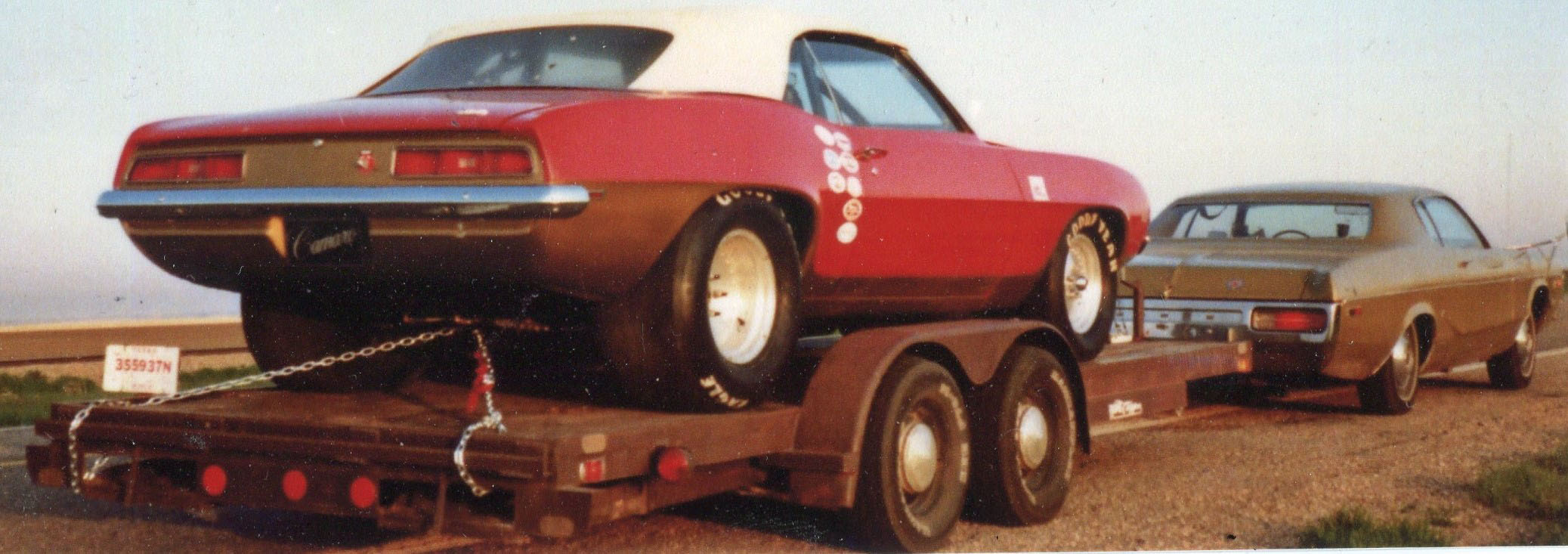
(Photo above by Leon Aldridge about 1984 — The cars pictured are not Corvettes and that barn find adventure was not in Kentucky. Sadly, no photos of the Corvettes in Kentucky exist. The cars above were technically not “barn find” cars in the strictest sense of terminology either, they were an East Texas “chicken house find.” I have found old cars waiting to be discovered in every imaginable type of structure. The “chicken house adventure” above yielded a 440 powered 1969 Plymouth GTX convertible (left), a 428 powered 1969 Pontiac Bonneville convertible (center), and a 1968 Oldsmobile Cutlass convertible (not in the photo.) The 1961 Cadillac limo was also in the chicken house, but unlike the three cars listed above, it and several others did not go home with me that day.

. . . . . . . . . . .

Aldridge columns are published in these Texas newspapers: The Center Light and Champion, the Mount Pleasant Tribune,  the Rosenberg Fort Bend Herald, the Taylor Press, and the Alpine Avalanche.

© Leon Aldridge and A Story Worth Telling 2022. Unauthorized use and/or duplication of this material without express and written permission from this site’s author and/or owner is strictly prohibited. Excerpts and links may be used, provided that full and clear credit is given to Leon Aldridge and A Story Worth Telling with appropriate and specific direction to the original content.

Fond memories about mostly good times together

“We don’t remember days, we remember moments.”

—Old saying, author unknown, but they might have been a pilot.

– – – – – – – – – – – – – – – – –

It had been many years since I thought about her. Even longer since I had seen any pictures of her. All I had was lots of old memories about mostly good times together.

Then there she was one day last week. An aging, grainy photo of her in a 1984 edition of The Light and Champion where she was looking for a new place to work.

For Sale” the ad declared in large type. “Cabin Class Twin Aircraft.” The Cessna was a step up for Shelby Newspapers, Inc. in the early 1980s. It was the second aircraft Jim Chionsini purchased for easy access to newspapers from up in Kansas to down in South Texas.

The first was a six-place single-engine Piper, a larger and faster version of an aircraft in which I was a partner and flew at the time.

Center native Jonathan McDonald was the pilot for the company’s first plane. By the time the Cessna replaced it, Jonathan had acquired newspaper skills that earned him a publisher’s job, and C.A. Samford, another Center guy, became chief pilot for the Cessna.

The perk for me was that as a licensed pilot, I got to accumulate right-seat time with both of them. In addition to serving as editor and publisher of The Light and Champion in those days, my duties often entailed helping Jim with new acquisitions. So, I was along for the ride anyway.

To me, the heavens and the earth viewed from the cockpit of an airplane is the “catbird seat” for breathtaking views and fond memories from which great stories are born. One, in particular, was a trip over to Selma, Alabama, where we met with Jim’s long-time friend, Shelton Prince. A trip to see Shelton was always a mixture of business and pleasure.

On the return flight home that night “flying” right seat in the cockpit with C.A., I watched growing thunderheads off the right wing at a comfortable distance while Jim snoozed in the back. Flashes of lightning illuminated the massive clouds every few seconds that were otherwise invisible in the darkness. Closer to me was the mesmerizing red glow from the exhaust flowing out the right engine just outside the cockpit window.

Magnificent scenes then and pleasant memories through the years.

Coincidentally, that same right engine later produced something less than pleasant moments on a trip down to South Texas. I wasn’t on board for that trip, but Jim’s vivid account of it is a great memory and a good story.

The flight was taking a friend to visit a newspaper for sale. I dropped everyone off at the Center airport on an overcast morning and returned to the office downtown. Just a short time later, Jim was calling. “Can you pick us up at the Lufkin airport? Long story, I’ll tell you when you get here.”

Recounting the short flight on the long drive back to Center, Jim began, “We took off and had punched through 5,000 feet of overcast. When we popped out on top in the sunshine, I noticed oil seeping out of the cowling on the right engine. Knowing my prospective newspaper buyer hated flying to begin with,” he continued, “I calmly got up, stepped to the cockpit and tapped C.A. on the shoulder. Before I even said anything, he replied, ‘I know boss, I’m watching it.’”

Jim said he barely had time to get to his seat and sit down when the engine let go with a loud, explosive noise. “I jumped up and went straight back to the cockpit, but C.A. cut me short saying, ‘Boss, I’m really busy at the moment.’ Then he closed the cockpit door.”

“I sat down and tried to console my friend who was about to have a nervous breakdown,” Jim always told the story. “I looked out the window as we went back into the 5,000-foot overcast. When we came out the bottom, we were looking straight down the runway at the Lufkin airport.”

According to Jim’s oft-repeated story, C.A. landed the wounded airplane gently on the runway and taxied to the terminal. “As the good engine shut down,” he told it, “The cockpit door opened, C.A. stepped out and asked, ‘What was that you wanted to talk to me about boss. I’m not quite as busy now.’”

I smiled at seeing the newspaper ad last week. Whether it was remembering the good moments or the others, the old girl was apparently up for sale when she was repaired and flying again.

Details in that ad read, “… 880 hours since left engine overhaul, zero hours since right engine overhaul.”

—Leon Aldridge

. . . . . . . . . . .

Aldridge columns are published in these Texas newspapers: The Center Light and Champion, the Mount Pleasant Tribune,  the Rosenberg Fort Bend Herald, the Taylor Press, and the Alpine Avalanche.

© Leon Aldridge and A Story Worth Telling 2022. Unauthorized use and/or duplication of this material without express and written permission from this site’s author and/or owner is strictly prohibited. Excerpts and links may be used, provided that full and clear credit is given to Leon Aldridge and A Story Worth Telling with appropriate and specific direction to the original content.

Still the better resolution borrowed from the past

“May all your troubles last as long as your New Year’s resolutions.”

—Joey Adams, (1911 – 1999) American comedian, vaudevillian, radio host, nightclub performer, and author.

– – – – – – – – –

Resolutions are seldom the solution. Easily made but even more easily tossed aside before Valentine cards are on sale, our endeavors for a new start often require more work than we are willing to put into them.

That is unless your resolutions are like Center minister Tim Perkins’ pledges. In his sermon Sunday morning at the Center Church of Christ, he vowed before the faithful flock gathered that he would eat no more sweets in 2022: no more cakes, no more cookies, and no more pies. Then, when he had everyone’s undivided attention, he concluded with a smile, “I also vow to eat no less than I did in 2021.”

Vowing to eat less is probably second only to resolutions for saving more money. So, that aspect of improving 2022 dominated my thoughts last week as I worked on creative ways to further stretch the already thin dollars in my budget. In doing so, I remembered a conversation with former city manager and friend Jeff Ellington many years ago. In that visit, Jeff and I laughed at realizing we shared a common method for making extra spending money as kids, collecting and redeeming empty soft drink bottles for the deposit money. The humor was in realizing that countless youngsters like us had done the same thing.

Ellington grew up in Shelby County, and I grew up in Titus County in northeast Texas, but the work ethic was the same. Even at a bicycle riding age, if we wanted disposable income, we made it with our ingenuity and sweat equity.

My life as a preteen in the late 50s and early 60s was not a hardship. There were no five-mile walks to school in the snow, uphill both ways. Life was easy. I walked just two blocks to school in an average middle-class American neighborhood on Redbud Lane in Mount Pleasant. Even so, a Saturday movie, a comic book, or the newest rock-and-roll record was enjoyed only by free enterprise at its best.

For good friend and next-door neighbor, Eddie Dial, and me, the lure of admission to the Martin Theater on Saturday afternoons often required extra income. Motivation to see that western or sci-fi flick and maybe pick up a comic book later from Perry Brothers five-and-dime store was enough to learn that extra income was going to come primarily by our own efforts.

Our parents cared well for our needs, and in my case, I even earned 25-cents a week allowance so long as I cleaned my room, kept the trash cans emptied, and groomed mom’s flower bed, keeping it free of weeds. But the bulk of our recreating was supported by collecting soft drink bottles tossed on the roadside and returning them at the corner grocery store for the deposit money.

The total cost of a Saturday afternoon on the town was minimal by today’s standards. A quarter to get in the movies. Popcorn and a drink were another quarter. The comic book afterward was a dime.

But Saturday afternoon luxuries were dependent on Saturday morning’s search for bottles. Typically, the business plan was a bicycle ride south of town on the Pittsburg highway, some days as far as Cypress Creek scanning the roadside for bottles. The round trip of up to ten miles if we went all the way to Cypress Creek usually netted a decent income from the two cents each for bottle was worth at Hutchison’s Grocery Store. Life was good.

Still working on stretching dollars today when the expense of my upkeep becomes my downfall caused me to think. Perhaps being introduced to more of the same free enterprise, a.k.a. work, at an early age would solve a few problems today just as it did for previous generations of kids.

After all, look how well it worked for my friends and me. Jeff enjoyed a prominent career in city government during his lifetime. The last I heard, Eddie followed in his father’s footsteps with a successful career in the insurance business. And me?

Let’s just say that, for me, working has proven to still be the better resolution.

—Leon Aldridge

. . . . . . . . . . .

Aldridge columns are published in these Texas newspapers: The Center Light and Champion, the Mount Pleasant Tribune,  the Rosenberg Fort Bend Herald, the Taylor Press, and the Alpine Avalanche.

© Leon Aldridge and A Story Worth Telling 2021. Unauthorized use and/or duplication of this material without express and written permission from this site’s author and/or owner is strictly prohibited. Excerpts and links may be used, provided that full and clear credit is given to Leon Aldridge and A Story Worth Telling with appropriate and specific direction to the original content.

Doesn’t he look good for his age

“You are never too old to set another goal or to dream a new dream.”

—C.S. Lewis, British writer and lay theologian.

– – – – – – – – – – – – – – – – –

I’ve been told I’m getting old, but I refuse to accept that somewhat opinionated viewpoint. It’s my personal observation I’ve simply accumulated a lot of experience.

Lately however it’s becoming apparent just how much “experience” I really do have. That revelation came last week while performing the traditional “old year-out and new year-in” reflections routine one more time.

Reading a collection of clippings and the bounty of bound volumes in the newspaper library still trying to assemble something into a book gave me cause to smile. To borrow from perhaps the most well-known advertising slogan in history, “We’ve come a long way baby.”

Along with noticing how far my column writing style has come, the experiences I’ve written about offer their own perspective. For instance, reading one recently that I wrote in 1981 clearly noted the changes in both. Ironically, that piece also began as a reflection on being told that I was getting old. 

“Imagine if you will,” it began, “a day in the life of modern man living in the United States.”

“It starts with his subtle awakening to soft music, noting the time in a liquid crystal display, and comes with a feature that allows him the privilege of intermittent lapses back into the sleep state by simply pushing a button.

“As that awakening process begins in the bedroom, an automatic coffee pot in the kitchen with its own timer brews fresh java that is ready before he ever sets foot on the floor.

“After our modern man eats breakfast cooked in seconds in a non-heat-producing oven called a microwave, he heads off to work in a diesel-powered automobile equipped with a “cruise control” that maintains a constant speed without effort. That same vehicle has an onboard computer informing him of his average speed, fuel consumption, and trip duration.

“Once in the office, he makes calls on his desk phone that automatically stores numbers in memory for future use. That same modern telephone takes messages when he cannot answer it and has a button that allows him to speak into the phone without a long cord for holding the handset to be heard from anywhere in the room.

“During the course of a day, he has at his disposal a calculator that will not only add and subtract but also divide and multiply as well. And it fits into a shirt pocket along with a tiny tape recorder for documenting conversations.

“He travels by flying in jet-powered aircraft capable of navigating through any type of weather with the aid of computerized guidance systems using nothing more than needles on the instrument panel.

“While flying, he can read a newspaper produced and printed via photographic processes while the recording device on his television at home will automatically record any of his favorite shows he might be missing.

“Most remarkable is that all the technology described above has been invented in the last 15 years, most of it in 10. We can’t help but wonder what impact the next ten years and beyond will have on our lives.”

If 1981 could only see how far we have come in 2021. Computers that were new in 1981 control every aspect of our lives today, whether we want them to or not. Virtually every necessity and convenience in life is reduced to a single device smaller than the pack of trendy cigarettes the advertising slogan mentioned earlier promoted decades ago.

With those personal reflections, I wish all a happy and prosperous New Year as we await the unveiling of what 2022 has in store. Let’s resolve to set new goals. Accumulate new experiences. Start the new year with optimism. I’ll go first and say that 40 years from now, I’m hoping those comments about my getting old have changed to, “Wow, doesn’t he look good for his age.”

—Leon Aldridge

. . . . . . . . . . .

Aldridge columns are published in these Texas newspapers: The Center Light and Champion, the Mount Pleasant Tribune,  the Rosenberg Fort Bend Herald, the Taylor Press, and the Alpine Avalanche.

© Leon Aldridge and A Story Worth Telling 2021. Unauthorized use and/or duplication of this material without express and written permission from this site’s author and/or owner is strictly prohibited. Excerpts and links may be used, provided that full and clear credit is given to Leon Aldridge and A Story Worth Telling with appropriate and specific direction to the original content.

We can make it better for a few of them

“Christmas is sights, especially the sights of Christmas reflected in the eyes of a child.” 

– William Saroyan (1908 – 1981) Armenian American novelist, playwright, and short-story writer.

– – – – – – – – – –

With every washed-out hole in the dirt road, my truck rebelled at the impact, tossing the front end toward one ditch or the other.

The weather outside was cold and rainy. Inside the vehicle, where it was warmer, I gripped the steering wheel in hopes the battle between my truck and the holes in the road wouldn’t jerk it out of my hands. A slower speed might have made the trip less violent, but it wasn’t worth risking getting stuck on the backside of nowhere in the far reaches of the county. In 1986, cell phones were still a part of Christmas future.  

“What are we looking for, daddy,” asked son, Lee, then six, who is 41 as this Christmas approaches.

“A house down here a ways on the right,” I explained. “At least it’s supposed to be around here somewhere.”

“If we can’t find it, maybe Santa Claus can,” he replied with youthful optimism.

“Lee, if Santa Claus could find it,” offered his philosophical sister Robin, then eight, who is now 43, “We probably wouldn’t be hunting for it.”

At last, we found our first destination, a muddy driveway near three small, old, and unpainted houses. Each one had smoke curling from a stovepipe chimney jutting from some random spot. Small sticks of wood were stacked nearby, but the aroma in the air smelled more like burning garbage.

There were no yards. The houses were separated only by broken household items: washing machines, couch frames, bicycles, and a junked automobile or two. Surveying the “neighborhood,” I suddenly feared that the seemingly large baskets of Christmas toys and food we had with us were small, compared to the need.

Sunday afternoons like this were a regular Christmas season practice back then as a Center Noon Lions Club member distributing the civic club’s food and toy baskets. More often than not, I took my kids with me.

For just a moment, it was quiet. Robin and Lee looked, but neither said a word. Exiting my truck, I stepped from the warmth of my vehicle and into a sizable puddle of mud. Recovering from that, I looked for the door of the nearest house to verify our location.

A dim light shone through the window, and the muffled bark of dogs came from under the porch as I raised my hand to knock. Beside that dilapidated door was the rusted frame of a bicycle. It had no chain or tires, and lying beside it, was a worn-out doll.

In a window was a child’s drawing of Santa Claus with, “It’s Christmas time Oh, Oh, Oh,” in a youngster’s handwriting that I presumed to be the same child. At first, I wondered if it was a youngster’s misspelling of St. Nick’s Ho-Ho-Ho or a sad message of desperation.

Inside, family members huddled close to the wood-burning heater because more than three feet away from it, the temperature wasn’t much different than it was outside.

We shared the Lion’s Club basket with Christmas dinner fixings and children’s toys while visiting and learning everyone’s name. Then, wishing the family a blessed Christmas, we were off to find another location on our list.

As we were quietly traveling more muddy roads, Robin asked, “Why isn’t Christmas the same for all kids?”

“Well sweetheart,” I told her, “If we don’t get lost in the next hour or so, I will try tell you. But maybe during that time, we can make it better for a few of them.”

Prayers for a Merry Christmas to all through the eyes of a child.  

And a wish for special blessings for those many individuals and organizations who spend their Christmas time and money trying to make it a better memory for others.

—Leon Aldridge

. . . . . . . . . . .

Aldridge columns are published in these Texas newspapers: The Center Light and Champion, the Mount Pleasant Tribune,  the Rosenberg Fort Bend Herald, the Taylor Press, and the Alpine Avalanche.

© Leon Aldridge and A Story Worth Telling 2021. Unauthorized use and/or duplication of this material without express and written permission from this site’s author and/or owner is strictly prohibited. Excerpts and links may be used, provided that full and clear credit is given to Leon Aldridge and A Story Worth Telling with appropriate and specific direction to the original content.