Whether snow, rain, humor or tragedy, the mail makes it

“Neither snow nor rain nor heat nor gloom of night stays these couriers from the swift completion of their appointed rounds.” —Often attributed to the Postal Service although the USPS has no official slogan.

Amidst delivery frustration a few weeks ago at The Monitor up in Naples, Editor and Publisher Morris Craig and I chuckled recalling one piece of mail delivered to the newspaper when I worked my first journalism gig there some 45 years ago.

The U.S. Postal Service, like many government agencies struggling with the sheer impossibility of a bureaucracy its size, is often criticized or made light of when something does not go as planned. But the truth is that below the staggering layers of bureaucracy, many dedicated people are working diligently at your local post office to make sure that the mail arrives on time.

Newspaper publishers understand, perhaps better than some, about the complexities of the post office. Publications depend on the post office and discounted rates for affordable delivery. Even with an understanding that running the postal service is like the old Gene Pitney tune, “True Love Never Runs Smooth,” we all love the humor in life when something goes awry.

And humorous it was that morning years ago when the day’s mail included an anticipated package from the photo lab. Reaching to open it, I noticed the box flaps were pushed up by the contents forming a ridge along the taped seam. Perhaps a larger box was nixed in a rush to get the shipment out, but it was the post office stamp that really caught my attention. 

The box had been rubber-stamped in red to declare the package “First Class.” Also, apparently in a rush, the stamp’s ink hit one box flap but missed the other on the uneven surface just right failing to print a couple of letters and inadvertently misclassifying the shipment.

The word “First” was legible enough, but where the letters spelling “Class” hit the uneven flaps, the “C” and “L” failed to imprint. With one misapplied rubber stamp, the package had been reclassified from First Class to a service assumed to have been, even back then, not used in decades.

“Craig,” I called out, “Look at this. The post office is reverting to pony express again. But, by golly it made it.” 

An extra delivery effort was apparent again last week when a piece of mail arrived at my house repackaged with an apology from the postmaster that the “document was inadvertently damaged in handling.” It was torn, bent and smudged. Goodness knows what happened to the mail between California and Center. I’m just sorry it wasn’t my Publisher’s Clearing House prize check. But, by golly it made it.

The first time I received a damaged piece of mail repackaged like that was also in August—34 years ago. It arrived in Center at the Light and Champion office tattered, torn and badly burned. I carefully opened what was left of it and read the letter. While I don’t remember who it was from, I remember only that it was mailed from Fort Lauderdale, Florida. Trying to imagine what could have happened to it between the Sunshine State and Center, Texas, I left it lying on the corner of my desk. When I picked it up later that day still puzzled, suddenly the answer occurred to me.

Just a few days before, on August 2, 1985, Delta Air Lines Flight 191 service from Fort Lauderdale, Florida, to Los Angeles with a stop at Dallas/Fort Worth International Airport encountered a weather microburst on approach to landing. The aircraft struck the ground more than a mile short of the runway, hit a car, and then collided with two water tanks in a fireball killing 137 people and injuring 28.

Comprehending the tragedy that piece of mail went through reaching Center was sobering. But it made it.

—Leon Aldridge

Aldridge columns are published in these Texas newspapers: The Center Light and Champion, the Mount Pleasant Tribune,  the Rosenberg Fort Bend Herald, the Taylor Press, and the Alpine Avalanche.

© Leon Aldridge and A Story Worth Telling 2019. Unauthorized use and/or duplication of this material without express and written permission from this site’s author and/or owner is strictly prohibited. Excerpts and links may be used, provided that full and clear credit is given to Leon Aldridge and A Story Worth Telling with appropriate and specific direction to the original content.
In 1969 I still needed a paycheck to stay in school

“Remember, this was an era where you were defined by the music you listened to and the clothes you wore.” ― Karl Wiggins, humorist, satirist and Indie author writing about Woodstock

“Know what today is,” I asked a co-worker last Thursday? Watching “the wheels turn” while she searched for an answer told me that I had done it again. I keep forgetting that “younger than me” is a legitimate polling population including just about everyone these days.

My question was in reference to Woodstock. For those of you in that polling group defined above, Woodstock was the 1969 music festival that brought half a million people together at Max Yasgur’s 600-acre dairy farm in Bethel, New York to celebrate the 60s “peace, music and love” movement. It got underway August 15, 1969, concluded four days later and has since been regarded by history as a pivotal moment in pop music history legitimizing the counterculture generation. So much so that in 2017 the festival site was listed on the National Register of Historic Places.

Intrigued by the epiphany created by asking Jennie if she knew what today was before stopping to think that the trees used to make the paper for her birth certificate were still saplings in ‘69, I henceforth decided to conduct an informal poll around the office noting the variety of answers. The answers differed all right, and as might be expected, were along the lines of birth dates and musical interests. However, not one soul responded, “What’s Woodstock?”

I was 21 years old the summer of Woodstock. Honestly, I was not a huge fan of popular music at the time but have come to appreciate it in its “oldies” status. While performers like The Who, Jimi Hendrix, and Grateful Dead were getting all the radio airplay, I was still clinging to “my music;” Elvis, Ricky Nelson, and Buddy Holly before “Golden Oldie” was ever a historical reference.

Church on Sunday, Boy Scouts during the week, and knowing that half the teachers at MPHS had a paddle in his or her bottom desk drawer every day instilled an allegiance in me toward God, country, and respect for authority. Despite that upbringing still shaping my life today, I’ll admit the 60s hippie culture appealed to some rebel tendencies I may have been relating to.

My definitive moment with that relationship occurred in 1969 when I was an art and psychology major at then East Texas State University in Commerce (Texas A&M at Commerce today). Cruising the circular drive in front of the Education Building with a group of guys hoping we could provide transportation for girls needing a lift across the highway to the dorms just because we were nice like that, we found a confrontation near the flagpole. A group of jeans and cowboy boot wearing ag majors were challenging bell-bottom and tie-dye wearing hippies attempting to take down the American flag.

Despite my art major inspired “chukka” boot footwear and hair over my ears and shirt collar, I felt compelled to side with the ag majors. Campus police soon broke up the gathering and returned the flag to its spot atop the flagpole. Hippies went one direction flashing peace signs and singing John Lennon’s, “Give Peace a Chance” while the ag majors went the other most likely humming a few bars of Merle Haggard’s “Okie From Muskogee.”

After classes that afternoon, I drove to Mount Pleasant listening to Patsy Cline’s “Faded Love” on WBAP in Fort Worth stopping by Chris Durant’s “Artistic Barber Shop” for a haircut before reporting to my part-time job at Sandlin Chevrolet and Olds.

Regardless of what anyone wore, the music we listened to, or who would remember what when polled about Woodstock in 50 years, in 1969 I still needed a paycheck to stay in school.

—Leon Aldridge

Aldridge columns are published in these Texas newspapers: The Center Light and Champion, the Mount Pleasant Tribune,  the Rosenberg Fort Bend Herald, the Taylor Press, and the Alpine Avalanche.

© Leon Aldridge and A Story Worth Telling 2019. Unauthorized use and/or duplication of this material without express and written permission from this site’s author and/or owner is strictly prohibited. Excerpts and links may be used, provided that full and clear credit is given to Leon Aldridge and A Story Worth Telling with appropriate and specific direction to the original content.

Memory can be funny or frustrating

“Memory… is the diary that we all carry about with us.” — Irish poet and playwright, Oscar Wilde

Long-time friend and colleague from our newspaper days, Albert Thompson, paid me a fine compliment after reading a column recently when he said, “Your memory recall is the best ever, or you keep a mean diary, or both.”

Albert’s kind words were sincerely appreciated. Fact is, he was closer to the truth than he probably realized. I’ve always said my goal in writing is to tell a good story sharing something that is memorable to me and why, and hopefully in a manner with which the greatest number of readers can relate and smile.

The memory diary we all have can be funny or frustrating, however, depending on our point of view. And that point of view I’m talking about is too often age. Memories from the age of three, four and five years old come frequently for me, many as vivid as yesterday. On the other end of life’s spectrum, however, memories of this morning better have been written on a note somewhere in plain sight if I’m expected to remember them.

Stories for a column can come from any source that jogs a memory. Just ask me, “Do you remember when …” and chances are the light bulb will come on, and I’ll respond with, “Oh yes, I remember that but haven’t thought about it in years!” Sadly, there may also be times, however, when you ask the same question, and I do not have a clue. Nothing. Not so much as a flicker in the light bulb, not even a faint glimmer. Those moments are usually defined by glazed eyes caused by the energy drain on my brain grasping for any trace of memory activity.

Many of the columns appearing in this space are created utilizing that same cranial logarithm. As the glazed stare between weekly offerings sets in, someone or something will trigger a long-lost memory and once it begins, the rest of it follows…most of the time.

Memory also typically fares better where personal interest is more intense. The best illustration for this phenomenon is best understood by those who are married when your spouse refers to “selective memory.” Like the husband who went to the police station to report his wife as missing.

“What does she look like,” asked the detective. “How tall is she, how much does she weigh, hair color, what was she wearing, things like that.”

After a moment’s thought, the distraught husband responded, “She’s about 5-6, no wait more like 5-8, I think. Weight? Oh, 160 to 170. Well, she lost some weight back in the spring, so maybe 145 now. I don’t know, it’s hard to say. Dark, brown hair, maybe. But I think she said something about dying it a couple of months ago, so I’m not sure. What was she wearing,” the husband hesitated as he repeated the question? “ Jeans…maybe. I didn’t take notice, but she usually wears jeans.”

“What was she driving,” was the next question. “Can you describe the car?”

“Yes sir,” the husband promptly replied, his voice cracking. “She was driving my classic 1955 Ford Crown Victoria, solid white with black and white interior. 46,321 miles, 312 cubic inch Thunderbird motor with automatic transmission, power steering, aftermarket carburetor, valve covers and air cleaner, 6.70×15 white-wall tires, factory wheel covers and fender skirts. It has a small scratch on the passenger door from the last time she drove it.”

“There, there,” the officer consoled the husband. “Don’t worry, we’ll find your car for you.”

If you related to that story and it brought a smile to your face, you understand how memory works. Whether it’s funny or frustrating might depend on age or other personal factors.   

—Leon Aldridge

Aldridge columns are published in these Texas newspapers: The Center Light and Champion, the Mount Pleasant Tribune,  the Rosenberg Fort Bend Herald, the Taylor Press, and the Alpine Avalanche.

© Leon Aldridge and A Story Worth Telling 2019. Unauthorized use and/or duplication of this material without express and written permission from this site’s author and/or owner is strictly prohibited. Excerpts and links may be used, provided that full and clear credit is given to Leon Aldridge and A Story Worth Telling with appropriate and specific direction to the original content.

It didn’t take long to learn that was her gift

“Life is partly what we make it and partly what it is made by the friends we choose.”— American playwright Tennessee Williams

I’m not sure whether Edna chose me as a friend, if I chose her, or if it was simply destiny that caused our paths to cross. In any case, it didn’t take me long to realize that her professional association and her friendship made a difference in my life.

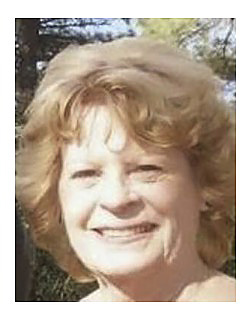
Edna Keasling

Edna was employed by the competing newspaper when the company known today as Granite Publications bought The Madisonville Meteor. Prior to that day almost 30  years ago, the Dobbin, Texas, native had several years of newspaper experience covering many titles on her resume except for one: publisher.

When the opportunity arose to purchase the competitor, we quickly closed on a deal that included Edna joining our team. Shortly after that, we found ourselves needing a new publisher for the Meteor. Planning a trip to Madisonville to arrange a change in leadership for the newspaper, I called Edna about meeting with me on the details.

“I’ll be here,” she told me before quickly adding, “but I don’t want the publisher’s job.” Her reply caught me off totally off guard. Not even a hint of my plan to offer her the job had I leaked. It didn’t take long to learn that Edna was perceptive like that, however. So,, I just laughed and simply said, “OK.”

Once details for the change were finalized, Edna asked, “Are you going to be the new publisher?” I told her “no” without tipping my hand that I would wait for her to decide she wanted the job. “Can you keep things running until I can get someone in place?”

She allowed as how she thought she could do that much but reiterated her stance that she did not want the publisher’s job. It didn’t take long to learn that Edna was sometimes stubborn like that, so I just told her that was fine.

After reviewing some basics on what we needed to do “until I could hire someone,” I left Madisonville with Edna “temporarily” in charge. For the next several weeks, we talked frequently ensuring that she had the support she needed. Every conversation was concluded with her asking, “You found anybody for the job yet?” I always answered with something like, “Still looking, just haven’t found the right person yet.”

A few weeks of “have you found anybody” followed by “still looking” had gone by when one day she paused after my answer and said, “If that publisher’s job is still open, I’d like to apply.” I laughed and told her, “What took you so long, we thought you were never going to give in.”

To no one’s surprise, Edna was a superb publisher not just at Madisonville, but also at Boerne where she followed me in that position. In the years between Madisonville and Boerne that we worked together and developed a great friendship, I came to appreciate Edna for many reasons.

It didn’t take long to learn that Edna’s insistence on doing it her way was her drive for excellence, and that her expectation for those around her to excel was her hope for them to become not just the employee the paper needed, but also the individual they were destined to be. And it didn’t take long to learn that her desire to help people accomplish all of these things was her gift.

I know because in more ways than one, she did those things for me both professionally and personally.  

If you are a Saturday morning reader, chances are you are reading this as I make my way south from Center, Texas to Sam Houston Memorial Funeral Home in Montgomery for 10-12 a.m. visitation and 12 noon services for my friend, Edna Keasling.

—Leon Aldridge

Aldridge columns are published in these Texas newspapers: The Center Light and Champion, the Mount Pleasant Tribune,  the Rosenberg Fort Bend Herald, the Taylor Press, and the Alpine Avalanche.

© Leon Aldridge and A Story Worth Telling 2019. Unauthorized use and/or duplication of this material without express and written permission from this site’s author and/or owner is strictly prohibited. Excerpts and links may be used, provided that full and clear credit is given to Leon Aldridge and A Story Worth Telling with appropriate and specific direction to the original content.

Exploring forest roads looking for the roots of Aldridge, Texas

“It doesn’t get any lonelier than this, Cause I’m on this road alone.” — “Lonelier Than This” song lyrics by Steve Earle

There was no mistake that I was on this road alone. I really don’t think anyone had been on it in a long time plus I was at the end of this road. I chuckled thinking any farther travel on this road would require an off-road vehicle. Making it this far had already required navigating washouts rivaling small canyons and pine saplings between dirt ruts large enough for professional forest management.

Surveying the spot where the app proclaimed, “you have arrived,” (the exact location documented by the photo above) I realized that my intended destination was nowhere in sight. Humor again compensated for uneasiness when I realized if anything happened to me this deep in the forest, my grandchildren could be retired before I was ever found.

Thoughts soon drifted back 100 years to imagining the hustle and bustle of a community of 2,000 supporting one of the largest sawmill operations in Texas near the spot where I was surrounded by serenity deep in a national forest,

History records that East Texas logging boomed between the late 1880s and the late 1920s when southern lumber and timber products were in huge demand. The untapped potential of East Texas attracted increased logging which led to large industrialized mills replacing small owner-operated sawmills.

Railroads grew into the forest connecting remote sawmills and the company towns that sprang up around them. The mill I was searching for one day last week was built in 1905. At its peak, it produced 125,000 board feet of lumber a day making it one of the largest producers in the state. The community that grew up around it included 200 company houses, a hotel, post office, blacksmith shop, train depot,  schools, shops and saloons. Continued success eluded it after two fires and diminishing pine forests eventually lead to its demise by 1923.

My presence deep in the woods was not driven by sawmill research or by seeking history about the East Texas timber business. I was looking for the ruins of the Aldridge sawmill and the community around it—Aldridge, Texas.

Both are gone now and have been for almost a century, but remnants of concrete structures that housed the mill equipment still slumber deep in the Pine Thicket of the Angelina National Forest. The vine-covered and graffiti-adorned ruins are accessible by a 2.5-mile hike from the Boykin Springs Recreation Area, and reportedly also via a wilderness trail from somewhere near where I was standing that morning at the end of the road. Access via the road less taken looked on maps to be a short distance from where I stood in the photo above, but I won’t know until I return with better info and suitable hiking gear.

Curiosity leads me to see firsthand the ruins of prosperity from an earlier time with a possible family connection and to stand on the same ground. Hal Aldridge was a Mississippi native from the same area as my father’s family who worked in sawmills before building the mill and town in Texas that bore his name.

Significant time has been invested recently researching dad’s heritage, something he never had any interest in doing. In fact, he associated with only two of his siblings in my lifetime, and I knew little about his family when I started down the path of learning more about my Aldridge roots.

On that morning last week in the woods, paths crossed at the roots of some majestic pines near the spot where mills once produced lumber from ancestors of the trees surrounding me.

Whether or not research ties my family tree’s roots to the ghost town of a mill and community with which I share a name, going down that road is fascinating. But if you don’t hear from me soon, please send my grandchildren down that road before they retire.

—Leon Aldridge

Aldridge columns are published in these Texas newspapers: The Center Light and Champion, the Mount Pleasant Tribune,  the Rosenberg Fort Bend Herald, the Taylor Press, and the Alpine Avalanche.

© Leon Aldridge and A Story Worth Telling 2019. Unauthorized use and/or duplication of this material without express and written permission from this site’s author and/or owner is strictly prohibited. Excerpts and links may be used, provided that full and clear credit is given to Leon Aldridge and A Story Worth Telling with appropriate and specific direction to the original content.

Love the weather, but not the pesky guests

“An optimist is a fellow who believes a housefly is looking for a way to get out.” —George Jean Nathan, American drama critic and magazine editor

I call myself optimistic, but most of the flies I’ve seen around my house this summer appear content staying inside. A friend swears, however, that he arrived home one day last week to hear his wife greet him with, “Leave the door open dear, these flies haven’t been out all day.”

Whether it’s flies, mosquitoes, gnats or other forms of pesky guests, as Mom used to say, “If it’s not one thing, it’s six of something else.” She was saying that long before Gilda Radner’s “Roseanne Roseannadanna” popularized a variation of it on Saturday Night Live.

The saying in any form applies to the bugaboo flies and other pests are perpetrating this summer. According to the entomologists, (can we just call them lord of the flies) the rain and unseasonably low temps we’ve been enjoying are creating the insect infestation that we are not enjoying. Who hasn’t enjoyed the unusually nice weather, but with an estimated 1,000,000 species of house flies, many of which I’m pretty sure have been hanging around my house, who wants them?

If you don’t like flies, however, the cooler, wetter, weather has created critter problems outside the flying variety. The Texas Hill Country has seen a marked increase of Scorpions reportedly for the same reasons we’re “enjoying” more flies in East Texas.

As I was busy swatting flies here last week, my son Lee, checked in on Facebook to share his dealings with the rash of predatory arachnids down his way. “Just a random scorpion,” he posted with a picture of one roaming around in a ceiling light fixture at his house. “The joys of living in the Texas Hill Country. That’s the light fixture in our bathroom…it was running around in circles trying to get out,” he wrote. “I’m more concerned about how it got in there.”

Recalling some 25 years ago when my kids and I lived just a stone’s throw from where Lee lives today, I responded, “I’m sure you remember them when we lived near Pipe Creek and you and Robin were in school. You used to go around the yard turning over rocks looking for them. Sometimes we would be sitting on the couch watching TV at night and see one run across the floor. They would get in the light fixtures in the kitchen there too. And, then there was the night I was standing barefoot in the kitchen, felt something on my foot and kicked in time to see one go flying across the floor. Yep, just part of living in the Texas Hill Country.”

While my kids have in recent years felt confident in confessing to numerous things about which I was uninformed back then, I must admit Lee’s next story was one I had not heard.

“Oh yeah,” he wrote. “I remember them and those stories. I used to go looking for them when I was younger. I remember catching about four or five and having them in a butter bowl in my room playing with them. I sat them on the window sill and went to bed only to wake up and the bowl was upside down on the floor. I picked it up and there was nothing under it…I never did find out where they all went.”

Mystery solved—it was all clear to me now. “One or two went to the kitchen light fixture,” I told Lee. “All but one more went to the living room floor and the last one crawled across my foot.”

I’m glad Lee waited until now to tell me about his pets. Otherwise, I’m optimistic that if the scorpions were not looking for a way to get out, I would have been.

—Leon Aldridge

Aldridge columns are published in these Texas newspapers: The Center Light and Champion, the Mount Pleasant Tribune,  the Rosenberg Fort Bend Herald, the Taylor Press, and the Alpine Avalanche.

© Leon Aldridge and A Story Worth Telling 2019. Unauthorized use and/or duplication of this material without express and written permission from this site’s author and/or owner is strictly prohibited. Excerpts and links may be used, provided that full and clear credit is given to Leon Aldridge and A Story Worth Telling with appropriate and specific direction to the original content.

Change challenges the comfort of every generation

 “The only thing constant is change.” —Greek philosopher Heraclitus

If Ol’ Heraclitus was moved enough to wax philosophical about change while hanging around Ephesus 500 years before Christ, one wonders just what words of wisdom he might communicate today?

In my youth, I marveled at thinking about the changes my grandmother must have seen in her lifetime. When Hattie Lois (Farmer) Aldridge was born in 1905, riding in automobiles and flying in airplanes were still rare experiences for most. Yet, she lived long enough to ride in luxury cars with undreamed-of automotive options, fly in an airplane piloted by her grandson, and watch men walk on the moon via yet another unheard of concept in 1905—television.

Similar feelings surfaced years later while reading Lewis Grizzard’s 1984 book “Elvis Is Dead and I Don’t Feel So Good Myself.” The late columnist and author humorously elaborated in his best-seller about the many generational changes that left him feeling lost and confused trying to keep up in a society considerably different from the one in which he grew up. His witty and nostalgic observations detail how growing up in the 50s good times “… hanging out at the local store, eating Zagnut candy bars and drinking Big Orange belly washers” left him ill-prepared to cope as an adult in the 80s where  “… assassinations, war, civil rights, free love, and drugs had rocked the old order.”

Like it or not, coping in today’s world with values and traditions differing from those we grew up with is a common transition in life. The difficulty of giving up pieces of our past and learning new ones that we may not always understand is a concept that requires a significant number of birthdays to fully appreciate.

Those familiar feelings flourished one more time last week when Mount Pleasant High School classmate and long-time friend now residing in Colorado, Richard Shaw, commented on a Facebook post dealing with a topic near and dear to my heart: the art of communication.

It was news to me when Richard noted the method of addressing the Alpha, Bravo, and Charlie of communication I recognized as aviation communication was known as the ITU phonetic alphabet and was also shared with short wave and ham radio operators. All I knew was that learning the Delta, Echo and Foxtrot language was something required of me to earn a pilot’s license in the 70s and one of those things I never forgot.

The social media exchange brought to mind another form of communication, one that has not fared as well in my memory moments. Morse Code earned me a merit badge in Coach Sam Parker’s early 60s Mount Pleasant, Texas, Boy Scout troop where we memorized the  “dots” and “dashes” patterns using flashlights to transmit messages the length of the old MPHS building ground-floor hallway from opposite ends of the structure.

While I remember the X-ray, Yankee, and Zulu of the aviation chatter I was once part of, I retained very little of Morse Code that was used widely to send and receive messages in World War II and by my grandfather at the Pittsburg, Texas, depot for communicating up and down the Cotton Belt Route in the years following “WW II, the big one.”

With eons of communication education and practice behind me, I’ve seen more change with every decade than I could have possibly conceived might occur in a lifetime when first entering the world of wordsmiths almost 50 years ago.

Just as my grandmother likely never envisioned travel as she experienced it in her lifetime, I never envisioned a world experiencing old words changing definitions and connotations—let alone changes to instant worldwide communication via electrically charged digital knowledge.

When I started writing, ‘digital’ was defined simply as an activity having to do with fingers and toes. And that’s comforting to know. That way, if someone pulls the plug on my modern electrically charged digital, I can still count ‘digitally’ to ten…like Heraclitus might have.

—Leon Aldridge

Aldridge columns are published in these Texas newspapers: The Center Light and Champion, the Mount Pleasant Tribune,  the Rosenberg Fort Bend Herald, the Taylor Press, and the Alpine Avalanche.

© Leon Aldridge and A Story Worth Telling 2019. Unauthorized use and/or duplication of this material without express and written permission from this site’s author and/or owner is strictly prohibited. Excerpts and links may be used, provided that full and clear credit is given to Leon Aldridge and A Story Worth Telling with appropriate and specific direction to the original content.

Finishing a book is still on the bucket list

“When the zombie apocalypse knocks out the electricity in town and the internet is down, your books will still work just fine.”—from 50 Reasons Real Books are Vastly Superior to eBooks by David Ferrer

As I am again itching to dust off my long-labored book drafts with thoughts of finishing one, I’m reading that printed book sales are up and eBook sales are slowing for the first time since Kindle came on the scene. Those reports parallel others of school districts returning to real books and pitching the pads. Research supported reasons, outside of Ferror’s satirical thoughts, include reading comprehension and retention are better with “old-timey” printed books. Works for me, too.

I’ve both collected and accumulated “old-timey” printed books since I was in high school…shortly after the printing press was invented according to my kids. Reading and writing are two things that keep me going. Keep my creative clock wound. Keep me somewhat sane—to the degree that is possible.

After a career of writing everything from news stories, to columns, to technical and promotional writing plus teaching writing skills, my one remaining writing goal is a book, something I’ve been working on since long before digital books came along.

I tried digital, didn’t work for me. I confess to keeping a couple of books online accessible for reading primarily while waiting to see the doctor. When appointments run long past time, a book or two on the phone is a nice way to justify wasted time.

Beyond that, I want real books. Books that I can recognize across the room by looking at the spine. Books that have a distinctive smell much like the olfactory experience of sitting in an old car each with its own distinct automotive aura. Books, any one of which I can pull off one of my shelves and quickly turn to almost any passage I want to revisit regardless of how many years ago I read it. Can’t do that with digital; have you ever thought about why?

Mark Hom on SciTech CONNECT says that’s because the human brain is analog and not digital. For instance, if someone asks directions to a destination, do you reply, “Take US 96N 11 miles to 59N, then Texas 149 5 miles to 281? The majority of us are more likely to answer, you go down here (while pointing) about 11 miles or so to the Denny’s and turn right on the loop then go around to the exit at the Shell station.”

Whatever directions I may follow attempting to add “author” to my resume, I have some ideas about what I want to write should flames miraculously erupt from the embers of my rubbing words together anytime soon.

Plus, I now have new inspiration with three of my colleagues from the ranks of newspapers having published books in the last couple of years. Gary Borders who has published a number of newspapers in his long career wrote, “Yours Faithfully, J.A.” chronicling the life and times of newspaper editor and publisher H.B. Fox. Lou Antonelli at the Clarksville Times published his first novel following numerous award-winning short stories which he terms alternative history. It’s titled, “Another Girl Another Planet,” a novel about secret government agents and a photo taken by a Mars lander. Then there’s Kari Collins at the Iowa Park Leader who, along with Kevin Slimp, published, “Haunted Places and Ghost Sightings Across Texas,” stories from the pages of Texas newspapers about paranormal activity.

Hopefully, one of my drafts will come to normal activity fruition for reading in the form of a real book and I can join the ranks of my published friends before I get to the end of my bucket list … and also hopefully long before the zombie apocalypse.

—Leon Aldridge

Aldridge columns are also published in the Center, Texas Light and Champion, the Mount Pleasant, Texas, Tribune, the  Taylor, Texas, Press, the Alpine, Texas, Avalanche.

© Leon Aldridge and A Story Worth Telling 2019. Unauthorized use and/or duplication of this material without express and written permission from this site’s author and/or owner is strictly prohibited. Excerpts and links may be used, provided that full and clear credit is given to Leon Aldridge and A Story Worth Telling with appropriate and specific direction to the original content.

Friends are the best sunshine on rainy days

“Vicky’s in great shape and we’re ready for some 2019 road trip fun 1950s style—with a little sunshine.” – Leon Aldridge, April 6, 2019

Those words of optimism sounded great when I penned them three months ago after the “Highway 271 Cruise” classic car touring event in Northeast Texas was rained out. Sunshine was still scarce last Saturday when the rescheduled version got underway, but it was soon to come in the form of crossing paths with old friends along the East Texas pine tree route, and making new ones as well.

That morning back in April, I savored hot coffee from my sunshine-less breakfast room window while violent thunderstorms raged outside and Vicky snoozed in the garage. By the way, Vicky is my 1955 Ford—one of Henry’s finest produced 64 years ago.

Rain, lightning and thunder were still in the offering last Saturday, but this time I was sipping coffee from a travel mug and viewing the weather through Vicky’s windshield. The rescheduled touring cruise was a “go” this time based on forecasts of only light scattered rain along the U.S. 271 route. True to the weather prognosticator’s predictions, we were greeted in Mount Pleasant by rainless but cloudy skies. However, that did not include the 103 miles of rain and thunderstorms we weathered from Center to Daingerfield before reaching the starting point for the day’s activities.

In addition to cloudy skies, we were also greeted in Mount Pleasant by an MPHS school mate of 58-years ago. Vicky was just six years old when Kenny Thompson and I occupied school desks on the same Titus County campus, which was also the last time we had seen each other. Light rain would come and go for the rest of the day, but the wonderful time spent catching up on names from years past and the cars associated with each one was non-stop.

We were still working on those “remember that ’57 Chevy he had” memories at the third tour stop in Gladewater. As the 35 or so cars and their owners who took a chance on the wet weather were directed toward parking at “The Antique Capital of Texas,” I recognized the photographer capturing photos. My journalism journey crossed paths with Jim Bardwell’s some 30-plus years ago and we were quickly good friends. I was entrusted with the care of the Center Light and Champion at the time while Jim was guiding the Lindale Times and News in that city over north of Tyler. Jim and his wife Susanne are owners of the Gladewater Mirror these days along with newspapers at Big Sandy and also Lindale. 

Jim and I followed suit in the day’s game of catchup conversations swapping information on the ever-changing business of publishing the local newspaper. It was Suzanne who some years ago during a similar group exchange of “who was where” and “what had they done,” declared that my connections were sufficient to merit a bumper sticker proclaiming, “Honk if You Know Leon Aldridge.” She vowed that night to produce a batch, but I have yet to see one. 

Visits with Jim, Kenny and other friends made during the day’s activities ended in Gladewater and the “Highway 271 Progressive Car Cruise” for 2019 was officially in the books. However, our day was not over. Vicky carried on flawlessly getting us on down to Panola County to join the Shelby County Cruisers car club “date night” supper that included a guided tour of G.W. “Dub” Ayres’ outstanding car collection. The gracious host provided narratives on every pristine car in his collection adding one more friend and many memories to my long list.

To end the evening, the Cruisers met for dinner at a restaurant on the north side of Lake Murvaul discussing what else—old cars and good friends. After that, Vicky purred back into Center where our adventure had started a little more than 12 hours and 285 miles earlier. It also ended just as we had started it; in a downpour of rain. But even on rainy days, there is always sunshine in reconnecting with old friends, making new ones and spending time with all of them.

Oh, if you happen to see one of Suzanne’s bumper stickers in your travels, please don’t forget to honk.

—Leon Aldridge

(Photo at top of the page: The Highway 271 Cruise caravan of cars line up along Jefferson Street in downtown Pittsburg, Texas.)

Aldridge columns are also published in the Center, Texas Light and Champion, the Mount Pleasant, Texas, Tribune, the Taylor, Texas, Press, the Alpine, Texas, Avalanche.

© Leon Aldridge and A Story Worth Telling 2019. Unauthorized use and/or duplication of this material without express and written permission from this site’s author and/or owner is strictly prohibited. Excerpts and links may be used, provided that full and clear credit is given to Leon Aldridge and A Story Worth Telling with appropriate and specific direction to the original content.

Good memories from a big ol’ Buick

A good life is a collection of happy memories.”

— Denis E. Waitley, American motivational speaker, writer and consultant

Memories that may or may not have inspired Bob Dylan’s song, “Ballad from a Buick 6” notwithstanding, many of mine shine brighter than all the chrome on one of the big 50s cruisers.

Good memories are the basis for a good life as well as many a good story worth telling. I’m also convinced that memories also help to shape our lives and determine why we enjoy some things more than others.

Friend and mentor, Jim Chionsini, sent me a photo last week of a superb ’53 Buick Skylark convertible belonging to an acquaintance of his. The car captured highest honors at the 2019 Buick Club of America (BCA) Show recently in the Oklahoma City suburb of Midwest City.

The dark blue beauty was indeed a fine specimen of automotive history at the pinnacle of motoring excellence when every car on the road possessed a unique style and personality making each one easily distinguishable from others. Cars of that era were new when I was a kid and I remember easily differentiating a Buick Roadmaster from a Chevrolet Bel-Air at a country mile with one eye while admiring a new Ford Crown Victoria with the other.

That ability went hand-in-hand with developing an affinity for the aroma of gas and oil and the dazzle of chrome plating at an early age. Fond memories include spending a whole week’s allowance on the latest issue of Car Craft magazine and reading Tom McCahill’s automotive column in Popular Mechanics at the barber shop on Saturday.

“Gorgeous example of a rare car,” I responded to Jim’s message. “Reminds me of a childhood memory of spending a few days with my aunt and uncle in Kentucky. They were newly married students at Kentucky Wesleyan where someone drove a big ol’ new Buick convertible.”

My Aunt Jo, my Mom’s younger sister and one of the Johnson siblings from Winchester, Kentucky, married Fred Scott from Hazard, Kentucky, who also admired distinctive vehicles himself.

Remembering the Buick convertible from that summer long ago, I can’t tell you if it was one of the rare Skylark models, but the car none-the-less made an impression on me even at that young age. Uncle Freddie owned at least one Buick himself that I recall, a big black fastback model called the Sedanette with Buick’s signature Straight-8 engine dubbed the “Fireball 8.” Specifically, I remember a trip in that car where we spent several hours one night at a roadside hamburger joint somewhere in Oklahoma waiting to meet my Uncle Bill who was coming from California in a ’49 Mercury convertible. We were all headed to a family reunion and the waiting part occurred because no one knew Bill was stuck at a repair shop somewhere else in the Sooner State after the big Merc broke down.

A couple more memories from that Kentucky summer visit include discovering clover and the fact that it came in three-leaf and four-leaf varieties. That was huge for a youngster who was yet to enter the first grade. I still remember searching for one with four leaves among the blades of grass outside a small tavern where Uncle Freddie took me with him one afternoon.

And that’s the other memory. The color of the neon lights in the tavern, the pool tables and the sound of the balls hitting each other, and the glow of the jukebox filling the establishment with the Big Band music of Glenn Miller, Tommy Dorsey and Artie Shaw.

Reflecting on all of these wonderful memories, I’m thinking that I probably owe my Uncle Freddie a large debt of gratitude for some of the things that  I appreciate even today. He may very well have played a pivotal role in the fact that I have always harbored a fondness for big cars from the age of motoring excellence, and for taverns with neon lights, pool tables, and jukeboxes.

Especially one that might still have a tune like “Ballad from a Buick 6” vibrating the speakers.

—Leon Aldridge

Aldridge columns are also published in the Center, Texas Light and Champion, the Mount Pleasant, Texas, Tribune, the Taylor, Texas, Press, the Alpine, Texas, Avalanche.

© Leon Aldridge and A Story Worth Telling 2019. Unauthorized use and/or duplication of this material without express and written permission from this site’s author and/or owner is strictly prohibited. Excerpts and links may be used, provided that full and clear credit is given to Leon Aldridge and A Story Worth Telling with appropriate and specific direction to the original content.