Could be the genes, but maybe it’s more

“It’s got safety tubes, and I’m not scared
The brakes are good, and the tires are fair.”

—”Hot Rod Lincoln” song lyrics by Charlie Ryan

– – – – –

“Looks like about a ’41 Chevrolet truck,” I responded to my son’s email photo. A one-corner close-up of an old primer-coated project being refurbished with mild hot rod touches by his friend.

“You’re right,” Lee texted a couple of minutes later. “It is a ’41 Chevy. I asked. But how could you tell from that picture?”

I’ve heard it said that deep in the human being DNA genome lies a recessive gene known as LOC. Biologists will say they’ve never heard of it. Laboratory research in that area of genetics, I would wager, is rare.

It can be found in anyone but appears to have peaked in males who grew up in the ’50s and ’60s. Carriers are easy to spot. They display an affinity for old cars and trucks powered by internal combustion “dead dinosaur burner” engines.

LOC is short for ‘loves old cars.’

How do I know that? I have the gene. Lee inherited it from me, but his displays a generational mutation that allows for newer and imported makes. Mine is limited to cars I grew up with. American manufactured predating the dilution of foreign cars that began in the mid-to-late 60s.

I could have wowed him with all of that. But, instead, I just told him the truth.

“I had a short but memorable relationship with a 1941 Chevy panel truck in my youth,” I said. “She was a member of Mount Pleasant’s Explorer Post 206.”

I was a scout most of my school years. Cub Scout, Boy Scout, Explorer Scout. Mount Pleasant’s Explorer post in the 60s was organized as an “emergency service” post with a mission that today, would cause overprotective parents and over-enthusiastic legislators to suffer a meltdown.

We were 15-, 16-, and 17-year-olds working alongside first responders on emergency calls. High school students who aided city police and highway patrol officers at wreck scenes directing traffic and helping with clean up. Working with firefighters extinguishing grass fires in the country. Helping with hoses at city structure fires and directing traffic. We even trained with firefighters at the old North Washington fire station.

And that’s where the ’41 Chevy panel truck came into my life. And the lives of others like David Ward, H.O. Townsend, Scott Conner, J.B. Davis, Jay Jackson, Terry Landrum, Keney McDougal, Richard Shaw, Terry Nicholson, Terry Gaddis and others that will come to mind. About a week after this is published.  

Along with some names, where we got the old hauler escapes me. It was well-worn before it began serving time with Post 206. Its straight-six motor provided blazing power equaling that of a herd of turtles in a cloud of snail dust. Which was fine. We didn’t need anything fast.

It wasn’t without flaws. The floor-shifted three-speed transmission tended to jump out of high gear at speeds over 45 miles per hour, which were rare. But making it the scene of an emergency, the driver sometimes needed a shotgun rider keeping a death grip on the gear shift lever.

An example of a 1941 Chevrolet panel truck, much nicer than my memories of Post 206’s Big Orange. (Wikimedia Commons Photo)

We may not have been the first to arrive, but we looked official when we got there. A local body shop donated a bright emergency orange paint job. We cleaned the inside and applied an all-white rattle-can paint job. Emergency flashing lights were mounted up top. The interior was fitted with brooms and Army Surplus “Jerry” water cans,

The pièce de resistance professionally painted on both sides of the truck was “Explorer Post 206 Emergency Service.”

While Explorer Scouting taught us responsibility, service, and dedication, we also learned a lot about auto mechanics. Many nights and weekends were spent “shade tree mechanicing” to keep the Big Orange ’41 on the road. One time it was a head gasket and valve job. Another was a carb overhaul. And one time, when we forgot to check the anti-freeze, we learned about ingenuity.

Scratching our heads in silence as we watched coolant seeping from an inch-long crack in the block, someone whispered, almost reverently as if directed by a divine suggestion, “J-B Weld.”

“Won’t work,” one of our fathers offered. You’re going to need a new motor. Undaunted, we cleaned the crack with a grinder and slathered it with a liberal layer of the miracle substance. The old ’41 never lost another drop. At least not from that cracked block.        

Maybe it is that gene thing. But for appreciating old Detroit iron, recognizing it from minuscule clues, and keeping it patched and on the road, I owe some credit to Big Orange ’41. Mount Pleasant Explorer Post 206’s emergency service vehicle.

—Leon Aldridge

(Photo at top of the page — From one of my boxes of “closet archives.” Undated but about 1963 would not miss it much. Memory does not produce information about the event, but it was staged at the old National Guard Armory in Mount Pleasant across Highway 271 from the current Titus Regional Medical Center, known back then as Titus County Memorial Hospital. Pictured are, left to right, J.B. Davis, Scott Conner, Terry Gaddis, Leon Nicholson, and David Ward.)

– – – – – – –

Aldridge columns are published in these Texas newspapers: The Center Light and Champion, the Mount Pleasant Tribune,  the Rosenberg Fort Bend Herald, the Taylor Press, the Alpine Avalanche, The Fort Stockton Pioneer, and The Monitor in Naples.

© Leon Aldridge and A Story Worth Telling 2023. Unauthorized use and/or duplication of this material without express and written permission from this site’s author and/or owner is strictly prohibited. Excerpts and links may be used, provided full and clear credit is given to Leon Aldridge and ‘A Story Worth Telling’ with appropriate and specific directions to the original content.

It’s important to keep telling them

“I’ll tell you a secret. Old storytellers never die. They disappear into their own story.”

—Vera Nazarian, author.

– – – – – – – –

“Tell a story,” I encouraged my feature and column writing students at Stephen F. Austin a couple or three decades ago. “Everybody has a story.”

“But Mr. Aldridge,” I was challenged once. “You’ve been around longer. You know more people, you’ve seen more. Where do we get ideas as students?”

“Family, friends, folks you’ve just met,” I said. “There’s a story in everyone you know and everyone you meet. Your challenge is telling it. Tell their story for them. Keep it, and their memory, alive.”

Fast forwarding fifteen years found me in the newsroom again. The gig this go around was the Texas Country Music Hall of Fame up in Carthage, where Willie Nelson and Ray Price were in town to announce inductees for that year. After making the news official that it would be Kris Kristofferson, the pair of country music legends hung around to tour the museum, perusing the exhibits and swapping memories.

Following at a respectable distance, I took pictures and listened to them talk. And I gained another story. One about watching the two entertainment icons swapping their stories.

“Look at that,” Willie chuckled with a backhanded slap on Ray’s arm. “You remember that time in San Antonio we played that beer joint, and he was with us,” the memories continued.

And that’s the premise of my missives. Recounting memories. We all have stories to tell. And the important thing about them is that we keep telling them. I’ve always preached the importance of storytelling. But I’ve amended that sermon lately. And the best way to make my point is … with stories.

Stories like favorites about my dad. I’ve shared before that he was a quiet man, never offering advice, and how I learned from him by example. He strayed from that norm twice, that I remember. Once was about love and how what seems like love sometimes isn’t. The only way to know the difference is time,” he offered. “You can’t rush it.”

The other was making decisions. “I can tell you what to do, but you’ll probably do what you want to do. You’ll learn like everyone else, and like I did. The hard way by making mistakes.”

Then there are stories about my good friend and “partner in crime” through life, Oscar Elliott. The story about driving somewhere one afternoon, I forget where. I just remember telling him I was moving from the newsroom to the classroom to try my hand at teaching journalism.

“Here’s what you tell your students,” Oscar said. “Tell them communication skills are the best education they can get. With communication skills, you can be successful in any field. Tell them about your good friend since the fifth grade who never took a college class, who has an office in Dallas reporting to the vice-president of a big company because he can assess any situation and communicate it to anyone from the machine operators to the company ‘suits’ in the office.”

About my Center friend Vance Payne and his exemplary customer service skills. The story about the time I needed rubber mat material. He produced a dusty leftover roll from the warehouse of his hardware store, “on the corner, on the square.” With a smile, he asked, “How much ya’ need?” As he rolled it out to measure, I said, “three feet. How much would that cost.”

“Five dollars,” was Vance’s answer.

“That’s a good price.” I acknowledged. So would six feet be ten dollars,” I countered while counting my money. “No,” he said, still grinning. “That will be five dollars.” Confused but curious, I quizzed him. “So how much for the whole roll?’

“Five dollars,” he said again. “I need to get rid of that roll.”

There are many more like those above, so many. Far too many to tell in this space. But all with one common thread. Swapping stories last week with long-time good friend Mark Henry, I allowed as how for all the years I’ve been sharing stories about good old days and good old friends, I had just come to a sobering conclusion.

Far too many of my stories are now ending with the realization that I am the only one in the story who is still here.

And that is why we should all share our stories with as often as possible. Storytelling is our obligation to the next generation. Keeping alive, the events and memories of the people with whom we made those memories.

Before you and I disappear into our stories.

—Leon Aldridge

– – – – – – –

Aldridge columns are published in these Texas newspapers: The Center Light and Champion, the Mount Pleasant Tribune,  the Rosenberg Fort Bend Herald, the Taylor Press, the Alpine Avalanche, The Fort Stockton Pioneer, and The Monitor in Naples.

© Leon Aldridge and A Story Worth Telling 2023. Unauthorized use and/or duplication of this material without express and written permission from this site’s author and/or owner is strictly prohibited. Excerpts and links may be used, provided full and clear credit is given to Leon Aldridge and ‘A Story Worth Telling’ with appropriate and specific directions to the original content.
Going the extra mile

“I chose the road less traveled. Now if I can just figure out where I am.”

Anonymous

– – – – – –

Roads less traveled have always been my preferred routes.

Dodge the interstates. Enjoy the scenic route and the small towns. Unfortunately, there was no scenic route to where I was going last week. There just wasn’t any way to get there from here without battling NASCAR wannabes running wide open, five freeway lanes wide. Also known as any given day driving in Dallas.

I have a good sense of direction. There was a day when a road atlas was all the direction I needed. You can still find one in my car, but the current edition is not as well-worn as previous issues. Electronic devices have replaced them with ease and convenience for finding a route to almost any place on earth — most of the time. There are still places where even the current array of electronic devices is not foolproof, however. I found one of them a couple of years ago.

“I’m at an intersection somewhere in the middle of Southeastern Kentucky,” I said aloud. I also had directions that night. Not good ones, as it turned out. “It’s late, it’s dark, and the only lights in any direction are from my vehicle. I have no cell phone signal. And GPS took me in circles, then admitted it was lost. I hear banjos playing. Please tell me you can help me.”

My pitiful plea was answered with the push of a button. “OnStar, how may I help you.” A voice in the wilderness. “Don’t worry. We’ll have you back to civilization soon. Give me just a moment to pinpoint your location,” she said.

I heard a tone of humor in her voice. Was she laughing at me?

“I’ve found you,” she chuckled. Then, giving me the names of the two intersecting rural roads where I sat alone in prayer, she asked, “Where would you like to go.”

Alone again in silence after furnishing the name and address of the lodge that was eluding me, I looked out into the pitch-black darkness. Glowing green eyes dotting the dark woods had joined the banjo music. I decided against sharing that with the OnStar agent.

“I’ve located your destination and have the correct coordinates.” She was back. “The information you gave for the lodge does not match what’s in our system. It’s close but we have it under a different 911 address. Would you like to go there now?”

“Ma’am,” I said meekly. “There is nothing in the world I would rather do at this very moment.”

“Hold on while I download the directions to your vehicle,” she said. “Listen to your radio for turn-by-turn directions as you travel.” I listened closely to see if she was still laughing.

While I waited for Miss OnStar to work her magic, I reviewed the previous two hours in my mind. How was I to know the GPS address on the brochure was not the same one stored in GPS computers? How was I to know that instead of telling me, “The address you gave me for that name does not match my records,” GPS would instead find delight in directing me in circles through sparsely populated Kentucky mountain regions in the dark of night.

Maybe GPS has a sense of humor, too.

A couple of missed turns later with OnStar nudging me back on course, I finally arrived. Three hours behind schedule. A sigh of relief came with those words, “You have reached your destination.”

A similar sense of relief awaited me at the end of my trip to Dallas last week, where my plea for help with big city traffic was to a power a little higher than guidance satellites. That prayer was answered as well. It may have been the phone app that directed me to my destination, but I’m confident that signal was getting a large dose of divine direction.

By whatever means, I’ve usually always made it to where I’m going, even if I am the last one to arrive. And people are glad to see me when I get there. I know that because they say things like, “I thought you’d never make it.”

“You know me,” I tell them. “I always go the extra mile. Whether I want to or not.”

—Leon Aldridge

– – – – – – –

Aldridge columns are published in these Texas newspapers: The Center Light and Champion, the Mount Pleasant Tribune,  the Rosenberg Fort Bend Herald, the Taylor Press, the Alpine Avalanche, The Fort Stockton Pioneer, and The Monitor in Naples.

© Leon Aldridge and A Story Worth Telling 2023. Unauthorized use and/or duplication of this material without express and written permission from this site’s author and/or owner is strictly prohibited. Excerpts and links may be used, provided full and clear credit is given to Leon Aldridge and ‘A Story Worth Telling’ with appropriate and specific directions to the original content.

I’m still learning, and still writing

A child learns from his parents, but sometimes, the parents can learn from their child.

— Gregorio Santos, composer.

– – – – –

“My son learned to water ski this summer.”

I penned that proclamation September 22, 1987. My son, Lee, was seven years old.

“No big deal you say,” that column continued. “Lots of youngsters tackle things like water skiing, swimming, and bicycle riding. Oh yeah, did I tell you he also learned to ride a bicycle this summer?”

I revisited that piece last week for the first time since I wrote it. It surfaced while working on my latest project, collecting, and cataloging many years of my attempts at weekly ramblings. All the way back to my first column in November of 1980. It’s been fun. It’s been frustrating. It’s been fulfilling.

When I wrote my first more than 42 years ago, the farthest thing from my mind was that it may have been the beginning of what would someday resemble my life’s resume. More often, I have said column writing became my cheap therapy. Something I admitted in writing as early as the column I wrote about Lee. “People who write often share their souls with the world by committing things to the posterity of print for all the world to read,” were my exact words. “Things that others may think but never say. It keeps me sane, and it’s cheaper than a therapist.”

“What follows has been on my mind for some time,” that column continued. Thoughts waiting to be set free. Feelings that started when our seven-year-old, Lee, first maneuvered a bicycle down the driveway earlier last spring. He was proud, but proud couldn’t touch my feelings.

“Then, this summer, when I watched as he overcame frustration and failed attempts to stay on top of water skis, I wasn’t sure which was bigger. The lump in my throat or the smile on his wet face as I watched from the boat when he finally persevered, holding on to the ski rope for dear life.

“What father is not proud of his children’s achievements? Bear with me a minute longer. Let me tell you about my pride,” I wrote.

“Go back with me to 1980 when Lee was born. May 12. Share with me disbelief, fear, and heartache when doctors said shortly after Lee entered the world that his chances for survival were not good. As I tried to process what the doctor was saying. I heard words like, ‘Don’t get your hopes up.’ Statements about how fewer than 10 percent of babies born with the problems Lee came with survived. And how survivors are typically weak and frail children who never properly or fully develop to adulthood.”

The column chronicled the six weeks we stood vigil at Schumpert’s Neonatal Intensive Care Unit in Shreveport with a glass partition separating us from our newborn. I also confessed thoughts about my weakness, doubts about whether hours of reconstructive surgery the same day he was born would be successful. And if he did make it, what kind of a life would he face.

“But,” the column also recounted, “that’s only background for the message that follows.”

I lauded long about how Lee quickly became an impatient second grader making excellent grades, climbing trees, skateboarding, and water skiing. About him decorating his sister’s room with Crayolas, running off the cat, and mesmerizing the neighbors. But most of all, about how he, along with his nine-year-old sister, brought so much love into our home.

I concluded by writing, “Still, every time I watch him accomplish another milestone in life, I’m thankful for his accomplishments and thankful that he’s my son. Not because of what he’s done or how far he’s come from where he started. Hey, by the time he reached his first birthday, you’d never know what he went through the first year of his life.

“I’m grateful most of all for what he’s taught me. Because every time he rides his bike across the yard or skis across the lake, I think God knew seven years ago what Lee could do for me.

“But that’s another story, another part of my soul to be shared in another column.

“I’ve told you my son learned to water ski this summer. Only God in heaven knows what I’ve learned from him.”

As I share my soul in this message in 2023, my son Lee will be 43 this coming May.

I still thank God for him and his amazing sister, Robin. I’m still learning from both.

And I’m still writing for therapy. Cheap therapy.

—Leon Aldridge

– – – – – – –

Aldridge columns are published in these Texas newspapers: The Center Light and Champion, the Mount Pleasant Tribune,  the Rosenberg Fort Bend Herald, the Taylor Press, the Alpine Avalanche, The Fort Stockton Pioneer, and The Monitor in Naples.

© Leon Aldridge and A Story Worth Telling 2023. Unauthorized use and/or duplication of this material without express and written permission from this site’s author and/or owner is strictly prohibited. Excerpts and links may be used, provided full and clear credit is given to Leon Aldridge and ‘A Story Worth Telling’ with appropriate and specific directions to the original content.

The Ramblers may have exceeded mom’s limits

“When your mother asks, ‘Do you want a piece of advice?’ It is a mere formality. It doesn’t matter if you answer yes or no. You’re going to do it anyway.”

— Erma Bombeck

– – – – – – –

Exploring the old East Texas Light offices down on Austin Street when I returned to The Light and Champion two years ago, I found 40-plus-year-old copies of a couple of newspapers.

Yellowed issues of the defunct Sabine News in Many, La., and the still going strong Monitor from Naples up in northeast Texas were lying with a framed certificate in the bottom of a long-ignored built-in storage cabinet. Everything in the cabinet was covered in dust so thick, the pages were barely recognizable.

I wrote a column about the unusual find. If you missed it then, or like me, just forgot about it, I also offered my thoughts on how the combination of newspapers bearing those dates, along with the other framed find, could have been placed there by just one person — me.

That 2021 discovery was in a room that has housed printing press air compressors for at least 30 years. However, the room was once the publisher’s office at The East Texas Light and the office I occupied in 1980 when I filled that position.

I started my newspaper career at The Monitor in 1974. I left there to become editor of The Sabine News before joining The East Texas Light, which became The Light and Champion while I was there. And that other document?

That other dusty document keeping the newspapers company came to mind last week while perusing a collection of old columns I wrote about the same time those papers were stashed away. It was a Texas Motorcycle Roadriders Association Club charter for the East Texas Ramblers dated 1982.

I was a charter member of the Ramblers.

It all came together last week while reading one of my columns from 1981 elaborating about the club. In the piece I penned when I occupied the office described above, I opined about how my mother was adamantly opposed to me riding a motorcycle, something I spent many enjoyable years of my life doing.

I also added that perhaps the newly organized Ramblers community activities might help boost my mother’s visions of motorcycle riders: black jackets and dangerous noisy machines.

Knowing she was a faithful follower of my column back then, I wrote, “For anyone with reservations like my mother, let me clarify. Motorcycle enthusiasts can be any person of any age, sex, creed, or national origin who enjoys riding lawfully registered two- or three-wheel motor powered vehicles for fun or transportation, or anyone wanting to associate with persons of similar persuasion.”

I followed with, “A club is a lawful and legal gathering for the natural and normal pursuit of motorcycle enjoyment in a family-oriented fashion. See, mom, nowhere in there did you read anything about black leather jackets or noisy and recklessly operated machines.”

The old column defined the Ramblers as 15 members that included respected community individuals, like police officers (Ed Roberts), judges (Billy Ballard), bank presidents (sorry, that one slips my mind), and business people (Robert Poffinbarger). I considered including newspaper publishers but decided to keep the image completely respectable.

“The club has participated in homecoming parades and will be a part of seven upcoming Christmas parades in the area,” the column continued.” Two of the club’s members, Dennis Leggett of Joaquin and Paul Blackwell of the James Community, have planned the ‘Fourth Annual Poker Run and East Texas Progressive Field Meet’ for Sunday, November 15, 1981. All proceeds from the Poker Run and Field Meet go to the Texas Motorcycle Roadriders Association which in turn supports organizations like the National Hemophilia Foundation.”

The invitation encouraged motorcycle riders to try their hand at the events or simply enjoy the ride scheduled to cover 70 miles of East Texas. Reading the column, flashbacks of my choosing the latter that day more than 41 years ago made me smile. That, and recalling my now 44-year-old daughter, who was three at the time, riding with me.

I ended the column with a note to my mother. She was not only fearful of my motorcycle riding, but also of my flying. And my drag racing. “Dangerous activities,” she called them. So, I ended the motorcycle riding column by telling her we would address my fondness for flying at another time.

Erma Bombeck was right. I always listened to my mother’s advice … even if I didn’t always follow it.

To mom’s credit, she did fly with me—once. Plus, she and dad attended a couple drag races to watch me participate in “dangerous events.” Mom had her limits, however.

She never, ever accepted any of my offers to take her motorcycle riding.

—Leon Aldridge

– – – – – – –

Aldridge columns are published in these Texas newspapers: The Center Light and Champion, the Mount Pleasant Tribune,  the Rosenberg Fort Bend Herald, the Taylor Press, the Alpine Avalanche, The Fort Stockton Pioneer, and The Monitor in Naples.

© Leon Aldridge and A Story Worth Telling 2023. Unauthorized use and/or duplication of this material without express and written permission from this site’s author and/or owner is strictly prohibited. Excerpts and links may be used, provided full and clear credit is given to Leon Aldridge and ‘A Story Worth Telling’ with appropriate and specific directions to the original content.

What would your daddy think

“A father’s goodness is higher than the mountain, and a mother’s goodness deeper than the sea.”

—Japanese Proverb

– – – – –

I did something dumb a few days ago.

That’s not a news flash and certainly not uncommon enough to warrant a column. Moreover, it was a second thought that motivated this missive.

“What would your daddy think?” No words got my attention quicker as a youngster.

I watched an old movie a while back. About some young boys caught throwing rocks at windows. I smiled, not at young brats throwing rocks, but at how the officer dealt with them.

The boys denied their actions and showed little fear until the officer said, “OK boys, let’s go.”

“What,” they laughed? “You taking us to jail?”

“No,” said the policeman. “Worse than that. I’m taking you home to your parents.”

I related. Nothing was more difficult for me as a kid than facing my father and seeing the disappointment in his eyes for some bone-headed thing I had done. Far more painful than any adequately applied paddle to my backside.

My father was friends with then Mount Pleasant Police Chief B.C. Sustaire when I was growing up. Chief Sustaire was of the law enforcement era when a higher percentage of parents taught their children to respect authority. It was also a time when society allowed officers of the law to temper strict law enforcement with a dose of common sense when the latter better served the circumstances.

That’s what prevailed one fall mid-60s night when a trio of Mount Pleasant teenagers decided fun could be defined as mischief with a few water balloons. However, that fun began to go south when the trio lobbed water-laden projectiles at what they thought was a friend’s car.

Perfect strike. The brake lights on the big white Oldsmobile lit up as the car whirled around and gave chase. Fortunately for these kids, the new Olds was no match for the old hot rod Ford they were cruising in that night.

We were still laughing a half hour later when flashing red lights filled the rear-view mirror.

Laughter was lackluster when we learned that it wasn’t our friend we had water bombed, but a well-known local businessman who was scared out of his wits when the projectiles exploded on his car’s windshield. And hopping mad.

Feigning innocence of knowing anything about water balloons, we accepted the officer’s gracious invitation to follow him downtown to meet with the police chief. It’s was one thing to get summoned to the station at night, but it was another when the chief was called to leave home at night and come downtown.

Chief Sustaire’s questions were precise, but in the second lapse of good judgment in one night, we offered what we thought to be a convincing argument of innocence. “It must have been someone else in a car similar to ours,” we pleaded.

The chief listened silently, then let us go with a warning. “You boys get on home—it’s too late for you to be out riding around.”

Looking back, he likely knew we were being less than truthful with him. But tempering circumstances with common sense, he also knew our fate at home would be far more memorable than any policeman’s reprimand.

Sure enough, I had a message waiting for me the next day after school. “Your father wants to talk to you—now.” When I arrived at Perry Brothers, where he worked, he calmly said, “Let’s take a walk.”

A block down the street, I broke the silence. “Where we going?”

“Just around the corner,” he said. A block north of the five-and-dime store on Jefferson Street and around the corner led to an intersection where the post office, the Baptist Church, and an optometrist’s office occupied three corners. City hall and the police station sat on the fourth. Even I was smart enough to figure out we weren’t headed for any of the first three places.

I stood quietly in the police chief’s office as my father and Mr. Sustaire exchanged a handshake and pleasantries. Then, after a few seconds that seemed like an eternity, my daddy looked at me and said, “Now, I want you to tell Chief Sustaire what happened last night, one more time. This time, I want to hear it, too.”

Suffice it to say I sang a different song when grilled under the bright lights. My dad was not a tall man, stood just a few inches more than five feet. B.C. Sustaire was just the opposite; tall and broad shouldered. At least that’s how I saw them back then.

I was nearing six feet tall by the time I was a sophomore in high school. Still, I was the smallest person in the room that day as I confessed and apologized for my behavior and dishonesty.

Chief Sustaire was very gracious, thanking me for my honesty in admitting wrong doing. He knew justice would be served because he also knew I respected my father—who was somewhat less benevolent once we got home.

My dad has been gone for almost 18 years now. But even today, every time I do something that begs the question, “What was I thinking,” there’s also that voice that asks … “What would your daddy think?”

—Leon Aldridge

(Photo above: The Mount Pleasant, Texas, City Hall, and Police Station next door, on Madison Street at the intersection of Third Street during what I’m judging, from the cars, to be the 1950s. It looked pretty much the same the night I got to visit there in the 1960s.)

– – – – – – –

Aldridge columns are published in these Texas newspapers: The Center Light and Champion, the Mount Pleasant Tribune,  the Rosenberg Fort Bend Herald, the Taylor Press, the Alpine Avalanche, The Fort Stockton Pioneer, and The Monitor in Naples.

© Leon Aldridge and A Story Worth Telling 2023. Unauthorized use and/or duplication of this material without express and written permission from this site’s author and/or owner is strictly prohibited. Excerpts and links may be used, provided full and clear credit is given to Leon Aldridge and ‘A Story Worth Telling’ with appropriate and specific directions to the original content.

Stick with what you do best

Everything is changing. People are taking their comedians seriously and the politicians as a joke.”

—Will Rogers (1879–1935) actor, syndicated newspaper columnist, and social commentator.

– – – – – – –

“Didn’t you run for public office one time back there somewhere,” longtime friend and fellow newspaper publisher Hudson Old asked me last week? Hudson and I grew up in Mount Pleasant where Hudson had a paper route at the Tribune in the northeast Texas city during the time my mom was circulation manager at the newspaper.

We print Hudson’s East Texas Journal in Center. He was in town to pick up the latest edition when, for some reason, my foray into politics crossed his mind.

“Guilty,” I pled. “Took a shot at the state representative seat for Shelby, Nacogdoches, and Panola counties the late 80s. And, looking back, the best part of running for public office might have been the education in life. Best one you’ll get outside of a schoolhouse.”

Writing and reporting on the actions of those who craft laws out of chaos, at one time, created a desire in me to help bring about positive change.

As a former schoolteacher, I had a zeal for improving the direction of education. As a journalist, I was experienced in delving into the political processes and reporting the findings. As a business owner and investor, I had a working knowledge of the economy. As a part of all the above, my ideals were in a responsible government that truly represented the people. 

The part I was not too fond of was being tagged a politician. “What we need is more statesmen who think about the future and fewer politicians who think about the next election,” I have always advocated. 

A good friend got into politics once and asked if I would support him. “Sure, on one condition,” I joked. “That you don’t get corrupted working around the politicians.” He was earning a passing grade when one day, I called him with a question about an upcoming bill.

“What the people back in the district need to understand is …,” he started to answer.

“Hold it right there,” I countered. “The only thing the people back here in the district need to understand is that they elected you to represent them, not to dictate collaborative political needs in the capitol.” Unfortunately, my friend had become afflicted with the dreaded “politicalitis.”

Despite that, I was still toying with the notion of running when one morning during a meeting of our downtown coffee club, the one responsible for solving world issues, the topic of an open seat in the state house came up. Community-minded people like Jack Motley, Roy Masterson, J.W. Braden, and others were in the conversation that morning when Mr. Jack looked at me and said, “Why don’t you run?” 

With little hesitation, I responded, “Why not?”

For five months, I knocked on doors. I spoke to civic organizations in three counties. At all hours and numerous locations. I was invited to speak at church gatherings and fellowship functions. I learned about cake walks and pie auctions. I could tell you where every sale barn was located, and I knew every sale day. I spoke to civics, history, and a sundry of other kinds of classes from elementary to high school. I attended a rally somewhere between northern Panola County and the southernmost regions of Nacogdoches county more often than I care to remember. Oh, and one college political forum at Stephen F. Austin State University.

Then came the day when all campaign trails ended at the polls. I had given it everything I had, and it was time for the people’s verdict. 

That night, our election watch party at a local business on the square was winding down with only a few boxes still out around 11:00 p.m. I was where I had been since the first box came in — in second place among five contenders, none of us with political experience.

“I think we’re in the runoff,” someone said. I wasn’t as sure. The few boxes still out were in Nacogdoches, where most of the votes were cast. So, I stayed until everything was in. Sure enough, the last boxes from Nac bumped me out of the runoff.

I thanked those who had persevered with me, turned off the lights, and headed home. The party was over.

I sat on the back porch for a time that night, gazing at the stars and pondering the education I had just completed. I smiled as I remembered that “God is good. He knows what I need, and he takes care of me.”

“Have you ever written about that,” Hudson asked last week?

“Naw,” I responded. “It wasn’t that good of a story. Just a great education.

Plus, that night on the porch, I recalled what a mentor once told me: ‘always stick with what you do best.’ That’s when I decided I might be better suited for becoming a comedian.”

—Leon Aldridge

– – – – – – –

Aldridge columns are published in these Texas newspapers: The Center Light and Champion, the Mount Pleasant Tribune,  the Rosenberg Fort Bend Herald, the Taylor Press, the Alpine Avalanche, The Fort Stockton Pioneer, and The Monitor in Naples.

© Leon Aldridge and A Story Worth Telling 2023. Unauthorized use and/or duplication of this material without express and written permission from this site’s author and/or owner is strictly prohibited. Excerpts and links may be used, provided full and clear credit is given to Leon Aldridge and ‘A Story Worth Telling’ with appropriate and specific directions to the original content.

What to do with an extra dollar

“If you drive a car, I’ll tax the street,
If you try to sit, I’ll tax your seat,
If you get too cold, I’ll tax the heat,
If you take a walk, I’ll tax your feet.”

— “Taxman” song lyrics by The Beatles.

– – – – – – –

Every January, we charge into the new year filled with hope and optimism. We even get giddy at times, dreaming about how much better this year will be.

Then it happens. We go to the mailbox one day, and it’s there. The dreaded W-2. Followed by sales pitches from tax preparation firms and tax filing software companies. We’re still humming the last few bars of Auld Lang Syne when the tax man comes tapping on our shoulder.

None of us likes paying taxes, at least no one I know. But I feel just awful about my longtime friend and mentor in this business, Morris Craig, up at The Naples Monitor. He’s distraught. He found a dollar bill in one of his pockets recently. And he called to tell me about the “problem” with that.

While I was concerned about my friend’s anxiety, I let him know that I had a hard time understanding how his situation qualified as a problem.

“You found it,” I said. “Now, if Melba had found it while doing the laundry, that would have been a problem. When a wife finds money left in your pockets, you never see it again.”

“The problem,” he sighed, “is taxes. I’ve paid every tax I can think of. Income tax, state tax, amusement, sales, hospital, and gasoline taxes. I’ve paid taxes for Medicare and old age benefits, state automobile taxes for license plates, school taxes to educate the kids, and the county tax to build a bridge … at the other end of the county.

“I even paid my dam tax,” he chuckled. “You know — the water district tax we’ve been paying for years to build that dam at the lake?”

“I pay my lawyer, my doctor, the butcher, and the baker with money I’ve already paid taxes on,” he said. “And if that isn’t enough, I pay my tax accountant with taxed money to figure out how much more tax I’m going to have to pay.

“So how come I’ve still got a dollar left,” Craig asked? “Obviously, I’ve overlooked a tax. It can’t be my road, defense, or college tax for higher education. And it can’t be taxes for sewers or streets, wheat for starving nations, the tax on highways and public transportation, or taxes to pay the salaries of elected officials who pass more taxes. I’ve paid all of them.

“My real estate taxes are paid, my water tax, and when they charge us for an air tax, I’ll have to pay that too,” he said.

“I pay taxes on the toothpaste I use in the morning and on the pillow where I lay my head at night. Taxes to help with parks, and fire and police protection. For the farmer’s and the pork producer’s bad years, for underdeveloped nations, and urban revitalization. And I wouldn’t dream of going fishing, owning a dog, or getting married without first paying a tax.”

“Hold up, “I quizzed Craig. “You’ve been married for almost as long as I’ve been alive. Well maybe not that long, but close to it.”

“Yeah,” he responded. “And we paid a tax to get hitched back then too.”

Then he whispered, “I confess there is one tax I haven’t paid yet … a death tax. But I will. Until then, how come I have this dollar in my pocket? Did someone plant it there to get me in trouble?”

“Craig,” I told him in my best sympathetic voice. “I don’t know where you got that dollar. But I can tell you what you better do with it.”

“What’s that,” he asked?

“If it were me, I would hide that dollar,” I advised my friend. “Before the government, or your wife discovers you have it.”

—Leon Aldridge

– – – – – – –

Aldridge columns are published in these Texas newspapers: The Center Light and Champion, the Mount Pleasant Tribune,  the Rosenberg Fort Bend Herald, the Taylor Press, the Alpine Avalanche, The Fort Stockton Pioneer, and The Monitor in Naples.

© Leon Aldridge and A Story Worth Telling 2023. Unauthorized use and/or duplication of this material without express and written permission from this site’s author and/or owner is strictly prohibited. Excerpts and links may be used, provided full and clear credit is given to Leon Aldridge and ‘A Story Worth Telling’ with appropriate and specific directions to the original content.

Memorable people few would recognize

“One day your life will flash before your eyes. Make sure it’s worth watching.”

― Gerard Way, American singer, songwriter, and comic book writer.

– – – – – –

A life spent chronicling a cross section of life’s cross roads has lots of perks.

It has permitted me to shake hands with U.S. Presidents, astronauts, and heroes everyone knows, and connected me with inspirational individuals whose name most have never heard. It has also paved the path to places I would not have gone otherwise.

Like landing me a seat in at least two courtrooms. One, the U.S. Supreme Court press gallery in Washington D.C. to witness law argued at the highest level in the land as it applied to events on which I had reported. The other, in a district courtroom, seated beside my attorney as the judge looked in my direction and said, “Will the defendant please rise.” Also, for points of law as applied to events bearing my byline. 

Both great stories, but for another installment. It’s the people that’s on my mind this week. Famous people and places have been fun, but among the best memories are those little know individuals whose lives inspired others. People like Barry McWilliams.

I’m betting a cheeseburger you’ve never heard of him.

I met Barry in the early 1980s. Sadly, I learned only last week that he passed away more than a year ago at his home outside Whitehall, Montana, at the age of 79.

Barry McWilliams was born in 1942 in North Hollywood, California. According to his obituary bio, he grew up in what he referred to as an “immigrant home” where three families shared a small three-bedroom house with wall-to-wall mattresses — a period he reportedly reminisced about later in life as a simpler time with his sister and cousins.

His love of literature led him first to teach English, but that was not his last calling. Following a couple of other endeavors, he ultimately sold ads and shot pictures for The Madisonian, a small weekly newspaper in Virginia City, Montana.

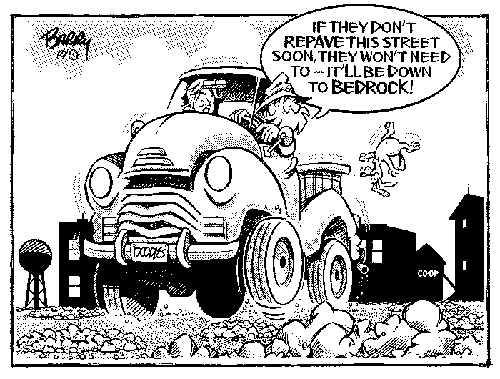
He began drawing a weekly editorial cartoon, “J.P. Doodles,” while working for The Madisonian. Soon after creating Doodles, he “split a week’s worth of firewood for his family, bought a week’s worth of food, spent his last $20 on gas, and headed out across Montana on a late-November night with packets of cartoons.”

With that beginning, McWilliams ultimately created the cartoons from four continents for more than 1,500 newspapers. I signed on at the East Texas Light in Center in late 1982.

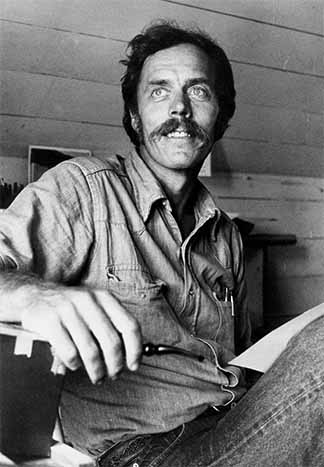
Barry McWiliams in the 1980s about the time he was in Center, showing Center Elementary students how to draw cartoons and talking to them about small town USA. (Barry’s Cartoons photo)

The J.P. Doodles character was a likable farmer type who dealt with small town issues like making ends meet, bad roads, high taxes, raising kids, local schools, and the weather — life as we know it. McWilliams got his inspiration by traveling the country, visiting hundreds of small elementary schools, and cartooning about what he saw.

Barry came to Center on one of those jaunts shortly after I started running Doodles in the newspaper. I remember shaking his hand and thinking of him as a younger version of the older J.P. Doodles character in his cartoons. He arrived driving a highway-worn long-wheelbase pickup truck and wearing jeans, a plaid flannel shirt, cowboy hat, and boots. And that’s the same way he dressed when he engaged attentive young minds, including my daughter Robin, at Center’s Elementary School, that day by teaching kids how to draw cartoons while talking to them about life in small towns across the U.S.A.

I ran his cartoons in Center in the 80s, at The Boerne Star in the Hill Country in the 90s, and The Monitor in Naples when I was there.

His monthly batch of cartoons always included a “group message” that chronicled his travels. Plus, every so often, a handwritten personal note inquiring about how his cartoons were working. Other times, he called from distant regions inquiring about what was happening wherever I was. Asking about any local issues to share as cartoon fodder.

True to the obit bio I read last week, Barry “was a character. Unique. Unlike anyone you’ve ever met. He was an adventurer who hitchhiked around Saudi Arabia during the first Gulf War to interview soldiers, joined a government trade mission to Asia, declared himself ‘shipwrecked’ on Flinders Island off the southern coast of Australia, and helped mastermind America’s biggest cattle drive in over a hundred years. He could walk into a restaurant and sit there for hours talking to complete strangers who quickly became friends.”

Not mentioned in the internet obit bio was an experience I recall him writing about in his weekly notes. A northern Alaskan stint spent in a cabin accessible only by boat or plane, enduring weather with daily high temperatures ridiculously below zero. He still brought J.P. Doodles to life from there, sending cartoons back to civilization on the weekly float plane that also brought him supplies.

The obit concluded by announcing a celebration of life for Barry at the Whitehall Community Center. The public was welcome.

I’m grateful to this crazy business for the people it’s connected me with. It has put me in touch with many incredible people. People like Barry McWilliams.

I have no doubt the celebration of life for him in Whitehall highlighted what Barry obviously lived for, a life worth watching.

—Leon Aldridge

– – – – – – –

Aldridge columns are published in these Texas newspapers: The Center Light and Champion, the Mount Pleasant Tribune,  the Rosenberg Fort Bend Herald, the Taylor Press, the Alpine Avalanche, The Fort Stockton Pioneer, and The Monitor in Naples.

© Leon Aldridge and A Story Worth Telling 2023. Unauthorized use and/or duplication of this material without express and written permission from this site’s author and/or owner is strictly prohibited. Excerpts and links may be used, provided full and clear credit is given to Leon Aldridge and ‘A Story Worth Telling’ with appropriate and specific directions to the original content.

Newspapers aren’t what they used to be

All I know is what I read in the papers.”

Will Rogers

– – – – – –

“Newspapers aren’t what they used to be,” I was challenged last week.

“You’re absolutely right,” I countered. “But your implications are way off target. Show me some part of life that hasn’t changed with time. Newspapers have changed to survive radio, television, and whatever else that has come down the pike since that copy of our local newspaper you’re holding started publishing in 1877.”

That chat while preparing stories for the first edition of 2023 this week started me thinking about just how newspapers really have changed, in looks and content, and how news reporting has changed. 

While older editions can be found online, the oldest “paper” copy of a Center newspaper on file in our office is a Thursday, March 7, 1940, edition of The Champion. Laid beside last week’s print edition, there’s no denying it’s changed. The most eye-catching difference was current use of color compared to all black and white in decades past. Like they were when I spent my first week in a newspaper office at The Monitor in Naples in 1974.

Also noticeable was how newspapers use larger photos and liberal doses of white space. The Plaquemine Parish Post in South Louisiana sported that airy look when I went down to The Sabine News in Many, Louisiana, in about 1976.

The mid-70s also saw the use of just one single “spot color” on a page adding eye appeal to community newspapers. The first full-color photo in a paper I published was The Boerne Star sown in the Hill Country in 1995. Heady stuff almost 30 years ago.

Eighty-three years ago, however, newspapers lacked photos of any kind. Life magazine’s use of printed pictures in 1936 had only recently revolutionized news reporting. Without pictures, stories in 1940 started at the upper left and ran down the page, then back to the top of the next column for the next story. And so on across the page.

“Bigger” stories, often state or national in those days, might get three or four columns of display at the top. For example, that top story in March of 1940 was headlined, “Jerry Sadler Gets In Race For Governor; Promises That He Will Wage Active Campaign.”

In local news, the top story was, “Fox Hunters Board Will Meet March 20 To Decide On Site For 1940 Meet.” East Texas Fox Hunters Association President Bibb Samford was quoted as saying the meeting at Boles Field would be followed by mulligan stew and a night fox hunt. Important was selecting Boles Field in Shelby County as the permanent headquarters for the East Texas Association.

Also news was expanded rural electrification. “25 Miles of More Line Added To East Texas. Subscribers from Tenaha to Huber Now Enjoy Service,” the headline proclaimed. “The latest addition to the service this cooperative is rendering in East Texas territory is a line from Tenaha to Bobo, Tennessee, New Prospect, and Huber, serving 51 subscribers.”

It was also reported that week that “Miss Richards Club Speaker – Tells Rotarians Of Home Economic Work In School.” As the story was written, “At Tuesday’s Rotary luncheon Miss Catherine Richards, of the home economics department of Center High School, gave an interesting and enlightening talk on the work of this department of Center High School. Dr. Spencer Warren was in charge of the program.”

Other front-page news that week included the “Everybody’s Banquet” at the Shelbyville High School Friday night. While the story failed to report what the banquet was all about, tickets were 50¢ a plate and promised to be “one of the most enjoyable of the season.” And if that wasn’t exciting enough, a box supper at the Stockman School was taking place Thursday night. Everyone was invited.

Seems journalists 83 years ago also took on the responsibility of reporting the prognosis of the ill and injured. Imagine reading today, a story like this 1940 news item: “Information reached Center relatives Thursday afternoon that a former Center resident and prominent educator, injured in Austin some weeks ago, was sinking and hope for his recovery practically abandoned.”

Then there was the story of Mrs. J.M. O’Banion of Jasper visiting with relatives. “Sees Fire That Isn’t Fire But It Scares Her,” said the headline. Mrs. O’Banion reportedly awakened during the night to see what she thought were “flames eating through the floor under her dresser. Petrified for the moment,” the absence of odor or smoke led her to investigate, whereupon she discovered the source of light was not fire at all but a flashlight in a dresser drawer that “in some manner had snapped on.”

So, yes, newspapers are not what they used to be. They’ve changed just in the years I’ve been plying my skills in the trade. In looks, in reporting style, and most recently in methods of delivery.

I ended my ‘newspapers aren’t what they used to be’ conversation last week with a smile by telling my naysayer, “All I offer is this. By whatever means or methods, newspapers will remain as a most trusted medium long after both of our obituaries are read — in a newspaper.”

—Leon Aldridge

– – – – – – –

Aldridge columns are published in these Texas newspapers: The Center Light and Champion, the Mount Pleasant Tribune,  the Rosenberg Fort Bend Herald, the Taylor Press, the Alpine Avalanche, The Fort Stockton Pioneer, and The Monitor in Naples.

© Leon Aldridge and A Story Worth Telling 2023. Unauthorized use and/or duplication of this material without express and written permission from this site’s author and/or owner is strictly prohibited. Excerpts and links may be used, provided full and clear credit is given to Leon Aldridge and ‘A Story Worth Telling’ with appropriate and specific directions to the original content.