“I have great respect for the past. If you don’t know where you’ve come from, you don’t know where you’re going.”
— Maya Angelou, (1928 – 2014) American memoirist, poet, and civil rights activist.
. . . . . . . . . . .
I’ve been looking back through tons of archived yellowing newsprint for the last year or more. Perusing things I’ve written in preparation for authoring a collection of my work for posterity. For my children. For future garage sales.
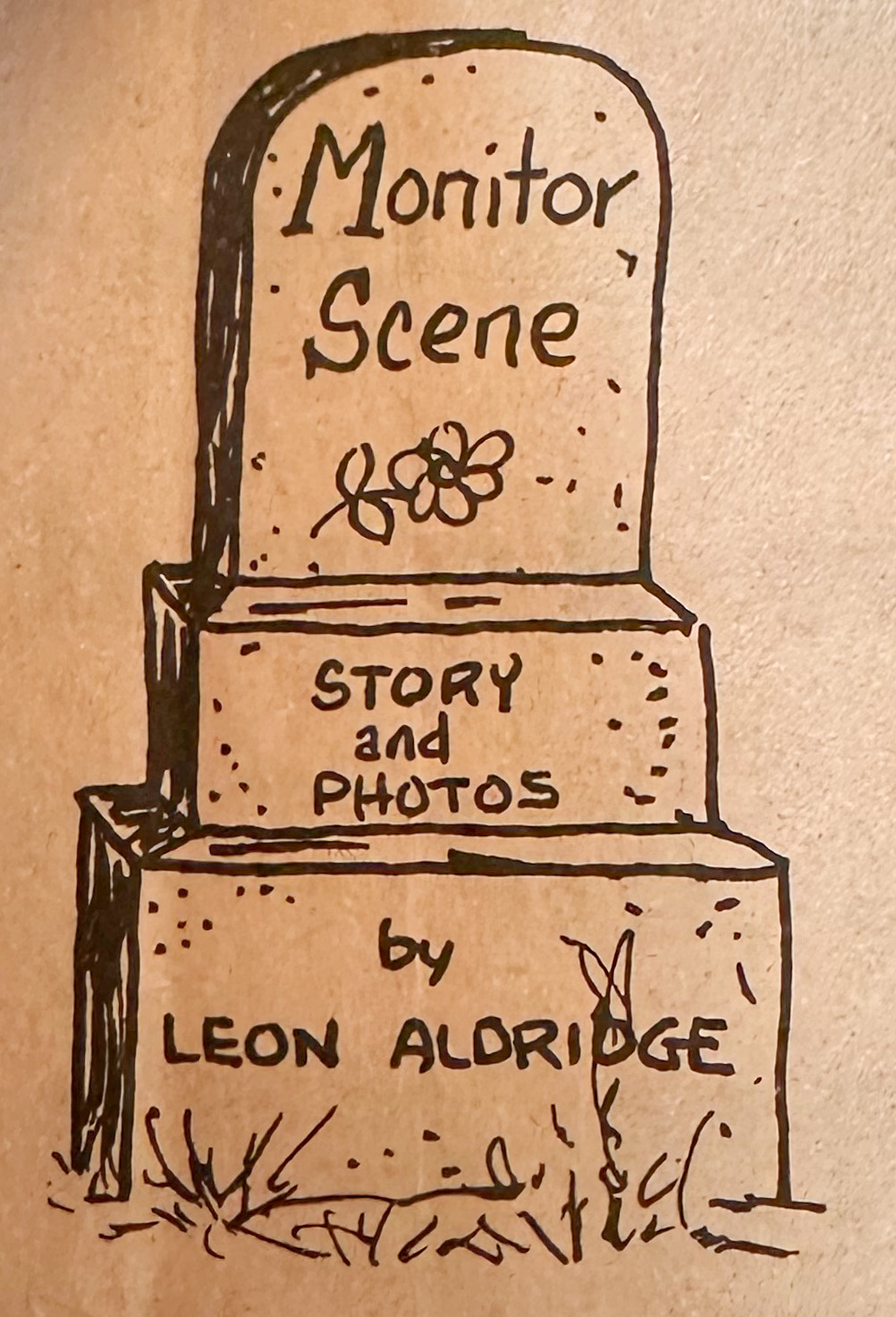
And, the strangest thing has been happening. The more I read, the more I learn about the person who started all of this. For instance, this piece I penned December 4, 1975, and published in The Naples Monitor. One that I had long forgotten ever having written.
“Every county has an abundance of old cemeteries and Morris County is no exception,” it started. “Cemeteries rich in history, sentiment, and knowledge. Most of it not recorded anywhere outside of weathering marble that is all too often crumbling and surrounded by overgrown grass and weeds.”
That intro paragraph evoked memories of my mother and her sisters combing Kentucky cemeteries every summer during family reunions. Hot summers driving miles to graveyards on hillsides and behind country churches. Time, that as a kid, I preferred to have been splashing in a mountain stream somewhere close to a picnic lunch instead of cleaning decaying grave markers trying to read names and dates.
“Besides being the final resting place for the earthly remains of relatives, friends, and loved ones, old country cemeteries reflect a lot about us,” I wrote.
“Public cemeteries are, relatively speaking, something of recent times. Before becoming the “here today and there tomorrow” mobile society that moves every few years we have become, people were often born, lived and died in the same area, if not the same parcel of land.”

A good example of which played out about the same time this 1975 missive appeared in print. I was standing at the parts department counter at Sandlin Chevrolet and Oldsmobile on Mount Pleasant’s north side. The same place where the business established in 1937 still sits today.
A sign a couple hundred yards north of there on Highway 271 north declared the tiny burg of Talco to be 17 miles away.
While I waited for my order to be filled, an older gentleman came in looking for a part for his aging Chevy truck, announcing that he had just come from Talco. While one of the parts guys, probably Alvie Neely or “Cotton” Huff, both of whom worked there at the time, was in the back retrieving what he needed, the old guy gazed out the window at the 271 and Highway 67 intersection in front of the Titus County dealership.
“This north end of Mount Pleasant sure has changed since the last time I was down here,” he drawled.
“Really,” I asked. “How long’s it been since you ventured over from Talco,” I inquired. Just to make conversation while we both waited.
He thought for a minute before replying, “… near about 17 years. I don’t get far from the farm very often,” he laughed.
“Hence,” my 49-year-old column continued, “most families had their own cemetery where family members were buried.” Like the Kentucky mountaintop property where my mom’s great-grandparents were born, lived, died, and were buried. A hike that required wading a river up to that plot one summer in the 1980s leading to a small family cemetery with Johnson tombstones bearing date in the 1700s.
“Visits to one of the older plots will often reveal family lineage bearing birth and death dates etched in stone; some with a line of wit, wisdom, or philosophy inferring that the one interred is ‘gone but not forgotten’ or is ‘waiting for us on the side.’
Like to one I read about once, where supposedly inscribed in stone was, “Here lies poor ol Henry Howell, shined his shoes with his wife’s guest towel.”
“Other times, associations formed by the departed are recorded, such as military records from recent skirmishes to the Civil War or earlier. Here in the South, the inscription C.S.A. is common on old markers noting the person had served in the military for the Confederate States of America. Others often honored membership in a brotherhood or a lodge.
Also common on older markers is the deceased’s cause of death. Particularly if it was some sort of plague, pestilence, or territorial dispute that may have robbed families and communities of multiple members.
While all this enlightenment tells us much about the departed person while still among the living, a glance around the local Boot Hill can also offer insight into the living before they became cemetery residents.
Learning more about ourselves by studying our past.
Or in my case, reading what I wrote a lifetime ago revealing more about who I am today.
—Leon Aldridge
(Original art and photos above by Leon Aldridge, 1975)
. . . . . . . . . . .
Aldridge columns are published in these Texas newspapers: The Center Light and Champion, the Mount Pleasant Tribune, the Rosenberg Fort Bend Herald, the Taylor Press, the Alpine Avalanche, the Fort Stockton Pioneer, and The Monitor in Naples.
© Leon Aldridge and A Story Worth Telling 2024. Unauthorized use and/or duplication of this material without express and written permission from this site’s author and/or owner is strictly prohibited. Excerpts and links may be used, provided that full and clear credit is given to Leon Aldridge and A Story Worth Telling with appropriate and specific direction to the original content.
 A Story Worth Telling