Working our way back to more hope than nervousness

“I heard someone say, ‘It’s December! Maybe 2020 saved the best for last.’ I’m not sure whether to be hopeful or nervous about that.” 

― Steve Marabol, speaker, bestselling author, and behavioral science academic.

– – – – – – – – – – – – – – – – –

Searching for wit, wisdom, and hope in 700 words or less for my last column of the year, I quickly found myself at a loss about where to start. As we prepare to usher 2020 out to make way for 2021, my only conscious thought was, “Where does one even begin to look to find hope for better?”

Doing what writers often do when trying to figure out where to begin, I looked back on what I penned last year as 2019 was about to fade away. That column started by quoting an acquaintance. “I have a vision that this new year is going to be a perfect year,” a good friend offered over coffee last week. “I agree that 2020 looks like it has some potential,” I responded to him. Then, expecting bits of insight into economics, politics, or advancements in society, I added. “But tell me, on what are you basing your optimistic view?”

“This year is going to be 2020, and that’s perfect vision, right,” was his witty response.” For 2021, that same friend has offered no sage sayings so far. And that seems perfectly understandable given the bust that 2020 turned out to be. 

Reviewing one’s past performance is always a fun and educational exercise. Some of my work has aged pleasingly as “masterpieces in my own mind,” while time has exposed the weaknesses of others. Then there are those prophetic pieces that make one think, “Had I only known.” That was my thought after reading one from last November when I wrote, “It was especially fun last Sunday as I watched a 78-year-old steam locomotive roll through the small East Texas berg of Hallsville headed for its next stop in Marshall. Steam spewing from enormous pistons to the rhythm of their “chug-chug” power thrusts and the massive locomotive’s haunting horn heralding its presence delighted crowds lining both sides of the track for miles.”

Revisiting that memory more than a year later, it occurred to me that had we an inkling then, those words might have offered a hint of the year just around the bend. Fortunately, the Union Pacific 4014 about which I was writing, also known as the “Big Boy,” completed its journey around the country and back to Wyoming. Our nation was not so fortunate. It jumped the tracks early plunging headlong into a myriad of domestic upheaval, a CCP virus, and the train wreck of a presidential election. 

Fortunately for this week’s column though, the preacher’s sermon Sunday answered my question and provided that ray of hope for which I was looking just in time to meet my deadline. Jokingly, he suggested as how the best hope for some of us who have witnessed several decades of new years might be that “at this age,” forgetfulness is an easy thing to do. Therefore, maybe we will just forget 2020 like some of us do names and faces.

On a more serious note regarding working together in spiritual matters, his lesson caused me to think of the most important thing too many have sadly forgotten over the last few decades. Whatever we hope and aspire for our nation to be in the coming year, it will be whatever we work together to make it. If our actions and expressions selfishly and mindlessly criticize it, tear it apart, and ridicule those with whom we disagree, then we are creating for ourselves a nation of discord and doom. 

But let’s just hope for a moment that we can be smart enough in our collective efforts to support our great nation, build it up, defend it, and work together on strengthening it. Then maybe we can restore it to the healthy, strong, and proud country it once was. Perhaps even work our way back to a new year filled with more hope than nervousness.

And, on that hope, best wishes to all for a Happy New Year!

—Leon Aldridge

. . . . . . . . . . .

Aldridge columns are published in these Texas newspapers: The Center Light and Champion, the Mount Pleasant Tribune,  the Rosenberg Fort Bend Herald, the Taylor Press, and the Alpine Avalanche.

© Leon Aldridge and A Story Worth Telling 2020. Unauthorized use and/or duplication of this material without express and written permission from this site’s author and/or owner is strictly prohibited. Excerpts and links may be used, provided that full and clear credit is given to Leon Aldridge and A Story Worth Telling with appropriate and specific direction to the original content.
Finding the spirit of peace, joy, and goodwill

For behold, I bring you tidings of great joy which shall be to all people… and on earth peace, goodwill toward men. That’s what Christmas is all about, Charlie Brown!”

—from the TV show, “A Charlie Brown Christmas”

– – – – – – – – – – – – – – – – –

“What’s the point,” someone asked last week? “I just can’t feel it this year. It’s hard to get excited about Christmas with all that’s going on.”

It does seem challenging to get excited about it this year; and understandably so. We’re just about done, in more ways than one, with arguably the ugliest year ever and “good riddance” to 2020 next week. I’m siding with my friend in Center, Tim Perkins. He admitted that his style for years has been assuming that the new year would arrive just fine if he went on to bed before midnight. This year, he says he is staying up, not to welcome 2021, but to make sure 2020 is gone. 

This year has left us reeling from an incomprehensible chain of calamities and praying that next year will be better. Yet, there’s little on the radar to ensure that will be the case. We are still trying to figure out many things, including a CCP rogue virus, businesses burdened with government restrictions wrecking the economy, and a social revolution to name a few. Oh, and a presidential election we may never figure out.

So how do we get into the Christmas spirit of peace, joy, and goodwill with what’s staring us in the face? I suggest focusing on the things that represent the most festive season of the year to us. Mine is the same thing it has been for many years: Christmas through the eyes of a child. 

As a child, Christmas meant family gatherings shared with good food, exchanging gifts, and my favorite part—decorating Christmas trees. Even today, the glow of Christmas tree lights late at night when no other light in the house is on works pure magic for me. It reminds me of a time celebrated in the 1963 song by Edward Pola and George Wyle, “It’s the Most Wonderful Time of the Year.” 

Memories like the dawn of a Christmas day hearing, Leslie, my sister whispering in my bedroom doorway, “You think he’s come yet?” 

“I don’t know,” I answered, noticing that our youngest sibling, Sylvia, was right behind her in the shadows. “Let’s take a peek and see.” Slowly opening the door into the living room, we saw the magic of changing colors on a shiny aluminum Christmas tree surrounded by gifts that were not there the night before. “I think Santa made it,” I said.

When I had children years later, that feeling was manifested by watching them at Christmas and enjoying their anticipation of the magical season. Like the one Christmas past living in the Hill Country outside San Antonio when I announced, “Valentine’s Day is next week, guess we better take the tree down.” 

Putting up a tree later than some is par for me. So is leaving it up until Valentine’s Day is approaching. Daughter Robin’s counter that year was, “Let’s just decorate it with hearts and have a Valentine’s Day tree.” That worked so well that we also had an Easter tree with eggs, an Independence Day tree with flags, and a … well, we celebrated several holidays that year in a Christmassy sort of way.

And why not. Christmas is whatever we make of it. It’s a religious holiday to some, a cultural and commercial extravaganza to others, and both or something else entirely to the rest.

Whatever Christmas is to you, everything is better with love. How else will we ever hope to achieve joy, peace, and goodwill toward men if not through love for each other? The best path to love I’ve found is I John 4:8, in the Bible, “… God is love.” Some celebrate Christmas as the birth of Christ and Easter as His death, burial, and resurrection. I like to think that Christ and His purpose for coming is something we should celebrate with the same spirit and zeal every day of the year.

For this day and every day, Merry Christmas and best wishes for a Charlie Brown Christmas of love, family, and shiny Christmas trees through the eyes of a child. You know, that might also go a long way toward fixing those 2020 calamities we are still trying to figure out.

—Leon Aldridge

. . . . . . . . . . .

Aldridge columns are published in these Texas newspapers: The Center Light and Champion, the Mount Pleasant Tribune,  the Rosenberg Fort Bend Herald, the Taylor Press, and the Alpine Avalanche.

© Leon Aldridge and A Story Worth Telling 2020. Unauthorized use and/or duplication of this material without express and written permission from this site’s author and/or owner is strictly prohibited. Excerpts and links may be used, provided that full and clear credit is given to Leon Aldridge and A Story Worth Telling with appropriate and specific direction to the original content.

I’m not addicted to coffee, but we’re in a serious relationship

Procaffenating: (n) the tendency to not start anything until you’ve had a cup of coffee.

—Anonymous, but obviously the wisdom of every serious coffee drinker.

– – – – – – – – – – – – – – – – –

Savoring hot coffee while searching for inspiration in crafting a column is routine for me. Confession time: I’m a coffeeholic. I just brewed another fresh pot. Never mind that it’s 8 p.m. as I’m writing this.

That vice is owing to one of two things; probably both. One, when I entered the newspaper business just a few years shy of half a century ago, “are you a coffee drinker,” was a common question in employment interviews. And a valid one too, because the old journalist’s saying about “ink in the veins” is the gospel. But, but what one learns only after committing to a life of deadlines is that ink flows better when blended with hot caffeine. 

As a semi-retired freelancer these days, I miss morning discussions about stories and headlines over a cup of joe at the office. Old habits die hard, and when I sit down to write at home now, there is still a steaming cup of coffee by my computer whispering, “Together, we can do this.”

The other influence was likely Dad’s heritage. As a 1950s youngster, trips with my grandmother to the A&P on Mount Pleasant Street in Pittsburg, Texas, meant watching her grind a bag of Eight O’Clock in the big red machine. Not only was that an intriguing process for a kid to watch, but the aroma of freshly ground beans was also a delight long before I was allowed to consume a cup of the brewed drink. “You’re too young to drink coffee,” Granny would caution me. “It will stunt your growth.”

The growth of “Eight O’Clock Breakfast Coffee” sold by The Great Atlantic & Pacific Tea Company began in 1859, also the company’s founding year. The coffee reportedly didn’t get its official name until a few years later when A&P conducted a survey and found the most popular times for drinking coffee were 8 a.m. and 8 p.m. Therefore, the company dropped “Breakfast” from the name, using “Eight O’Clock” as the official brand.

By the 1930s, A&P was the world’s largest retailer, and their Eight O’Clock coffee claimed more than a quarter of the U.S. market. At that time, a pound of their java would set you back a whole 25-cents.

The price of coffee had no doubt gone up by the 1950s when A&P began facing financial setbacks. By the late 1970s, the once grocery giant had pulled out of many U.S. markets, including Texas. In 1979, they licensed Eight O’Clock coffee for other supermarkets to sell and sold off the brand in 2003 before filing for bankruptcy and going out of business for good in 2015.

They were still an iconic business when I attained teenager status, the magic age for gaining my parent’s approval to consume coffee. While I liked the smell, I  had yet to develop a taste for the morning pick-me-up in liquid form. That was likely a good thing when that same year, I accompanied my father and his brother to Baton Rouge, Louisiana, in my uncle’s brand new 1961 Ford. A stop along the way included dinner and “visiting a spell with coffee” at their sister’s house located on a dirt road that ran through a sugar cane patch outside Baton Rouge. The next stop on the way back to East Texas the next morning included coffee with their father who lived alone near the Mississippi River banks. Sitting in the kitchen of his unpainted “dog-trot” house that morning, I learned a way to make coffee that had little to do with A&P. Coffee grounds were involved all right: cooked in a skillet with a healthy helping of something called “chicory root” and strained through a cloth into a pot where the concoction was heated to a rolling boil.

The smell wafting from the pot perking on the tiny stove was similar to the aroma at the A&P in Pittsburg, just stronger—a lot stronger. Brief conversation and coffee completed, Uncle Zebedee announced the need to “get on down the road” toward home. As we exchanged good-byes, the elder Aldridge poured the remaining brew from the still simmering pot into a thermos and said, “Here, you’ll need this coffee for the trip home.”

We were barely out of sight of the old house when my uncle turned to Dad, smiled, and asked, “You gonna drink any more of that coffee?”

“Nope,” my father quipped, “But let’s save it in case we run out of gas.”

The coffee keeping my muse awake for writing tonight bears no resemblance to that Cajun version fifty years ago. But it may have something in common with the Eight O’Clock brand Granny bought at the A&P; my favorite coffee time is 8 a.m. and 8 p.m. But, you can also pour me a cup at any hour in between.

—Leon Aldridge

. . . . . . . . . . .

Aldridge columns are published in these Texas newspapers: The Center Light and Champion, the Mount Pleasant Tribune,  the Rosenberg Fort Bend Herald, the Taylor Press, and the Alpine Avalanche.

© Leon Aldridge and A Story Worth Telling 2020. Unauthorized use and/or duplication of this material without express and written permission from this site’s author and/or owner is strictly prohibited. Excerpts and links may be used, provided that full and clear credit is given to Leon Aldridge and A Story Worth Telling with appropriate and specific direction to the original content.

Sounds we no longer hear are the loudest memories

“It’s a long leap from newspaper stories typeset on Linotypes to publishing news as it happens using a device that fits in a shirt pocket.” — Leon Aldridge 2020 

 – – – – – – – – – – – – – – – – –

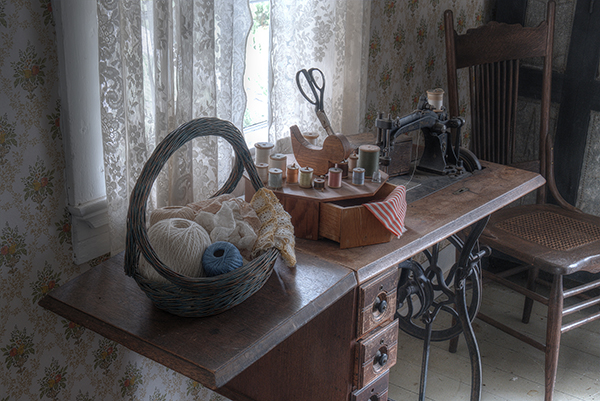
Once familiar sounds we never hear anymore. That thought came to mind while reading a 1981 clipping last week. Sounds like those made by my grandmother’s treadle sewing machine as she gently rocked the foot peddle and guided pieces of fabric under the needle to craft my shirts. Mom’s percolator pot brewing coffee. A Linotype machine in a country newspaper back shop.

Chances of hearing a treadle sewing machine or a percolator coffee pot these days are better than hearing the noisy clatter of a Linotype. That sound was almost gone when Garrett Ray wrote his column 39 years ago to the day I’m drafting this one. “Someday, all too soon, no one will be left who remembers the clatter of a Model 14 Linotype in a country newspaper shop,” he wrote. Ray’s aging admonition and my thoughts of another birthday in January, Lord willing, prompted me to pen some memories while I still have them.

“Cold type” offset presses were already taking over newspaper printing when I heard my first hot-metal typesetting machine run in the very early 1960s, but my grandmother was still sewing on her ancient Singer. The number of birthdays mentioned above hinders me from sharing much about experiencing the old Linotype other than I accompanied my father to The Titus County Tribune print shop located in a building behind the north-end Dairy Queen in Mount Pleasant. I think the man operating it on a warm summer night was a Mr. King. 

Ray’s memories were much better than mine when he wrote about remembering cold winter mornings and the country weekly where he worked near his home. “I walked anticipating the warmth I knew would greet me at the office door. No matter how early I arrived, the Linotype operators always got there first to turn up the gas under the lead pots, oil the bearings, and make the coffee.” 

“I never operated a line casting machine,” Ray also wrote. “I never did more than touch the keyboard to see where ‘etaoin shrdlu’ came from. But I marveled at those men and women who shared a love-hate relationship with their Linotypes.” 

Like Ray, I never operated one either. But I learned the meaning of the nonsensical typesetter’s phrase from Morris Craig at The Monitor in Naples, who did. Linotype keyboards had black keys on the left for small letters, white keys on the right for capital letters, and blue keys in the center for numbers, punctuation marks, spaces, and other items. The first two columns of keys on the left were e-t-a-o-i-n and s-h-r-d-l-u. If an operator typed an error, he or she would note it by running fingers down those two rows as code for the proofreader to remove that line.

While working for Craig in the 1970s, I also learned about other memories Ray wrote about. “I loved the smooth heft of a solid brass pica pole, burnished and glowing from everyday use.” Seems I recall Craig having a brass pica pole, a typesetting ruler also known as a “line gauge.” More common during my tenure were the thin steel type. Still keeping company with a few old rolls of border tape in my desk drawer is mine from The Monitor. Or was it The East Texas Light or The Boerne Star?

The last Linotype I saw working was at the Shiner Gazette in the mid-90s, but I don’t recall why I was there. Maybe it’s that birthday thing again or maybe it’s the stronger memory of the sound I heard upon entering the building: the unmistakable clatter of a Linotype machine. There it sat in the heat of the back-shop area still doing time, by then for job printing. I wonder if it’s still in operation.

As I peck on my modern-day laptop about hot type, I’m also wondering what a Linotype operator from those days would think about the long leap in writing news stories that many of us have seen. Especially typing stories as events happen and publishing them worldwide with photos and video on a device that fits in a shirt pocket.

It could even be a shirt sewn on a treadle sewing machine…if there is anyone left who still uses one.

The moment I felt that perfect storm

“It’s a record designed to reduce anyone separated from the one they loved to a pile of mush.” —Uncredited music writer commenting on The Righteous Brothers tune, “Unchained Melody.”

– – – – – – – – – – – – – – – – –

An afternoon brainstorming session for a weekly column is like most creative endeavors. Crafting something you hope will touch your reader’s senses sometimes occurs with surprisingly little effort. Other times, arriving at that perfect storm of thoughts and words requires inspiration and a great deal of immersion by the writer into his or her own store of sensory perceptions.

A stack of old records spinning on a 60s turntable served as inspiration for my latest session. Music pushed by an old amp to vintage speakers the size of small refrigerators appealed to my senses with the melodies of Linda Ronstadt, Otis Redding, and the Righteous Brothers. It was the latter’s recording of “Unchained Melody” that hijacked my memories offering winds of hope for that perfect storm.

Bobby Hatfield and Bill Medley’s iconic 1965 version of a song written 10 years earlier for a little-known prison film called “Unchained,” has blown many memorable storms into my life. Their original recording of the heart-tugging tune reached the top of the charts in the summer of 1965 creating lifelong memories in the hearts of many young lovers.

The song was still popular in May of 1966 when the reality of high school graduation and my last time to play with the Mount Pleasant High School band at the old band shell in Dellwood Park was weighing on my mind. Hearing it on the radio that night and knowing the girl I had been dating was moving away when school was out produced storms of feelings I still remember when I hear the song.

“Unchained Melody” went to the top of the charts again in 1990 as the most memorable song in the summer’s blockbuster movie, “Ghosts.” My feelings were storming again that summer, and the film’s one line still fresh in my mind today was, “Life turns on a dime.”

A lighter summer night just a few years later in the Hill Country, daughter Robin started to date. For her birthday, I offered to take her and the young man she had been dating to see the Righteous Brothers in concert at the old Municipal Auditorium in downtown San Antonio near the Riverwalk. Experiencing them in person and hearing music that is woven into the fabric of my life was moving. Making that memory with my daughter was priceless.

Robin knew who the Righteous Brothers were. She grew up with me, after all. She was raised on “my music.” Her date for the evening, however, had no clue about the duo dubbed masters of “Blue Eyed Soul” until he heard them sing “Unchained Melody.” That’s when I overheard him lean over and tell Robin, ‘That’s the Ghosts’ song.”

Fast forward this time to early November of 2003. I’m sitting in my vehicle on 70th Street in Shreveport one rainy morning, waiting to meet a photographer for a commercial shoot. “Unchained Melody” was playing on the radio. When the song ended, the radio announcer commented on the death of Bobby Hatfield the night before in Michigan where they were scheduled to perform a concert. A lifetime of memories flooded my mind and brought me close to tears. 

That lifetime of memories was as strong as ever this week when I leaned back in my chair and closed my eyes listening to a variety of  Righteous Brothers records. My futile attempt to sing along ended when Bill Medley’s voice reached for the upper stratosphere of vocal registers on “Bring Your Love to Me.” As the song ended and the needle trailed off into the lead-out area of the vinyl, I opened my eyes to enjoy the magic of an antique turntable tonearm lift and return to its stop position. 

That was the moment I felt that perfect storm

—Leon Aldridge

. . . . . . . . . . .

Aldridge columns are published in these Texas newspapers: The Center Light and Champion, the Mount Pleasant Tribune,  the Rosenberg Fort Bend Herald, the Taylor Press, and the Alpine Avalanche.

© Leon Aldridge and A Story Worth Telling 2020. Unauthorized use and/or duplication of this material without express and written permission from this site’s author and/or owner is strictly prohibited. Excerpts and links may be used, provided that full and clear credit is given to Leon Aldridge and A Story Worth Telling with appropriate and specific direction to the original content.