My bet was that Aunt Lucille had struck again

“In the picture there’s a fender of our old Chevrolet,
Or Pontiac, our dad would know, surely, he could say.”

— song lyrics, “The Picture” by Loudon Wainwright

“Can you tell me what kind of car this is,” the email message began. “I’ve been going through old family pictures. The young girl in this one is my mom, and that’s her grandmother in the middle. I’m not sure who the others are, and I have no idea what the occasion was.”

An obsession with anything automotive and nostalgic extends to my delight in old family photos with a car as the centerpiece, but gathering everybody around a vehicle sure has provided for fascinating old snapshots of history. You’ve seen them. Some in which folks lined up alongside an automobile for a group shot. Others, perhaps a young man with or without his girlfriend, fiancé or wife, and more often than not with a foot propped on the bumper as he smiled at the camera. The classic historical auto poses have to be the many images of bank robber Clyde Barrow of Bonnie and Clyde fame posing with a car while brandishing weapons.

I’ve imagined any number of explanations. One might be the pride families took in owning an automobile, particularly in a time period when family cars were not commonplace. And for many who did own one, it was nothing more than a well-worn used car. But the photos proclaimed, “by golly, we have a car.”

Even Kodak moments by more prominent families dressed in dapper-looking duds displayed an evident pride in featuring their ride. Decked out their finest attire and posing next to a Cadillac or a Packard exuded a “Gray Poupon” moment seeming to say, “But of course, we have a very nice car.”

Maybe other times it was simply because everyone was loading up to go home after a quick overnight visit with family or friends when Aunt Lucille, as my grandmother used to say, had just “struck” a picture while the family was all in one place.

Pictures were important because travel even for short distances was difficult. We think nothing today of driving 60 miles on four-lane highways for dinner, shopping, or a movie, but in those days a work week was six long days and roads connecting loved ones were often little more than gravel or mud. Even short trips by today’s standards were often delayed 80 years ago by bad roads, flat tires, rainy weather or loose livestock.

As for the family photo my friend sent inquiring about the car, I was happy to inform her that it was a 1937 Dodge. Did I know that off the top of my head? Heavens no. I don’t even know why I go from one room to another these days.

But the detective part was the fun. Enlarging the photo sufficiently to loosely identify the shape of the hood ornament, I searched the internet locating one with the same general shape. Detail in the photo was lacking but locating one with a similar profile implicated a Dodge. The general design of the car, headlights, wheels, etc. spoke mid to late 30s to me. Using 1937 as the midpoint of that time frame, photos of a ’37 Dodge rendered features identical to the car in the photo: hood shape, hood vents, hubcaps, and window posts were a perfect match.

Therefore, I was happy to inform my friend that I’m betting my money on the correct identification of the car in her photo to be a 1937 Dodge.

Everyone in the old sepia toned photo was wearing a smile and was dressed nicely. There was no evidence of traveling such as suitcases, so I’m guessing a journey was not in store. They didn’t look much like bank robbers to me, and since the pose also didn’t appear to be staged as bragging rights to display the Dodge, there was only one logical conclusion in my mind,

My money was on the hunch that Aunt Lucille had just struck again.

—Leon Aldridge

Aldridge columns are published in these Texas newspapers: The Center Light and Champion, the Mount Pleasant Tribune,  the Rosenberg Fort Bend Herald, the Taylor Press, and the Alpine Avalanche.

© Leon Aldridge and A Story Worth Telling 2020. Unauthorized use and/or duplication of this material without express and written permission from this site’s author and/or owner is strictly prohibited. Excerpts and links may be used, provided that full and clear credit is given to Leon Aldridge and A Story Worth Telling with appropriate and specific direction to the original content.

Revisiting little things that still make my day

“Go ahead, make my day.” 

—Clint Eastwood’s character Harry Callahan in the film “Sudden Impact.”

“Who remembers Life magazine?” That question was my intro to a column a few years ago about a prized possession that still makes my day every time I pick it up. 

Thinking about that first edition copy of Life magazine last week had more to do with the fact that it was a lack of website skills that relegated the piece to its own page instead of a post on my then newly launched blog. After ignoring its cyber solitude for too long, my question was again how to make my day moving it into the company of the other columns.

Pursuing first-issue publications, I enjoy. Studying web site “under-the-hood” maintenance, not so much. 

Before blogs blew up the internet, a study of photojournalism at Stephen F. Austin State University on the way to a master’s degree in communication left me with an appreciation for two things. One was the amazing work of Farm Security Administration (FSA) photographers documenting the Dust Bowl days of the 1930s. The other was Life magazine’s pioneering contributions to photojournalism.

The weekly news magazine filled with phenomenal photos debuted November 23, 1936 and was an American staple for more than 40 years. Time magazine founder, Henry Luce, remade an existing publication to launch a revolutionary news magazine utilizing photos by the best photographers he could find. His hunch was that the story-telling power of photographs, more than text, would be a history-making move, and he was right. Today, the magazine’s photos are legendary in the annals of American photojournalism. 

Distribution peaked at more than 13 million copies a week before tapering off and becoming a monthly in 1972. The magazine then struggled until ceasing publication completely in 2002.

While Life featured news makers from all walks of life, the first issue cover photo and feature story was not about any one individual. The subject was Fort Peck dam construction in Montana, or as history has revealed, more about the lives of workers building the dam.

FSA photographer Margaret Bourke-White captured the photos and when the magazine went to press, the cover featured her memorable photo of the dam. But the main attraction was the unplanned photo documentary of “frontier life” in the Northwest which was news to many readers as well as Life’s mostly Northeastern staff. The candid pictures of laborers at work and at home introduced a little-known way of life to Americans via pictures delivering much more impact than the previously printed word.

That historical first edition and my interest in photojournalism crossed paths some years ago at an antique shop stack of old Life magazines in a box bearing a handwritten sign offering them for sale at $10 each. After pulling several keepers, I found myself staring at the Peck Dam photo taken by Bourke-White. Astounded, I stared in disbelief carefully turning the pages and delighting in the distinct aroma of old paper.

Still heady on the unlikely find, I placed the historic issue on my stack and took the magazines to pay out. The proprietor picked up each one, tapping mechanical keys on his antique cash register six times concluding with, “Six at $10 each, that’ll be $60 please.”

“You are aware that one of those is a first edition, aren’t you,” I just had to ask? Without hesitation and with a smile, he replied. “I was going to ask you the same question.”

“And, you’re going to sell it for ten dollars just like the other issues?” He nodded affirmation adding, “I bought the whole box at an estate sale. Got the same money in all of them.”

I handed him a hundred with a smile plus a most appreciative, “thank you,” and turned toward the door. “Wait,” he said. “You’ve got change.” Raising my hand with a wave, I kept walking as I replied, “If you don’t want more for that first edition, then consider it a tip for making my day.”

Revisiting that memory again today brought a smile. Now, if I can just find someone to tip for showing me how to move that blog page to a post, that would really make my day.

—Leon Aldridge

Aldridge columns are published in these Texas newspapers: The Center Light and Champion, the Mount Pleasant Tribune,  the Rosenberg Fort Bend Herald, the Taylor Press, and the Alpine Avalanche.

© Leon Aldridge and A Story Worth Telling 2020. Unauthorized use and/or duplication of this material without express and written permission from this site’s author and/or owner is strictly prohibited. Excerpts and links may be used, provided that full and clear credit is given to Leon Aldridge and A Story Worth Telling with appropriate and specific direction to the original content.
Change heard through your children’s ears is the best music

“I welcome change as long as nothing is different.”

—Author unknown but appreciated

Attaining geezer status has its perks.

“I can hear the difference,” daughter Robin shared with excitement as we were enjoying a rare lunch together one day last week. Her exuberance was centered on this thing called a “DAC” that husband, Jonathan, had purchased for her.

“It converts digital music to analog,” she explained. “And the quality difference is amazing— the music sounds so much better.”

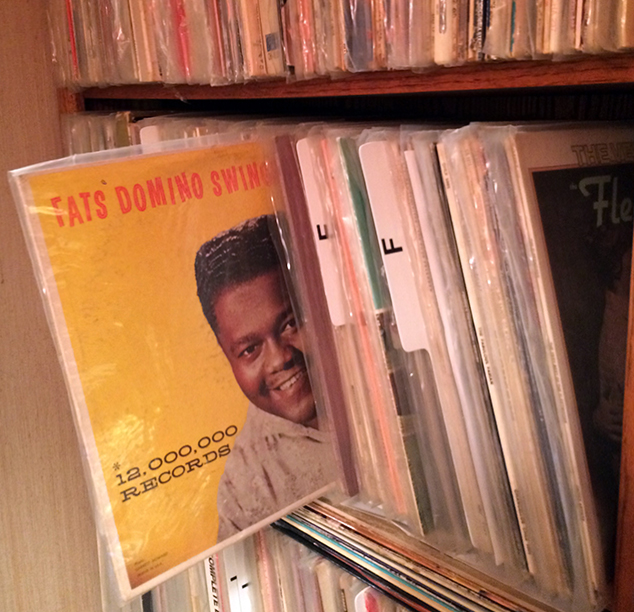
“Hold on,” I said. “You mean analog as in old records that were declared obsolete 30 or however many years ago it has been? You are saying that one now can buy a device to make the technology that replaced those records sound as good as the old records it replaced? Let me think about this a minute while I savor this old-fashioned hamburger reminiscent of the car hop days at the old K&N Root Beer stand in Mount Pleasant.”

Mom once said that she didn’t feel old until all of her kids were over 40. What mom didn’t tell me is that one of the best perks for living long enough to see your children reach that milestone is getting to experience change with them. Being around to see the appreciation for “new and improved” ways of life being retrofitted to bring back the best parts of the past can be downright  heartwarming for dinosaurs like me.

Turns out that DAC stands for “digital to analog converter,” and the device Robin was thrilled with does in fact return the superior quality sound to digital recordings that was lost when vinyl records were taken off the shelf.

I would say that I’ve missed the spectacular sound quality produced when a needle floats through a vinyl phonograph record groove delivering music with a range of tones that digital sound is not capable of delivering.

But the truth is I never quit listening to my “flat stacks of wax,” as DJ Russ Knight, the “Weird Beard” on KLIF in Dallas used to call records in the 60s. For those whose birthday predates the time when AM radio was the only option for broadcast music, DJ is short for disc jockey, one who played records (called discs) on the radio. And I still spin (DJ speak for play) my records regularly on a turntable connected to an amplifier as old as some of the records driving a pair of 42-inch speakers from the same era.

When vinyl was phased out, old record buffs scoffed at the new format declaring digital as incapable of delivering a sound as good as that of vinyl records. I didn’t pay a lot of attention to the debate because I wasn’t going to give up my old records any way. And now, with a vinyl revival underway in the last few years, here comes a device designed to enhance the sound of today’s digital downloads to bring the quality up to that of a vinyl record. Score one for the geezers.

What’s next? Perhaps a device that plugs into the USB port of the digitized megawatt AM/FM/Sirius/Blue Tooth/Pandora/video screen sound system in our homogeneously styled new cars to recreate the sensation of cruising to the oldies on AM radio in a 1950s automobile?

I would say that I’ve missed driving a car in which hearing the motor and feeling the bumps in the road with only an AM radio for tunes was common place. But I also still drive the mid-50s Fords parked in my garage. And I don’t even turn the AM radio on because the sound of an old car is music to my ears.

It would be nice, however, to pull my ’55 up under the awning at the K&N listening to Elvis on the radio and enjoy another old-fashioned hamburger like the one I was enjoying with my daughter when this conversation started.

– – – – – – – – – – – – – – – – –

—Leon Aldridge

Aldridge columns are published in these Texas newspapers: The Center Light and Champion, the Mount Pleasant Tribune,  the Rosenberg Fort Bend Herald, the Taylor Press, and the Alpine Avalanche.

© Leon Aldridge and A Story Worth Telling 2020. Unauthorized use and/or duplication of this material without express and written permission from this site’s author and/or owner is strictly prohibited. Excerpts and links may be used, provided that full and clear credit is given to Leon Aldridge and A Story Worth Telling with appropriate and specific direction to the original content.

A good column is just a good story in written form

“We read five words on the first page of a really good novel and we begin to forget that we are reading printed words on a page, we begin to see images.”

—John Gardner, (1933 –1982) American novelist, essayist, literary critic and university professor

Reminiscing about the newspaper business with Mike Elswick at the Center Light and Champion last week, I allowed as how after 46 years spent in the field of communication, almost 30 of that in newspapers, that one of my favorite parts of the business has long been writing a weekly column.

With my fondness for crafting columns came a love for enjoying the work of others, appreciating the diversity and variety of each writer’s style that sets a few apart from the crowd. I read and enjoy many columns but favor those by writers with a knack for pulling off what I consider to be the key to good column writing: telling a good story.

During time spent at Stephen F. Austin State University attempting to inspire young journalists, my primary advice for writing was to “…paint mental pictures with words, focus on your own naturally distinctive style, and listen to good story tellers.” In my book, a good column is just a good story told in written form.

A perfect example is the work of good friend and former colleague, Gary Borders. If you know Gary, you will hear him telling a story when you read his columns. He writes like he talks, and while that’s difficult for some to do effectively, he is a master. His subtle wit keeps the reader smiling as he tells a simple story that is informative, concise and always interesting. You will find Gary’s columns on Facebook or at garyborders.com.

Another master was the late Gordon Baxter, a newspaper and magazine columnist as well as a pilot in Southeast Texas. His column that ran on the last page of Flying magazine for many years called “Bax Seat” passed over stories about airplanes, equipment or technical aspects of flying to tell great stories about people and their aviation experiences. His style was laid back and almost folksy, but his insight into people and the way he painted pictures with words was phenomenal.

Ironically, my newest favorite column-style pieces are written by a veterinarian. Bo Brock is an engaging storyteller of the finest character. His style draws you into the stories he narrates with hilarious detail as to why some distasteful veterinary procedure he may be performing at the moment is not fun but relates to some greater meaning in life. You can find  him on Facebook.

We could go on all day about columnists like Leon Hale whose writing is a legend in Houston newspaper history, Lewis Grizzard whose newspaper column stories about life in the South led to a career in humorous books and speaking engagements, and many more. But another key to a good column is brevity.

The importance of a brief delivery was best explained by an old country preacher filling the pulpit at a neighboring congregation one Sunday. After preaching for about 20 minutes, he began his wrap-up remarks prematurely ending some good naps and prompting that flurry of activity when members of the congregation begin reaching for a hymnal. As though apologizing for the brevity of the lesson, he said, “I don’t believe in belaboring the point. My philosophy for a good sermon is stand up, speak up, shut up, and sit down.” And with those words, he offered the invitation.

Before I shut up and sit down, I will simply conclude that my passion for column writing could very well have started while reading Paul Crume’s front-page column in the Dallas Morning News when I was in high school. Crume  wrote his “Big D” column six days a week for 25 years. They were short, but witty, whimsical and entertaining. They were about anything and everything from Dallas news stories to life in general. Crume wrote his last column in the mid-70s and died less than a week after it ran.

If there is a distinctive style in my efforts, it is nothing eloquent. I consider column writing good therapy for the writer’s soul and simply begin writing about whatever story is on my mind when I sit down to compose the next column.

My aspiration at this point is to be like Paul Crume. When you read my obituary, I hope my last story worth telling is not yet a week old.

– – – – – – – – – – – – – – –

—Leon Aldridge

Aldridge columns are published in these Texas newspapers: The Center Light and Champion, the Mount Pleasant Tribune,  the Rosenberg Fort Bend Herald, the Taylor Press, and the Alpine Avalanche.

© Leon Aldridge and A Story Worth Telling 2020. Unauthorized use and/or duplication of this material without express and written permission from this site’s author and/or owner is strictly prohibited. Excerpts and links may be used, provided that full and clear credit is given to Leon Aldridge and A Story Worth Telling with appropriate and specific direction to the original content.

People seemed to be content, fifty dollars paid the rent

Boy, the way Glen Miller played.
Songs that made the Hit Parade.
Gee, our old LaSalle ran great,
Those were the days.” 

— Those Were The Days (“All In The Family” 70s TV show theme)

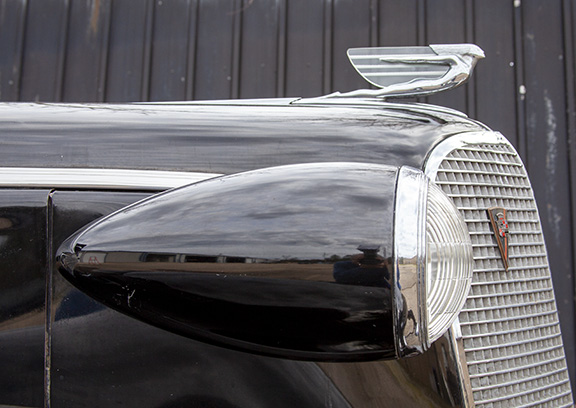
The elegance of the old car sitting quietly before me was spellbinding. It waited quietly to be documented in photos on a brisk Saturday morning last week as I studied the piece of automotive history to capture those images. At the same time, I was intrigued by the countless historical events and many personal family moments no doubt shared with its owners the 83-year-old Cadillac had survived.

Patterns of sunlight wrapped around the car’s stylish lines still wearing black paint appearing as the same finish applied at the factory more than eight decades ago. The sleek look, long majestic hood with chrome spears, and large radiator shell adorned with a chrome ornament resembling a feminine figure with arms and hair flowing in the wind evoked timeless imagines of the 3,800 pounds of beautifully styled steel cruising the highways. Even at rest, the majestic automobile centered in my camera’s viewfinder appeared fluid and graceful.

The year that this Cadillac 60 Series sedan rolled off the assembly line, the Golden Gate Bridge opened to traffic on May 27. The engineering feat of the iconic bridge was accomplished at a cost of $35 million, almost $664 million in today’s dollars. 

Unemployment continued to drop in 1937 as the country was beginning to see an end to the Great Depression. Franklin D. Roosevelt was the 32nd president of the United States. Elected in 1933, he would serve until his death in office in 1945 becoming the longest-serving president in U.S. History and commonly remembered as F.D.R. 

A 1937 60 Series Cadillac from General Motors ranged in price from $1,445 to $1,885 in 1937 ($21,310 to $34,020 in today’s dollars) depending on options. Annual household income averaged $1,780, a Ford or a Chevrolet sold for about $760, and a gallon of gas could be bought for 10¢.

As for options, air conditioning, automatic transmissions, or power anything were still some years into the future. Customers could, however, pay extra for things like wheel trim rings or full wheel cover discs, whitewall tires or a fender well metal tire cover that was not only stylish but also provided additional trunk space. After-market add-on radios were introduced for automobiles by Motorola just seven years prior in 1930. The first radio offered as a factory option in the U.S. was in 1933 by the Crosley Motor Company, but not by Cadillac even in 1937.

Saturday’s photography subject rolled on white wall tires of the 3.5-inch wide variety popular in the car’s heyday. It also sported the optional full wheel cover discs priced at $37.50. And it wore one of the add-on under dash Motorola radios from the period with a matching speaker mounted out of sight under the dash. It was powered by the three-speed, floor-shifted, manual transmission, and 332 cubic- inch 125 horsepower flathead V8 motor that it was born with.   

After close to two hours of photographing and admiring the historical vehicle that had lived part of its life in a museum, I had about 175 frames “in the can,” as we used to say in film days before the can became a disc.

Packing up my camera gear, I still tried to imagine where the car may have traveled, who it may have transported, and what kind of lives its owners had lived. Did they cross the Golden Gate Bridge? Did they listen to F.D.R.’s Fireside chats on the radio, hear the news about the attack on Pearl Harbor, or enjoy a Glenn Miller song as they drove along?

I did all of that and more, at least during a few minutes of fantasies on a chilly January morning, imagining life in a time when those were the days.

– – – – – – – – – – – – – – – – –

—Leon Aldridge

(To get a closer look at this timepiece or to call it yours and park it in your garage, contact Chrome Reflections Motorcars, 3698 East Marshall in Longview, Texas. Call 903-399-8014 and they are on Facebook.)

Aldridge columns are published in these Texas newspapers: The Center Light and Champion, the Mount Pleasant Tribune,  the Rosenberg Fort Bend Herald, the Taylor Press, and the Alpine Avalanche.

© Leon Aldridge and A Story Worth Telling 2020. Unauthorized use and/or duplication of this material without express and written permission from this site’s author and/or owner is strictly prohibited. Excerpts and links may be used, provided that full and clear credit is given to Leon Aldridge and A Story Worth Telling with appropriate and specific direction to the original content.